Pool electrical wiring and bonding for Port St. Lucie homeowners means running dedicated GFCI-protected circuits to every pump, heater, and light, then tying all metal parts within the pool area into one equipotential bonding grid per NEC Article 680. Port St. Lucie sits on sandy, high-water-table lots with salt-laden air blowing in off the Treasure Coast, and that combination corrodes bonding lugs and grounding hardware faster than it does fifty miles inland — which changes what "done right" looks like here.
- Pool electrical wiring in Port St. Lucie must meet NEC 680 bonding and GFCI rules before St. Lucie County signs off.
- An equipotential bonding grid ties pool shell, deck steel, ladders, and equipment into one electrical plane.
- Pump, heater, and light circuits each need GFCI protection sized to the equipment's nameplate amps.
- Salt air corrodes copper bonding lugs faster on the Treasure Coast, so gauge and connector choice matter more here.
- Imperium Electric handles bonding grid work as a licensed electrician, not as a subcontractor to the pool builder.
Why pool electrical wiring matters for Port St. Lucie homeowners
A pool is one of the few residential structures where a wiring mistake can electrocute someone standing in water, which is why NEC 680 treats it as its own code article separate from general residential wiring. St. Lucie County's Building Division requires a permit and a rough-in electrical inspection before the pool deck gets poured — skip it, and you're looking at torn-up concrete to fix a bonding grid later.
Humidity and salt air on the Treasure Coast also mean bonding lugs, wire nuts, and panel lugs corrode faster than they would in a dry inland climate. A bonding connection that passes inspection in year one can read open-circuit by year three if the wrong hardware went in. That's a maintenance problem specific to coastal Florida, not a generic pool-wiring issue.
Map your pool's equipment load before wiring
Start by listing every piece of equipment that will draw power: pump, heater, salt chlorine generator, pool lights, and any water feature. Each device needs its own circuit sized to its nameplate amperage, not a shared circuit split between two pumps.
- Pull the nameplate amp rating off the pump, heater, and any water feature motor
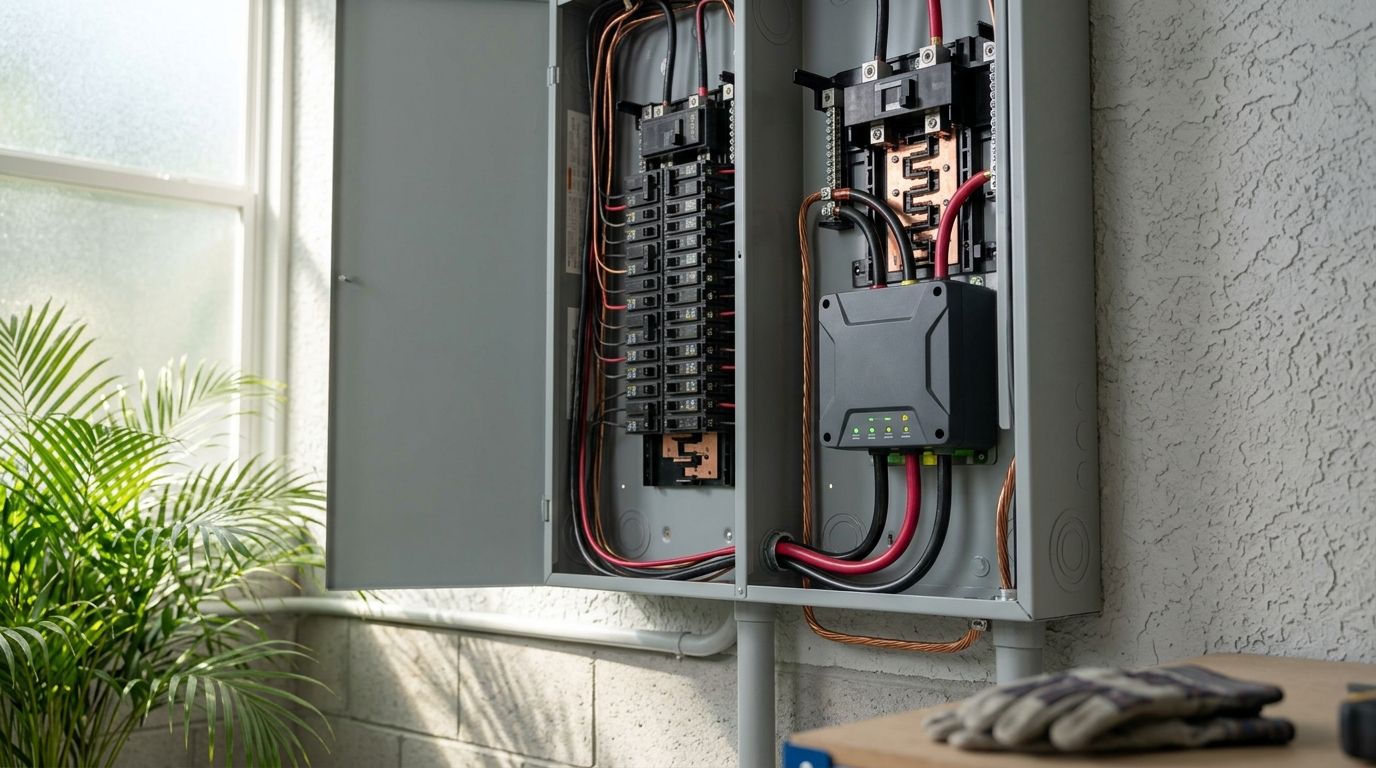
- Check whether the existing panel has open breaker slots rated for the new loads
- Confirm the panel's total amperage still covers the house plus the new pool circuits
- Note voltage requirements — many pumps and heaters run 240V, not 120V
- Flag any equipment over 15kW, since that changes GFCI requirements under NEC 680.22
Install the equipotential bonding grid first
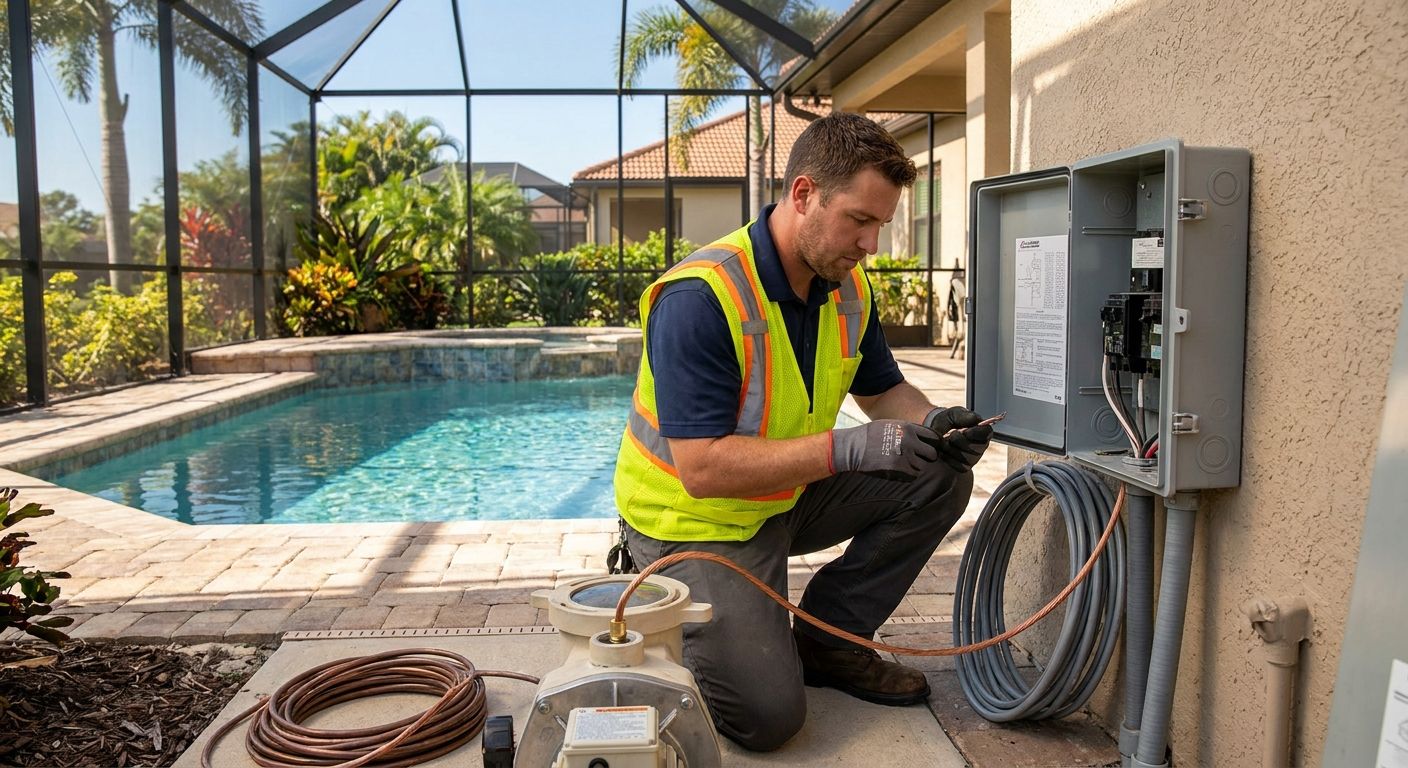
The bonding grid is a web of copper wire that ties the pool's steel reinforcement, deck, and metal fixtures into one electrical plane so no two surfaces near the water can carry different voltages. NEC 680.26 requires this bonding to extend to conductive surfaces within 3 feet of the pool wall, and it has to go in before the deck concrete pours.
- Bond the pool's rebar or wall reinforcing steel with listed bonding clips
- Extend the grid to any metal ladders, rails, and diving board anchors
- Bond metal deck reinforcing steel within the 3-foot perimeter zone
- Bond the pump motor frame and any metal equipment housings
- Use solid copper bonding wire, not stranded, per the equipment manufacturer's listing
Run dedicated GFCI-protected circuits to each device
Every pump, light, and piece of pool equipment needs GFCI protection under NEC 680.22 — this is the rule that trips up the most DIY installs and the fastest way to fail a rough-in inspection. Pool lights operating above 15 volts need GFCI protection regardless of wattage, and pump circuits need it up to 15kW rated equipment.
- Install a GFCI breaker at the panel, not just a GFCI outlet, for pump and heater circuits
- Confirm underwater pool lights carry GFCI protection even at low voltage
- Keep receptacles within 20 feet of the pool's edge on GFCI protection too
- Separate pump and heater circuits so one tripped breaker doesn't kill both
- Test every GFCI device with its test button once wiring is complete
A general-purpose electrician who hasn't worked pool jobs will sometimes miss the light-circuit GFCI rule because it applies at voltages lower than most residential GFCI use cases. That's a detail worth confirming out loud with whoever pulls your permit — see how to choose an electrician in Port St. Lucie for what licensing questions to ask before hiring.
Size and protect the panel breaker for pump and heater loads
Adding pool equipment to an older panel without checking total capacity is how homes end up with nuisance trips or, worse, an overloaded panel. Many Port St. Lucie homes built before 2000 carry 100-amp or 150-amp panels that were never sized with a pool heater in mind.
- Calculate total connected load including the new pool equipment before adding circuits
- Upgrade to a 200-amp panel if the pool heater or salt system pushes past current capacity
- Use breakers rated and listed for the specific pump or heater model
- Label every new breaker clearly at the panel for future service calls
- Leave two open slots for a future feature like pool lighting expansion or a spa jet
Bond metal ladders, rails, decking, and light niches
Beyond the buried grid, every accessible metal part touching the pool water or deck needs a bonding jumper back to the grid — ladders, handrails, diving board bases, and light niche housings all qualify. This step gets skipped most often on retrofits where a homeowner adds a ladder or rail years after the original pool build.
- Add bonding jumpers to any new ladder, rail, or accessory installed after the original build
- Check light niche housings for a bonding lug and confirm a wire is actually connected to it
- Inspect existing bonding connections annually for corrosion, especially near saltwater pools
- Replace any bonding clip showing green corrosion buildup rather than cleaning and reusing it
- Confirm handrail bonding on both entry points if the pool has stairs on two sides
Schedule the rough-in inspection before decking pours
St. Lucie County requires the bonding grid and rough electrical to pass inspection before the deck concrete goes down — pour first and you're cutting concrete to fix a failed bond. Coordinate this timing directly with your electrician and pool contractor so nobody schedules the pour before the inspector signs off.
- Confirm your electrician pulls a permit specific to the pool electrical scope
- Schedule the rough-in inspection once bonding and rough wiring are both complete
- Keep photos of the buried bonding grid before it's covered by concrete or backfill
- Get the final inspection scheduled before the pool contractor fills the pool with water
- Ask for a copy of the passed inspection report for your records at resale time
Home sales on the Treasure Coast increasingly require electrical documentation for pool systems — see electrical inspections for Treasure Coast home sales if you're wiring a pool ahead of listing the house.
Weatherproof and label every junction for salt air exposure
Every junction box, panel lug, and bonding connection near a Port St. Lucie pool sits in salt air that accelerates corrosion compared to inland Florida. This is the step homeowners skip because it doesn't affect whether the inspection passes today — it affects whether the wiring still works in five years.
- Use corrosion-resistant, listed junction boxes rated for wet or damp pool-deck locations
- Apply anti-corrosion compound on panel and bonding lugs during install
- Keep panel and disconnect boxes off the ground and shaded from direct salt spray where possible
- Re-torque bonding and breaker connections during annual maintenance checks
- Add whole-house surge protection ahead of the pool panel, since pool equipment motors are sensitive to the voltage spikes common during Treasure Coast storms
Comparing your options for pool electrical work
| Option | Best for | Key limitation |
|---|---|---|
| DIY bonding and wiring | Homeowners with electrical licensing and NEC 680 experience | Most DIYers miss GFCI light-circuit rules and fail rough-in inspection |
| Pool contractor's in-house crew | Fast turnaround tied to the pool build schedule | Not always a licensed electrician, limited accountability on bonding faults |
| General handyman or unlicensed installer | Small cosmetic fixes only | Cannot legally pull an electrical permit in St. Lucie County |
| Licensed local electrician (Imperium Electric) | Full bonding grid, panel sizing, and permitted rough-in work | Requires scheduling around the pool contractor's pour timeline |
Verdict: hire a Florida-licensed electrician separate from the pool contractor's crew for bonding grid and panel work — it's the only option that legally pulls the permit and stands behind the inspection.
Get your pool wiring quoted right
Licensed bonding and GFCI wiring for Port St. Lucie pools, permitted and inspected.
Common mistakes Port St. Lucie homeowners make
- Assuming the pool shell is already grounded because it's concrete and steel — bonding and grounding are separate systems, and rebar alone doesn't satisfy NEC 680 without dedicated bonding wire
- Letting the pool contractor's crew handle bonding without checking their electrical license — bonding grid work legally requires a licensed electrician pulling a permit, not a pool-building subcontractor
- Adding a pool heater to an already-maxed panel — older 100-amp panels common in pre-2000 Jensen Beach and Port St. Lucie homes often can't absorb a heater load without an upgrade
- Skipping GFCI protection on low-voltage pool lights — the misconception that low voltage means no shock risk is exactly backwards for pool lighting under NEC 680
- Reusing corroded bonding clips during a pool renovation — green corrosion on a bonding lug means replace it, not clean and reinstall it
FAQ
Does a pool need its own electrical permit in Port St. Lucie?
Yes, St. Lucie County requires a separate electrical permit for pool wiring and bonding, with a rough-in inspection completed before the deck concrete pours.
What is pool bonding and why is it required?
Pool bonding ties the pool shell, deck steel, ladders, and equipment into one electrical plane using copper wire under NEC 680.26, so no two surfaces near the water can carry different voltage potential.
Do pool lights need GFCI protection even at low voltage?
Yes, underwater pool lights need GFCI protection under NEC 680.22 regardless of voltage, which is a rule DIY installers frequently miss.
Can my pool contractor's crew do the electrical wiring?
Only if that crew includes a Florida-licensed electrician pulling the permit — an unlicensed installer cannot legally handle bonding grid or panel work in St. Lucie County.
How often should pool bonding connections be inspected?
Check bonding lugs and connections annually, since salt air on the Treasure Coast corrodes copper bonding hardware faster than inland Florida climates.
What size panel does a pool heater need?
Panel sizing depends on total connected load; many Port St. Lucie homes built before 2000 need a 200-amp panel upgrade to safely add a pool heater and pump circuit.
Should pool wiring happen before or after the deck is poured?
The bonding grid and rough electrical wiring must pass inspection before the deck concrete is poured, since the grid is buried under the deck.
Does a saltwater pool need different bonding than a chlorine pool?
The bonding grid requirements under NEC 680 are the same for both, but saltwater systems accelerate corrosion on bonding lugs and hardware faster than standard chlorine pools.
One last thing
The 3-foot rule in NEC 680.26 catches more homeowners off guard than any other part of pool bonding — it means metal deck railings, fence posts, and even a metal shed wall within 3 feet of the pool's edge legally need to be tied into the bonding grid, not just the equipment touching the water. If you're planning a deck expansion or adding a metal rail after the original pool build, check that distance before you install anything, or you'll be retrofitting bonding wire into a poured deck.