Pool heater installation for Treasure Coast homeowners in 2026 starts with the electrical or gas hookup, not the equipment itself — a heat pump or gas heater is only as good as the circuit, gas line, and bonding grid feeding it. Salt air, HOA setbacks, and county permitting rules along the Treasure Coast make this a different job than installing the same heater inland.
- Heat pump pool heaters need a dedicated 240-volt circuit sized to the nameplate, commonly 30-60 amps.
- Gas pool heaters need a properly sized gas line and outdoor venting clearance, not just a bigger heater.
- NEC Article 680 requires a bonding grid tying the heater into the pool's equipotential bonding — skipping this fails inspection.
- Pool heater installation treasure coast projects almost always need a permit pulled by a licensed trade, not the pool contractor.
- Imperium Electric handles the electrical, gas, and permitting side of pool heater installs for Port St. Lucie, Stuart, and Jensen Beach homeowners.
Why pool heater installation matters for Treasure Coast homeowners
A pool that sits unheated from December through February loses months of use every year on the Treasure Coast, which is the main reason homeowners here add a heater instead of just tolerating cooler water. The flip side is corrosion: salt chlorination systems and coastal humidity eat through unprotected wiring connections faster than almost anywhere else in Florida, so the electrical work around a pool heater has to hold up to conditions inland installers rarely deal with.
Permitting adds another layer specific to this area. St. Lucie, Martin, and surrounding county building departments require a permit for the electrical circuit and, in most cases, for the gas line — and that permit has to come from a licensed electrical or plumbing contractor, not the company selling the heater. Homeowners who skip this step often find out during a home sale inspection, when pool electrical wiring and bonding that was never permitted becomes a repair item at closing.
The pool heater installation process for Treasure Coast homes
Pick the heater type for your climate and pool size
Florida's mild winters make heat pumps the default choice for most Treasure Coast pools, but gas and electric resistance heaters still have a place depending on how the pool gets used.
- Heat pumps pull ambient air heat and run efficiently down to roughly 50°F air temperature, then lose output below that
- Gas heaters recover heat fast, which matters for spas and pools that only get heated for weekend use
- Electric resistance heaters work for small spas but draw the most power per BTU of any option
- Solar add-ons extend a heat pump's season without raising the electric bill, if roof or rack space allows it
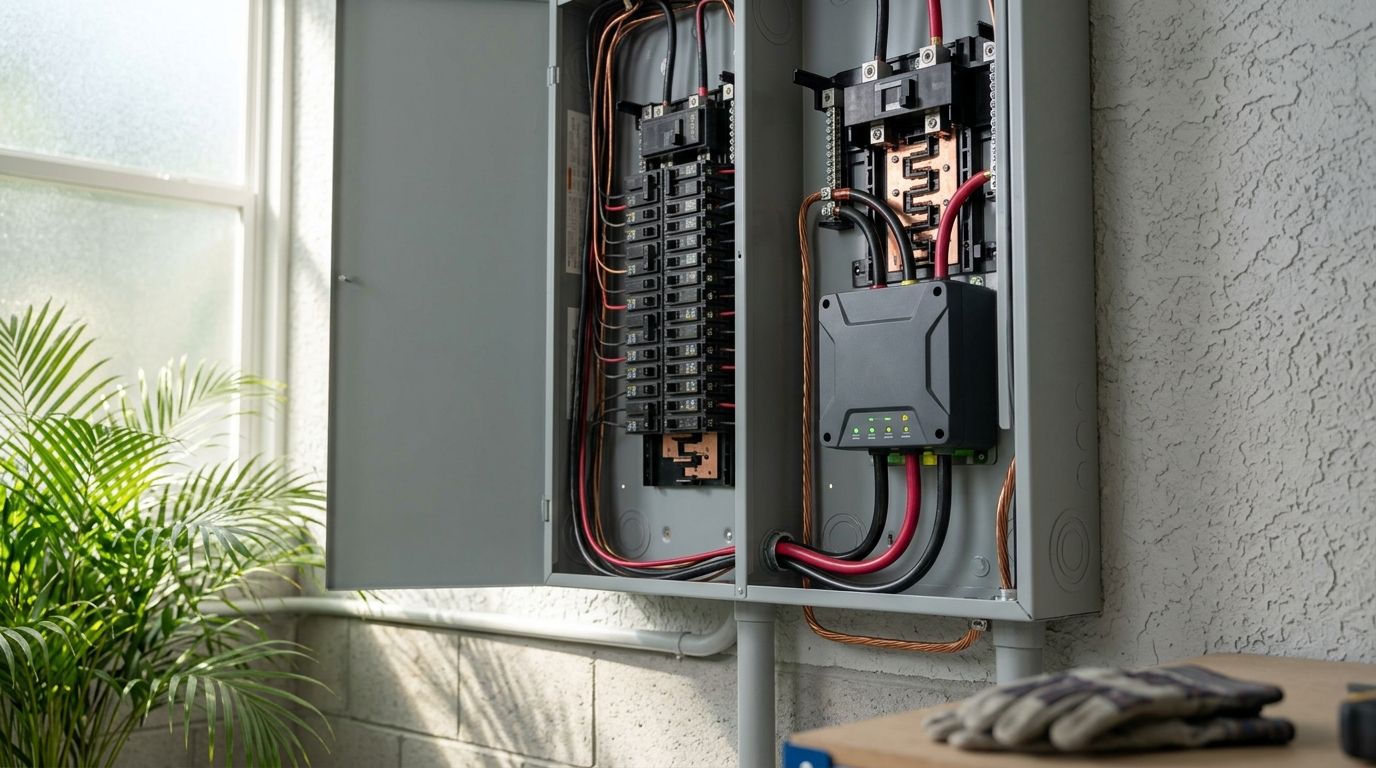
Check your electrical panel before you buy anything
A 240-volt pool heat pump needs a dedicated circuit, and plenty of Treasure Coast homes built before the 2000s don't have the spare breaker space or panel capacity to add one without an upgrade.
- Confirm available amperage on the main panel, not just open breaker slots
- Check whether the panel is original to a 1990s or older home — these often need replacement before adding a 30-60 amp circuit
- Ask whether a subpanel near the pool equipment pad makes more sense than a long run from the main panel
- Have a licensed electrician load-calculate the panel if generators, EV chargers, or AC units already share it
Run or verify the gas line for gas heaters
Gas pool heaters are rated by BTU input, and the gas line has to be sized to match — undersizing it is the single most common reason a new gas heater underperforms.
- Confirm the existing gas meter has capacity for the added BTU load, especially in homes that already run a gas range or tankless water heater
- Size the line to the heater's BTU rating; higher-output units often need 3/4-inch line or larger from the meter
- Plan for proper outdoor venting clearance from windows, doors, and eaves
- A licensed plumber can extend or size gas line installation work correctly the first time instead of retrofitting later
Pull the right permits before the equipment ships
Permits for pool heater installation treasure coast projects cover the electrical circuit, the gas line if applicable, and sometimes the equipment pad itself.
- Confirm which county — St. Lucie, Martin, or Indian River — has jurisdiction over the address
- Ask whether the pool contractor's license covers the electrical permit or only the pool shell and equipment set
- Pull the permit before scheduling equipment delivery, not after — inspectors can require rework on unpermitted installs
- Keep the final inspection card on file; it matters at resale
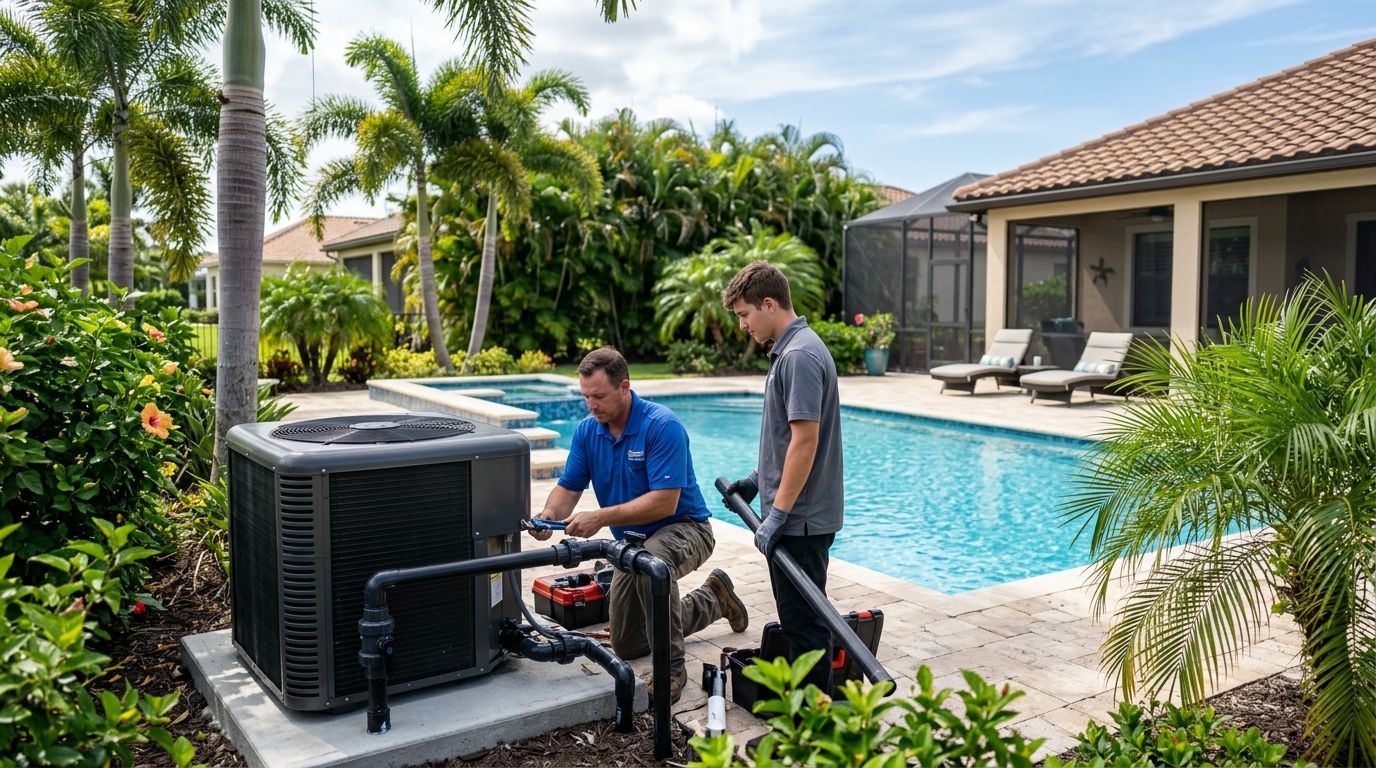
Set and anchor the pad for hurricane season
Equipment pads that aren't anchored to Florida Building Code wind standards become projectiles in a storm, and insurers increasingly ask about this during 2026 policy renewals.
- Set the pad on compacted, level ground away from roof drip lines
- Anchor or strap the unit per the manufacturer's wind-rating instructions
- Keep clearance from fences and structures per the manufacturer's airflow requirements
- Route conduit and gas lines so they're not exposed to standing water during heavy rain
Bond and ground the equipment per NEC 680
National Electrical Code Article 680 requires all metal parts in and around a pool — including the heater — to tie into a common equipotential bonding grid, and this is the step inspectors check first.
- Bond the heater's metal casing to the existing pool bonding grid
- Confirm GFCI protection on the circuit feeding the heater where code requires it
- Verify bonding continuity with a meter, not a visual check
- Document the bonding work for the final inspection — it's the most commonly failed item on pool electrical inspections
Schedule the licensed inspection and startup
The heater doesn't get turned on until the permitted work passes inspection, and skipping this step voids most manufacturer warranties.
- Schedule the county electrical (and gas, if applicable) inspection before startup
- Have the installing contractor present for the inspection to address questions on site
- Run the heater through a full startup cycle before the pool contractor leaves
- Save all permit and inspection paperwork with the home's records
Pool heater options for Treasure Coast homes
| Option | Best For | Key Limitation |
|---|---|---|
| Heat pump | Year-round Treasure Coast climates, lower operating cost | Output drops once air temperature falls below roughly 50°F |
| Gas heater | Fast heat-up, spa use, cooler winter stretches | Higher operating cost; needs sized gas line and venting clearance |
| Electric resistance | Small spas or backup heat | Highest power draw per BTU of any heater type |
| Solar add-on | Sun-exposed lots, lowest ongoing cost | Needs roof or rack space; slow recovery on cloudy days |
Verdict: heat pumps are the right call for most Treasure Coast pools that get used year-round; gas heaters make sense only when fast recovery matters more than operating cost.
Common mistakes Treasure Coast homeowners make
- Buying the heater before checking panel capacity — a 60-amp circuit request on a maxed-out 100-amp panel means a panel upgrade nobody budgeted for
- Assuming the pool contractor pulls the electrical permit — most pool builders aren't licensed electricians and can't legally pull that permit
- Skipping the bonding grid connection — this is the top reason pool heater inspections fail on the Treasure Coast
- Ignoring salt chlorination corrosion — unprotected connections near a saltwater pool corrode faster than standard residential wiring
- Setting the pad too close to a fence or property line — HOA and setback rules in Port St. Lucie and Stuart trip up more installs than the electrical work itself
Get your pool heater wired and permitted right
Licensed electrical and gas work for pool heater installs across the Treasure Coast.
FAQ
What's the best pool heater for a Treasure Coast home?
A heat pump pool heater is the best fit for most Treasure Coast homes because winter air temperatures rarely drop low enough to hurt its efficiency. Gas heaters make more sense for spas or pools that only get heated occasionally.
How much electrical capacity does a pool heat pump need?
Most heat pump pool heaters need a dedicated 240-volt circuit, commonly in the 30-to-60-amp range depending on the model. A licensed electrician should confirm the exact breaker size against the manufacturer's nameplate before wiring.
Is a gas pool heater better than a heat pump in Florida?
Gas heaters heat water faster but cost more to run than heat pumps in Florida's climate. Heat pumps win on operating cost for pools heated most of the year; gas wins when fast recovery matters more than efficiency.
How long does pool heater installation take?
The electrical or gas hookup itself is usually a single-day job once permits are pulled. Permitting and inspection scheduling with the county typically add more time to the project than the physical installation.
Do I need a permit to install a pool heater in Port St. Lucie?
Yes, St. Lucie County requires a permit for the electrical circuit feeding a pool heater and for any new gas line. The permit must be pulled by a licensed electrical or plumbing contractor.
Can my pool contractor pull the electrical permit?
In most cases, no — pool contractor licenses cover the pool shell and equipment set, not electrical work. A licensed electrician or general contractor needs to pull the electrical permit separately.
How close can a pool heater be to the house?
Clearance depends on the manufacturer's airflow and venting requirements plus local setback rules, which vary by municipality on the Treasure Coast. Check both the equipment manual and county code before setting the pad.
Does a saltwater pool need special electrical protection for the heater?
Saltwater chlorination systems accelerate corrosion on unprotected electrical connections near the pool equipment pad. Sealed, corrosion-rated connectors and conduit reduce the risk of failure within the first few years.
One last thing
Most homeowners assume the heater unit is the expensive part of the job — it's usually the panel upgrade or gas line extension that adds unplanned cost once a licensed contractor inspects the property. Get the electrical panel and gas capacity checked before ordering equipment, not after it's sitting on the pallet in the driveway.