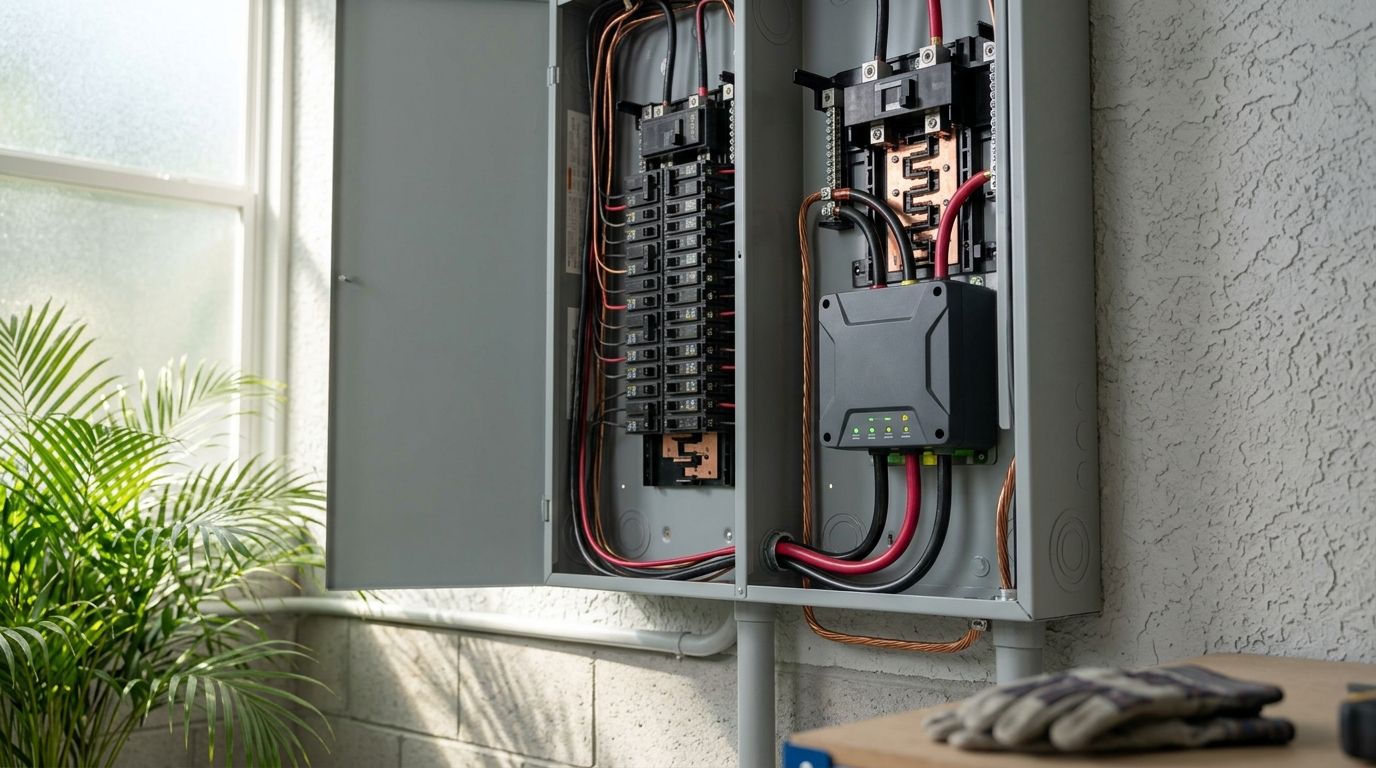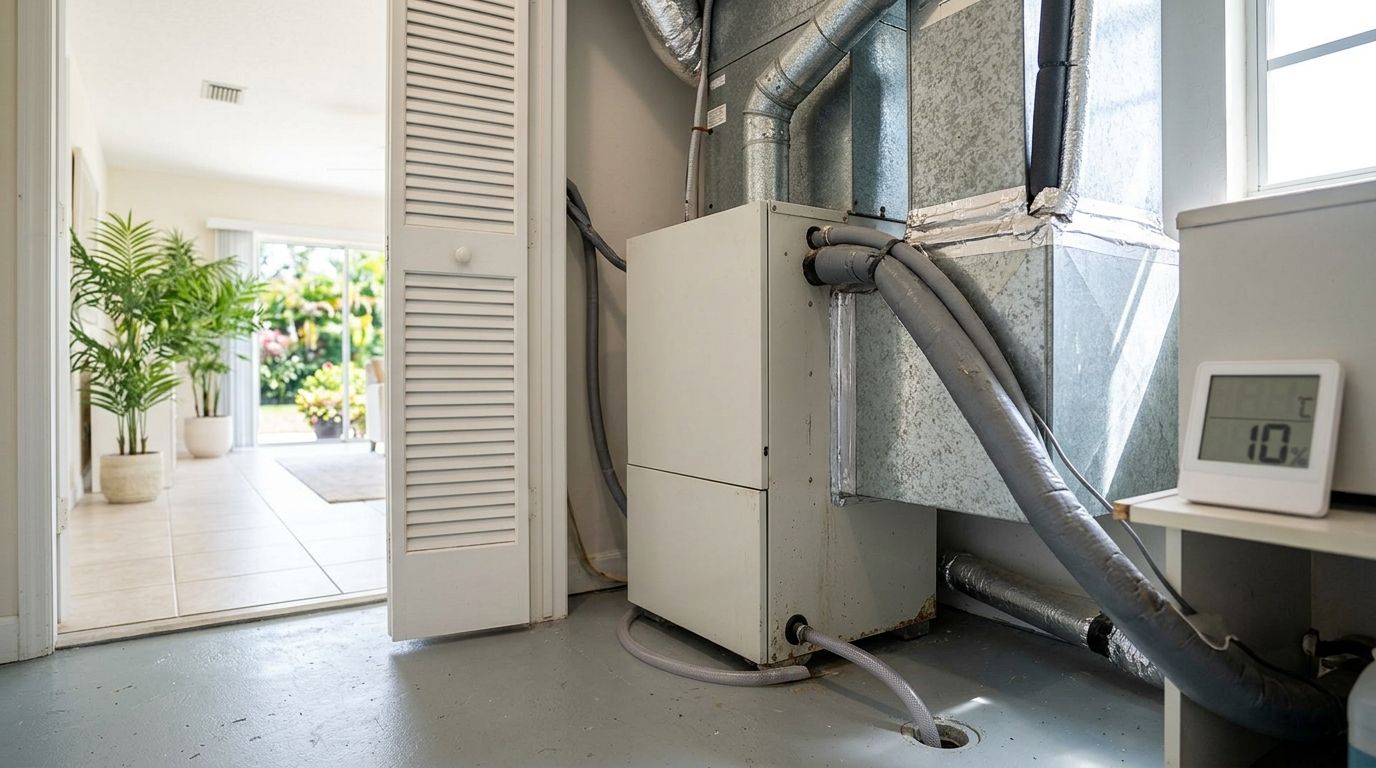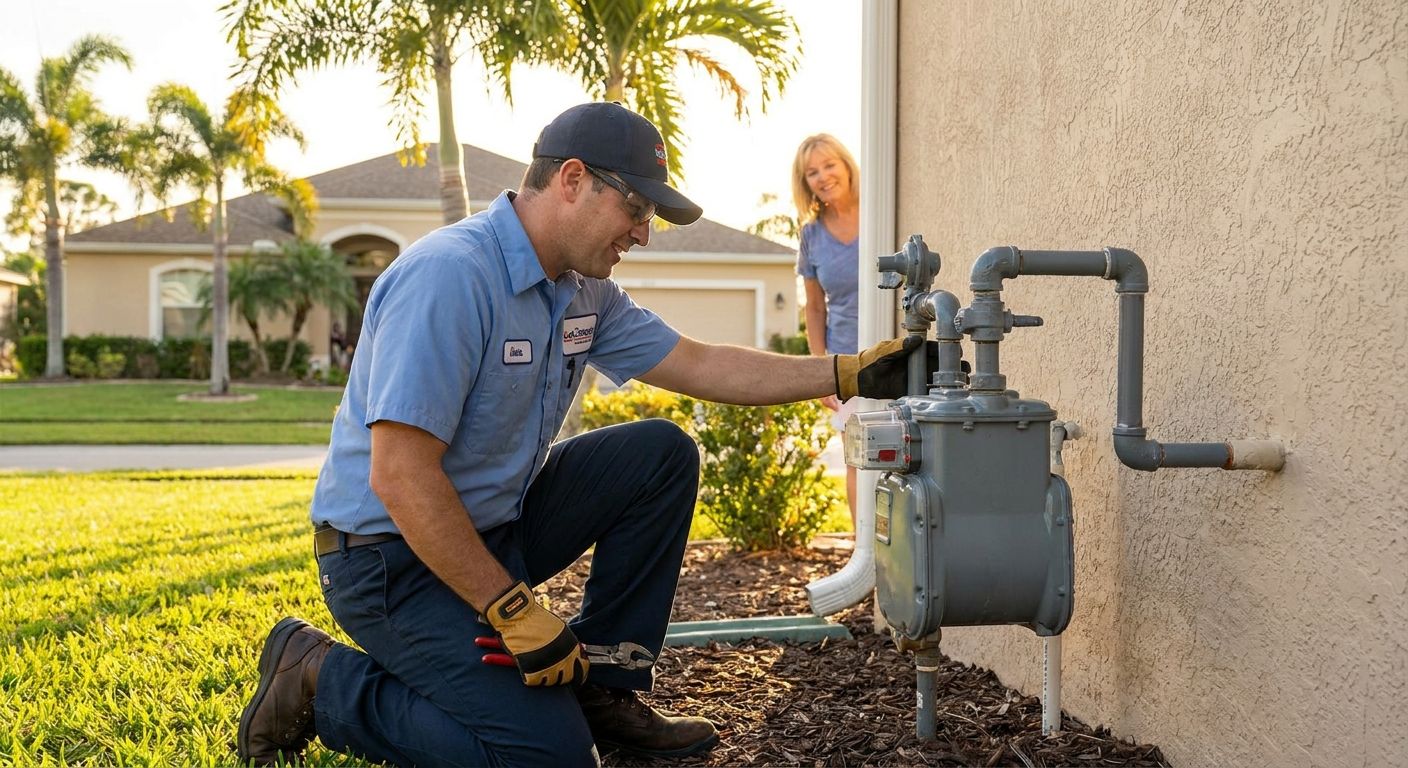
Gas line installation and repair for Treasure Coast homes means running new gas piping or fixing existing lines that feed a standby generator, range, tankless water heater, or pool heater in Port St. Lucie, Stuart, or Jensen Beach. The work sits at the intersection of plumbing code, generator sizing, and county permitting, which is why it trips up more homeowners here than almost any other trade job on the property.
- Gas line installation and repair on the Treasure Coast runs through a licensed plumber or contractor, not a weekend DIY project.
- Standby generators sized 20kW to 24kW draw roughly 200,000 to 300,000 BTU per hour and need a dedicated line sized for that load.
- St. Lucie and Martin county both require a permit and inspection before a new gas line or appliance goes live in 2026.
- Older galvanized lines in Jensen Beach and Port St. Lucie homes corrode from the inside long before a visible leak shows up.
- Imperium Electric handles gas line work tied to plumbing and generator installation across the Treasure Coast.
Why gas line installation and repair matters for Treasure Coast homes
Every hurricane season, homeowners on the Treasure Coast wait until a storm is in the forecast to size a standby generator, and by then it's too late to fix an undersized gas line without a rush job. A 20kW to 24kW natural gas generator running at full load pulls 200,000 to 300,000 BTU per hour, and if the existing line was sized years ago for a range and a water heater, it chokes the generator right when the power goes out. Get ahead of it before June 1, not during a named storm.
Older homes in Jensen Beach and parts of Port St. Lucie still run on galvanized steel gas pipe that was code-compliant decades ago and is now a corrosion risk from the inside out. A pipe can look fine on the outside and be down to a fraction of its original wall thickness inside, which is exactly the kind of problem that shows up as a rotten-egg smell and an emergency call, not a scheduled repair. Pairing a standby generator upgrade with a gas line inspection catches both issues in one visit instead of two.
Identify what the gas line needs to power
Before any pipe gets cut or any permit gets pulled, list every appliance the line will feed and how far each one sits from the meter or tank.
- Range, cooktop, or outdoor kitchen appliance
- Tankless water heater or pool heater
- Standby generator (natural gas or propane)
- Fire pit or outdoor gas lighting
- Existing pipe material: black steel, copper, CSST, or galvanized
- Distance from meter or tank to the farthest appliance
Check your home's gas supply and meter capacity
Adding a generator or a second high-draw appliance to a line that's already near capacity is the single most common reason a Treasure Coast gas job fails inspection. Start with what's already there before assuming the meter can handle more.
- Confirm the meter's rated capacity in cubic feet per hour (CFH)
- Add up the BTU demand of every appliance already on the line
- Inspect visible pipe runs for rust, pitting, or soft spots
- Locate the main shutoff and confirm it's accessible
- Note whether the home runs on natural gas or a propane tank
This is where a manual walk-through stops being enough for most homeowners — matching BTU demand to pipe diameter and meter capacity is a licensed-trade calculation, not a guess. Imperium Electric handles this sizing check as part of gas line installation and repair, tying it directly into generator and plumbing work so nothing gets sized twice.
Pull the permit before work starts
St. Lucie County and Martin County both require a permit for new gas piping or material alteration to an existing line — repairs that go beyond a simple fitting swap fall under the same rule. Skipping this step is the fastest way to stall a home sale inspection months later.
- Submit a gas piping diagram to the county building department
- Schedule a rough-in inspection before pipe gets covered
- Schedule a final pressure test before appliances connect
- Keep the permit card on file for future insurance or resale checks
A licensed contractor pulling the permit and scheduling both inspections is the faster path here — it removes the back-and-forth of a homeowner navigating county scheduling on their own.
Choose the right pipe material and route
Material choice depends on the run: exposed indoor runs typically use black steel pipe, tight turns and retrofits often call for CSST (corrugated stainless steel tubing), and underground runs from a propane tank to the meter use rated polyethylene pipe.
- Use black steel for exposed, straight indoor runs
- Use CSST for tight bends around framing or finished walls
- Use PE pipe rated for underground burial on tank-to-meter runs
- Install a sediment trap (drip leg) ahead of every appliance
- Apply pipe joint compound rated specifically for gas, never plumber's tape alone on threaded gas fittings
Homes old enough to need gas line replacement often need broader pipe attention too — if the property's water lines are the same age as the gas lines, a full re-piping evaluation during the same visit saves a second round of wall access.
Schedule installation or repair with a licensed contractor
Verify the license number before anyone touches gas piping in your home — Florida requires a state or county gas license for this work, and it's not covered under a general handyman license.
- Confirm the contractor's license number and that gas work is within scope
- Confirm they pull the permit, not you
- Ask how they pressure test the finished line
- Ask how the new gas run ties into an existing or planned generator transfer switch
- Confirm inspection scheduling before work starts, not after
Get a gas line quote today
Licensed plumbing and generator installation across the Treasure Coast.
Pressure test and inspect the finished line
A gas line isn't done until it holds pressure and passes the county's eyes, not just yours.
- Run a soap-bubble test at every joint before burying or closing walls
- Hold a static pressure test for the duration required by code
- Schedule the county inspector's sign-off before gas flows
- Confirm the odor test after the line is charged
- Verify every connected appliance ignites cleanly on first light
Maintain the system between hurricane seasons
A gas line that passed inspection in 2026 doesn't stay maintenance-free — flexible connectors and exposed fittings age faster in Florida's humidity than the pipe itself.
- Inspect exposed piping annually for surface corrosion
- Check flex connectors behind ranges and water heaters for cracking
- Re-test the propane tank regulator if the home runs on propane
- Coordinate gas line checks with standby generator maintenance on the same schedule
“A gas line sized for a range wasn't sized for a generator, and finding that out during a storm is the expensive way to learn it.”
Comparing your options for gas line work
| Option | Best for | Key limitation | Verdict |
|---|---|---|---|
| DIY soap-bubble leak check | Homeowners who smell gas or hear hissing near a fitting | Confirms a leak exists but can't legally fix or replace piping | Fine as a first check, not a repair |
| Independent single-trade plumber | A one-off appliance swap, like a water heater | Often doesn't coordinate with generator or transfer switch work | Workable for simple swaps |
| HVAC or generator installer without a gas license | New AC or ductless install with no gas tie-in | Cannot legally run or repair gas piping in Florida | Skip for any gas work |
| Imperium Electric (plumbing, generator, general contracting) | Homes adding a standby generator, tankless water heater, or gas appliance | Work still has to clock in around county permit and inspection turnaround | Best fit for combined gas, plumbing, and generator jobs |
Common mistakes Treasure Coast homeowners make
- Sizing for today's appliance, not next hurricane season's generator. A line sized only for a range chokes a 22kW generator the first time the power drops.
- Skipping the permit because it's "just a repair." St. Lucie and Martin county both require one for gas line alterations, and a missing permit surfaces at the worst time — during a home sale inspection.
- Using the wrong sealant on threaded joints. Not every pipe dope is rated for gas, and the wrong one fails under pressure within months, not years.
- Ignoring corroded galvanized lines until they leak. Older Jensen Beach and Port St. Lucie homes carry pipe that looks fine from the outside and is thin from the inside.
- Adding appliances without recalculating total BTU load. A pool heater or fire pit added to a line already feeding a generator can starve both under peak demand.
FAQ
What's the best way to handle gas line installation and repair on the Treasure Coast?
Route new gas piping and repairs through a licensed plumbing or general contracting company that pulls the county permit and coordinates the sizing with any generator or appliance load. DIY leak checks are fine for a first look, but installation and repair need a licensed hand and an inspection.
Is DIY gas line repair legal in Florida?
Minor fitting swaps on an already-permitted line may fall outside licensing rules, but new runs, material alterations, and repairs beyond a simple fitting require a licensed gas contractor and a county permit. Doing unlicensed work also voids most manufacturer warranties on generators and tankless water heaters.
Do I need a permit for gas line work in Port St. Lucie or Stuart?
Yes. St. Lucie County and Martin County both require a permit for new gas piping and for repairs that go beyond a minor fitting replacement. Skipping the permit can stall a home sale inspection months or years later.
Natural gas or propane for a standby generator on the Treasure Coast?
Natural gas works if the home already has utility service and needs no on-site fuel storage, while propane works for homes off the natural gas grid and requires a tank. Either fuel needs a gas line sized for the generator's BTU draw, typically 200,000 to 300,000 BTU per hour for a 20kW to 24kW unit.
How long does gas line installation take?
A straightforward indoor run for one appliance can be scheduled and completed in a single visit once the permit is in hand, while a new run from a propane tank or a full pipe replacement in an older home takes longer and requires a rough-in and final inspection. Timeline depends on run length, pipe material, and county inspection scheduling.
What are the signs of a gas leak in my home?
A rotten-egg smell (the odorant added to natural gas for exactly this reason), a hissing sound near a fitting, dead vegetation near an underground line, or unexplained higher gas bills all point to a leak. Shut off the gas at the main and call a licensed contractor immediately rather than testing it yourself with an open flame.
Can Imperium Electric handle both the generator and the gas line hookup?
Yes, gas line work for a standby generator ties directly into Imperium Electric's plumbing and generator installation services, so the line sizing, permit, and transfer switch tie-in get coordinated in one project rather than two separate contractors.
One last thing
Most gas leaks on the Treasure Coast aren't in the buried pipe at all — they're at the cheap flexible connector behind the range or water heater, the one part of the system nobody thinks to check until something smells wrong. If a gas line inspection is on the calendar for 2026, ask the contractor to pull and inspect every flex connector in the house, not just the new run.