Solar panel electrical interconnection for Port St. Lucie homeowners is the permitted, inspected process that ties a rooftop solar array into Florida Power & Light's grid so the system can legally run and earn net metering credit. Port St. Lucie's mix of 1980s-1990s block homes and newer construction means the electrical work behind the panels varies a lot more than the panels themselves — older services often need a capacity check or upgrade before FPL will approve the interconnection agreement. Imperium Electric handles that electrical side directly, separate from the solar sales pitch.
- Solar panel electrical interconnection in Port St. Lucie requires a county permit, a code-compliant rapid shutdown, and an FPL interconnection agreement before the system can run.
- Homes with 100A or older panels commonly need a panel upgrade first — solar cannot legally backfeed a panel that isn't rated for it.
- Permission to Operate (PTO) from FPL comes after inspection, not after installation — flipping the system on before PTO violates the interconnection agreement.
- A licensed electrical contractor, not the solar sales rep, is who pulls the electrical permit and signs off on the panel work in 2026.
Why this matters for Port St. Lucie homeowners
St. Lucie County requires a separate electrical permit for the panel, disconnect, and rapid shutdown work tied to a solar install — that permit is distinct from the solar installer's structural mounting permit. Skipping it, or letting an unlicensed crew handle the tie-in, is the single most common reason FPL kicks back an interconnection application.
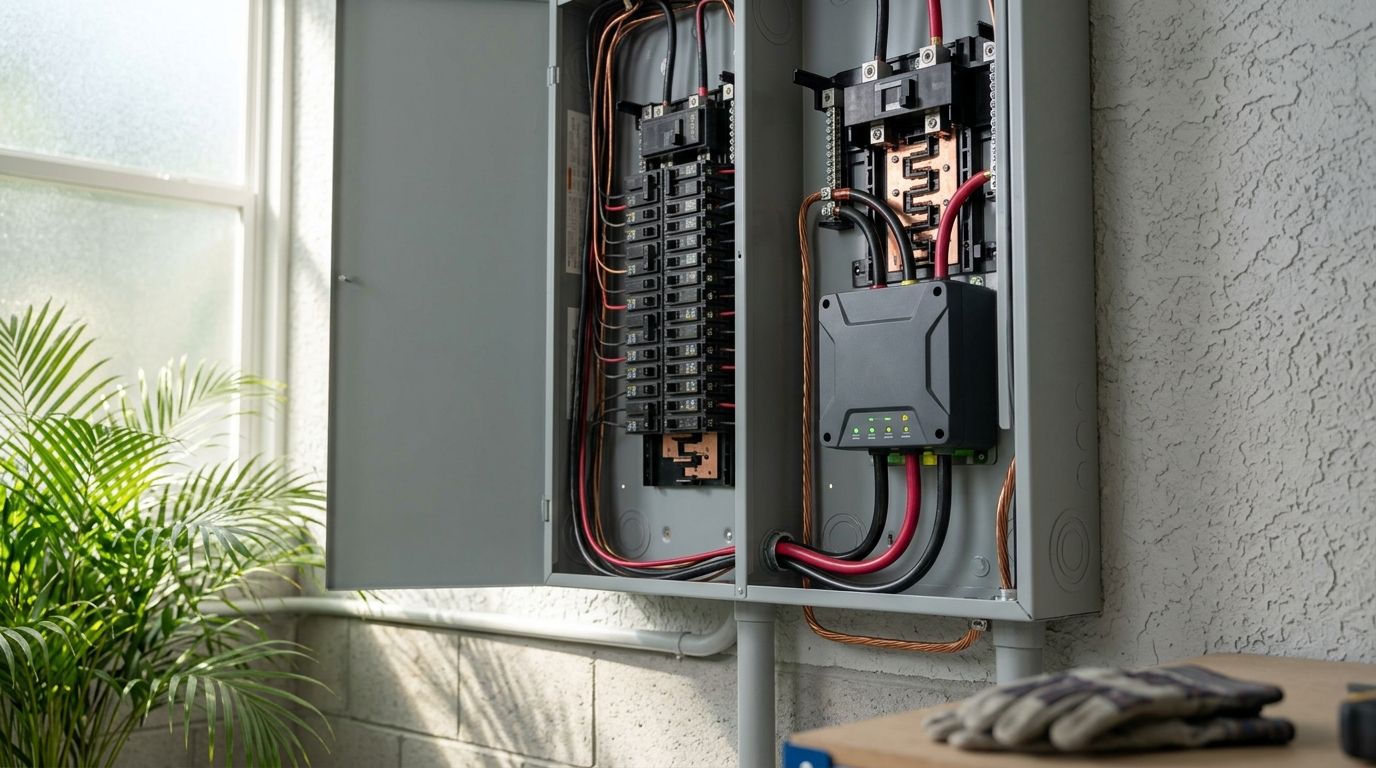
Many Treasure Coast homes built before the mid-1990s carry 100A or even 60A services. A 60A or 100A panel usually can't legally accept solar backfeed without hitting the 120% rule in NEC 705.12 — the code section that limits how much combined utility and solar current a bus bar can carry. That single fact turns a straightforward solar install into a panel upgrade project for a large share of older Port St. Lucie houses, and it's worth knowing before a solar salesperson quotes a system size.
Check your panel's capacity and backfeed rating
Before any solar contract gets signed, someone qualified needs to look at the panel's amperage and bus bar rating, not just the meter can.
- Confirm the main panel size (60A, 100A, 150A, or 200A) stamped on the panel door.
- Check the bus bar rating against the 120% rule for the proposed solar breaker size.
- Look for double-lugged or overcrowded breaker slots that already violate code, solar or not.
- Note the panel's age and manufacturer — some older Federal Pacific and Zinsco panels get flagged during inspection regardless of solar.
- Flag any panel upgrade for an older Port St. Lucie home need now, before the solar installer locks in a system size.
Confirm FPL's interconnection requirements before signing a contract
FPL's net metering interconnection agreement has its own paperwork track separate from the county permit, and it needs specific equipment listed correctly the first time.
- Verify the inverter model is on FPL's approved equipment list before purchase.
- Confirm the production meter or bi-directional meter requirement for the system size.
- Get the interconnection agreement signed and submitted before construction starts, not after.
- Ask who is listed as the electrical contractor of record on the FPL application — it should match the licensed electrician doing the panel work.
- Keep a copy of the signed agreement for the eventual home sale disclosure file.
Pull the right permits before work starts
St. Lucie County issues a building permit for panel mounting and a separate electrical permit for the interconnection equipment, and both need to be active before an inspector will touch the job.
- File the electrical permit under the licensed contractor's number, not the homeowner's.
- Match the permit scope to the actual equipment: main panel work, disconnect, rapid shutdown device, and any subpanel.
- Confirm whether a structural permit is also required for roof-mounted racking on tile or metal roofs.
- Review the county's timeline for permitting a home renovation in St. Lucie County so the solar timeline lines up with inspection scheduling.
- Keep permit copies on-site — inspectors in 2026 routinely turn away jobs without visible paperwork.
This is the point where a licensed electrical contractor, not the solar sales team, becomes the person managing code compliance. Imperium Electric pulls the electrical permit, does the panel work, and coordinates the inspection so the solar installer isn't the one making code calls on someone else's panel.
Install rapid shutdown and disconnect equipment to code
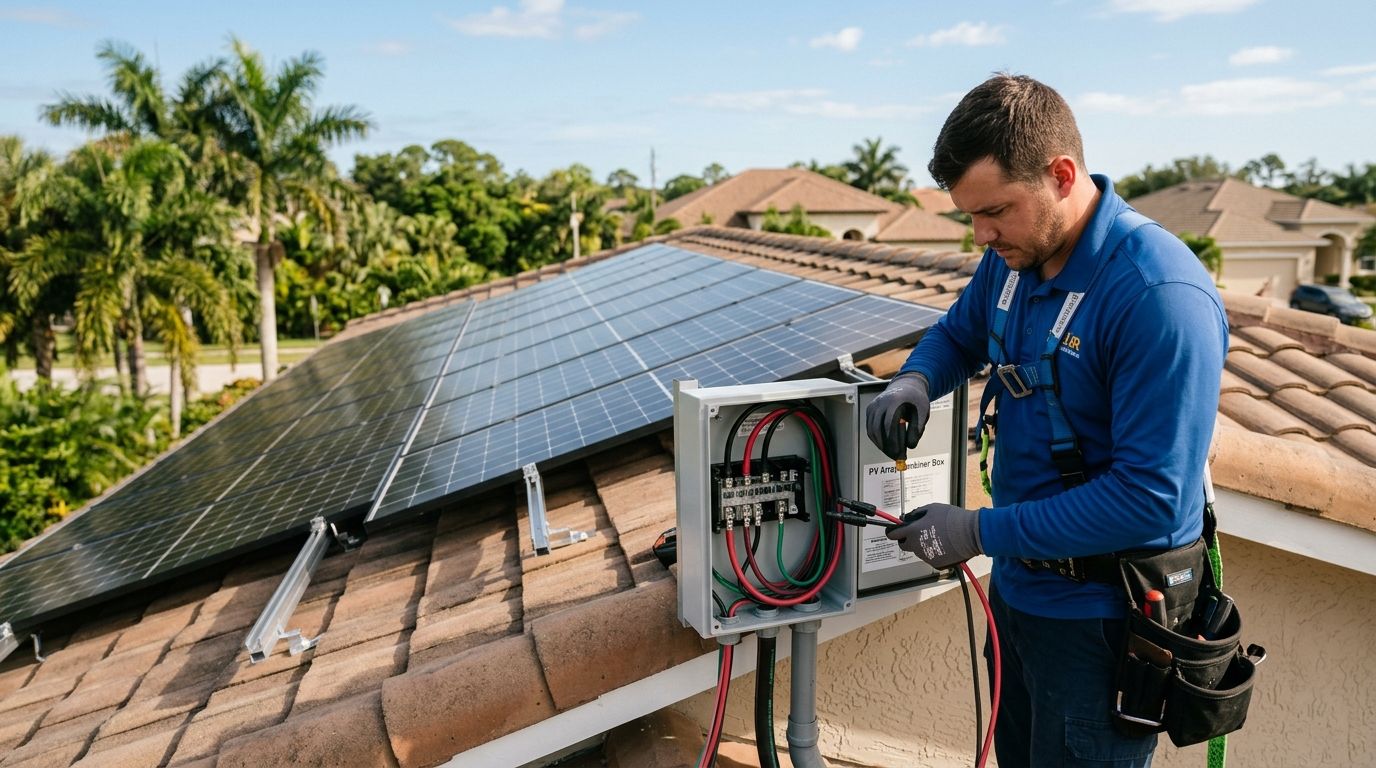
NEC 690.12 requires rapid shutdown for rooftop PV systems, and Florida's building code enforces it strictly given the hurricane exposure on the Treasure Coast.
- Install the rapid shutdown initiation device within 10 feet of the service entrance, per code.
- Label the AC and DC disconnects clearly for first responders.
- Confirm the disconnect is accessible without a ladder or roof access.
- Verify grounding and bonding on the new equipment matches the existing panel's grounding electrode system.
- Add whole-house surge protection at the panel — inverters and monitoring equipment are sensitive to the voltage spikes common during Florida storm season.
Schedule the county electrical inspection
The county inspector checks the panel work, grounding, disconnects, and labeling before anything gets approved for utility interconnection.
- Book the inspection only after the licensed electrician confirms the work is complete and labeled.
- Have the permit card and interconnection agreement paperwork on-site.
- Expect a re-inspection if labeling, torque specs, or grounding don't match the approved plan.
- Photograph the completed panel work before the inspector arrives, for the homeowner's own records.
Submit for Permission to Operate and net metering
FPL issues Permission to Operate (PTO) after the county inspection passes and the interconnection paperwork clears — this is the step that legally allows the system to run.
- Submit the passed inspection certificate to FPL promptly; delays here just push out the PTO date.
- Confirm the net metering billing structure kicks in only after PTO, not at installation.
- Do not energize the system before PTO — it violates the interconnection agreement and can trigger a compliance review.
- Save the PTO letter with the permit and interconnection paperwork for insurance and resale purposes.
Get a quote on the electrical side
Panel checks, upgrades, and interconnection wiring — separate from the solar sales quote.
Maintain the interconnection after it's live
A passed inspection isn't the end of the electrical relationship with the system — panels, breakers, and surge devices age.
- Test the rapid shutdown device annually, ideally ahead of hurricane season.
- Check the disconnect and breaker for corrosion in Port St. Lucie's salt-air environment.
- Re-torque panel connections every few years — thermal cycling loosens lugs over time.
- Watch for tripped solar breakers after storms, a sign of a surge event or loose connection.
Comparing your electrical-work options
| Option | Best for | Key limitation | Verdict |
|---|---|---|---|
| DIY interconnection paperwork | Homeowners comfortable navigating FPL's portal and county permit system themselves | FPL and the county both require a licensed contractor's number on the electrical permit — a homeowner can't self-permit this work | Skip |
| Solar installer handles electrical in-house | Newer homes already on a 200A panel with no rewiring needed | Many solar companies subcontract panel upgrades, adding a second contractor and a second delay if your panel doesn't qualify | Hold |
| Licensed electrical contractor (Imperium Electric) | Older Port St. Lucie homes needing a panel check, upgrade, surge protection, or rewiring alongside the solar tie-in | Scheduling still depends on the county's inspection queue, not just the electrician's calendar | Buy |
A licensed electrical contractor handling the interconnection wiring directly, rather than a subcontracted electrician working under the solar company, cuts out one layer of scheduling delay on older Port St. Lucie homes.
Common mistakes Port St. Lucie homeowners make
- Signing a solar contract before checking panel capacity — the system gets sized for a panel that can't legally accept it, forcing a change order mid-project.
- Assuming the solar installer's permit covers the electrical work — St. Lucie County treats them as separate permits with separate inspections.
- Energizing the system before PTO arrives — this breaks the FPL interconnection agreement even if the inspection passed.
- Skipping surge protection at the panel — inverters and monitoring hardware are among the first things damaged in a Florida lightning strike or grid surge.
- Ignoring an old Federal Pacific or Zinsco panel — inspectors flag these regardless of solar, and the flag stops the whole interconnection timeline.
FAQ
What is solar panel electrical interconnection in Port St. Lucie?
It's the permitted, inspected process of tying a rooftop solar system into FPL's grid, covering the panel, disconnects, rapid shutdown, and the utility's interconnection agreement. It's separate from the solar panels themselves and requires a licensed electrical contractor's permit in St. Lucie County.
Does my Port St. Lucie home need a panel upgrade for solar?
If your panel is rated 60A or 100A, it likely needs an upgrade or a specific backfeed calculation under NEC's 120% rule before solar can legally connect. A licensed electrician can confirm this before you sign a solar contract.
Who pulls the electrical permit for a solar interconnection?
The licensed electrical contractor of record pulls the electrical permit, separate from the solar installer's structural mounting permit. St. Lucie County requires both to be active before inspection.
Can I turn my solar system on before FPL approves it?
No. Energizing before Permission to Operate (PTO) violates the interconnection agreement with FPL, even if the county inspection already passed.
How much does an electrical panel upgrade cost in Florida for solar?
Costs vary by panel size, home age, and wiring condition, so check current pricing directly with a licensed contractor. The panel upgrade budget guide covers what drives the price up or down.
Is rapid shutdown required for solar in Florida?
Yes. NEC 690.12 requires a rapid shutdown device for rooftop solar, and Florida's building code enforces it during the county electrical inspection.
Do I need surge protection with a new solar interconnection?
It's strongly recommended. Inverters and solar monitoring equipment are vulnerable to the voltage spikes common during Treasure Coast storm season, and whole-house surge protection at the panel covers that equipment along with the rest of the home.
Should the solar installer or an electrician handle my panel work?
A licensed electrical contractor should handle the panel, disconnects, and interconnection wiring directly, since that work needs its own permit and inspection independent of the solar racking.
One last thing
The part of solar interconnection that trips up the most Port St. Lucie homeowners isn't the panels on the roof — it's the bus bar rating inside a panel installed 20 or 30 years ago. Get that checked before signing anything with a solar company in 2026, because a panel upgrade discovered mid-install costs more in delay than it would have cost as step one.