Well pump installation and repair for Treasure Coast homeowners means diagnosing, replacing, or fixing the submersible or jet pump that pulls water from a private well, with the goal of getting full-house pressure back without guessing at the wrong fix. Homeowners in Port St. Lucie, Stuart, and Jensen Beach who run on well water face a different failure mode than city-water households: when the pump quits, every faucet, toilet, and irrigation zone goes dry at the same time, not just one fixture.
- Well pump installation and repair on the Treasure Coast starts with electrical checks — a tripped breaker or failed pressure switch causes more no-water calls than a burned-out motor.
- Submersible well pumps generally run 8-15 years; a pump that cycles constantly or trips breakers repeatedly is signaling replacement, not another repair.
- A well pump needs 240V power to run, so backup power matters more on a well than on city water during hurricane season 2026.
- Both electrical and plumbing licenses touch a well pump job — dedicated circuits, GFCI breakers, pressure tanks, and pipe fittings all need sign-off.
- Imperium Electric LLC handles the electrical side of well pump jobs (circuits, breakers, transfer switches) alongside the plumbing side (tanks, fittings) for Treasure Coast homes.
Why well pump work is different for Treasure Coast well-water homes
City-water homes lose pressure gradually or lose hot water first. Well-water homes lose everything at once, because the well pump is the only source of pressure in the house. That single-point-of-failure design is why well pump installation and repair gets treated as an emergency call more often than a routine plumbing job.
Many properties west of US-1 in Port St. Lucie, and older lots in Stuart and Jensen Beach, still run on private wells even where city water lines exist nearby. Those homes also tend to have older pressure tanks and pump control boxes wired decades ago, which means the failure is as likely to be electrical as mechanical. Imperium Electric LLC treats a well pump call as a joint electrical-and-plumbing diagnosis for exactly that reason.
Hurricane season adds a second layer most city-water households never think about: a well pump draws 240V power to run, so a grid outage means zero water pressure, not reduced pressure. That single fact drives a lot of the decisions below.
Diagnose the failure before you call anyone
Most "dead pump" calls in 2026 turn out to be something cheaper than a new pump. Work through the free checks first:
- Check the breaker panel for a tripped double-pole breaker feeding the well
- Listen at the pressure tank for the pump cycling on and off rapidly (a sign of a waterlogged tank, not a dead motor)
- Check for a tripped GFCI if the pump circuit runs through one
- Look for visible corrosion on the pressure switch contacts
- Confirm the well isn't simply dry from irrigation overuse during dry stretches
If the breaker holds and the pump still won't start, move to the electrical side before assuming the motor is shot.
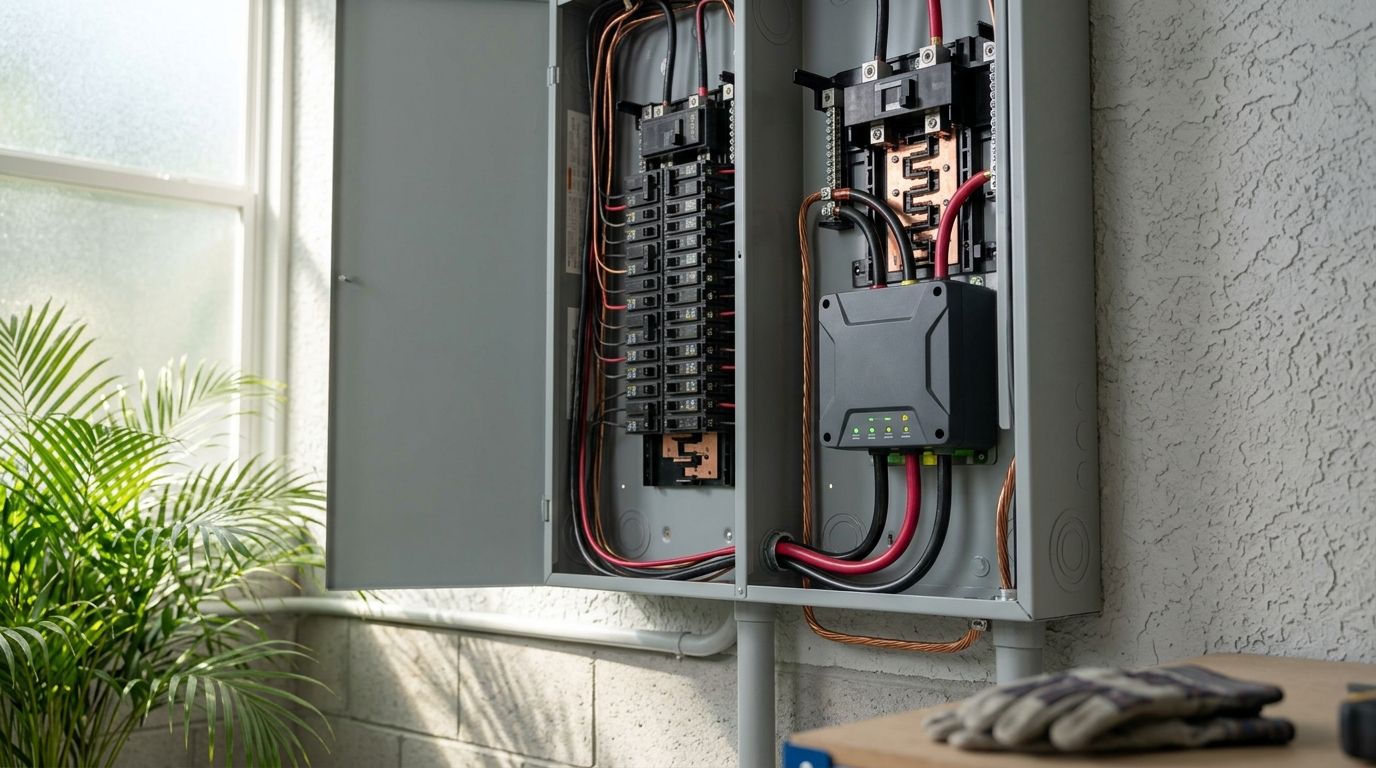
Check the electrical side first
Well pump motors pull a heavy startup surge, and that surge is what wears out breakers, contactors, and wiring connections over time — long before the motor itself fails. A licensed electrician can test the circuit in minutes, which is where a DIY check usually stops being useful.
- Test voltage at the pump disconnect with a multimeter
- Inspect wire nuts and splices inside the control box for corrosion (common in Florida's humidity)
- Confirm the breaker is sized correctly for the pump's horsepower
- Check the capacitor on single-phase pump motors for bulging or leaking
- Verify the ground wire is intact — a common miss on older Jensen Beach and Stuart wiring
This is the point where most Treasure Coast homeowners call a licensed trade instead of continuing to troubleshoot, since a miswired 240V circuit is not a DIY repair.
Test the pressure tank and switch
A bad pressure tank mimics a bad pump almost perfectly — short cycling, weak pressure, banging pipes. Rule it out before paying for pump work.
- Tap the tank; a hollow sound near the top and solid sound near the bottom means the air charge is correct
- Check the pressure switch cut-in and cut-out settings (typically 30-50 psi or 40-60 psi depending on the system)
- Look for water dripping from the tank's air valve, a sign the bladder failed
- Inspect the switch contacts for pitting or arcing damage
- Confirm the check valve near the tank isn't stuck open, which causes constant cycling
Decide between repair and replacement
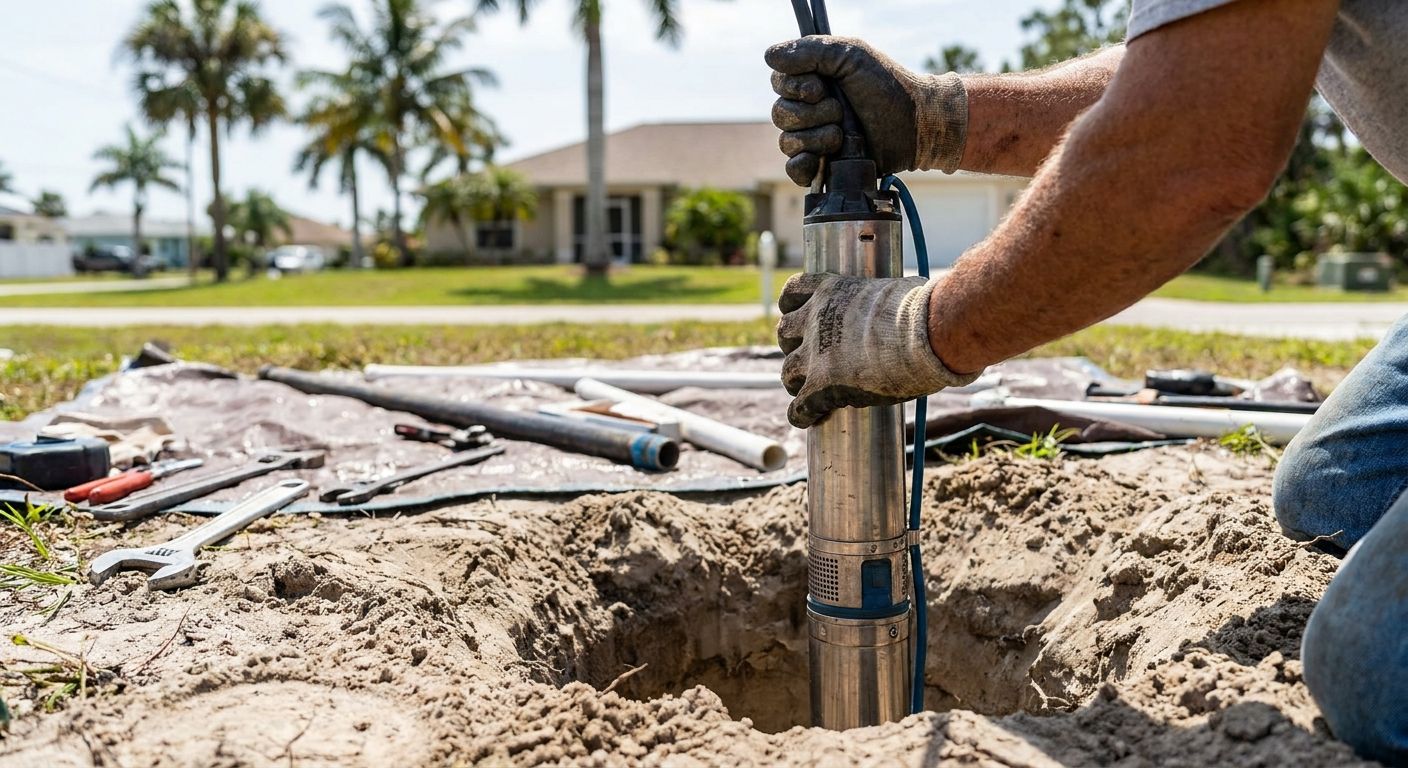
Submersible well pumps typically last 8-15 years under normal Florida well conditions. Jet pumps mounted above ground tend to fail sooner because they're exposed to heat and humidity in a garage or well house.
Signs that point to replacement instead of another repair:
- Pump is already 10+ years old and this is the second failure in two years
- Sand or grit showing up in faucets and toilet tanks
- Motor humming but not starting (a common sign of winding failure)
- Breaker trips again within days of being reset
- Well yield has visibly dropped over the past year
A pump pulled out of a deep well for the third time in five years is a replacement decision, not a repair decision.
Size the replacement pump correctly
An undersized pump starves upstairs bathrooms and irrigation zones; an oversized pump short-cycles and burns out early. Sizing depends on well depth, static water level, and how many fixtures run at once.
- Count fixtures that could run simultaneously (showers, irrigation, washing machine)
- Match pump type to well depth: shallow jet pumps work to about 25 feet, deep well jet pumps to roughly 90 feet, submersible pumps beyond that
- Confirm the pressure tank size matches the new pump's flow rate
- Ask whether a constant-pressure (variable speed) system makes sense for a home with a large irrigation footprint
- Verify the wire gauge from the panel to the well is rated for the new pump's amperage
Protect the pump from power outages
This is the step Treasure Coast well-water homeowners skip most often, and it's the one that matters most every June through November. City water keeps flowing during an outage because the utility maintains line pressure; a well produces nothing without power to the pump.
- Size a transfer switch or generator for the pump's starting wattage, not just its running wattage — motor startup surge is typically several times the running draw
- Confirm the transfer switch includes the well pump circuit, not just lights and refrigerator
- Test the setup before hurricane season, not during a storm watch
- Review generator transfer switch installation options if the well isn't currently on backup power
- Ask about a manual transfer switch as a lower-cost interim step if a full standby system isn't in the budget yet
Address water quality issues tied to the pump
Sediment, sulfur smell, or staining often gets blamed on "bad well water" when the real cause is a failing pump pulling sediment from the bottom of the casing, or a well screen that's degrading.
- Test water clarity right after any pump repair to confirm sediment clears
- Check for a rotten-egg smell, which points to sulfur bacteria rather than the pump itself
- Inspect for iron staining in sinks and tubs, common in Port St. Lucie's well water
- Look into a water filtration system built for well water if quality issues persist after pump replacement
Comparing well pump types for Treasure Coast homes
| Pump Type | Best For | Key Limitation |
|---|---|---|
| Shallow well jet pump | Wells under 25 feet deep | Loses prime easily; weak pressure once well depth increases |
| Deep well jet pump | Wells roughly 25-90 feet deep | Two-pipe system to maintain; less efficient than submersible |
| Submersible pump | Wells deeper than 90 feet, most Treasure Coast properties | Pump sits underwater — pulling it for repair means pulling the whole drop pipe |
| Constant pressure (variable speed) system | Homes with large irrigation zones or multiple bathrooms running at once | Higher electrical demand and more electronics that can fail |
Verdict: most Treasure Coast homes on private wells run submersible pumps, and that's the right call for wells over 90 feet — the tradeoff is that any repair means a full pump pull, which is why electrical diagnosis up front matters so much.
Get a well pump electrical quote
Circuit, breaker, and transfer switch work for well pump systems on the Treasure Coast.
Common mistakes Treasure Coast homeowners make with well pumps
- Assuming a dead pump before checking the breaker. Well pump circuits often share a panel section with pool equipment and irrigation timers, and one trips them all together.
- Skipping the backup power conversation until after a storm. A pump with no power source is just as dry as a broken one — the fix needs to happen before hurricane season 2026, not during it.
- Treating sandy or rust-colored water as normal for a well. That's usually a pump or casing wear signal, not a permanent well-water characteristic.
- Calling a well driller for a problem that's actually a $30 pressure switch or a corroded wire nut. Electrical diagnosis first saves a service call.
- Upsizing pump horsepower without checking wire gauge and breaker rating. A bigger pump on undersized wiring trips breakers and shortens motor life.
FAQ
How do I know if my well pump needs repair or replacement in 2026?
A pump under 8 years old with a single failure usually just needs a repair — pressure switch, capacitor, or wiring fix. A pump over 10 years old with repeat breaker trips, sand in the water, or a second failure in two years is a replacement call.
Is well pump repair different from fixing a city-water pressure problem?
Yes. City water keeps line pressure during outages and pump failures affect one fixture at a time. A well pump is the only pressure source in the house, so its failure or an outage cuts off water everywhere at once.
How long do submersible well pumps typically last?
Submersible well pumps generally last 8 to 15 years under normal Florida well conditions. Heat, humidity, and sediment exposure can shorten that range on older wells.
Can a whole-house generator run a well pump during a power outage?
Yes, as long as the transfer switch and generator are sized for the pump's starting wattage, which is higher than its running wattage. A generator sized only for running load will fail to start the pump.
What causes a well pump to cycle on and off repeatedly?
Short cycling is most often a waterlogged pressure tank or a failing pressure switch, not a bad motor. Testing the tank and switch first avoids paying for pump work that wasn't needed.
Do I need a permit to replace a well pump in St. Lucie or Martin County?
Electrical and plumbing work tied to well pump replacement typically requires permitting through the local building department. A licensed contractor pulling the permit keeps the work compliant for insurance and resale purposes.
Who should I call for well pump repair — a plumber or an electrician?
Well pump problems split between plumbing (pressure tank, pipe fittings) and electrical (circuit, breaker, control box), so a company licensed in both trades avoids a second truck roll to diagnose the other half of the system.
Is it safe to run a well pump without a working pressure tank?
No. Running a pump without a functioning pressure tank causes rapid cycling that burns out the motor and switch far faster than normal use, often within weeks.
One last thing
The detail most homeowners miss until a storm hits: a well pump's starting wattage can run several times higher than its running wattage, and a generator or transfer switch sized only for the running number will trip or fail to start the pump at all. Confirm the starting load before hurricane season 2026, not during a watch.