For Florida homeowners comparing whole house generators ranked by price, the lowest-cost approach is to back up essential circuits only; for whole-home coverage, compare a load-managed installation before an installation designed to run every selected load at once. Neither approach has a dependable price rank until an electrician checks your loads, fuel connection, transfer equipment and installation site.
- For whole house generators ranked by price in Florida, compare backed-up loads and installation scope, not generator labels alone.
- Essential-circuit backup limits the initial scope, but it is not whole-house backup.
- A load-managed whole-house setup is the first option to assess when you want broad coverage without every load running together.
- Imperium Electric LLC is best for Treasure Coast homeowners who need generator installation assessed against their home's electrical setup.
Why this matters in Florida
A generator quote covers more than a machine. The electrical work must connect the generator to the loads you choose, and the installation needs a safe way to separate your home from utility power during an outage. Fuel connection and the generator's placement also belong in the scope. If one quote includes those items and another does not, comparing the totals tells you little.
In Port St. Lucie, Stuart and Jensen Beach, the practical question is what you need to keep running during an outage. Start with refrigeration, lighting and the equipment your household relies on, then decide whether you also want air conditioning and other large loads. Imperium Electric LLC provides generator installation and electrical services across the Treasure Coast; ask for a scope that names the loads the proposed setup will serve.
A whole-house label does not settle the capacity question. A system that serves the whole panel while controlling which large loads run together differs from one designed around simultaneous demand. The distinction affects both the equipment selection and the work described in a quote.
What makes the best generator setup for the price?
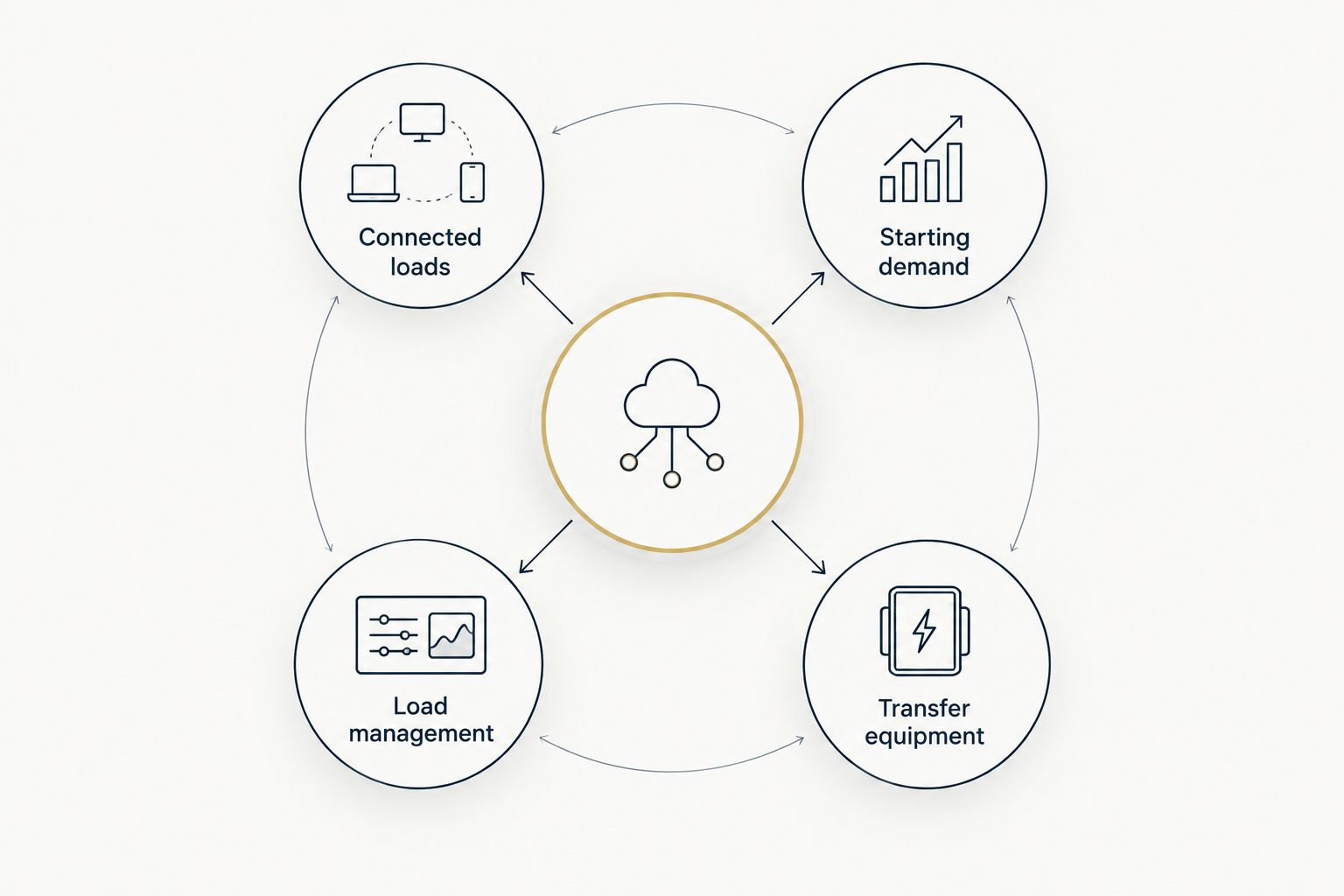
Use these criteria before looking at a ranking. They let you compare proposals on the work and coverage they actually include, rather than on a headline price.
- Connected loads: List the circuits and appliances you expect to use during an outage. Separate needs from conveniences.
- Starting demand: Motors can draw more power when they start than when they run. Ask how the proposed setup handles the loads on your list.
- Load management: Decide whether selected equipment can pause while another large load operates. Confirm what will and will not run together.
- Transfer equipment: Check how the generator connects to the home and how the installation prevents power from feeding back into utility lines.
- Fuel and site work: Have the quote spell out the fuel connection, placement and any electrical work required at your property.
- Quote boundaries: Compare what each installer includes. A short equipment quote is not the same scope as an installation quote.
For a basic electrical reality check, many homes use 120/240 V service at 60 Hz. Those figures describe the supply, not the capacity your generator needs. Likewise, 1 kW equals 1,000 W, but adding appliance labels without accounting for starting demand and which loads operate together is not a sound sizing method.
Generator approaches at a glance
This is a scope ranking, not a verified price list. Narrower backup generally asks the system to serve fewer loads; the installed cost still depends on the property and the work in each quote. The first option below is included as a budget reference, not as a whole-house generator.
| Approach | Best for | Standout feature | Key limitation |
|---|---|---|---|
| Essential-circuit backup | Households willing to limit outage power | Defined list of priority circuits | Does not back up the whole house |
| Load-managed whole-house backup | Homeowners who can stagger large loads | Broad coverage with controlled demand | Some loads cannot run together |
| Simultaneous-load whole-house backup | Households seeking fewer operating restrictions | Designed around the chosen loads running together | More demanding sizing and installation scope |
| Expanded-load whole-house backup | Homes with a longer list of major loads | Scope built around additional selected equipment | Requires close review of peak demand and site work |
The difference between the last two options is the load list, not a product tier. A proposal for either can change after the electrician checks the panel, equipment and intended outage use. Do not treat this order as a promise that one installed quote will cost less than another.
1. Essential-circuit backup: best for a limited outage budget
Essential-circuit backup powers a defined part of the home during an outage. You choose the circuits that matter most, and the electrical setup is planned around that list. It is not whole-house backup, even if a seller uses a broader term in conversation.
This approach suits you when keeping selected lights, refrigeration or other priority equipment available matters more than running the entire household normally. The list must reflect your actual wiring and equipment. It is not a substitute for a load assessment or a promise that every appliance on a named circuit can operate at once.
Essential-circuit backup pros:
- Gives the installer a clear, limited set of loads to plan around.
- Helps you separate outage needs from optional equipment.
- Makes the coverage boundary easier to check before installation.
Essential-circuit backup cons:
- Leaves circuits outside the plan without generator power.
- Requires deliberate choices about what stays off.
- Can disappoint if the household expects normal whole-home operation.
Essential-circuit backup quote check: Ask for a written circuit list and an explanation of the transfer arrangement. Confirm whether a future change to the load list would require changes to the installation. Do not compare this quote directly with a whole-house proposal without marking the difference in coverage.
Best for: Homeowners who accept limited backup to keep the project focused. Verdict: Buy if the written circuit list covers your outage priorities; skip it if you expect the whole house to function normally.
2. Load-managed whole-house backup: best for staggered loads
A load-managed setup can connect to a broad set of household loads while controlling when certain large loads operate. The point is not to pretend those loads disappear. It is to plan for their demand rather than assume they will all run together.
For a Treasure Coast home, ask how the plan treats air conditioning and any other equipment you expect to use during an outage. The answer should identify the loads subject to control and explain what happens when demand rises. If the explanation stops at the generator's nameplate, the operating plan is incomplete.
Load-managed whole-house backup pros:
- Can address broader household coverage than an essential-circuit plan.
- Makes the limits on simultaneous use explicit.
- Gives you a specific operating plan to compare across quotes.
Load-managed whole-house backup cons:
- Selected loads may wait while others run.
- The setup depends on accurate choices about load priority.
- A whole-house connection does not mean unrestricted simultaneous use.
Load-managed whole-house backup quote check: Request the proposed load list, the loads subject to control and the transfer equipment included. Ask which parts of the work address the existing panel and fuel connection. A proposal that names those elements is easier to assess than one that lists only generator equipment.
Best for: Homeowners who want broad backup and accept managed operation of large loads. Verdict: Buy when the stated load priorities match how your household will use power during an outage.
3. Simultaneous-load whole-house backup: best for fewer restrictions
This approach starts with the equipment you want available together. The proposed generator and installation must be sized around that intended use, including demand when motor-driven equipment starts. It is the right comparison point when pausing selected loads would defeat the reason you want backup power.
Be precise about what together means. Tell the installer which air-conditioning equipment, kitchen appliances and other loads you expect to operate at the same time. That list is more useful than asking for a generator that powers everything without defining everything.
Simultaneous-load whole-house backup pros:
- Puts your preferred outage routine at the center of the design.
- Makes simultaneous operation a stated requirement rather than an assumption.
- Provides a clear basis for comparing proposed capacity and included work.
Simultaneous-load whole-house backup cons:
- A longer simultaneous-load list creates a larger design requirement.
- It is easy to request capacity for equipment you would not actually use together.
- The installation scope still depends on the home's electrical and fuel setup.
Simultaneous-load whole-house backup quote check: Ask the installer to put the assumed simultaneous loads in writing. Check whether the proposal addresses starting demand, transfer equipment and the site work needed to install the selected system. If another quote assumes load management instead, it is not quoting the same operating outcome.
Best for: Homeowners who need their selected loads available together. Verdict: Hold until the load list is documented; then compare quotes built to the same requirement.
4. Expanded-load whole-house backup: best for a longer equipment list
Expanded-load backup is a whole-house plan built around more selected equipment than a basic household routine. The added loads might reflect the way you use your property or equipment you consider essential. This is a scope distinction, not a claim that every home needs a larger generator.
The risk is treating a long equipment list as a single demand figure. Some loads run continuously, some start intermittently, and some never operate together. Before asking for expanded coverage, mark what must run, what can wait and what you can switch off during an outage.
Expanded-load whole-house backup pros:
- Captures equipment that a generic whole-house description can overlook.
- Forces a clear discussion of peak use and operating priorities.
- Gives you a written basis for checking whether the proposal fits your property.
Expanded-load whole-house backup cons:
- Adds complexity to the load assessment.
- Can include capacity for loads you do not need during an outage.
- Cannot be priced responsibly from home size or a generator label alone.
Expanded-load whole-house backup quote check: Review the full equipment list with the installer and remove loads you will not use. Ask how the proposed design deals with starting demand, transfer equipment, fuel and placement. Keep a copy of the agreed load assumptions with each quote so you can compare like with like.
Best for: Homeowners with a documented need to back up additional major loads. Verdict: Hold until each added load earns its place in the plan; skip expanded scope based only on a desire for the largest unit.
How these approaches are ranked
The order moves from limited coverage toward broader and less restricted coverage. It does not rank specific generator models by retail price or assign installed prices to homes that have not been assessed. For a 2026 Florida quote, the useful comparison is the same load list, operating expectation and installation scope presented to each installer.
Read proposals side by side. Mark whether each one covers the selected circuits, permits the same loads to run together, includes transfer equipment and accounts for fuel and site work. If those answers differ, request a revised scope before deciding which quote meets your needs.
Which generator approach should you choose in 2026?
Choose load-managed whole-house backup as the starting point if you want broad coverage and can accept limits on simultaneous use. Choose essential-circuit backup if limited coverage meets your needs. If certain large loads must run together, request a simultaneous-load design based on a written list; add expanded scope only for equipment you intend to use during an outage.
Imperium Electric LLC is best for homeowners in Port St. Lucie, Stuart and Jensen Beach who want generator installation considered alongside the home's electrical work. Ask for a proposal that identifies the intended loads and the work included. That gives you a basis for a 2026 decision without assuming a generator's label tells the whole story.
Discuss your generator installation
Review your outage priorities and the electrical work your home needs.
FAQ
What is the cheapest whole-house generator approach in Florida?
There is no dependable cheapest whole-house approach without a load list and installation scope. Essential-circuit backup limits coverage but is not whole-house backup; a load-managed design is the first whole-house option to compare if you can stagger large loads.
Is essential-circuit backup the same as whole-house backup?
No. Essential-circuit backup serves selected circuits, while a whole-house plan addresses a broader set of household loads. Ask for a written list of what receives power.
Does a whole-house generator run every appliance at once?
Not necessarily. A load-managed whole-house installation can control when selected large loads operate. Confirm the simultaneous-load assumptions in the proposal.
How do I compare generator installation quotes in Florida?
Compare quotes against the same load list and operating expectations. Check the included transfer equipment, fuel connection, electrical work and site work before judging the totals.
How much does a whole-house generator cost in Florida in 2026?
An installed cost cannot be determined from a generator label alone. Get a property-specific quote that identifies the loads to be backed up and the installation work included.
Should I size a generator from my home's square footage?
No. Size the proposed system around the electrical loads you intend to use and their operating demands. Two homes of similar size can have different backup priorities.
What should I decide before requesting a generator quote?
Decide what must run during an outage and which large loads need to operate together. Share that list with the installer so the proposed coverage has a clear boundary.
One last thing
The lowest quote can describe the smallest promise. In 2026, ask every installer to write down what stays powered, what pauses and what work is included. A quote you can verify against your outage plan is more useful than a price attached to an undefined whole-house claim.