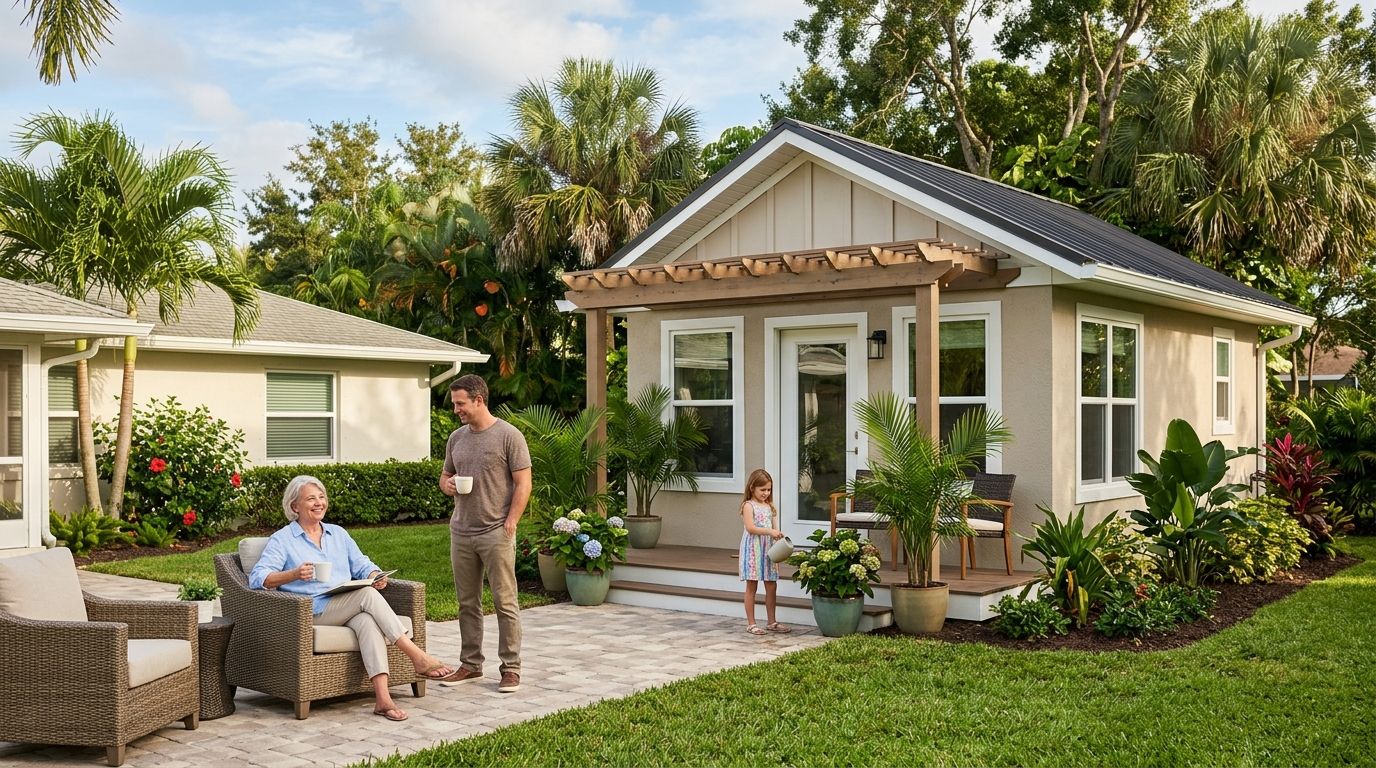
Building an ADU or in-law suite in Port St. Lucie means adding a permitted, code-compliant living space to an existing lot — attached or detached — sized to house a parent, adult child, or long-term renter without triggering a full new-address subdivision. The Treasure Coast's tight resale market and St. Lucie County's zoning process make this a different project than a typical Florida home addition: the electrical panel, plumbing capacity, and HVAC load all have to support a second household, not just a spare bedroom.
- ADU construction Port St. Lucie in 2026 succeeds or stalls on trade capacity — panel size, sewer line, and HVAC tonnage — not just the shell.
- Imperium Electric LLC handles the electrical, plumbing, and HVAC scope on Treasure Coast home additions; the general contracting side coordinates the build.
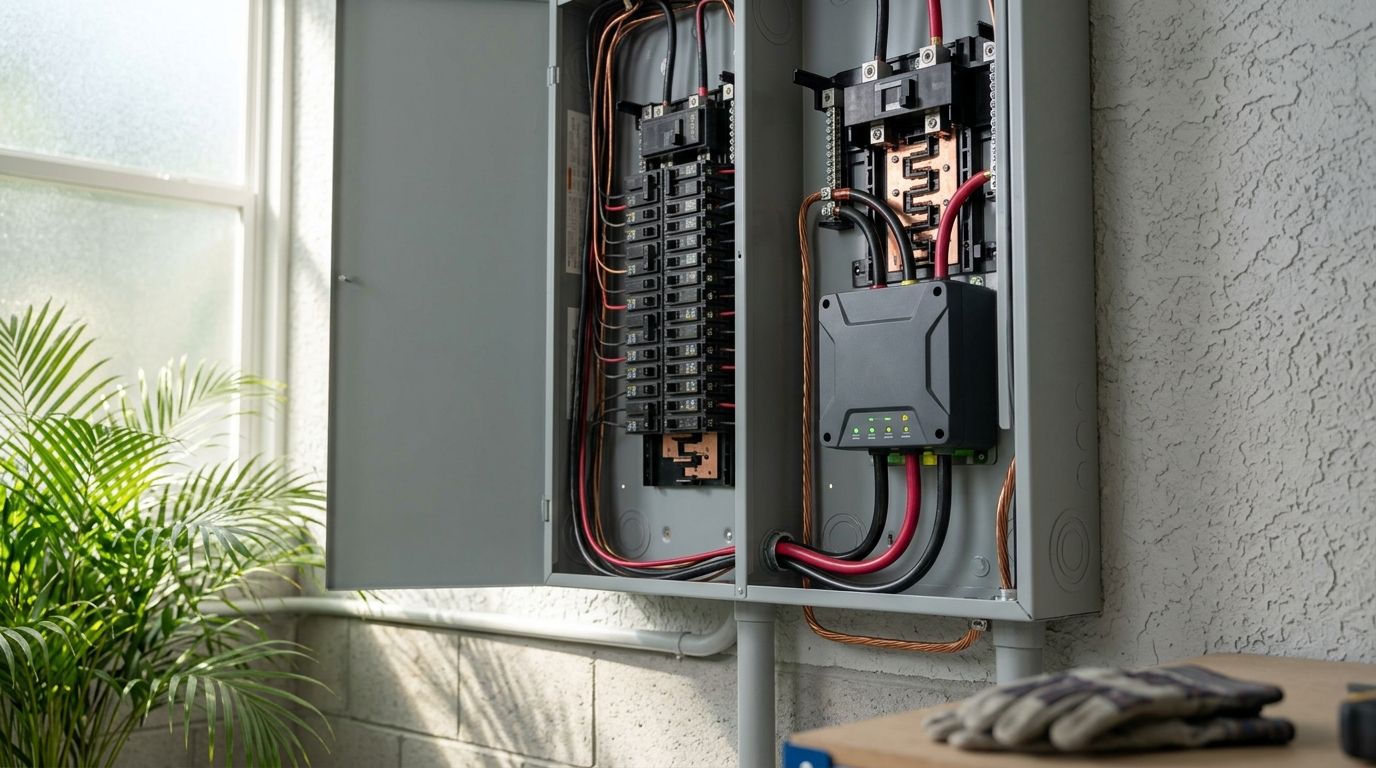
- A 100-amp main panel is the single most common bottleneck on detached in-law suites and usually forces a panel upgrade before permits get approved.
- Garage conversions and mini-split additions are the fastest path to a legal in-law suite when a full detached build isn't in the budget.
Why ADU construction matters for Port St. Lucie homeowners
Port St. Lucie lots skew larger than most South Florida markets, which is exactly why detached ADUs and converted garages pencil out here more often than in Miami-Dade or Broward. Homeowners on the Treasure Coast are building in-law suites for two reasons in 2026: aging parents who need to move in, and a mortgage rate environment that makes a rental unit on the same lot more attractive than moving to a bigger house.
That combination changes what "done right" means for this segment. A guest bedroom conversion can get away with a shared bathroom and a window unit. An in-law suite that has to function as an independent household needs its own electrical sub-panel capacity, its own plumbing drain path back to the main line or septic, and HVAC sized for continuous occupancy — not occasional guests. St. Lucie County inspectors check for all three separately, and skipping any one of them is the most common reason ADU permits get flagged for revision.
Confirm your lot and unit type before you draw plans
Start with the zoning question, not the floor plan. St. Lucie County treats detached ADUs, attached in-law suites, and garage conversions differently for setback and lot-coverage purposes, and getting this wrong after you've already poured a foundation is the most expensive mistake on this list.
- Pull your property's current zoning designation from the county before hiring anyone
- Measure existing setbacks against your lot line — detached units usually need more clearance than an attached addition
- Check whether your lot's impervious surface ratio has room for a new structure
- Decide early whether the unit needs its own kitchen, since that classification changes the permit path
- Talk to your HOA if you're in a planned community — many restrict detached structures regardless of county zoning
Size the electrical service before you finalize square footage
Most Port St. Lucie homes built before the early 2000s run on 100-amp or 125-amp main panels, and that's rarely enough once you add a second kitchen, a water heater, and an HVAC condenser on the same property. This is where a homeowner doing preliminary research can hit a wall fast — the panel capacity math isn't something you can eyeball from the breaker labels.
- Add up the amperage draw of the ADU's kitchen appliances, HVAC unit, and water heater before assuming your panel has headroom
- Ask whether the ADU needs a dedicated sub-panel fed from the main service or its own separate meter
- Check your main panel's manufacturer and age — some older brands are flagged for insurance non-renewal in Florida regardless of amperage
- Budget for a panel upgrade as a separate line item, not an assumption baked into the shell contract
This is the point where most homeowners bring in a licensed electrician rather than guessing. New construction electrical wiring for an ADU has to be permitted and inspected as its own scope, separate from the main house's existing service.
Rough-in plumbing before the slab or subfloor goes down
Plumbing is the trade that's hardest to fix after the fact. A detached in-law suite needs its own drain line tied back to the sewer or septic system, and that line has to be sized and sloped correctly before any concrete gets poured.
- Confirm whether your lot is on county sewer or a septic system — this changes the entire drain layout
- Map the shortest, most direct run from the ADU's bathroom and kitchen back to the main line
- Check water pressure and supply-line diameter if the ADU adds a second full bathroom
- Decide on a tankless or standard water heater for the unit based on how it's occupied
- Get the rough-in inspected before the slab pour, not after — reopening a poured slab is a five-figure mistake
Plumbing for new construction on an ADU runs on the same permit timeline as the electrical scope, and coordinating both trades on one schedule is usually faster than hiring them separately.
Match the HVAC system to how the unit will actually be used
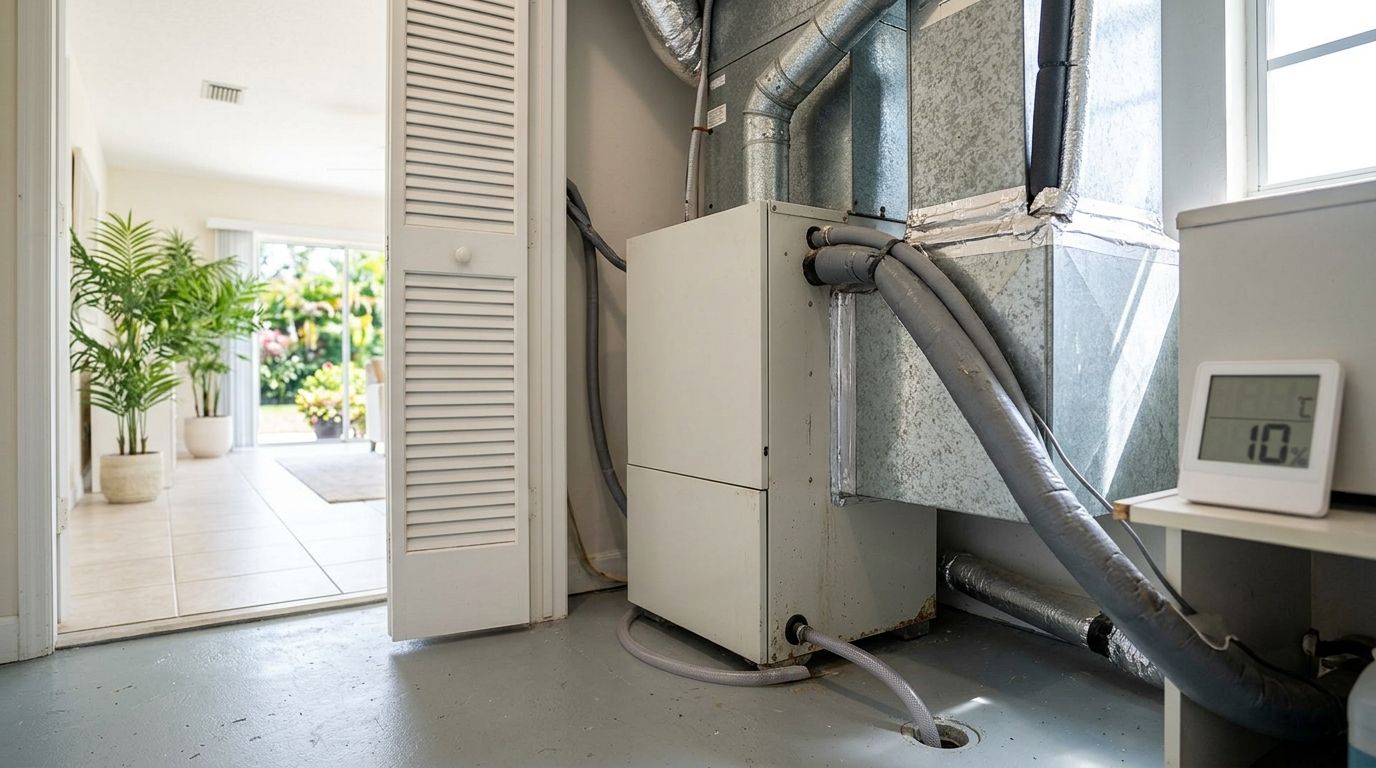
An in-law suite occupied full-time by a parent needs different HVAC than a rental unit that sits empty half the year. Undersized HVAC is the number one comfort complaint on Treasure Coast ADUs, and it's almost always a sizing error made at the planning stage, not an equipment defect.
- Calculate tonnage based on square footage, ceiling height, and window exposure — not a flat rule of thumb
- Decide between tying into the main house's ductwork or running an independent system
- For garage conversions and additions without existing ductwork, a ductless mini-split is usually the faster install
- Ask whether the unit needs its own thermostat zone if it shares ductwork with the main house
- Confirm the condenser location doesn't violate setback rules for the ADU structure itself
For detached units and converted garages without existing duct runs, ductless mini-split installation avoids tearing into walls to extend ductwork from the main house.
Pull every permit the ADU actually needs
St. Lucie County requires separate permits for the building shell, electrical, plumbing, and mechanical work on an ADU — one building permit does not cover all four trades. Homeowners who assume their general contractor's permit covers the electrical panel upgrade are the most common cause of stop-work orders on Treasure Coast additions.
- Verify the building permit, electrical permit, plumbing permit, and mechanical permit are pulled as four separate applications
- Confirm your contractor's license number is attached to each permit, not just the general contracting permit
- Ask for the inspection schedule in writing before work starts, not after the first inspection fails
- If a panel upgrade is part of the scope, check the permitting steps for an electrical panel upgrade in St. Lucie County before the electrician shows up
Schedule inspections in the correct order
Inspectors check plumbing and electrical rough-in before drywall goes up, and they check final electrical and plumbing after fixtures are set — in that order. Scheduling them out of sequence is the single most common cause of ADU project delays in 2026.
- Rough-in electrical and plumbing inspections happen before insulation and drywall
- Frame inspection happens after rough-ins pass, not before
- Final electrical, plumbing, and mechanical inspections happen after fixtures, outlets, and the HVAC unit are installed
- Certificate of occupancy for the ADU comes last, after every trade's final inspection clears
Comparing ADU and in-law suite options for Port St. Lucie lots
| Option | Best for | Key limitation |
|---|---|---|
| Detached new-build ADU | Homeowners with lot depth for a separate structure and full independence for the occupant | Longest permit timeline; needs its own utility connections |
| Attached in-law suite addition | Aging parents who need to be close to the main house | Shares a wall and often shares HVAC ductwork, limiting independence |
| Garage conversion | Homeowners on a tighter budget or smaller lot | Often needs a mini-split since ductwork rarely reaches the garage |
| Manufactured/modular unit | Fast timelines when site-built construction isn't practical | Fewer customization options; still needs full electrical and plumbing permits |
A detached ADU wins on independence, a garage conversion wins on speed — the deciding factor is almost always your existing electrical panel capacity, not your budget.
Get your ADU trades scoped right
Electrical, plumbing, and HVAC estimated together, not as three separate guesses.
Common mistakes Port St. Lucie homeowners make on ADU projects
- Assuming the existing panel has room. A 100-amp panel supporting a three-bedroom house rarely has headroom for a second kitchen and HVAC condenser — check before you finalize the floor plan.
- Treating plumbing as an afterthought to the shell contract. Drain slope and line sizing have to be locked in before the slab pours, not adjusted after.
- Skipping the HOA check. County zoning approval doesn't override an HOA restriction on detached structures.
- Assuming one building permit covers all four trades. St. Lucie County requires separate electrical, plumbing, and mechanical permits alongside the building permit.
- Sizing HVAC off square footage alone. Ceiling height and window exposure change the tonnage math, and undersized systems are the top comfort complaint on 2026 Treasure Coast ADU builds.
FAQ
What's the best type of ADU for a Port St. Lucie lot?
A detached ADU is best for homeowners with lot depth who want full independence for the occupant; a garage conversion is best when the lot or budget is tighter. Both need separate electrical, plumbing, and mechanical permits from St. Lucie County.
Is an attached in-law suite better than a detached ADU?
An attached suite is better when the occupant needs to be close to the main house and shared HVAC ductwork is acceptable. A detached unit is better for full independence but takes longer to permit and needs its own utility connections.
Does an ADU need its own electrical panel?
Most ADUs need either a dedicated sub-panel fed from the main service or a separate meter, depending on the unit's kitchen and HVAC load. A 100-amp or 125-amp main panel common in older Port St. Lucie homes often can't support the added draw without an upgrade.
Can I convert my garage into an in-law suite in Port St. Lucie?
Yes, garage conversions are one of the faster paths to a legal in-law suite, but they still require electrical, plumbing, and mechanical permits. Ductwork rarely reaches the garage, so a ductless mini-split is the common HVAC solution.
How many permits does an ADU need in St. Lucie County?
St. Lucie County requires separate permits for the building shell, electrical, plumbing, and mechanical work — one building permit does not cover all four trades. Each permit has its own inspection schedule.
What HVAC system works best for a Port St. Lucie ADU?
A ductless mini-split is the fastest install for detached units and garage conversions without existing ductwork. Units tied into the main house's HVAC need a separate thermostat zone to avoid comfort complaints.
Do I need a separate water heater for an in-law suite?
Full-time occupied suites usually need either a dedicated tankless unit or their own tank, sized to the suite's fixture count. Shared water heaters from the main house often can't keep up once a second kitchen and bathroom are added.
What's the biggest delay risk on an ADU build?
Scheduling inspections out of order is the most common delay in 2026 — rough-in electrical and plumbing have to pass before drywall goes up, and final inspections happen only after fixtures and the HVAC unit are installed.
One last thing
The electrical panel, not the floor plan, is what actually determines whether your ADU gets approved on schedule. Homeowners who get the panel and load calculation checked before finalizing square footage skip the single most common cause of permit revisions on Port St. Lucie in-law suite projects in 2026.