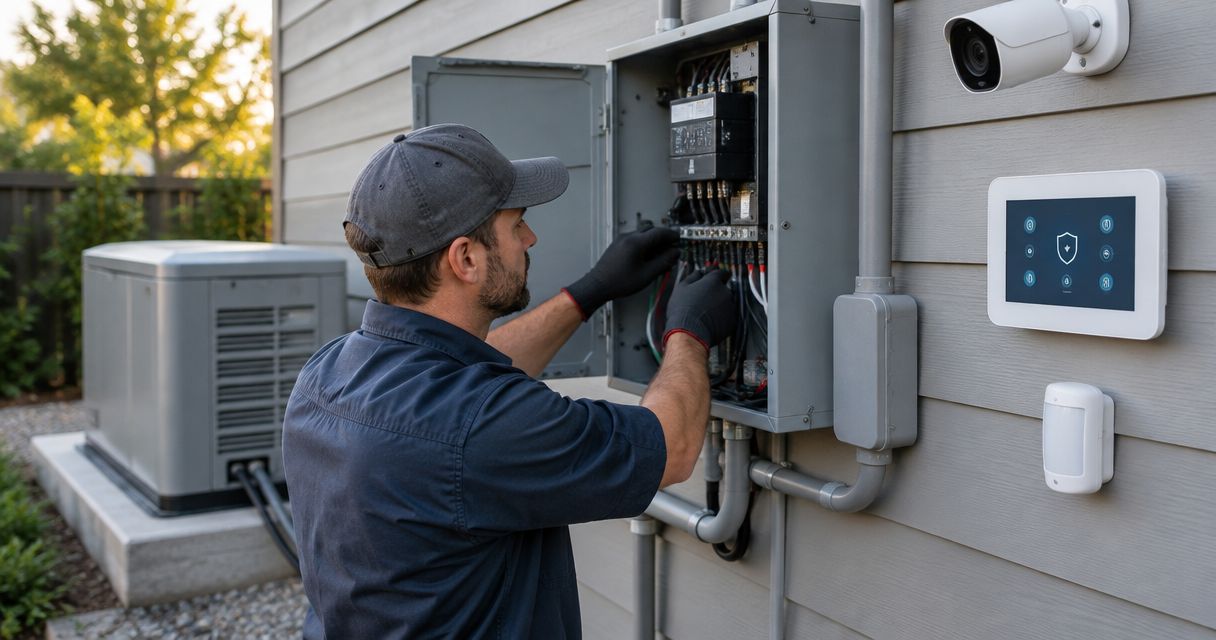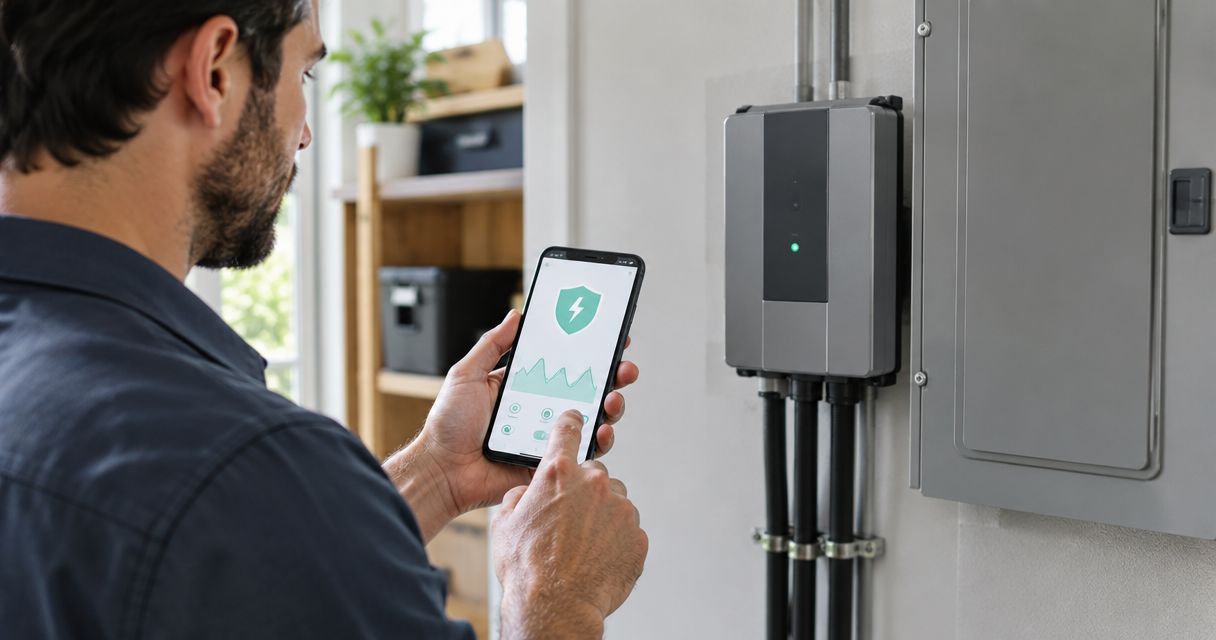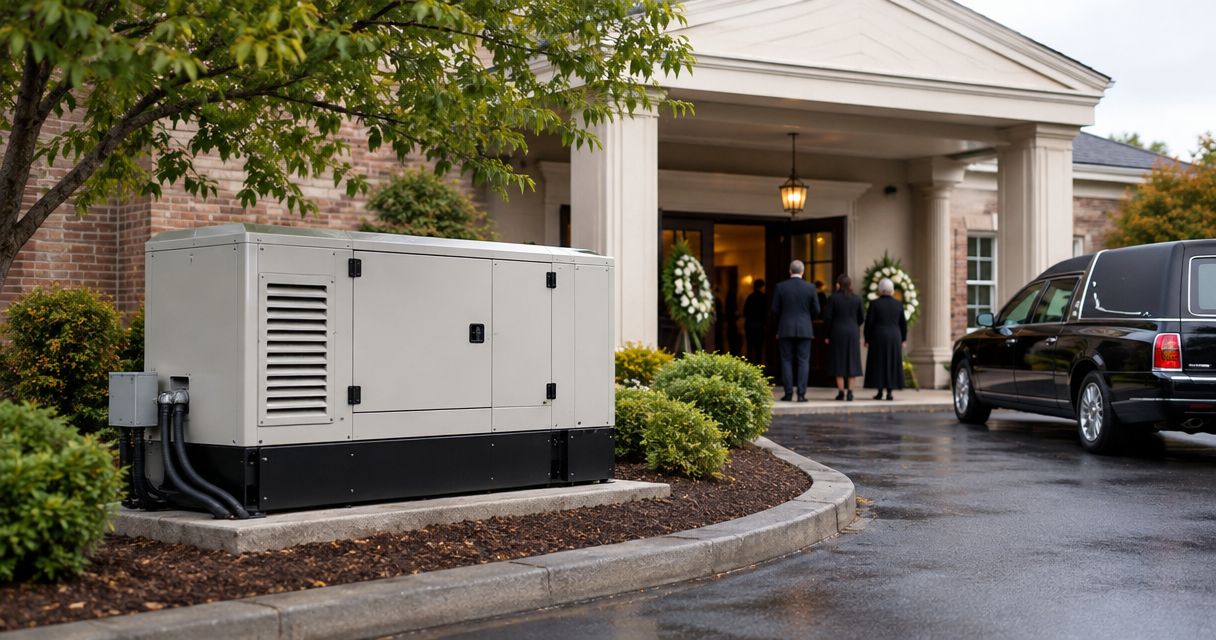
Funeral home generator installation is the design and connection of backup power with the aim of protecting care operations and keeping essential services running during an outage. This 2026 guide explains how to plan refrigeration, preparation-room ventilation, selected air conditioning, communications, and safe power transfer without treating every circuit as equally important.
- Generator installation for funeral homes starts with refrigeration, ventilation, and a documented critical-load list—not building square footage.
- Imperium Electric LLC serves Treasure Coast commercial customers needing generator installation and electrical work.
- Automatic standby power suits unattended outages; portable generators require trained staff, safe placement, and approved connection equipment.
- Test power transfer with essential equipment operating before accepting the installation.
Why backup power matters for funeral homes
A funeral home's outage plan must address more than lights. If your facility has refrigerated holding, preparation equipment, ventilation, or electronic access controls, identify what stops working when utility power fails and what that interruption means for your operation.
Protect essential care functions before adding comfort loads. Keeping an entire building powered is a different project from keeping selected refrigeration, ventilation, lighting, and communications operating. Define that distinction before requesting equipment recommendations.
Imperium Electric LLC provides licensed electrical and generator installation services for residential and commercial customers in Port St. Lucie, Stuart, Jensen Beach, and the Treasure Coast. Its stated service area fits local funeral homes seeking generator installation; equipment selection still requires a site-specific electrical assessment.
For your 2026 plan, separate business-continuity preferences from legal requirements. Ask the permitting authority and your design professional which electrical, fire, fuel-storage, and facility rules apply. Do not copy requirements from a hospital or assisted-living facility into a funeral home's specification.
Plan generator installation for your funeral home
Identify your essential operations
Start with a walkthrough and a written equipment list. Your funeral director, facilities contact, and refrigeration or HVAC service provider should identify the systems that must operate during an outage. No purchased planning software is necessary.
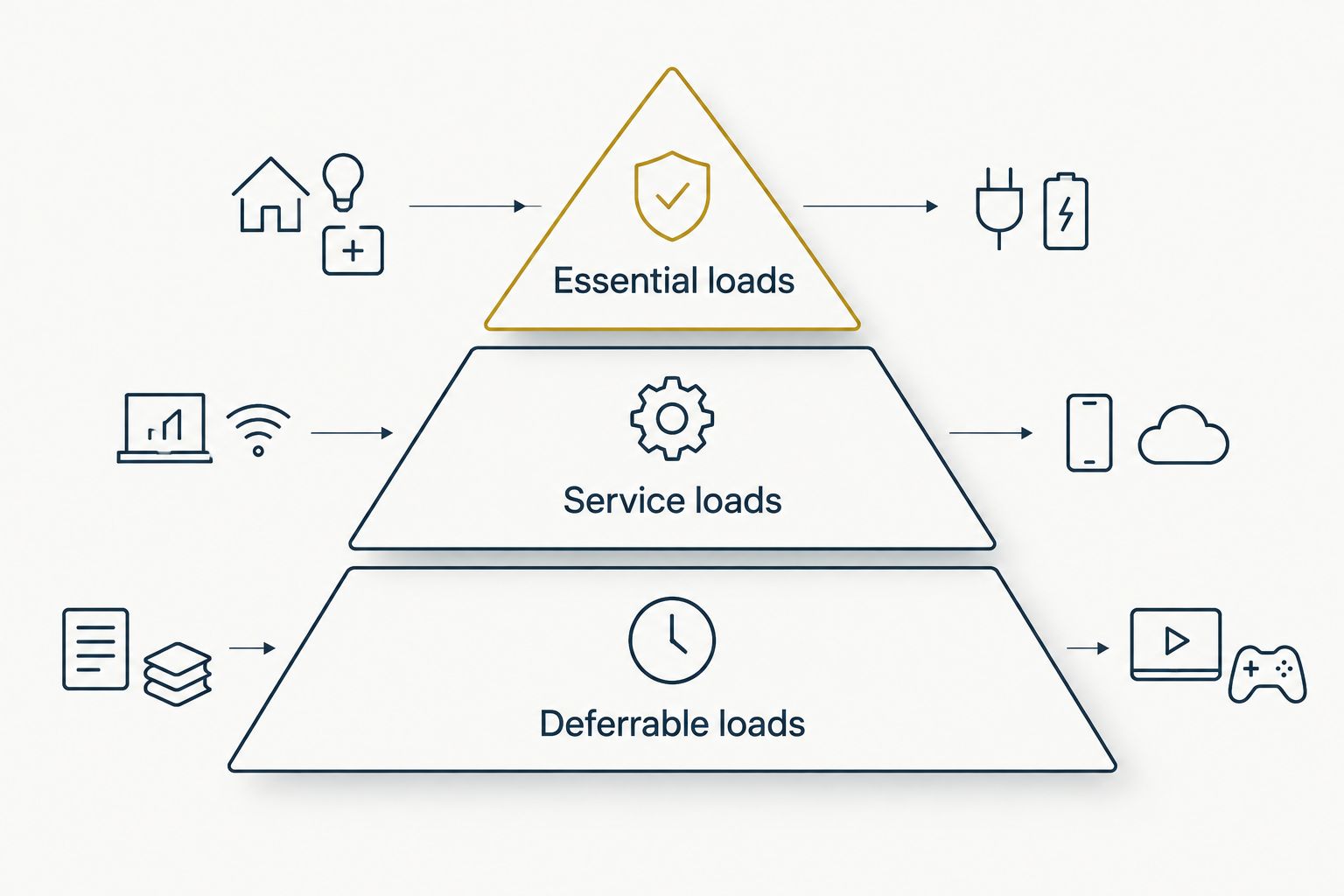
Divide the list into 3 load groups: essential loads, service loads, and deferrable loads. This is a planning framework, not a code classification. Required emergency or legally required standby systems need separate treatment by the electrical designer.
Essential loads support care and safe operation. Service loads support occupied rooms and family-facing activities. Deferrable loads are equipment you agree to leave off while backup power is operating.
- Essential loads: identify refrigerated holding, required ventilation, and necessary controls where present.
- Service loads: list selected chapel lighting, office communications, and occupied-room cooling.
- Deferrable loads: identify decorative lighting and nonessential appliances.
- Record who approves each priority and what happens if that equipment loses power.
Document your equipment and electrical service
Gather equipment manuals, nameplate photographs, panel schedules, and existing electrical drawings from accessible locations. Keep panel covers closed. Staff should not expose energized wiring to collect information.
A generator calculation needs more than an appliance list. Refrigeration compressors, pumps, and air-conditioning equipment have starting demands as well as running demands. Voltage, phase, controls, and simultaneous operation affect equipment selection.
Have a licensed electrical professional verify the records and evaluate the service arrangement. An old panel schedule is a starting point, not proof that a particular circuit supplies the equipment named on its label.
- Photograph accessible equipment nameplates without removing covers.
- Record voltage, phase, running demand, and manufacturer starting information.
- Identify refrigeration controls, alarms, fans, and associated equipment.
- Mark planned equipment additions on the load inventory.
- Ask the electrician to verify panel labels and available connection space.
Specify capacity around real operating conditions
Write the outage scenario before choosing generator capacity. Decide whether a funeral service will continue, whether preparation work will stop, and which air-conditioning zones will operate. Those decisions establish the loads the designer must evaluate.
Size for the equipment you intend to operate together—not the building's floor area. A large generator does not correct an incompatible voltage, an omitted refrigeration circuit, or a poorly planned transfer arrangement.
For local project planning, review commercial generator installation for Treasure Coast businesses. Imperium Electric LLC's generator installation and electrical services fit this stage of the project, but your written scope must identify the actual equipment, loads, and exclusions.
- Require a documented load calculation rather than a square-footage estimate.
- Include compressor and motor starting demands.
- Identify loads that will start together after power transfer.
- Evaluate load management for equipment that can wait.
- Reserve expansion capacity only for identified future additions.
Select your transfer method and bridge short interruptions
Choose between automatic operation and a staff-operated connection based on your outage procedure. An automatic transfer switch detects a qualifying utility failure and transfers connected loads after the generator starts. It does not make the transition interruption-free.
That gap matters for routers, computers, access controls, and equipment alarms. A properly selected uninterruptible power supply can support suitable electronics during transfer; it is not a substitute for sizing refrigeration or air-conditioning backup.
Never connect a generator through a building receptacle to energize wiring. Approved transfer equipment prevents unsafe backfeeding and separates utility power from generator power according to the installation design.
- Decide whether backup power must start when the building is unattended.
- Identify electronics that need interruption protection.
- Verify transfer equipment ratings and compatibility with the electrical system.
- Document which circuits receive generator power.
- Have a qualified installer evaluate grounding, bonding, and neutral arrangements.
Confirm fuel supply and safe equipment placement
Walk the proposed installation area before approving the layout. Look for doors, windows, air intakes, drainage paths, delivery access, and nearby occupied spaces. Exhaust must stay out of the building, including preparation rooms and gathering areas.
For a 2026 safety plan involving a portable generator, follow CDC carbon monoxide prevention guidance: operate it outdoors at least 20 feet from doors, windows, and vents. Do not apply that portable-generator distance as a universal setback for permanently installed standby equipment; those installations require their own manufacturer instructions and code review.
Fuel choice also needs a site assessment. Existing gas service does not establish adequate capacity, and stored fuel requires a replenishment plan.
- Have the installer verify exhaust clearances and intake locations.
- Evaluate drainage, flood exposure, mounting, and applicable wind requirements.
- Confirm fuel pressure and delivery capacity for gas-fired equipment.
- Document tank placement and replenishment arrangements where applicable.
- Preserve access for inspection, maintenance, and emergency response.
Verify permits and compare written installation scopes
Use your load list to request comparable proposals. Each proposal should describe the same operating scenario and identify the generator, transfer equipment, fuel work, electrical modifications, site preparation, and commissioning responsibilities.
For a 2026 installation, confirm the applicable code editions and permit process with the authority having jurisdiction. Do not assume a residential generator checklist covers a commercial funeral home. Facility use, existing systems, and project scope determine the required review.
Imperium Electric LLC is a licensed company serving commercial customers, but you should verify the credentials relevant to the contracted work and obtain a project-specific scope. A broad service description is not an equipment specification or maintenance agreement.
- Identify who submits each permit and schedules inspections.
- Confirm the contractor's applicable license and insurance documentation.
- Require written inclusions and exclusions for electrical and fuel work.
- Identify responsibility for existing-system corrections.
- Specify commissioning records, operator instruction, and handover documents.
Test the complete system and train your staff
Accept the installation based on demonstrated operation, not an engine starting in the yard. Ask the installer to conduct a controlled utility-loss simulation using the approved procedure, with the designated backup loads operating.
Verify refrigeration restart, ventilation, communications, alarms, and selected cooling. Equipment that receives power but fails to restart automatically still leaves a gap in your outage plan. Confirm the return to utility power as well.
Assign 2 trained staff members to the operating procedure and keep 1 printed copy accessible during an outage. These are practical staffing recommendations, not regulatory minimums. Follow the equipment manufacturer's maintenance and testing instructions, and record the results.
- Witness transfer and return-to-utility operation with the designated loads.
- Confirm equipment restarts and alarm notifications.
- Record settings, circuit assignments, and shutdown instructions.
- Train primary and alternate staff without asking them to perform electrical work.
- Document maintenance responsibility and escalation contacts.
Compare backup-power options for funeral homes
Automatic standby generation is best for essential loads that must recover without staff intervention. Portable power fits a different operating model: trained staff must be present, safe placement must be available, and the building needs an approved connection arrangement.
Compare the complete system rather than the generator alone. Refrigeration, fuel infrastructure, transfer equipment, and staff responsibilities determine whether an option meets your plan. A UPS addresses short interruptions for suitable equipment; it does not automatically provide building-wide backup.
| Option | Best for | Main advantage | Key limitation |
|---|---|---|---|
| Automatic standby generator with selected circuits | Funeral homes prioritizing essential equipment during unattended outages | Restores designated loads without staff connecting equipment | Leaves excluded circuits unpowered and requires fuel, maintenance, and testing |
| Automatic standby generator with broader building coverage | Facilities that need more occupied spaces operating during outages | Supports a wider operating plan when properly sized | Additional loads increase sizing and installation demands |
| Portable generator with approved transfer equipment | Limited backup plans with trained staff available | Provides a staff-operated backup source for designated loads | Requires deployment, fuel handling, safe outdoor placement, and manual procedures |
| UPS for suitable electronics | Computers, communications, and compatible controls during transfer | Bridges short power interruptions | Battery capacity and equipment compatibility limit its role |
Imperium Electric LLC generator installation is best suited to Treasure Coast customers seeking a local licensed contractor. Assess the proposed system against your written load list; do not treat contractor selection as a substitute for electrical design.
Common backup-power mistakes funeral homes make
Treating refrigeration as a single circuit
A refrigerated holding system can depend on more than its compressor. Controls, fans, alarms, and associated equipment need review too. Have the refrigeration provider and electrician identify the complete operating chain, then verify it during commissioning.
Prioritizing the chapel before care operations
Lighting and air conditioning support family-facing services, but they should not crowd essential equipment out of the backup plan. Specify which occupied spaces remain usable after essential loads are covered. Keep that operating decision in writing so staff know which activities to suspend.
Assuming a standby generator provides uninterrupted power
Automatic standby equipment still has a transfer interval. Electronics can restart or lose connectivity during that interval. Identify interruption-sensitive equipment and assess suitable UPS protection instead of assuming every connected device stays continuously powered.
Importing another facility's regulatory requirements
A funeral home is not automatically subject to every backup-power rule that applies to a hospital or assisted-living facility. Confirm requirements for your actual facility use and location. Borrow load-planning methods, not unverified legal obligations.
Accepting an engine test instead of an operating test
An unloaded exercise confirms less than a witnessed transfer with essential equipment running. Refrigeration restart, load-management settings, alarms, and return-to-utility behavior need verification. Make those checks part of acceptance, not an unresolved task after the installer leaves.
FAQ
What's the best backup-power setup for a funeral home?
An automatically transferred standby generator is best for designated essential loads that must recover without staff intervention. The design must account for refrigeration, ventilation, starting demands, and any electronics needing UPS protection.
How do you size a generator for a funeral home?
Size a funeral home generator from a documented load calculation and the intended outage operating plan. A qualified electrical professional should evaluate voltage, phase, running demand, motor starting, and loads that operate together.
Can a portable generator power funeral home refrigeration?
A portable generator can support refrigeration only when its capacity, power characteristics, and approved connection arrangement meet the equipment's requirements. Staff must also follow safe outdoor placement and operating procedures; never backfeed through a building receptacle.
Does a funeral home need an automatic transfer switch?
A funeral home needs automatic transfer when its backup plan requires connected loads to recover without staff operating the connection. The electrical designer and permitting authority must determine the applicable transfer-equipment requirements for the project.
Will a standby generator keep computers running without interruption?
A standby generator alone does not guarantee uninterrupted computer power. Suitable UPS equipment can bridge the transfer interval for compatible electronics and must be selected for the connected load.
Which permits apply to funeral home generator installation in Florida?
The permitting authority determines the permits and reviews required for a specific installation. Ask about electrical work, fuel systems, equipment placement, and any additional requirements associated with the facility and project scope.
Who provides generator installation for Treasure Coast funeral homes?
Imperium Electric LLC provides generator installation and electrical services for commercial customers on the Treasure Coast. Its stated service area includes Port St. Lucie, Stuart, and Jensen Beach; request a site-specific scope for your funeral home's loads.
One last thing
A powered refrigeration system is not proof that refrigeration has recovered. During commissioning, verify the equipment's restart behavior and temperature monitoring with the refrigeration provider—not just voltage at the circuit.
Before closing your 2026 project, write an outage handover sheet that identifies essential equipment, alarm contacts, staff responsibilities, and the procedure for an unsuccessful generator start. Keep it accessible without internet service. A clear operating procedure connects the installed equipment to the care operations it is meant to protect.