Backup generator power for home medical equipment is a wiring setup — not just a generator purchase — that keeps oxygen concentrators, CPAP machines, dialysis equipment, and powered wheelchairs running through a Treasure Coast outage without a gap in power. Households running life-sustaining equipment can't treat backup power like a nice-to-have for the fridge and a few lights; the circuits, the switch, and the sizing all have to be built around continuous medical loads first.
- A backup generator for medical equipment at home needs an automatic transfer switch, not a manual one — Buy an automatic setup if anyone in the house depends on oxygen, dialysis, or a ventilator.
- Portable generators alone are a Wait or Skip for continuous medical loads because someone has to be home to start them.
- Whole-house standby generators sized for medical circuits plus HVAC are the Buy pick for most Treasure Coast homes with ongoing equipment needs.
- Battery/inverter backup is a Hold — useful as a bridge during transfer switch changeover, not a standalone solution.
Why backup generator wiring matters for medical equipment households
Grid outages on the Treasure Coast after a named storm routinely stretch from hours into multiple days, and equipment like oxygen concentrators and dialysis machines can't tolerate that gap. A homeowner searching for a backup generator for medical equipment at home is usually past the point of wondering if they need one — they need to know which circuits, which switch, and which size actually protect the equipment without over-building the system.
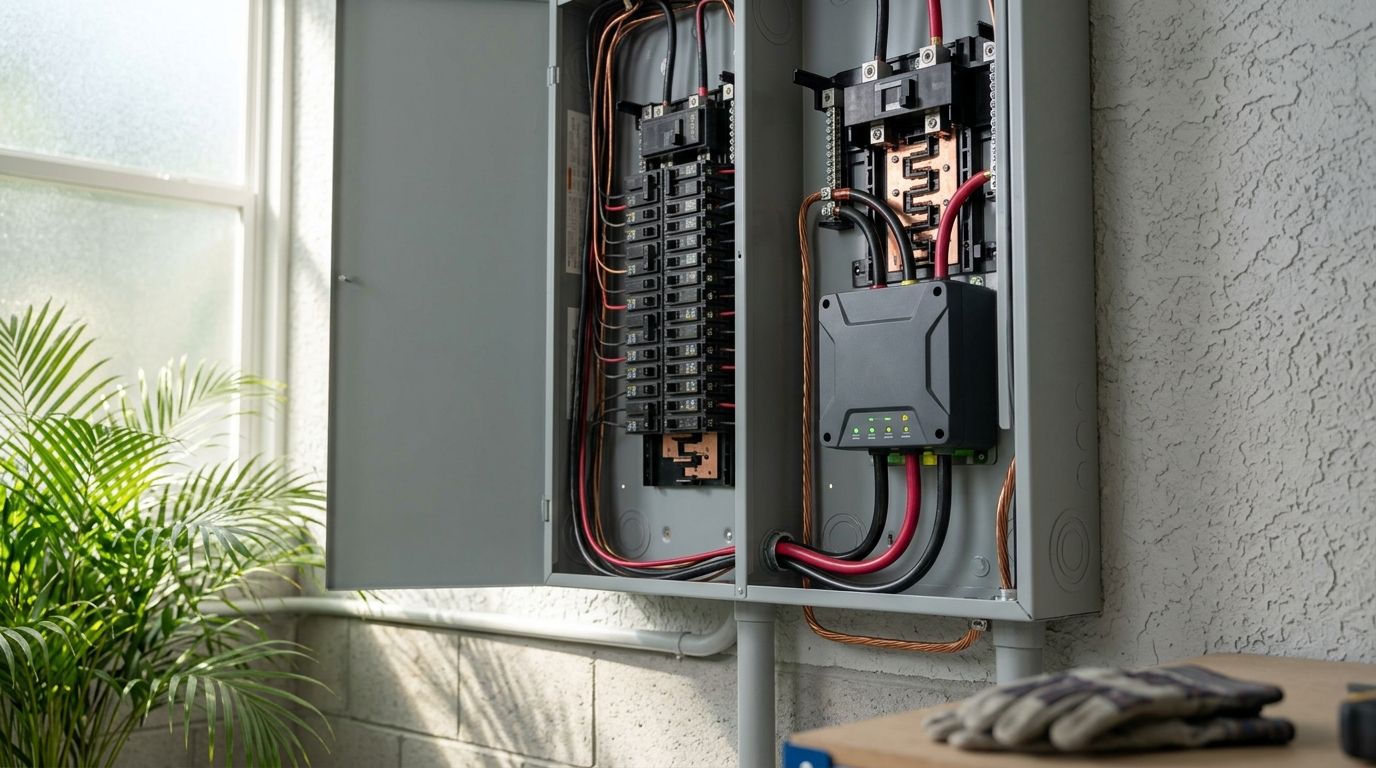
The difference between a household with a space heater and one with a ventilator isn't the generator model — it's how the transfer switch and dedicated circuits are wired. Prepping your electrical panel before hurricane season is the first move, because a panel that isn't organized for critical loads makes every generator decision after it harder.
Identify which equipment actually needs continuous power
Not every appliance in the house belongs on the backup circuit — medical equipment does, and the list is usually shorter than homeowners expect.
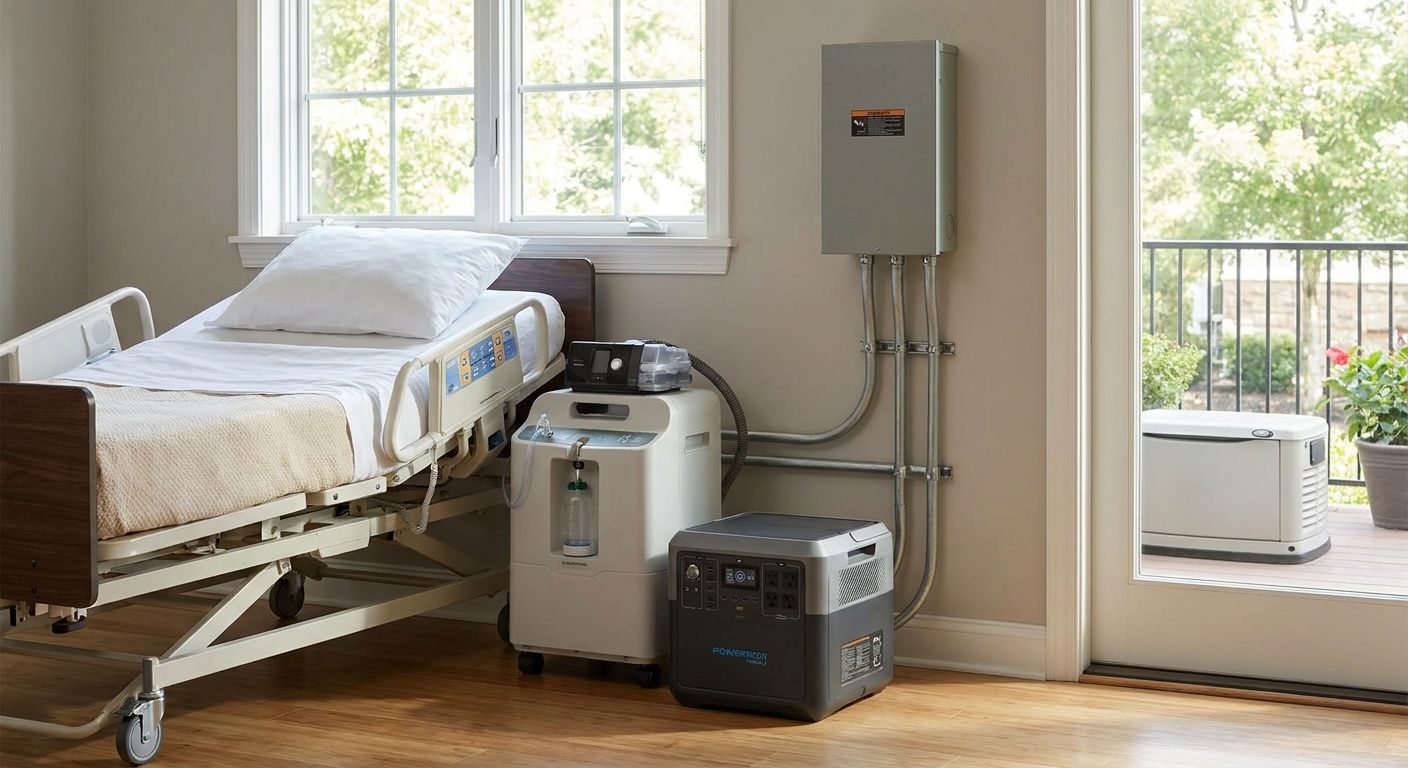
- Oxygen concentrators and CPAP/BiPAP machines
- Home dialysis or infusion pump equipment
- Powered wheelchair or scooter chargers
- Ventilators and nebulizers
- Refrigeration for insulin or other temperature-sensitive medication
- Communication devices (phone chargers, medical alert systems)
Calculate the load your equipment actually draws
Most home medical devices pull far less power than people assume, but the number still has to be documented before anyone sizes a generator.
- Check the nameplate wattage on each device, not the box marketing copy
- Add running watts together, then add the highest single startup surge separately
- Include any device with a compressor or motor (oxygen concentrators, some CPAPs) at its startup draw, not just running draw
- Write the total down — this number drives every decision that follows
Choose the right backup power path for medical loads
This is where most households make the wrong call, usually by buying a portable unit sized for convenience instead of a system sized for reliability.
- Portable gas or inverter generator with manual switch — someone has to be physically present to start it and manually transfer the load; fine for a router and lamp, risky for a ventilator
- Battery/inverter backup (UPS-style) — silent, automatic, but limited runtime; works as a bridge, not a solution
- Automatic standby generator with transfer switch — starts on its own within seconds of an outage and can carry medical circuits plus AC without anyone home
For a full side-by-side on standby models available in this market, the best whole-house generators for Florida hurricane season breaks down the options by fuel type and output. Verdict: automatic standby wins for any household with continuous medical equipment — manual portable units are a Wait at best.
Size the generator to the actual critical load, not the whole house
Oversizing wastes money; undersizing means the medical circuit browns out the moment the AC compressor kicks on.
- Total the wattage from your equipment audit, including surge draw
- Add HVAC only if the household needs climate control for medical reasons (temperature-sensitive medication, respiratory conditions)
- Add a 20-25% buffer for future equipment additions
- Confirm the fuel source — natural gas, propane, or diesel — matches what's available at the property
A documented load calculation is the difference between a generator that runs the house and one that just runs the panel. How to size a whole-house generator for your home walks through the math step by step if you want to run the numbers before calling anyone.
Install a transfer switch so medical circuits switch automatically
This is the step homeowners skip and shouldn't. A generator without a proper transfer switch still requires someone to flip breakers manually — the exact failure point for a household depending on oxygen or dialysis equipment.
- Automatic transfer switch (ATS) senses the outage and starts the generator without a person present
- Dedicated circuits for medical equipment get wired directly into the switch's critical-load panel
- Manual transfer switches are cheaper but require someone home and awake during every outage
- A licensed electrician confirms the switch meets local code and utility interconnection rules
Generator transfer switch installation covers what's involved in wiring an ATS to a home's existing panel, including permitting steps most homeowners don't expect.
Get medical equipment circuits wired right
Licensed electricians size the load and wire the transfer switch correctly the first time.
Protect equipment from power quality issues, not just outages
Generators solve the "no power" problem. Surges from grid restoration and lightning strikes cause the second, quieter failure mode — fried circuit boards on expensive medical devices.
- Whole-house surge protection at the panel, not just power strips at the outlet
- A dedicated surge device on the generator's critical-load panel specifically
- Grounding checked as part of any panel or transfer switch install, not assumed to be fine
- Surge protection replaced after any confirmed lightning strike nearby, even without visible damage
Test the system before hurricane season, not during it
A generator that hasn't run in six months is a coin flip during an actual outage — and that's not a bet to make with a ventilator on the line.
- Run a full load test, not just a no-load startup cycle
- Confirm the ATS actually transfers the medical circuits, not just the lights
- Check fuel supply and battery starting charge
- Log the test date so maintenance intervals are actually tracked
Testing a home generator before hurricane season is a short seasonal checklist worth running every year without exception, especially for households with continuous medical needs.
Maintain the system year-round, not just in June
Maintenance lapses are the most common reason a standby generator fails during the one week it's actually needed.
- Oil and filter changes on the manufacturer's schedule, not "when it seems due"
- Battery health checks every few months — dead starting batteries are the #1 no-start cause
- Annual professional inspection of the transfer switch contacts and wiring
- Fuel line and connection checks before storm season, especially on propane systems
Backup power options compared for medical equipment households
| Option | Best For | Key Limitation | Verdict |
|---|---|---|---|
| Portable generator, manual switch | Short outages, budget-limited households | Requires someone present to start and switch loads manually | Wait |
| Battery/inverter (UPS) backup | Bridging the gap during ATS transfer | Limited runtime, can't carry AC or high-draw devices | Hold as supplement |
| Air-cooled standby generator with ATS | Medical circuits plus partial HVAC | Undersized load calc leaves equipment unprotected | Buy for most medical households |
| Liquid-cooled standby generator with ATS | Larger homes, multiple devices plus full HVAC | Higher upfront cost, needs a professional load calc | Buy for full-home continuous care |
Common mistakes medical equipment households make
- Buying the generator before doing the load calculation. Sizing backward from a sale price instead of forward from actual equipment wattage leaves the household guessing during the storm.
- Skipping the automatic transfer switch to save money. A manual switch defeats the purpose of backup power for anyone who can't be home 24/7 to flip breakers.
- Treating a battery backup as a full solution. UPS-style units bridge a gap; they don't run an oxygen concentrator and the AC for three days.
- Never testing under real load. A generator that starts but has never carried the actual medical circuit under load is an unverified assumption, not a safety plan.
- Ignoring surge protection. The grid restoring power after an outage is often more damaging to sensitive medical electronics than the outage itself.
FAQ
What size generator do I need for home medical equipment?
Size the generator to the total wattage of your medical equipment plus its highest single startup surge, then add a 20-25% buffer. Most CPAP and oxygen concentrator loads are modest, but adding HVAC for medical climate control changes the math significantly.
Is a portable generator enough for a CPAP or oxygen concentrator?
A portable generator can run a CPAP or oxygen concentrator, but only if someone is home to start it and manually transfer the load during every outage. For continuous or unattended reliability, an automatic standby generator with a transfer switch is the safer choice.
How much does a backup generator for medical equipment at home cost?
Cost depends on generator size, fuel type, and whether existing panel wiring needs upgrading for a transfer switch. Get a load calculation and site evaluation first — pricing without a proper load calc is a guess.
Do I need an automatic transfer switch for medical equipment?
Yes, if the equipment is life-sustaining. An automatic transfer switch starts the generator and switches critical circuits within seconds of an outage without anyone present, which a manual switch cannot do.
How often should a standby generator be tested?
Test under full load at least once before hurricane season each year, in addition to any automatic self-test cycles the unit runs weekly. A no-load startup test does not confirm the transfer switch actually carries the medical circuits.
Can a battery backup replace a generator for medical devices?
A battery or inverter backup works as a short bridge during a generator's transfer switch delay, but it cannot sustain most medical equipment plus climate control for an extended outage. Treat it as a supplement, not a replacement.
What happens if the generator isn't sized correctly for medical equipment?
An undersized generator can brown out or shut down when a compressor or high-draw appliance starts, cutting power to the medical circuit at the worst possible moment. Correct sizing starts with a documented load calculation, not a guess based on house square footage.
Does a generator need a permit for medical equipment wiring?
Standby generator installations and transfer switch wiring typically require an electrical permit and inspection in Florida counties. A licensed electrician handles the permitting as part of the installation.
One last thing
The generator brand matters less than most homeowners think — the transfer switch timing and the dedicated circuit wiring are what actually protect a ventilator or dialysis machine, and those are installation decisions, not shopping decisions. A correctly sized, correctly wired system with a cheaper generator beats an oversized premium unit wired to a manual switch every time in 2026.