Testing a home generator before hurricane season means running it under a real load, checking the transfer switch, and confirming fuel and battery are ready — not just starting it up and listening for a hum. Do this by early May 2026, well before the Atlantic season opens June 1, so a failed part still has time to get fixed.
- Test a home generator before hurricane season with a full load test, not just a start-up check.
- Standby generators self-test weekly for about 12 to 20 minutes — that's not the same as carrying the house.
- A battery reading below 12.4 volts often means the generator won't crank when the grid drops.
- Imperium Electric runs full load tests on standby generators across Port St. Lucie, Stuart, and Jensen Beach before June 1, 2026.
Why this matters
A generator that starts fine on a Tuesday afternoon can still stall the moment it has to run a refrigerator, a well pump, and an AC unit at the same time. Most standby generators run a factory self-test once a week for about 12 to 20 minutes — but that self-test spins the engine with almost no load on it. It tells you the unit turns over. It does not tell you the unit can carry your house through a multi-day outage.
Salt air on the Treasure Coast corrodes battery terminals and control boards faster than it does inland, which is exactly why a generator that worked fine last hurricane season can fail silently this one. Testing before June 1, 2026 gives you time to order a part, swap a battery, or schedule a repair before the first named storm shows up.
How to test a home generator before hurricane season
Follow these steps in order — skipping the load test is the single most common reason a generator fails during an actual outage.
- Inspect the unit. Look for oil leaks, corroded battery cables, rodent nests near the intake, and blocked exhaust vents.
- Check the battery. A healthy 12-volt battery reads 12.6 to 12.8 volts at rest. Anything under 12.4 volts should be charged or replaced before you go further.
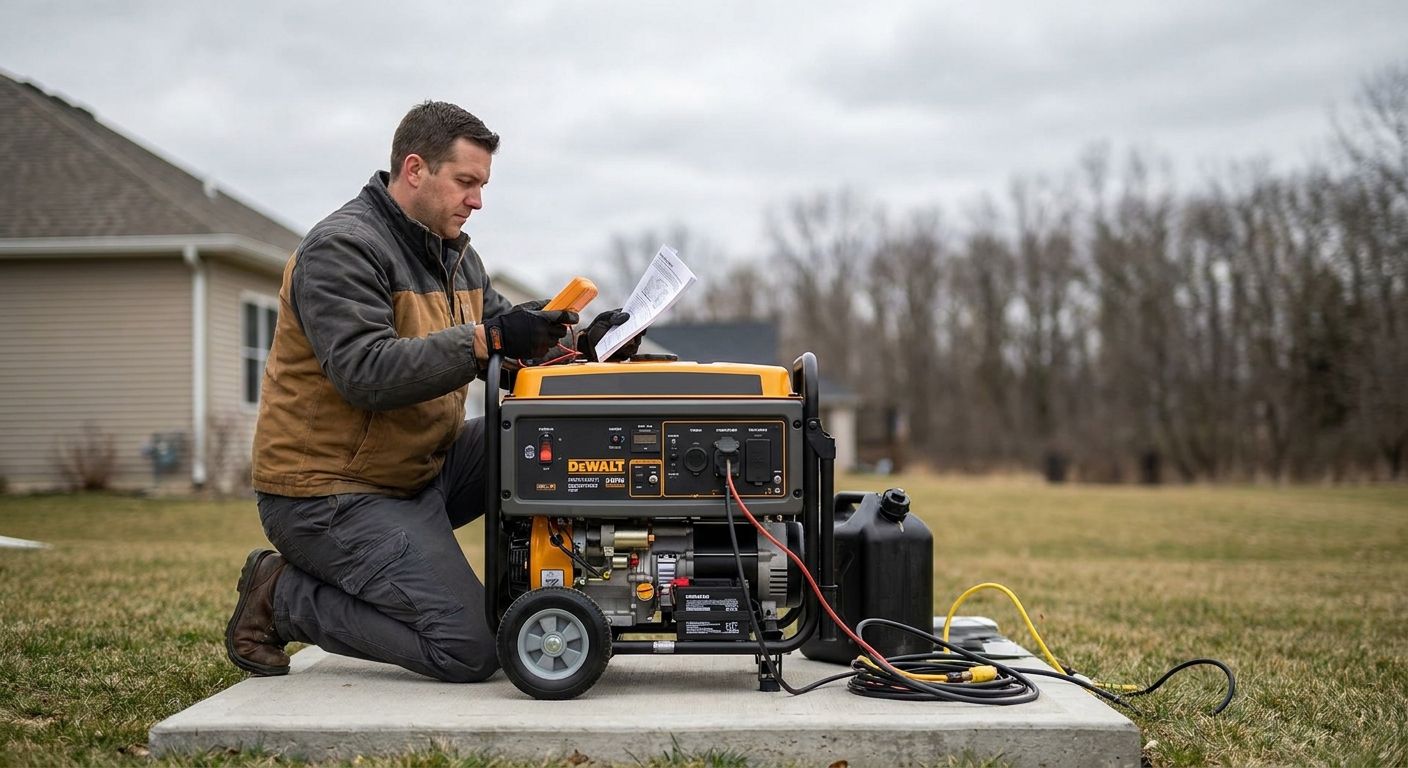
- Run a load test. For a standby unit, shut off utility power at the main breaker and let the automatic transfer switch carry the house for 15 to 20 minutes. For a portable, plug in the appliances you'd actually run during an outage and watch for voltage drop or stalling.
- Check the fuel. Propane and natural gas lines should show no smell of gas at the connections. Gasoline older than about 30 days without a stabilizer degrades enough to gum up carburetors — drain and refill if you're not sure how old it is.
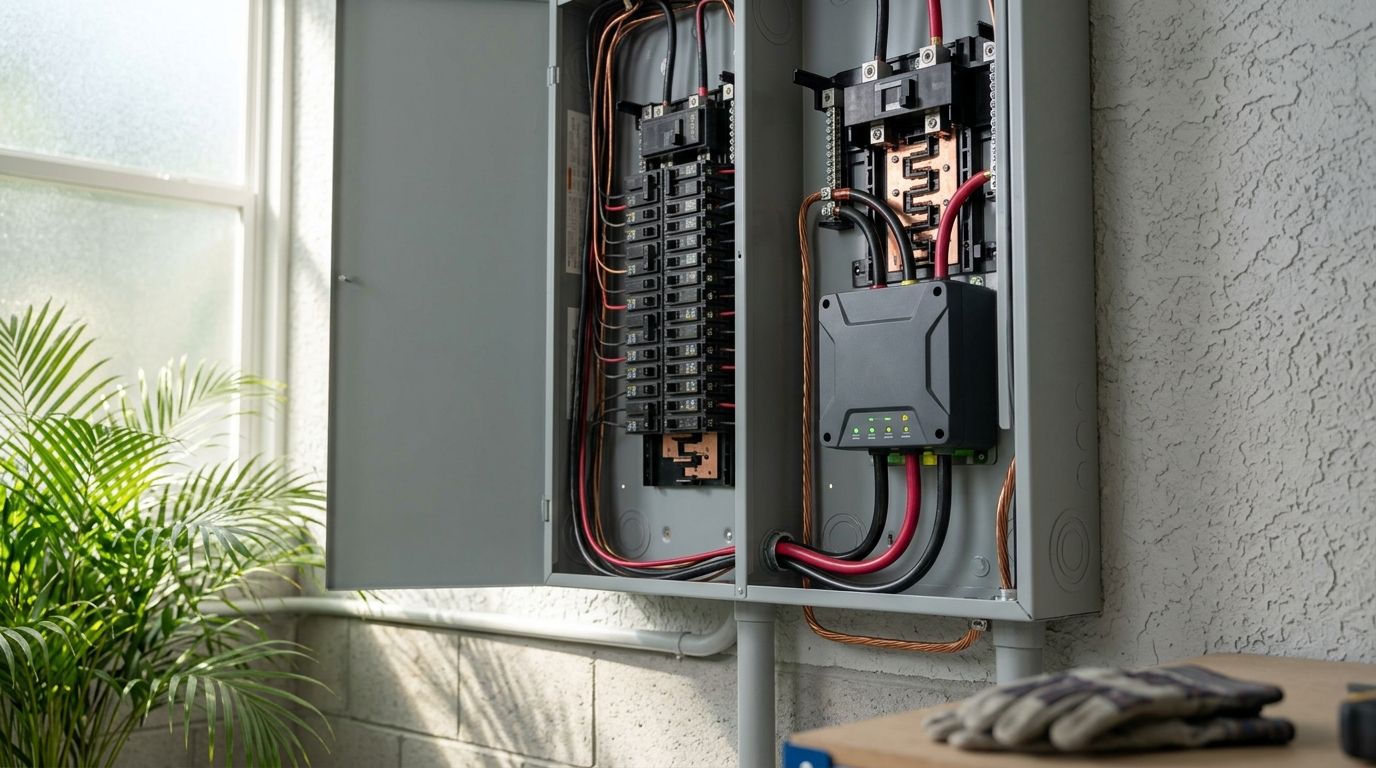
- Confirm the transfer switch cycles. An automatic transfer switch should engage within roughly 10 seconds of sensing a utility outage. A manual switch should throw cleanly without sparking or resistance.
- Check carbon monoxide detectors. Portable generators need to run outdoors and away from windows every single time — no exceptions.
If you'd rather not run this list yourself every spring, standby generator maintenance in Port St. Lucie covers the full load test, battery check, and fuel inspection in one visit.
Testing a portable generator
Portable units don't self-test, so the whole burden is on you. Start with fresh fuel — nothing sitting more than 30 days in the tank — and run it under an actual household load, not idle, for at least 15 minutes. Check that extension cords are rated for the amperage you're pulling; undersized cords overheat and trip breakers before the generator itself has a problem. Verdict: run this test yourself once a year, ideally in May, and again after any storm season it sat unused.
Testing a standby (whole-house) generator
Standby units already run a weekly self-test, but that's a no-load spin, not proof the unit can carry your house. Once a year, flip the main breaker off to simulate a real outage and confirm the transfer switch picks up within about 10 seconds and holds the load for 15 to 20 minutes without the engine bogging down. If you're shopping for a new unit instead of maintaining an old one, best whole-house generators for Florida hurricane season breaks down which models handle Treasure Coast humidity and salt air best. Verdict: schedule the full load test every spring before June 1, not just the factory self-test.
Why generator test results vary
Not every generator fails a test for the same reason. The factors below decide whether your unit passes clean or needs work before hurricane season 2026 arrives.
- Battery age. Most generator batteries lose reliable cranking power after three to five years, even if they still read close to full voltage sitting idle.
- Fuel type and age. Propane holds up far longer in storage than gasoline, which starts degrading within about 30 days without a stabilizer.
- How often it already self-tests. A unit that never runs its weekly self-test (skipped by a dead battery or a disabled controller) hides problems longer.
- Salt air exposure. Homes closer to the Intracoastal or ocean see faster corrosion on terminals, control boards, and exhaust housings.
- Correct transfer switch installation. A switch wired or sized wrong can delay transfer past what the panel and connected loads can tolerate.
- Sizing versus actual load. A generator undersized for the house will pass a light test and still stall once the AC and well pump kick on together — check how to size a whole-house generator for your home if you're not sure your unit was matched correctly in the first place.
How often should you test a home generator in Florida?
Test a home generator at least once before June 1 each year, with a follow-up check partway through hurricane season if it ran during a real outage. Standby units run a weekly self-test automatically, but that's no substitute for the annual full-load check.
Can you test a generator without cutting power to the house?
Yes — the weekly self-test runs without cutting utility power, but it also runs without any real load on the engine. A true load test requires shutting off utility power at the main breaker so the transfer switch and generator actually carry the house.
FAQ
What's the best way to test a home generator before hurricane season?
The best way is a full load test: shut off utility power, let the transfer switch engage, and run the generator under real household load for 15 to 20 minutes. Starting the unit and letting it idle for a minute tells you almost nothing about whether it can carry a real outage.
Is a weekly self-test the same as a load test?
No, a weekly self-test just spins the engine for about 12 to 20 minutes with no load on it. A load test forces the generator to actually power the house, which is the only way to catch a unit that stalls under real demand.
How long should a generator run during a test?
Run it for 15 to 20 minutes under load, long enough for the engine to warm up fully and for any voltage drop or stalling to show itself. Shorter tests can miss problems that only appear once the unit is warm.
What voltage should a healthy generator battery read?
A healthy 12-volt generator battery reads 12.6 to 12.8 volts at rest. Anything below 12.4 volts should be charged or replaced before hurricane season starts.
When does hurricane season start in Florida?
The Atlantic hurricane season officially opens June 1 and runs through November 30 each year. Testing your generator before June 1, 2026 gives you time to fix any problem the test uncovers.
How often should you test a portable generator?
Test a portable generator at least once a year, ideally in May, with fresh fuel and an actual household load connected. Fuel sitting more than 30 days without a stabilizer degrades enough to cause starting problems.
Do standby generators need professional testing?
A homeowner can check the battery voltage and fuel connections, but a full load test that safely disconnects utility power and verifies transfer switch timing is worth having a licensed technician run at least once before hurricane season.
One last thing
The generator that fails during a hurricane almost never fails because the engine is broken — it fails because the battery was weak, the fuel was stale, or the transfer switch was never actually tested under load. All three of those show up in a 20-minute test that most homeowners skip every single year. Run that test before June 1, 2026, and you've eliminated the three most common reasons a generator goes quiet exactly when you need it.