Best overall: Cummins for Treasure Coast businesses comparing commercial backup-power systems. Best for a smaller office or storefront: Generac. Best for a larger facility with a detailed engineering review: Caterpillar. The right brand is the one whose specific generator, transfer equipment and service arrangement fit your building’s measured loads.
- Cummins is the best overall starting point when comparing commercial generator brands for Treasure Coast businesses in 2026.
- Generac belongs on the shortlist for a smaller office or storefront; Caterpillar belongs on it for a larger facility.
- Imperium Electric LLC is best for businesses that need a local installer to assess the electrical work before choosing a generator.
- Compare the exact equipment and service arrangements offered, not brand names alone.
Why this matters
A generator brand cannot tell you which circuits will run when utility power fails. That decision starts with your building, your operations and the electrical loads you must keep on. In 2026, ask each bidder to price the same written backup-power scope before treating their proposals as alternatives.
Imperium Electric LLC provides generator installation and electrical services for commercial customers in Port St. Lucie, Stuart, Jensen Beach and the Treasure Coast. That makes the installation question as important as the brand question: an equipment shortlist is useful only after you define what the business needs the system to power.
What makes the best commercial generator brand?
Use these criteria before reading the ranking. None can be settled by a brand name alone; each needs an answer for the equipment and site in your proposal.
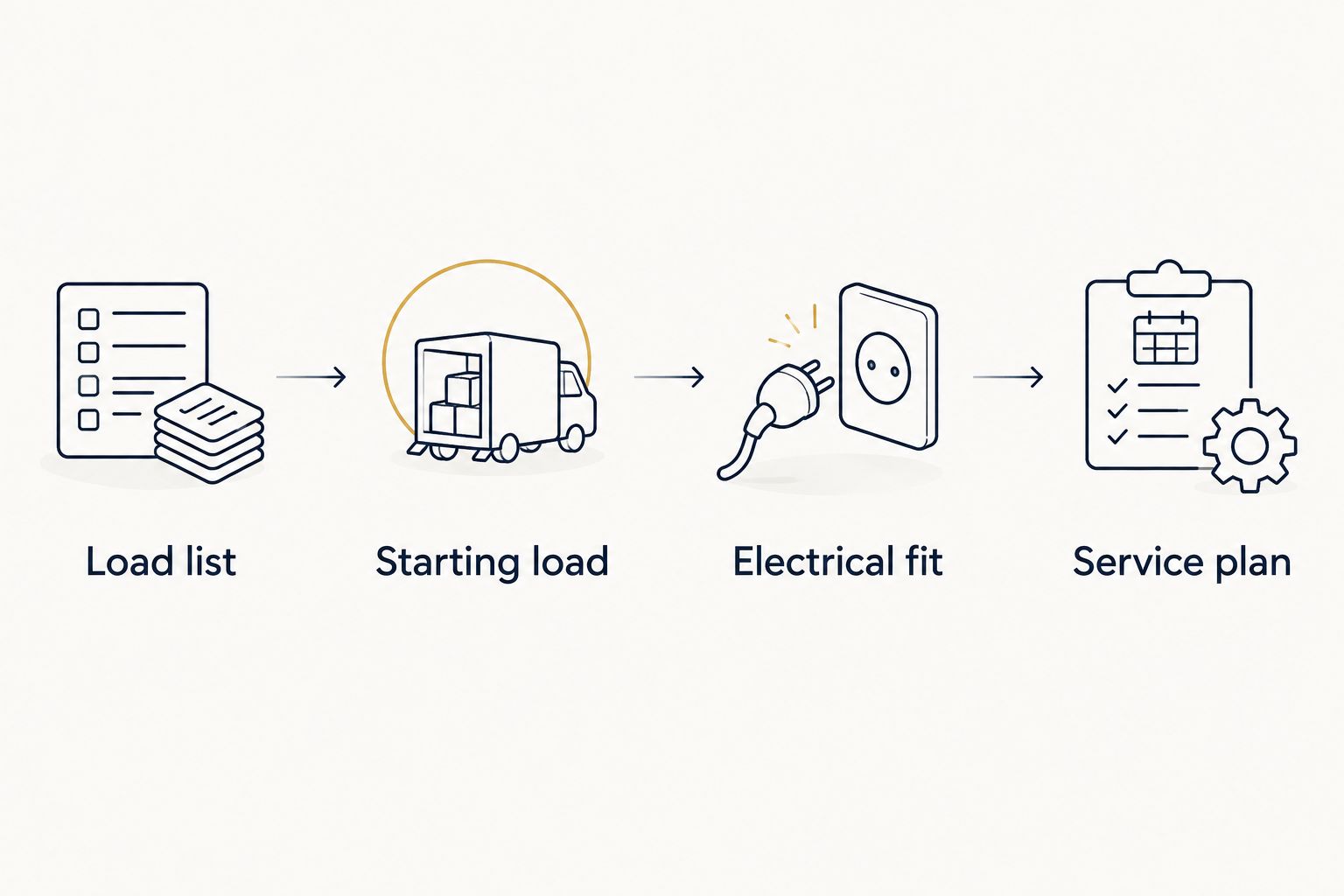
- Load list: Name the equipment that must remain powered. Separate essential operations from loads the business can leave off during an outage.
- Starting load: Identify motors and other equipment with a high demand when they start. Ask how the proposed system handles those starts alongside loads already running.
- Electrical fit: Confirm that the proposed generator and transfer equipment match the building’s electrical service. Common U.S. commercial systems include 120/208 V and 277/480 V, both at 60 Hz; your building’s actual service controls the choice.
- Site conditions: Identify a workable equipment location and have the installer address the installation requirements for that site. A generator that fits the load list still needs a viable place to go.
- Service plan: Ask who handles maintenance, what work the agreement covers and how you request service. Compare those answers in writing rather than assuming that support is identical across proposals.
The load list comes first. If a proposal excludes an essential circuit, changing the badge on the generator will not fix the scope.
Commercial generator brands at a glance
| Brand | Best for | Standout consideration | Key limitation to check |
|---|---|---|---|
| Cummins | Businesses seeking a broad first quote | Compare a specified generator and transfer arrangement as one system | The brand alone does not establish fit for your loads |
| Generac | Smaller offices and storefronts | A practical candidate for a defined essential-load scope | Confirm that the proposed model covers starting loads |
| Caterpillar | Larger facilities with an engineering-led review | Evaluate against a detailed facility load schedule | Do not assume a larger system is the right scope |
| Kohler | Businesses comparing a second system proposal | Gives buyers another equipment proposal to assess | Compare the quoted configuration and service terms, not just the name |
This is a buying shortlist, not a claim that one manufacturer outperforms another in every building. The ranking reflects which conversation to start for each use case. Model selection, installation scope and support need their own review.
1. Cummins: best commercial generator brand for a broad first quote
Cummins takes the overall slot because it is a sensible starting point for a business that has not yet settled on one equipment configuration. Ask for a proposal tied to your load list, including the generator and transfer arrangement. Then judge the proposal against the building rather than treating the manufacturer’s name as the specification.
A business with several competing electrical priorities needs this discipline. You can ask a bidder to distinguish loads that must continue from loads that can remain off, then show how the proposed equipment addresses that choice. That gives you a basis for comparing another brand’s proposal without relying on a sales description.
Cummins pros:
- Provides a clear brand starting point for a system-level proposal.
- Can be assessed against a written list of essential business loads.
- Keeps the comparison focused on the quoted equipment, transfer arrangement and service terms.
Cummins cons:
- A brand recommendation cannot replace a site-specific electrical assessment.
- A proposal without a stated load scope is difficult to compare with competing bids.
Best for: A Treasure Coast business seeking its first detailed commercial generator proposal. Verdict: Hold until the bidder shows how the proposed system covers the agreed loads and starting demands.
2. Generac: best commercial generator brand for a smaller office
Generac belongs on the shortlist when an office or storefront can clearly identify the circuits it needs during an outage. The task is not to power everything by default. It is to document which operations stay on, which can stop and what that means for the proposed generator and transfer equipment.
For example, do not treat a list of outlets as a complete load list if business-critical equipment sits behind them. Ask for the electrical assessment to name the loads and account for equipment startup. That prevents a small-building proposal from being judged only on the generator’s nameplate.
Generac pros:
- Gives smaller businesses a focused option to request and compare.
- Works as a comparison candidate when essential loads are clearly defined.
- Lets you test whether a proposal addresses startup demands, not just running loads.
Generac cons:
- A smaller building does not automatically have a simple electrical load.
- The brand name does not tell you which circuits the transfer arrangement will serve.
Best for: An office or storefront with a documented essential-load scope. Verdict: Hold until the specific proposal identifies the circuits served and addresses equipment startup.
3. Caterpillar: best commercial generator brand for a larger facility review
Caterpillar is a useful comparison for a facility whose backup-power decision needs a more detailed engineering review. Size alone is not the reason to choose it. The reason to request the quote is to test a proposed system against the facility’s load schedule, electrical service and installation conditions.
A larger property can have several types of load with different operating priorities. Ask the project team to identify which must run together and which can be managed during an outage. A detailed answer is more valuable than a proposal that simply calls for the largest generator under consideration.
Caterpillar pros:
- Provides a comparison candidate for a detailed facility specification.
- Encourages buyers to assess the whole installation rather than one piece of equipment.
- Can be judged against explicit operating priorities in the load schedule.
Caterpillar cons:
- A larger proposed system is not proof of a better fit.
- A detailed equipment quote still needs an installation and service review.
Best for: A larger facility comparing proposals against an established load schedule. Verdict: Hold until the proposed system and site work are documented together.
4. Kohler: best commercial generator brand for a second opinion
Kohler earns a place when you need another equipment proposal against the same scope. A second quote is useful only if both bidders understand the same essential loads and operating priorities. Otherwise, you are comparing different projects rather than different brands.
Give bidders the same load list and ask each to explain the proposed transfer arrangement, installation responsibilities and service terms. If one proposal leaves out an item that appears in the other, resolve that difference before choosing. The correction can matter more than the manufacturer name at the top of the page.
Kohler pros:
- Adds another brand to a like-for-like proposal review.
- Helps expose differences in equipment and installation scope.
- Gives you another set of written service terms to assess.
Kohler cons:
- A second brand does not create a fair comparison when scopes differ.
- The name alone establishes neither site fit nor service coverage.
Best for: A business checking an initial proposal against another specified system. Verdict: Hold until both quotes use the same written backup-power scope.
Turn the shortlist into comparable proposals
In 2026, start by writing down what an outage stops you from doing. Name the equipment involved, not just the rooms it occupies. A building-wide request sounds clear, but it leaves the bidder to decide what belongs in the backup-power scope. If you need only selected operations to continue, say so.
Next, have a qualified electrical professional assess the actual service and the loads. The distinction between a 120/208 V service and a 277/480 V service is not a detail to infer from the size of the property. Confirm it at the building and require the proposal to identify the electrical arrangement it is designed to serve.
Then put the site and transfer arrangement on the same page as the generator. Ask where the equipment is proposed to go, which circuits it will serve and who is responsible for the associated electrical work. A proposal that names a generator but leaves those questions open is not yet a complete installation proposal.
Finally, compare service terms before signing. Ask who you contact for maintenance, what the quoted service work includes and how a fault is handled. Do not assume that buying a familiar brand automatically answers those questions. Choose the complete, documented system that fits the building—not the shortest brand shortlist.
Imperium Electric LLC provides commercial generator installation on the Treasure Coast. If your load scope is still open, use a commercial generator installation assessment to frame the electrical and site questions before comparing equipment proposals.
How we ranked the brands
The 2026 ranking assigns each brand a distinct role in the buying process: Cummins as the overall first comparison, Generac for a smaller site with defined essential loads, Caterpillar for a larger facility review and Kohler for a second system proposal. Those labels are not test results, model endorsements or claims about local dealer support.
The same five criteria apply to every option: load list, starting load, electrical fit, site conditions and service plan. Without a model-specific proposal and building assessment, none of the four brands can be declared the best fit for a particular address. Use the ranking to organize quotes, then let the documented scope decide.
Which commercial generator brand should you choose?
Start with Cummins if you want one brand for the first detailed quote, then request another proposal against the same scope. Choose Generac for consideration when a smaller office or storefront has defined its essential loads. Include Caterpillar in a larger facility review, and use Kohler to check whether another bidder proposes a better-defined system.
Do not choose solely from this list if you have not identified the loads or confirmed the building’s electrical service. Imperium Electric LLC is best for Treasure Coast businesses that need the installation questions settled before they commit to a generator brand. The 2026 decision is a system decision, not a logo decision.
FAQ
What are the best commercial generator brands for Treasure Coast businesses?
Cummins is the best overall starting point for a commercial generator comparison in 2026; Generac, Caterpillar and Kohler each have a distinct place on the shortlist. Choose the final system only after a proposal addresses your building’s loads, electrical service and installation.
Is Cummins better than Generac for a small business?
Neither brand is automatically better for a small business. Compare specified equipment against the same essential-load list and starting demands before selecting either proposal.
Should a commercial generator power the entire building?
A commercial generator should power the loads your business decides it must keep running. Document those loads before asking for quotes so bidders propose systems for the same scope.
How do I compare two commercial generator quotes?
Give both bidders the same load list and compare their generator, transfer arrangement, site work and service terms. Resolve missing or different scope items before judging the brands.
Does a generator brand determine who services it on the Treasure Coast?
No. Ask each bidder to identify the service provider and the work covered by the proposed arrangement; do not infer those terms from the brand name.
Does electrical service voltage matter when choosing a generator?
Yes. The proposed generator and transfer equipment must fit the building’s electrical service. Have that service confirmed on site rather than assuming it from the property type.
What should I do before requesting a commercial generator quote in 2026?
List the equipment your business must keep operating during an outage. Have an electrical professional assess those loads and the building’s service so each bidder can quote against a defined scope.
One last thing
The most useful question in a 2026 generator meeting is not which brand the installer prefers. Ask which named operations will still work when utility power fails, and where the proposal says so. If the answer is unclear, the brand decision is premature.