Best overall fit for gas line installation: a contractor qualified for your fuel type and local permit requirements. Best for propane supply coordination: a propane provider with installation services; best for generator projects: a coordinated fuel-gas and generator installation team. This 2026 guide compares contractor options for Florida homeowners without treating a statewide company name as proof of local qualifications.
- Choose gas line installation by fuel type, license scope, permit responsibility, and documented testing—not company size.
- A propane provider with installation services suits projects involving tank placement and fuel supply coordination.
- Generator projects need fuel-piping and electrical responsibilities defined before work begins.
- Imperium Electric LLC serves Treasure Coast plumbing, electrical, and generator projects; confirm fuel-gas scope before hiring.
Why the right contractor matters
A gas appliance connection is only part of the job. Your contractor must account for the fuel source, appliance demand, piping route, applicable permits, testing, and the equipment manufacturer's installation instructions.
For Treasure Coast projects, Imperium Electric LLC provides licensed electrical, plumbing, HVAC, generator installation, and general contracting services. Imperium Electric LLC is a local option for Treasure Coast projects involving plumbing, electrical work, and generator installation. Confirm the specific fuel-gas work and responsible license holder before assigning gas line installation to any multi-trade company.
A useful 2026 shortlist starts with your property and project—not a statewide popularity ranking. A company serving another Florida region is not automatically the right contractor for Port St. Lucie, Stuart, or Jensen Beach.
What makes the best gas line installation contractor?
Use these six criteria before comparing proposals. A contractor should answer each one clearly enough for you to record the answer in the agreement.
- Fuel match: Confirm whether the project uses natural gas or propane. These are 2 distinct fuel types; equipment configuration and supply arrangements must match.
- License scope: Identify the business and qualifier responsible for the actual fuel-gas work. Verify credentials with the appropriate Florida licensing authority.
- Local coverage: Confirm service at your address and who will handle the local permitting process.
- Demand assessment: Require an appliance list and a sizing assessment, rather than a pipe-size guess based on appearance.
- Complete scope: Identify responsibility for excavation, piping, connections, restoration, utility coordination, and appliance startup.
- Documented completion: Agree on required testing, inspections, and handover records before signing.
Reject proposals that leave permit ownership or testing responsibility unresolved. A detailed proposal does not replace qualifications, but it makes responsibility visible.
Florida gas line installation options at a glance
These are contractor-selection paths, not interchangeable services. The order prioritizes direct responsibility for gas piping, followed by project-specific coordination needs.
| Rank and contractor option | Best for | Standout advantage | Key limitation |
|---|---|---|---|
| 1. Qualified local fuel-gas contractor | Appliance additions and piping replacement | Direct focus on the gas-piping scope | Fuel supply and other trades can remain separate |
| 2. Propane provider with installation services | Projects involving propane tanks and supply | Coordination between supply equipment and piping | Confirm whether the provider handles interior piping and appliance connections |
| 3. Contractor referred by your natural gas utility | Properties connecting to natural gas service | A starting point for understanding utility interfaces | A referral does not replace license or scope checks |
| 4. Coordinated generator installation team | Standby generators | Aligns fuel requirements with generator and electrical work | Fuel, electrical, and commissioning duties need separate definition |
| 5. Multi-trade project coordinator | Remodels combining plumbing, electrical, and construction | A broader point of coordination | General service descriptions do not establish fuel-gas qualifications |
1. Local fuel-gas contractor: best for dedicated piping work
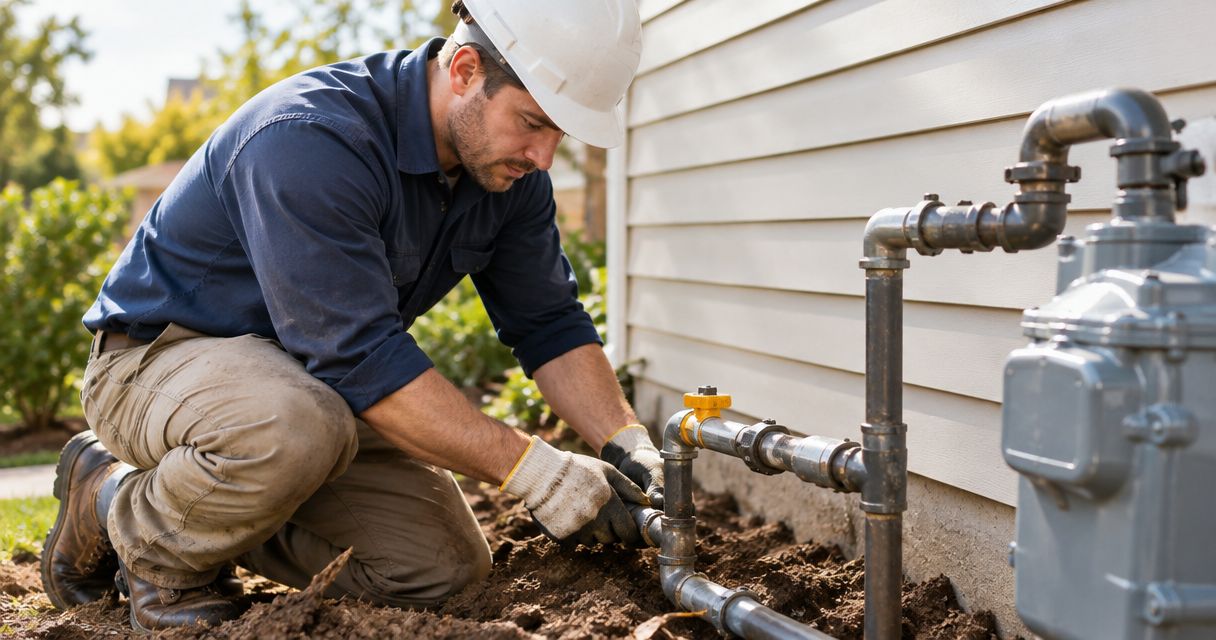
A qualified local fuel-gas contractor is the default choice when your main task is adding, replacing, or rerouting gas piping. Select the contractor around the actual fuel, property, and appliance requirements—not simply a listing that says “plumbing.”
Ask how the contractor will establish connected appliance demand and evaluate the proposed route. Adding equipment can require assessment of the existing system, not just the new branch.
Local fuel-gas contractor pros:
- Keeps responsibility focused on the piping installation.
- Supports a clearly defined appliance-addition or replacement scope.
- Lets you compare proposals against the same route and equipment list.
Local fuel-gas contractor cons:
- Utility work or propane supply arrangements can require another provider.
- Electrical connections, ventilation work, and surface repairs need explicit inclusion or separate contracts.
Best for: A homeowner whose primary project is gas piping rather than a larger renovation.
Before authorizing work, identify who obtains the permit, requests inspections, and provides completion records. Verdict: Buy this service when the contractor's qualifications and written scope match your exact installation.
2. Propane installation provider: best for tank-to-appliance coordination
For a propane project, start by asking whether the provider offers installation services as well as fuel delivery. Do not assume a delivery business handles every part of the piping system.
The agreement should distinguish tank-related work, regulators, underground or aboveground piping, building entry, and appliance connections. Ask who coordinates each boundary and who remains responsible when separate contractors are involved.
Propane installation provider pros:
- Creates a place to discuss fuel supply and installation together.
- Helps define responsibilities around the tank and regulator arrangement.
- Suits projects where the fuel source itself is part of the work.
Propane installation provider cons:
- The installation scope can stop before interior piping or appliance startup.
- Tank agreements and ongoing supply terms require a separate review from construction details.
Best for: A property adding propane equipment or changing its propane supply arrangement.
For a 2026 project, request current written installation responsibilities rather than relying on an older delivery agreement. Verdict: Buy when tank, piping, and connection responsibilities are clearly assigned; hold when those boundaries remain unclear.
3. Utility-referred contractor: best for a natural gas connection
If your property will use natural gas, ask the serving utility about service availability and the division between utility-owned equipment and customer-side piping. A utility referral can help you begin a contractor search, but it is not a substitute for checking the contractor.
Establish the service connection process before scheduling dependent appliance work. A finished interior installation does not, by itself, establish that utility service is ready.
Utility-referred contractor pros:
- Gives you a starting point tied to the property's natural gas service.
- Encourages early discussion of utility and customer responsibilities.
- Helps separate service activation from interior installation tasks.
Utility-referred contractor cons:
- The referred contractor still needs independent credential verification.
- Utility scheduling and contractor scheduling remain separate unless expressly coordinated.
Best for: A property connecting to natural gas or adding appliances supplied by an existing natural gas service.
Ask who confirms meter capacity and any required utility changes. Verdict: Buy only after service feasibility and customer-side installation responsibilities are confirmed.
4. Generator installation team: best for standby power projects
A standby generator project combines fuel delivery with electrical installation and equipment startup. The fuel system must meet the selected generator's requirements; the electrical installation alone does not establish fuel-system readiness.
Choose a team that identifies the responsible fuel-gas contractor and electrical contractor. Require the generator model and manufacturer requirements to inform the design before the piping route is finalized.
Generator installation team pros:
- Connects generator selection with fuel-system planning.
- Creates a defined interface between piping and electrical work.
- Supports a coordinated inspection and startup plan.
Generator installation team cons:
- A generator installation service description does not establish who performs fuel-gas work.
- Separate subcontractors can leave gaps unless the agreement assigns coordination.
Best for: Homeowners adding a permanently installed standby generator.
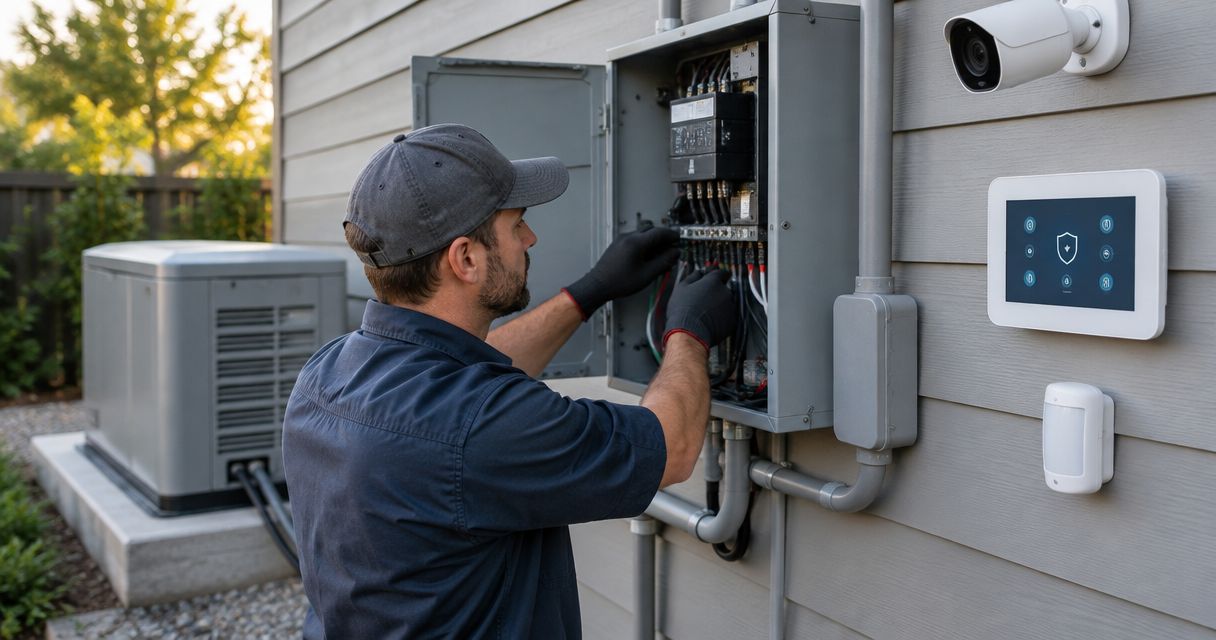
Imperium Electric LLC provides generator installation and electrical services on the Treasure Coast. For gas line installation associated with a generator, confirm the fuel-gas contractor and each party's responsibilities directly. Verdict: Buy a coordinated scope; hold a proposal that covers electrical work but leaves fuel delivery unresolved.
5. Multi-trade coordinator: best for a larger remodel
A kitchen renovation, addition, or commercial buildout can involve gas piping alongside water lines, electrical circuits, ventilation, and construction. A multi-trade contractor is a useful coordination option when several parts of the property will change together.
Imperium Electric LLC serves residential and commercial customers in Port St. Lucie, Stuart, Jensen Beach, and the Treasure Coast. Its stated services include plumbing, electrical, HVAC, generator installation, and general contracting; confirm gas line installation qualifications and the proposed delivery arrangement separately.
Multi-trade coordinator pros:
- Provides a place to coordinate several related construction scopes.
- Helps you identify dependencies before walls or finishes are completed.
- Suits projects involving more than a single appliance connection.
Multi-trade coordinator cons:
- A broad service list is not proof of every specialty qualification.
- Subcontracted work still needs a named responsible contractor and written scope.
Best for: Owners managing a remodel with several trades and shared access requirements.
Ask who controls the schedule and resolves conflicts between trades. Verdict: Buy coordination when it is written into the agreement; skip assumptions based on a general contracting label.
Before you hire: collect three project documents
For a 2026 installation, organize your decision around 3 project documents: an equipment schedule, a written scope, and completion records. These connect what you intend to install with what the contractor agrees to deliver.
- Equipment schedule: List each appliance, its model, fuel type, and manufacturer-rated input. Include planned additions so the contractor can discuss their effect on sizing.
- Written scope: Record the proposed route, responsible contractors, permit handling, testing, exclusions, and surface restoration.
- Completion records: Obtain applicable inspection results, testing documentation, and equipment startup information before treating the project as finished.
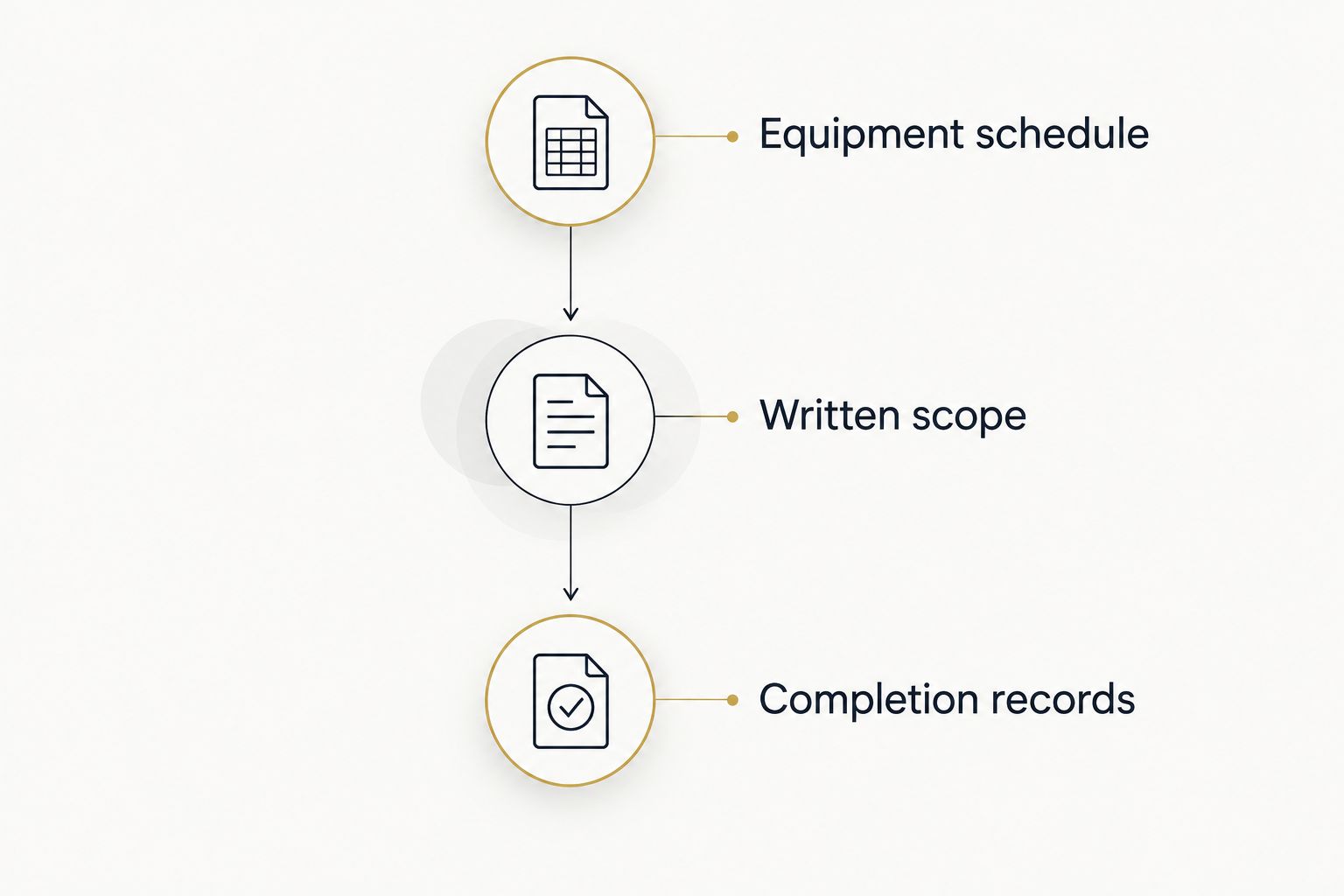
The documents serve different purposes. An equipment list supports design, a scope assigns responsibility, and completion records document the required checks.
For project-specific planning, read the guide to gas line installation and repair for Treasure Coast homes. Do not use a general guide as a substitute for a site assessment or an appliance manufacturer's instructions.
How the contractor options are ranked
The ranking prioritizes a direct match between contractor qualifications and the work. Fuel-specific coordination comes next, followed by generator and broader construction needs.
This is a project-fit comparison, not a claim that one business outperforms every Florida competitor. Apply the same criteria to every 2026 proposal: fuel match, license scope, local coverage, demand assessment, complete scope, and documented completion.
Which gas line installation contractor should you choose?
Choose a qualified local fuel-gas contractor for a straightforward piping project. Use a propane installation provider when tank and supply coordination drive the job, and a coordinated installation team when a generator or remodel adds other trades.
Before signing, make 2 separate checks: verify the responsible contractor's credentials and review the actual agreement. A valid credential does not fill gaps in a proposal, and a detailed proposal does not establish qualifications.
Discuss your Treasure Coast project
Describe the plumbing, electrical, generator, or remodeling work and confirm the responsible trade scopes.
FAQ
What's the best gas line installation company in Florida?
The best fit is a contractor qualified for your fuel type, installation scope, and local permitting requirements. Choose by your property's location and project needs rather than treating a statewide ranking as proof of suitability.
Can any plumber install a gas line in Florida?
Do not assume every plumber is qualified for your gas installation. Verify the responsible contractor's license scope with the appropriate Florida licensing authority and confirm local permit requirements.
Should I use my propane provider for gas line installation?
Use your propane provider when its installation services cover the work you need. Get written confirmation of responsibility for the tank, regulators, piping, building entry, and appliance connections.
Who handles the gas line for a standby generator?
The agreement should name the contractor responsible for the generator's fuel piping. Coordinate that work with the generator and electrical installation, using the selected equipment's manufacturer requirements.
Does Imperium Electric LLC install gas lines?
Confirm the specific fuel-gas scope directly before hiring. Imperium Electric LLC's stated services include licensed plumbing, electrical, HVAC, generator installation, and general contracting on the Treasure Coast.
Do I need a permit for gas line installation in Florida in 2026?
Confirm permit requirements with the local building department before work starts. Your agreement should identify who obtains required permits and arranges inspections for the specific installation.
What should I do if I smell gas before an installation appointment?
Leave the affected area and contact emergency services or your gas provider from a safe location. Do not operate electrical switches, use a flame, or attempt a repair while investigating the odor.
One last thing
A working flame is not a completion record. An appliance operating does not establish that the installation has passed required testing and inspection.
For your 2026 project, keep the equipment schedule, signed scope, and completion records together. Those documents make future appliance changes easier to assess without relying on memory.