Best overall generator brand for Florida assisted living facilities in 2026: Generac, for its wide natural gas and propane standby lineup and the deepest authorized-dealer network on the Treasure Coast. Best for quiet operation near resident wings: Kohler. Best for large diesel systems under NFPA 110 Level 1: Cummins. Best for multi-building campus power: Caterpillar. Best budget option for smaller freestanding facilities: Champion Power Equipment.
- Generac is the top pick among the best generators for assisted living facilities on Florida's Treasure Coast in 2026.
- Kohler and Cummins fit facilities that need quiet units or NFPA 110 Level 1 diesel reliability.
- Florida rule 58A-5.036 requires ALFs to hold 81°F or below for 96 hours during an outage; portable generators rarely qualify.
- Champion Power Equipment is the budget pick for small freestanding facilities with a tighter capital budget.
Why this matters
Florida rewrote emergency power rules for assisted living facilities after residents died from heat exposure at a Hollywood Hills nursing home during a multi-day outage in 2017. Rule 58A-5.036 now requires every licensed ALF in the state to hold resident rooms and common areas at 81°F or below for a minimum of 96 hours on an alternative power source, not just life-safety circuits.
That single requirement decides which generator brand actually works for a facility. A portable unit or a system sized like a house doesn't come close to covering that load. Backup generator installation for assisted living facilities built around this rule is what separates a compliant system from a generator that just sits in the parking lot until the first named storm proves it wrong.
Imperium Electric handles that kind of backup generator installation across Port St. Lucie, Stuart, and Jensen Beach, and the comparison below reflects what actually holds up against the 96-hour rule, not manufacturer marketing sheets.
What makes the best generator brand for an assisted living facility
- NFPA 110 compliance level — most licensed ALFs need Level 1 emergency power, not the lighter Level 2 spec built for optional standby loads.
- Fuel type on site — a natural gas main, an LP tank, or diesel storage determines which brand's lineup even fits the property.
- Sound output near resident windows — decibel rating at 23 feet matters more at an ALF than at a single-family home.
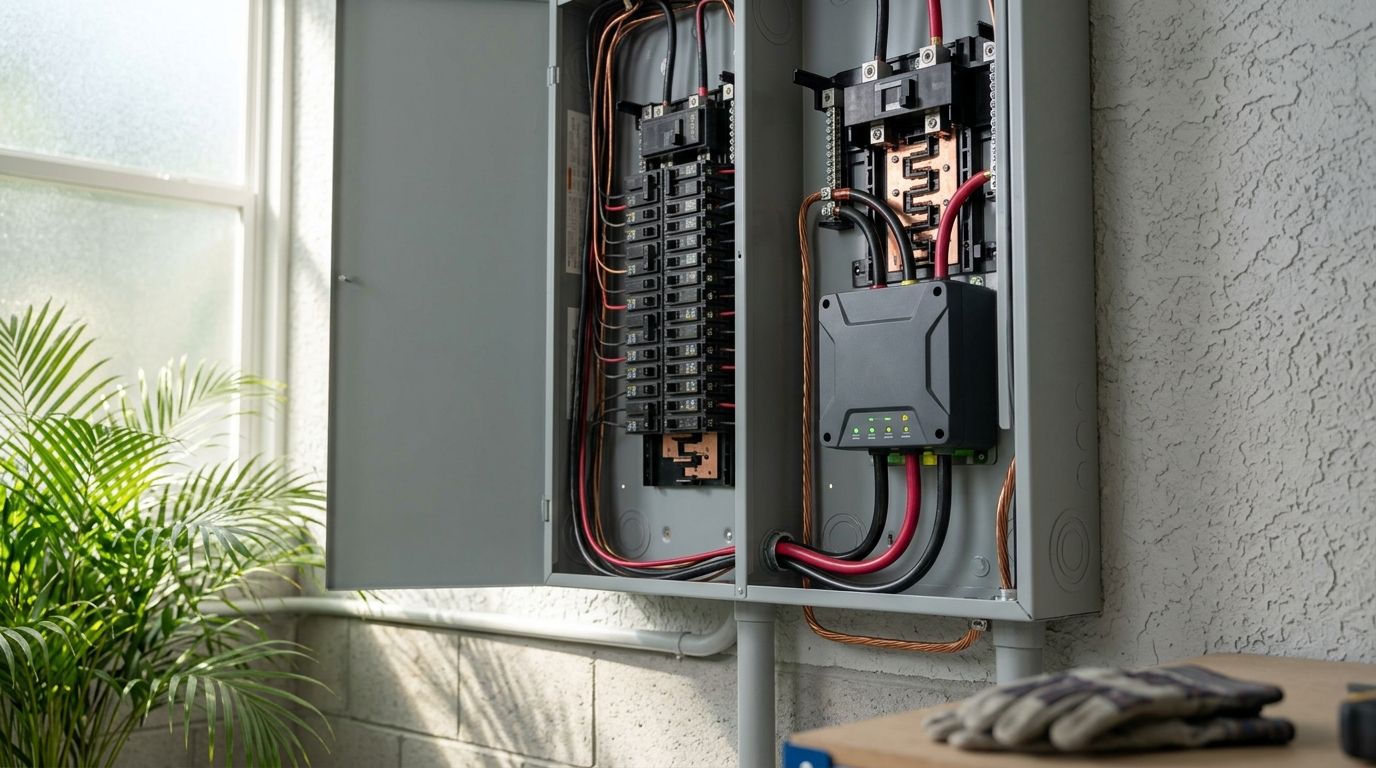
- Automatic transfer switch speed — life-safety switches need to close in seconds; standard switches take longer.
- Authorized dealer and parts coverage — a facility can't wait a week for a part when residents depend on climate control.
- Rated capacity against the 96-hour, 81°F rule — the unit has to run the full HVAC load, not just outlets and hallway lighting.
Sizing gets specific fast once you get past the criteria list. The load math is the same one used in how to size a generator for a medical office building, which walks through HVAC-heavy emergency circuits step by step.
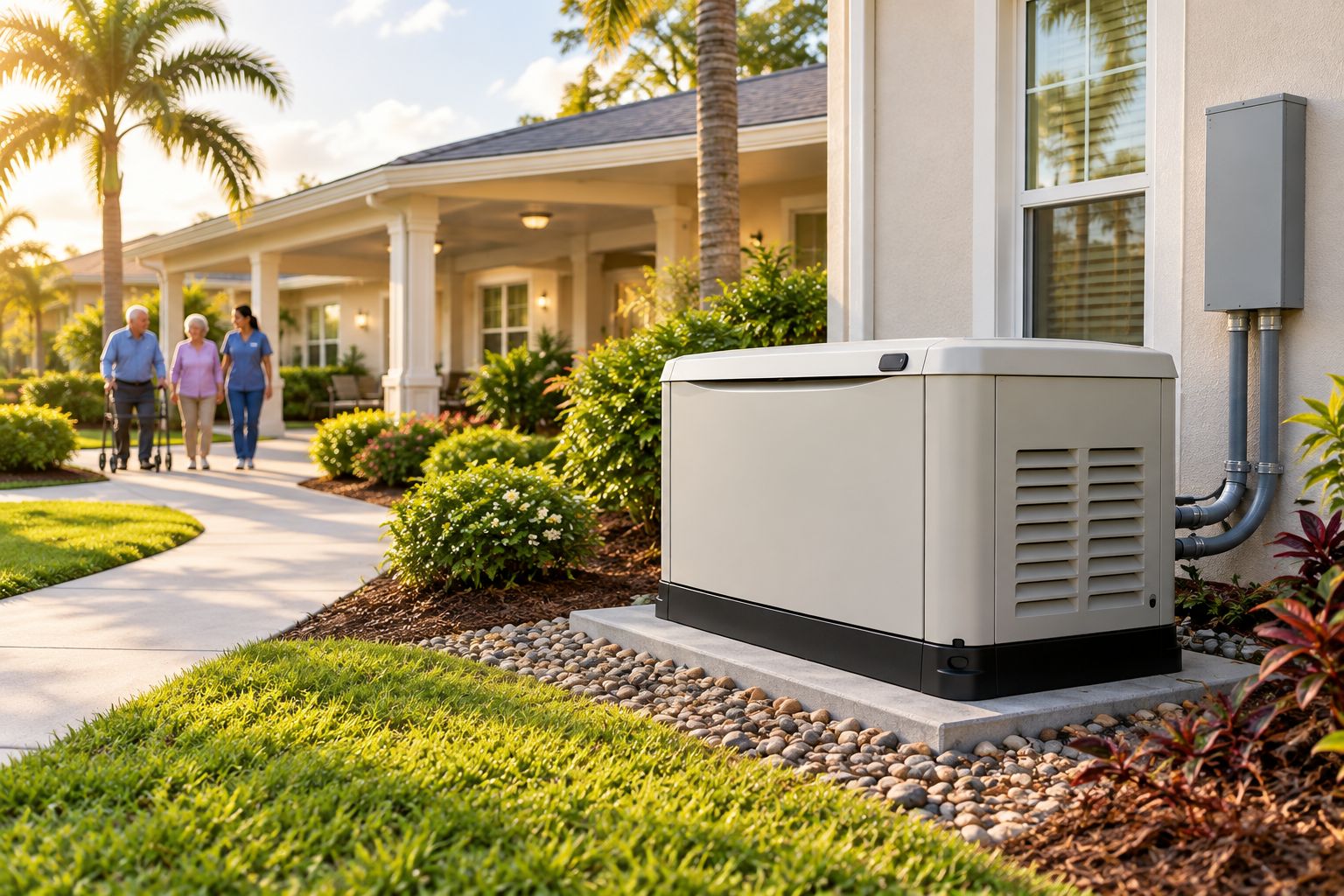
A facility on natural gas can usually skip diesel storage and permitting entirely, which narrows the field before you even open a spec sheet.
Best generators for assisted living facilities at a glance
| Brand | Best for | Standout feature | Key limitation |
|---|---|---|---|
| Generac | Overall Florida ALF backup power | Widest natural gas/LP standby lineup and Treasure Coast dealer coverage | Diesel commercial line is thinner than Cummins or Caterpillar |
| Kohler | Quiet operation near resident wings | Lower sound ratings at comparable kW output | Fewer authorized dealers per county than Generac |
| Cummins | Large diesel, NFPA 110 Level 1 campuses | Diesel engines built for continuous critical-load duty | Diesel storage adds a permitting and inspection step |
| Caterpillar | Multi-building paralleled campus power | Switchgear syncs multiple units into one system | Overbuilt and harder to service for a single facility |
| Champion Power Equipment | Smaller freestanding facilities, budget-conscious | Lower entry point into automatic standby power | Thinner 24/7 commercial support network |
1. Generac: best generators for assisted living facilities overall
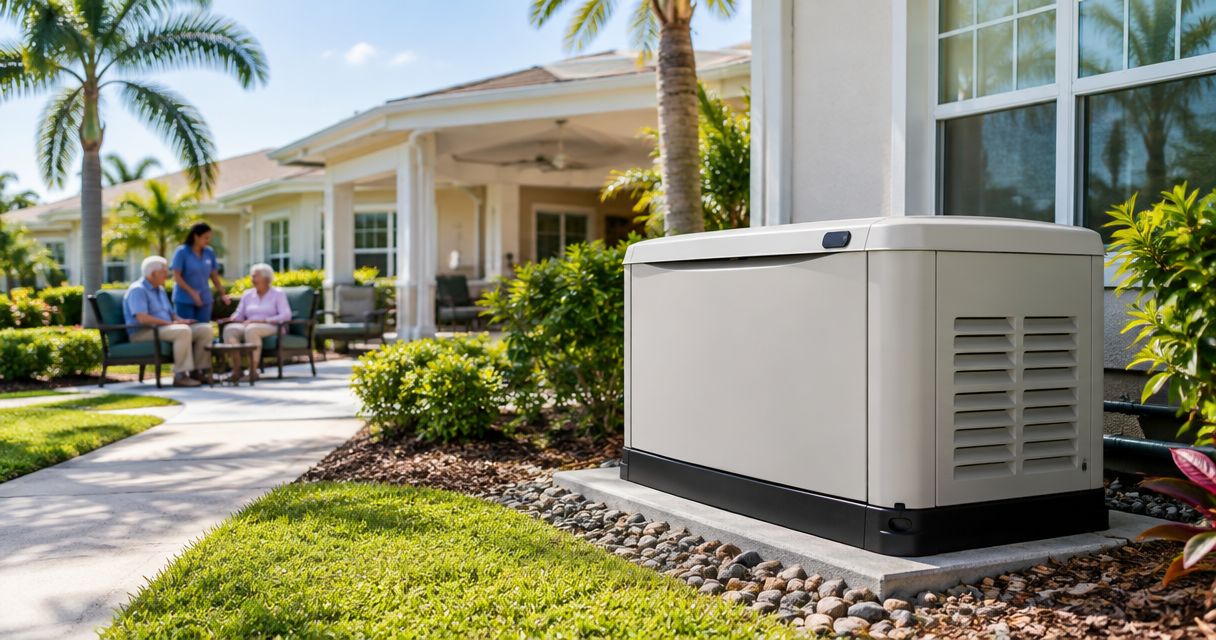
Generac builds the broadest lineup of natural gas and liquid propane standby generators sold in Florida, sized from small residential units through commercial systems large enough to cover an ALF's full HVAC and life-safety load. The dealer and parts network on the Treasure Coast is deeper than any other brand compared here, which matters when a part fails mid-storm.
Generac pros:
- Widest range of kW sizes to match an ALF's exact HVAC and life-safety load
- Deepest authorized-dealer and parts network in Port St. Lucie, Stuart, and Jensen Beach
- Natural gas and LP options avoid on-site diesel fuel storage and permitting
Generac cons:
- Diesel commercial line is thinner than Cummins or Caterpillar for very large campuses
- Popular sizes sell out fast in the weeks before a named storm
Generac is best for: a single-building ALF on natural gas or LP service that needs full-facility backup without diesel storage. Verdict: Buy.
2. Kohler: best for quiet operation near resident wings
Kohler generators post lower decibel ratings than several comparable Generac and Cummins units at the same kW output, which matters when the enclosure sits close to resident bedroom windows. The standby lineup covers the same natural gas and LP fuel range most Florida ALFs already run on.
Kohler pros:
- Lower sound output at comparable kW ratings, an advantage near resident rooms
- Duty-cycle design suited to facilities running extended monthly test cycles
- Natural gas and LP models fit existing ALF fuel infrastructure
Kohler cons:
- Fewer authorized dealers per county than Generac on the Treasure Coast
- Parts lead time can run longer outside peak stocking season
Kohler is best for: a facility where the generator enclosure sits within earshot of resident living space. Verdict: Buy.
3. Cummins: best for large diesel systems under NFPA 110 Level 1
Cummins built its reputation on diesel engines designed for continuous industrial duty, which shows up in generator sets rated for the sustained, high-load runtime an NFPA 110 Level 1 emergency system demands. Larger ALF campuses, or facilities co-located with a licensed nursing wing, tend to land on Cummins once the load calculation exceeds what one natural gas unit handles well.
Cummins pros:
- Diesel platform built for sustained, continuous-duty emergency runtime
- Strong fit for facilities classified under NFPA 110 Level 1
- Handles larger combined HVAC and life-safety loads than most single gas units
Cummins cons:
- Diesel requires on-site fuel storage, adding a permitting and inspection step
- Higher-capacity units need more mechanical room space than a comparable gas unit
Cummins is best for: a larger ALF, or a facility with an attached nursing unit, running under NFPA 110 Level 1. Verdict: Buy.
4. Caterpillar: best for multi-building paralleled campus power
Caterpillar's commercial line includes paralleling switchgear built to run two or more units together as one synchronized power source, which fits a campus spread across a main building, a memory-care wing, and a separate dining hall on one grid. That capability is overkill for a single-building facility but solves a real problem for a campus adding buildings over time.
Caterpillar pros:
- Paralleling gear syncs multiple generators into one coordinated system
- Built for continuous commercial duty at scale
- Fits campuses expanding buildings without replacing the whole system
Caterpillar cons:
- More equipment and mechanical complexity than a single-building ALF needs
- Service network skews toward large commercial and industrial accounts
Caterpillar is best for: a multi-building assisted living campus adding backup power in phases. Verdict: Hold — right for campuses, overbuilt for one building.
5. Champion Power Equipment: best budget option for smaller freestanding facilities
Champion's standby-style lineup gives a smaller freestanding ALF an entry point into automatic backup power without the dealer depth or diesel-scale capacity the larger brands carry. Natural gas and LP units suit smaller HVAC loads, which fits a facility with a lower resident count and a simpler electrical layout.
Champion Power Equipment pros:
- Lower entry point into automatic standby-style backup power
- Natural gas and LP models suit smaller facility HVAC loads
- Straightforward setup for a single-building, lower-load property
Champion Power Equipment cons:
- Thinner 24/7 commercial support network than Generac, Kohler, or Cummins
- Fewer large-kW options if the facility later adds beds or square footage
Champion Power Equipment is best for: a small freestanding ALF with a lower resident count and a tighter capital budget. Verdict: Buy for small sites, Wait if expansion is planned.
How this ranking works
The order above filters on the same criteria listed earlier: NFPA 110 level, fuel type on site, sound rating near resident rooms, transfer switch speed, dealer coverage on the Treasure Coast, and whether the unit actually holds the 81°F, 96-hour standard. Brand reputation alone doesn't move a system up this list — a well-known name that can't cover the full HVAC load on gas or diesel doesn't qualify as a top pick for an ALF in 2026, regardless of how it performs in a house.
“If a generator can't hold a Florida assisted living facility at 81°F for four straight days, it doesn't meet the state's emergency power rule.”
Which generator brand should you choose for your Florida assisted living facility?
For most single-building ALFs on natural gas or LP, Generac is the default pick in 2026 — the sizing range and Treasure Coast dealer coverage handle the 96-hour rule without adding diesel infrastructure. Kohler is the right override when the enclosure has to sit near resident rooms. Cummins or Caterpillar apply once campus size or NFPA 110 Level 1 status changes the equation, and Champion Power Equipment fits smaller properties that can't justify a commercial-diesel budget.
Whichever brand you land on, an undersized or improperly installed system voids the point of the investment. Imperium Electric's commercial generator maintenance contracts catch fuel, battery, and transfer switch issues before a storm, not during one.
Get an ALF generator sizing quote
Imperium Electric sizes and installs backup power for Treasure Coast assisted living facilities.
FAQ
What is the best generator brand for assisted living facilities in Florida?
Generac is the best overall pick for most Florida assisted living facilities in 2026 because of its natural gas and LP standby range and Treasure Coast dealer coverage. Kohler, Cummins, and Caterpillar fit specific needs like quiet operation or large diesel campuses.
Does Florida law require assisted living facilities to have a generator?
Yes. Florida Rule 58A-5.036 requires licensed assisted living facilities to maintain resident areas at 81°F or below for at least 96 hours during a power outage using an alternative power source.
Is Kohler or Generac better for a nursing home or ALF generator?
Generac offers a wider sizing range and a deeper Florida dealer network, while Kohler runs quieter at comparable output, which matters when the unit sits near resident windows. The right choice depends on placement and load, not brand loyalty.
What size generator does a Florida assisted living facility need?
Size depends on total HVAC and life-safety load, not resident count alone. A facility running central AC across common areas and resident rooms needs enough kW to hold 81°F for 96 hours straight, which a licensed electrician calculates from the building's actual load.
Can a portable generator meet Florida's assisted living power rule?
No. Rule 58A-5.036 requires an alternative power source capable of running HVAC continuously for 96 hours, which portable units aren't fueled or built to do. In practice the rule requires a standby system with automatic transfer.
Should an assisted living facility choose diesel or natural gas?
Natural gas or LP works for most single-building facilities already on a gas line, while diesel from Cummins or Caterpillar fits larger campuses or facilities needing NFPA 110 Level 1 continuous-duty ratings.
How often does a standby generator at an ALF need maintenance?
Monthly test runs plus an annual full-service inspection are standard for facility-grade standby systems, covering fuel, battery, and transfer switch condition ahead of hurricane season.
What happens if an ALF's generator fails Florida's compliance rule?
A facility found without a compliant alternative power source risks state licensing action, which is why sizing and installation need to match the 81°F, 96-hour standard before an inspection, not after one.
One last thing
The 96-hour clock starts the moment grid power drops, not when a state of emergency gets declared. A facility running a system sized for 72 hours fails the rule on day four of a slow-moving storm — exactly the point where Treasure Coast outages tend to run long. Imperium Electric sizes ALF backup systems against the full 96 hours for that reason, not the shorter runtime some quotes are built around.