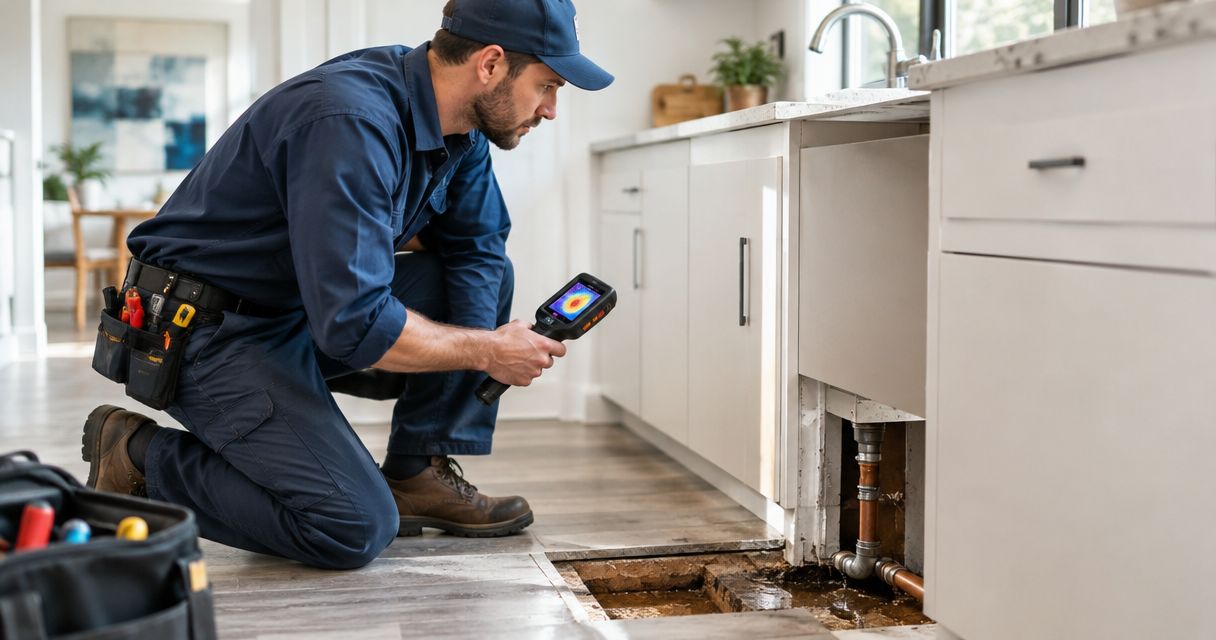
Yes, a plumber can fix a slab leak without breaking the floor by rerouting a leaking water-supply pipe, using suitable trenchless repairs for certain drain pipes, or reaching the damaged pipe from outside. Keeping the floor intact does not mean avoiding all demolition: the repair can still require wall openings, exterior excavation, or access holes, and the right method depends on the pipe and the building.
- Can a plumber fix a slab leak without breaking floor? Yes—pipe rerouting can bypass a damaged underground water line.
- Drain lining and water-supply rerouting solve different problems; identify the leaking pipe before choosing a repair.
- No floor demolition does not mean no wall openings, excavation, or restoration.
- Imperium Electric LLC provides licensed plumbing services for Treasure Coast residential and commercial customers.
Can a plumber fix a slab leak without breaking the floor?
Yes, but the repair must match the pipe that is leaking. A pressurized water-supply pipe can be disconnected and replaced along a different route. A drain pipe needs an assessment of its condition, connections, and slope before a plumber recommends lining, replacement, or excavation.
For a 2026 repair decision, compare the proposed access and restoration work—not just whether the contractor calls the method “trenchless.” The slab leak repair guide for older Port St. Lucie homes covers the local service topic.
| Repair method | Best for | How it avoids floor demolition | Main limitation |
|---|---|---|---|
| Water-line rerouting | A leaking supply line with an accessible alternative route | Bypasses the damaged underground section | Can require wall or ceiling openings |
| Drain lining | A drain pipe suitable for an approved lining system | Repairs the pipe through available access points | Does not correct every collapse, offset, or slope problem |
| Exterior tunneling | A pipe reachable beneath the slab from outside | Provides access without opening interior flooring | Requires excavation and careful foundation planning |
| Direct slab access | A localized defect where direct access is appropriate | It does not; concrete and flooring are opened | Requires slab and finish restoration |
There is no universally best method. A reroute preserves the floor but changes the pipe path; direct access disturbs the floor but reaches the defect directly.
Why this matters
A repair decision affects more than the leaking pipe. Tile, cabinets, drywall, insulation, and landscaping can all become part of the work, depending on the access route.
Your goal is to stop the leak and leave a properly functioning plumbing system. Do not approve demolition solely because a damp spot appears directly above the suspected leak. Water can travel before it becomes visible, so the wet area is not a reliable excavation map.
For your 2026 repair plan, ask for the diagnosis, proposed pipe route, testing, and restoration responsibilities in writing. Those details make different proposals comparable.
Water-line rerouting: bypassing the damaged pipe
Rerouting replaces the leaking supply run with a new line that follows an accessible path through suitable walls, ceilings, or other permitted spaces. The plumber disconnects the failed section so it no longer carries water.
Best for: a confirmed supply-line leak where a practical replacement route exists. Rerouting is especially relevant when preserving finished flooring is a priority.
The benefit is straightforward: the plumber does not need to reach the buried defect to stop water flowing through it. The trade-off is that the new route needs appropriate pipe sizing, support, protection, and access for installation.
Ask where the new pipe will run and which surfaces must be opened. If an attic route is proposed, ask how the installation addresses heat exposure, insulation, physical protection, and access to connections.
Also ask which fixtures the damaged line serves. A branch feeding several fixtures needs a different plan from a line serving a single connection. Choose rerouting when the complete replacement route works—not simply because it avoids a concrete cut.
Drain lining: repairing a suitable drain from inside
Drain lining places a liner inside an existing pipe to create a repaired interior passage. It is a drain-repair option, not a blanket solution for every pipe beneath a slab.
Best for: a drain with a defect that a suitable lining system can address, after inspection and preparation. The attraction is reduced excavation when the existing pipe provides an acceptable path.
The limitation matters. A collapsed section, major displacement, or incorrect slope requires assessment beyond a lining proposal; a liner does not automatically restore the pipe's original alignment or drainage slope.
Ask the plumber to explain the inspection findings and show where the proposed repair begins and ends. Branch connections also need attention so the repair does not obstruct connected fixtures.
Do not accept drain lining as an explanation for a water-supply leak. If a contractor proposes an internal repair for a drinking-water pipe, ask for the exact system, its approved application, and the basis for using it in your installation.
Exterior tunneling: protecting the interior floor
Exterior tunneling reaches an underground pipe from outside the building rather than through the finished floor. It can preserve interior tile or other surfaces while allowing the damaged pipe to be repaired or replaced.
Best for: a location where exterior access is feasible and excavation can be planned safely. The advantage is keeping the work out of the finished interior.
The disadvantage is substantial access work beneath the building. Soil conditions, footing locations, utilities, and the excavation route all affect feasibility.
Ask who is responsible for excavation, pipe work, backfilling, and any required structural review. A proposal should explain how the work protects the foundation and restores the excavated area.
Treat tunneling as an excavation project, not as a promise of disruption-free plumbing. Do not excavate beneath a slab or footing yourself; this is work for qualified contractors with an appropriate plan.
When breaking the floor is the appropriate repair
Direct slab access opens the floor and concrete above the damaged pipe. It remains an option when the defect is localized and alternative routes or trenchless methods do not fit the conditions.
Best for: a confirmed repair location where direct access provides a practical way to reach and replace the damaged section. Its strength is direct access to the pipe.
Its weakness is the restoration burden. The plumbing repair, concrete patch, moisture treatment, and replacement flooring are separate tasks unless the written scope includes them together.
Ask whether the work affects cabinets, shower waterproofing, or other finishes. Also ask how the contractor will assess the slab before cutting, particularly if its construction includes post-tensioning.
For a 2026 project, preserving the floor is a preference—not a reason to accept an unsuitable repair. The correct pipe repair takes priority over the least visible access opening.
How does a plumber decide which repair will work?
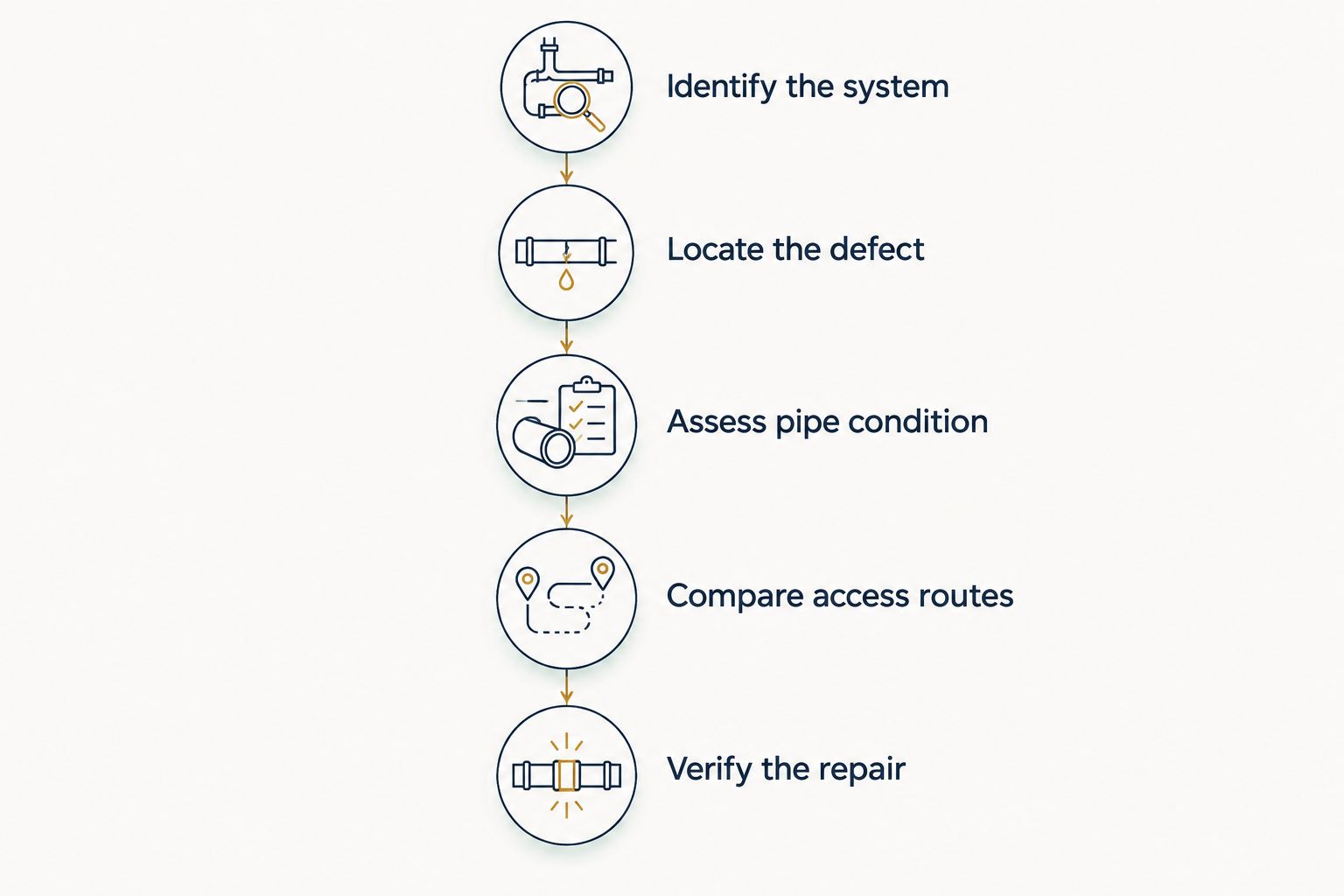
A plumber should establish the source and extent of the leak before recommending access. Detection findings narrow the repair choices; they do not automatically select one.
- Identify the system. Determine whether the problem involves a water-supply line, a drain, or another moisture source. A wet floor alone does not prove a slab leak.
- Locate the defect. Use appropriate testing and detection methods. Acoustic equipment can help with supply leaks; a camera can help assess accessible drain interiors.
- Assess pipe condition. Check whether the problem appears localized or whether the affected system has evidence of broader deterioration.
- Compare access routes. Evaluate rerouting, suitable trenchless work, exterior access, and direct slab access against the actual building layout.
- Verify the repair. Test the repaired system and document the work before closing access openings and completing restoration.
The inspection should answer a practical question: what evidence supports this particular repair? Ask for an explanation you can understand, not just a method name.
Why the repair method varies between homes
The same symptom does not justify the same repair. A warm floor over a suspected hot-water leak and wastewater escaping from a drain require different diagnostic work.
These factors determine whether your floor can remain intact:
- Pipe function: supply pipes carry pressurized water; drains depend on a suitable drainage path and slope.
- Defect type: a localized hole, damaged joint, collapse, and displaced pipe present different repair problems.
- Alternative routes: usable walls, ceiling spaces, and accessible connections determine whether rerouting is practical.
- Overall condition: repeated failures or deterioration elsewhere can make a broader replacement worth evaluating.
- Building construction: slab design, footings, utilities, and exterior access constrain excavation and cutting.
- Restoration scope: flooring, waterproofing, drywall, and landscaping influence how disruptive each method will be.
Ask the contractor to connect each recommendation to an observed condition. “We always do it this way” is not a diagnosis.
What should you ask before authorizing the work?
Before approving a 2026 slab-leak repair, get a scope that distinguishes pipe work from access and restoration. A brief description such as “repair leak” leaves too much unresolved.
Ask these questions:
- Which pipe is leaking, and what testing identified it?
- What route will the repaired or replacement pipe follow?
- Which floors, walls, ceilings, or exterior areas will be disturbed?
- How will the old leaking supply section be disconnected?
- What permits and inspections apply to this scope?
- Who handles drying, concrete, drywall, waterproofing, and flooring afterward?
- What testing confirms that the leak is resolved?
Imperium Electric LLC is a licensed plumbing option for Treasure Coast homeowners and businesses. Its stated service area includes Port St. Lucie, Stuart, and Jensen Beach; that establishes local relevance, not a guarantee that a particular no-floor-break method fits your property.
When discussing a repair with Imperium Electric LLC, ask for the diagnosis and proposed access plan before agreeing to the work. Choose the method from the findings, not from a general promise to protect the floor.
Discuss your plumbing repair
Ask about leak diagnosis, access options, and the work needed to restore affected surfaces.
Will rerouting stop the leak under the slab?
Yes, rerouting stops a supply-line leak when the damaged section is disconnected from the water supply. Installing a new line is not enough if the old leaking section remains pressurized.
Ask the plumber to identify the disconnected section and verify the replacement line. Existing moisture still needs assessment after the water source is stopped.
Can you avoid replacing the flooring after a slab leak?
Yes, if the repair avoids floor openings and the existing flooring remains serviceable. Preserving access does not reverse water damage already present beneath tile, wood, or other finishes.
Have affected materials assessed separately from the pipe repair. An intact-looking floor is not proof that the area beneath it is dry.
Should you repair one pipe or repipe the house?
A localized repair addresses a confirmed defect; repiping addresses a broader piping problem. The choice depends on inspection findings, repair history, and the condition of the remaining system—not the slab leak alone.
Ask for a clear reason if whole-house replacement is proposed. A single confirmed leak does not establish that every pipe needs replacement.
FAQ
Can a plumber fix a slab leak without breaking my floor?
Yes, a plumber can bypass a leaking supply line, use suitable trenchless drain repairs, or access a pipe from outside. The pipe condition and building layout determine which method works.
Does trenchless slab leak repair mean no digging?
No, trenchless repair can still require access openings or excavation. Ask the contractor to identify every area that will be disturbed.
Can a sewer camera find a leaking water pipe under the slab?
A sewer camera inspects accessible drain interiors, not the inside of a typical pressurized water-supply line. Supply leaks require diagnostic methods suited to that system.
Is rerouting better than breaking the concrete?
Rerouting is better for preserving the floor when a suitable replacement route exists. Direct concrete access remains an option when rerouting does not fit the pipe or building.
Does a warm patch on the floor prove I have a slab leak?
No, a warm patch does not prove a slab leak by itself. Have the plumbing tested before authorizing demolition or a replacement line.
What should I do if water is coming through the floor?
If you can safely reach the water shutoff and suspect a supply leak, shut off the water and contact a plumber. Stay away from wet electrical equipment and do not enter standing water near electrical hazards.
Will insurance cover a slab leak repair in 2026?
Coverage depends on your policy and the circumstances of the loss. Ask your insurer separately about pipe repair, access work, resulting water damage, and restoration.
Can Imperium Electric LLC guarantee a repair without floor demolition?
A no-floor-demolition repair requires a property-specific assessment. Imperium Electric LLC provides licensed plumbing services, but pipe condition and access determine the appropriate method.
One last thing
Stopping the leak and drying the building are different jobs. A successful pipe repair does not establish that moisture trapped beneath flooring or inside walls has been addressed.
Before you close out a 2026 repair, ask who verifies the affected area is ready for restoration. Then keep the diagnosis, repair photographs, test results, and inspection records together; they document what was repaired and what remains beneath the slab.