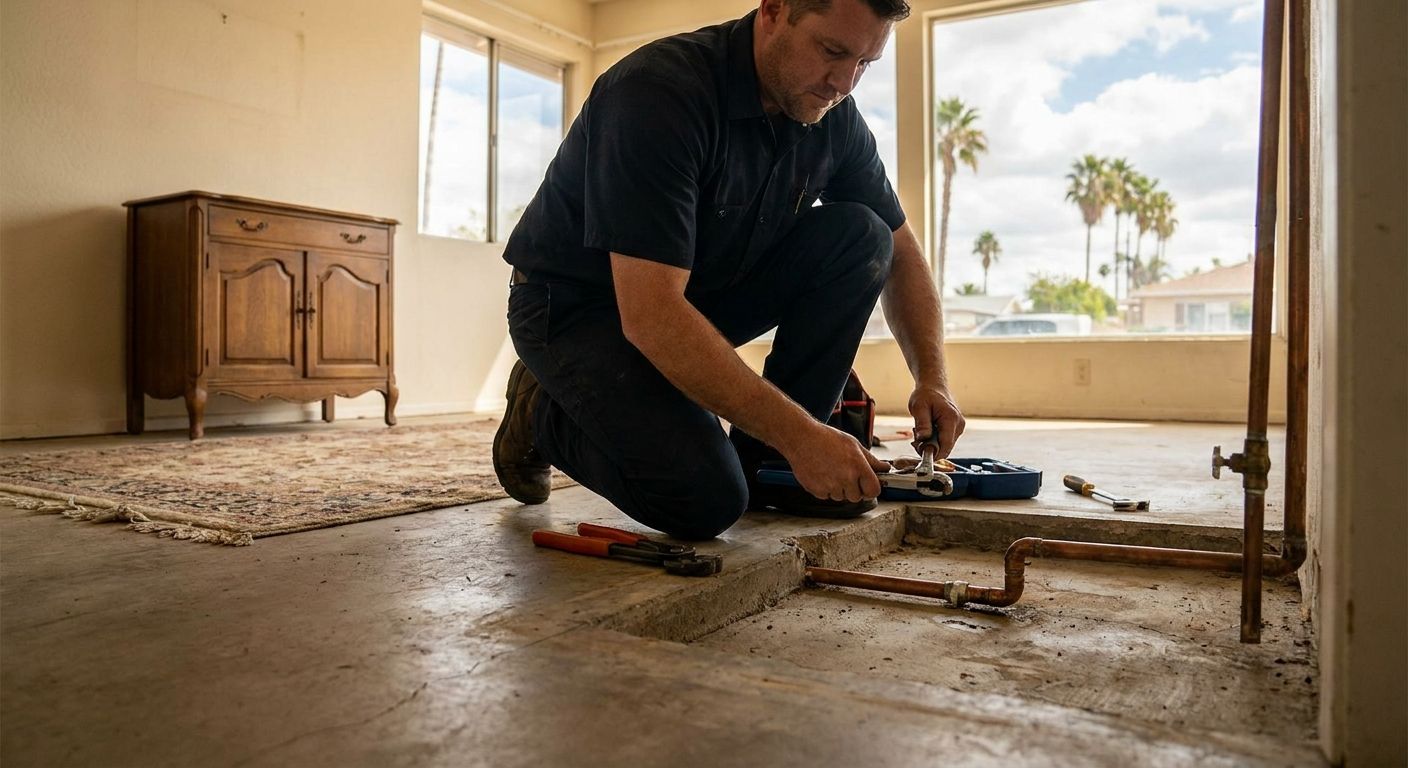
Slab leak repair for older Port St. Lucie homes means locating and fixing a broken water line running under the concrete slab foundation, with the goal of stopping water loss and foundation damage before it spreads. Homes built during Port St. Lucie's 1970s and 1980s growth years typically ran copper supply lines through the slab, and that copper is well into its 40- to 70-year expected service life heading into 2026.
- Slab leak repair port st lucie homeowners need starts with leak detection, not demolition.
- Copper pipe installed before the 1990s is aging past its 40-70 year service life in 2026.
- Imperium Electric traces the leak location first, then compares spot repair against a full re-pipe.
- A water bill that jumps with no new usage is the clearest early sign of a slab leak.
- Skipping the St. Lucie County permit on a slab repair can stall a home sale later.
Why slab leak repair matters for older Port St. Lucie homes
Port St. Lucie's older sections sit on slab-on-grade foundations with copper or galvanized supply lines run under the concrete. That pipe is decades into a 40- to 70-year expected lifespan for copper, and galvanized fails sooner. When a line under the slab pinholes or splits, water tracks along the path of least resistance — sometimes up through the slab into a closet, sometimes sideways into the soil where nobody notices until the foundation shifts.
If you own one of these homes, your water bill and your floor are the first line of defense. A jump in usage with no new fixtures or irrigation changes, paired with a warm spot on the floor, points at a slab leak before you ever see standing water. Waiting on it costs more than the repair — saturated soil under a footing is how a plumbing job turns into a foundation problem. For a broader read on catching leaks before they cause damage, see how to detect a hidden water leak before it floods your home.
Verdict: if your water bill is up and you can't explain why, treat it as a slab leak until a leak detection test proves otherwise.
Step-by-step: handling a slab leak in an older Port St. Lucie home
Watch for early slab leak warning signs
Catch it here and the fix stays small. Miss it and you're looking at flooring replacement on top of the pipe repair.
- Water bill noticeably higher than your seasonal average with no added usage
- Warm or damp spot on the floor, especially along the run of the hot water line
- Sound of running water when every fixture in the house is off
- Low water pressure at one or two fixtures only, not the whole house
- Musty smell or mold near baseboards where there's no visible plumbing
- New cracks in tile or flooring near a slab seam
Confirm the leak location before anyone breaks concrete
Guessing at the spot means cutting more slab than you need to. This is where a licensed crew earns its keep.
- Shut off every fixture and irrigation zone, then watch the water meter's leak indicator dial for movement
- Note which rooms feel warm underfoot — that side usually carries the hot supply line
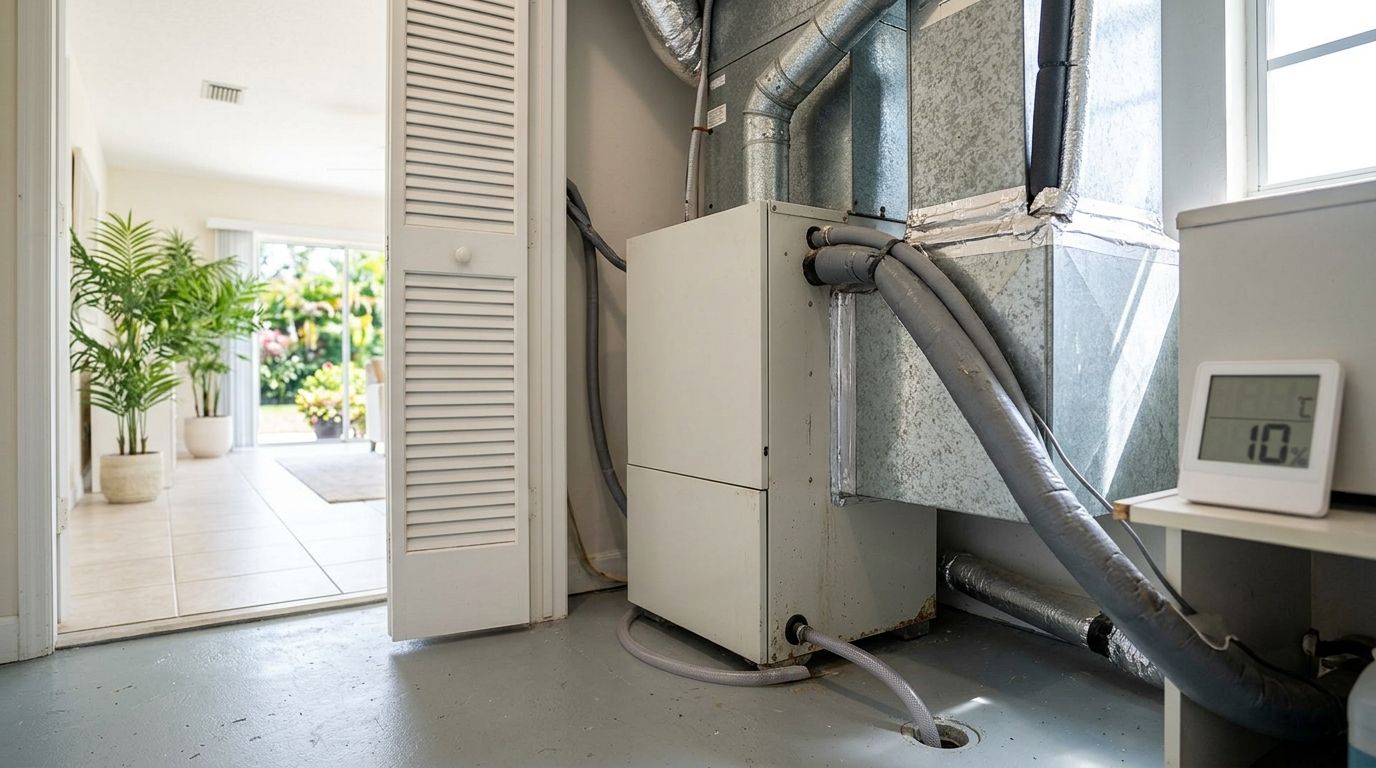
- Rule out an AC condensate line or irrigation break first; both are cheaper problems than a slab leak
- Have a licensed plumber run acoustic or thermal leak detection before any concrete comes up — Imperium Electric documents the exact location before quoting the repair
- Get the leak location in writing, not just a verbal estimate
Decide between a spot repair and a full re-pipe
One leak doesn't always mean one fix. The pipe's age and history matter more than the size of the current leak.
- Spot repair reroutes or patches the single damaged section — usually the fastest option
- A full re-pipe replaces the whole supply line, typically run overhead through the attic instead of back under the slab
- One isolated leak in pipe that's otherwise sound is usually a spot-repair case
- A second or third leak inside a few years, or original 1970s-80s copper throughout the house, usually points toward a full re-pipe
- Re-piping services for older Port St. Lucie homes covers what a full re-pipe involves and how it's sequenced
Pull the permit before work starts
St. Lucie County requires a permit for slab penetration and re-piping — not just for cosmetic repairs.
- A licensed plumber pulls the permit and schedules the required inspection, not the homeowner
- Skipping the permit on a "quick fix" creates a problem when a buyer's inspector asks for records at closing
- Keep the permit card and inspection sign-off with your home's closing documents
- Confirm the permit covers the specific work done — spot repair and re-pipe are filed differently
Schedule the repair as emergency or planned work
Active water inside the house and a slow leak under a slab are two different urgency levels — treat them that way.
- Water actively showing up inside a living space is an emergency call, any hour of the day
- A confirmed slow leak with no interior water yet can go on a normal weekday schedule
- Emergency plumber services for Port St. Lucie homeowners lists what qualifies as an emergency dispatch
- Ask whether the detection crew and the repair crew are the same people — fewer handoffs means fewer scheduling gaps
Protect the rest of the plumbing system while the slab is open
A slab job is already disruptive — use the access to catch other aging parts of the system at the same time.
- Test water pressure at a hose bib; Florida plumbing code requires a pressure-reducing valve once street pressure exceeds 80 psi
- Ask about backflow prevention if the repair is close to the main line near the meter
- Check the water heater's age while the crew is already on site — a slab job is a normal point to catch a second aging fixture
- Have the repaired section pressure-tested before the slab gets closed back up
Comparing slab leak repair options for older Port St. Lucie homes
| Option | Best for | Key limitation |
|---|---|---|
| Spot repair | One isolated leak in otherwise sound copper | Doesn't address other aging sections of the same line |
| Full re-pipe (overhead reroute) | Repeat leaks or original 1970s-80s copper throughout | Bigger job, more disruption while it's underway |
| Epoxy pipe relining | Structurally sound pipe with only interior corrosion | Not an option once a section has already split or pinholed |
| Slab tunneling access | Repairs that need to avoid breaking interior flooring | Requires exterior soil access and more excavation time |
Verdict: a spot repair fixes today's leak; a full re-pipe fixes the reason you'll keep getting leaks. Homeowners with 1970s-80s copper and more than one leak on record are better off budgeting for the re-pipe now instead of paying for detection twice.
“If the meter's leak indicator dial moves with every fixture in the house shut off, water is going somewhere under that slab.”
Common mistakes older Port St. Lucie homeowners make with slab leaks
- Patching the visible symptom — repainting a damp wall — instead of tracing where the water is actually coming from
- Assuming a slab leak is isolated when the home has original 1970s-80s copper that's failing throughout, not just in one spot
- Skipping the county permit on a "quick fix" and running into it during a home sale years later
- Ignoring a second leak within a year or two instead of treating it as a signal the whole line needs replacing
- Picking a contractor based on schedule speed alone and skipping electronic leak detection, which sometimes means cutting slab in the wrong spot
FAQ
What does slab leak repair cost in Port St. Lucie?
Cost depends on whether the fix is a spot repair or a full re-pipe, and on how much slab access the leak location requires. Ask for a written estimate after leak detection confirms the location and scope.
How can I tell if I have a slab leak versus a normal plumbing leak?
A slab leak usually shows up as a warm or damp spot on the floor, a running-water sound with fixtures off, or a water bill that jumps with no added usage. A normal leak is visible at a fixture, valve, or exposed pipe instead.
Is re-piping necessary for a home built in the 1970s or 1980s?
Not automatically, but original copper from that era is well past the midpoint of its 40- to 70-year expected lifespan in 2026. A second or third leak within a few years is usually the signal to re-pipe instead of patch again.
How long does slab leak repair take?
A single spot repair typically finishes in one day once the leak is located. A full re-pipe takes longer since it involves running new lines overhead through the attic and connecting fixtures room by room.
Do I need a permit for slab leak repair in St. Lucie County?
Yes, St. Lucie County requires a permit for slab penetration and re-piping work. A licensed plumber pulls the permit and schedules the required inspection as part of the job.
What causes slab leaks in older Florida homes?
Copper pipe corrodes from the inside over decades, especially in homes on well water or with aggressive soil conditions, and pinholes eventually form. Ground shifting and slab settling over 40-50 years also stresses the original pipe joints.
Can I keep using water while waiting for slab leak repair?
You can usually keep using the house normally for a confirmed slow leak with no interior water damage yet. If water is actively showing up inside a living space, shut off the main and treat it as an emergency call.
Is slab leak repair covered by homeowners insurance?
Coverage varies by policy and by whether the damage is sudden versus gradual, so check your specific policy language. The repair itself and any resulting flooring or drywall damage are usually assessed separately by the adjuster.
One last thing
The leak indicator dial on your water meter is a small triangle or wheel that spins with even a pinhole leak, and it costs nothing to check. Shut off every fixture and irrigation zone, watch that dial for two or three minutes, and you'll know before any contractor shows up in 2026 whether you're dealing with a slab leak or chasing something else entirely.