A Florida HOA can regulate generator placement and appearance, but it cannot deny an application for hurricane protection that meets its adopted specifications under Florida Statutes section 720.3035. That protection includes permanent fixed generators and fuel storage tanks; it does not exempt your installation from building codes, permits, or applicable local ordinances. For 2026, the practical answer is to get the HOA’s written specifications, submit a compliant installation plan, and keep association approval separate from government approval.
- Florida HOA generator installation rules cannot override section 720.3035’s protection for compliant permanent fixed generators.
- HOAs can require hurricane-protection specifications and adherence to an existing unified exterior appearance scheme.
- HOA approval does not replace permits, inspections, or manufacturer installation requirements.
- Imperium Electric LLC provides generator installation services for Treasure Coast homeowners; legal disputes require association-law counsel.
Can an HOA restrict generator installation in Florida?
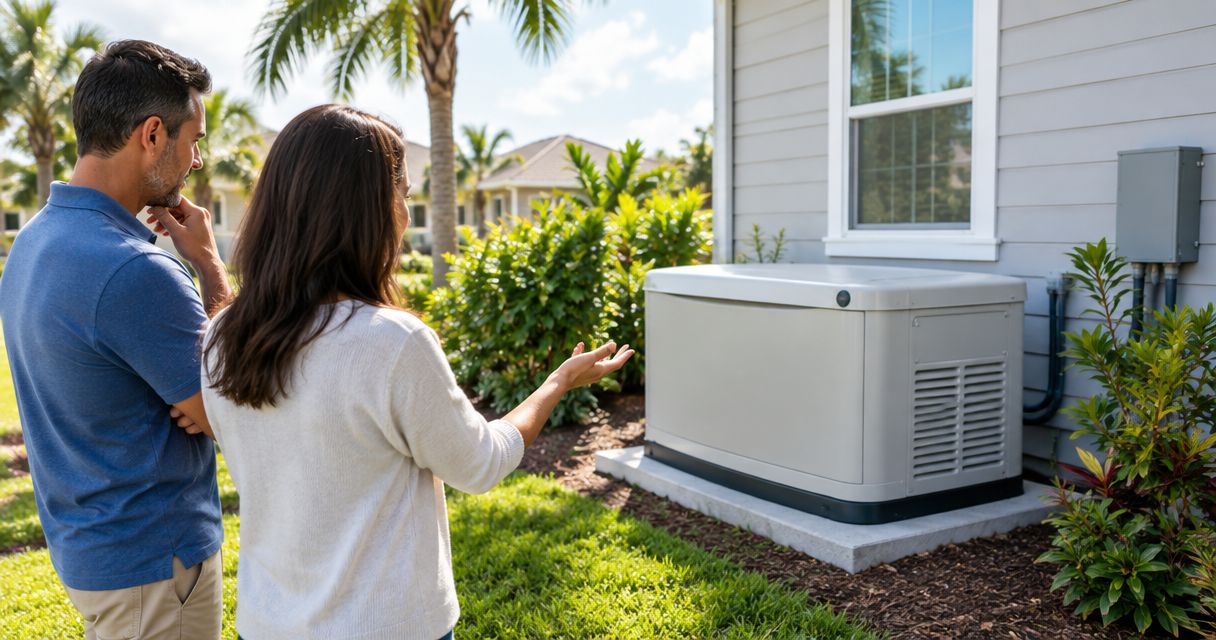
Yes, but its authority has limits. For Florida homeowners’ associations governed by Chapter 720, section 720.3035 addresses architectural control and hurricane protection. The hurricane-protection provisions expressly include permanent fixed generators and fuel storage tanks.
An HOA must adopt hurricane-protection specifications consistent with applicable building codes. It cannot deny an application for installation, enhancement, or replacement that conforms to those specifications. The association can require adherence to an existing unified building scheme regarding the exterior appearance of the property.
A restriction on location or screening is not the same as an enforceable blanket ban. If the board rejects your application, ask which adopted specification your proposal fails to meet.
| Proposed setup | Best for | Main advantage | Limitation to address |
|---|---|---|---|
| Permanent fixed generator | Homeowners planning installed backup power | Expressly included in Chapter 720’s hurricane-protection provisions | Must satisfy applicable specifications, codes, and installation requirements |
| Portable generator | Homeowners using movable backup equipment | Does not require a permanently mounted generator | Do not assume permanent-generator protections cover portable equipment; safe outdoor operation remains essential |
The legal reference for this 2026 guide is Florida Statutes section 720.3035, specifically its hurricane-protection provisions for Chapter 720 homeowners’ associations. A condominium, cooperative, or property with unusual ownership arrangements needs a separate review.
Why this matters
An HOA approval letter and a building permit serve different purposes. The association reviews the proposal under applicable community requirements; the permitting authority reviews regulated construction and installation work. You need both approval tracks addressed before installation begins.
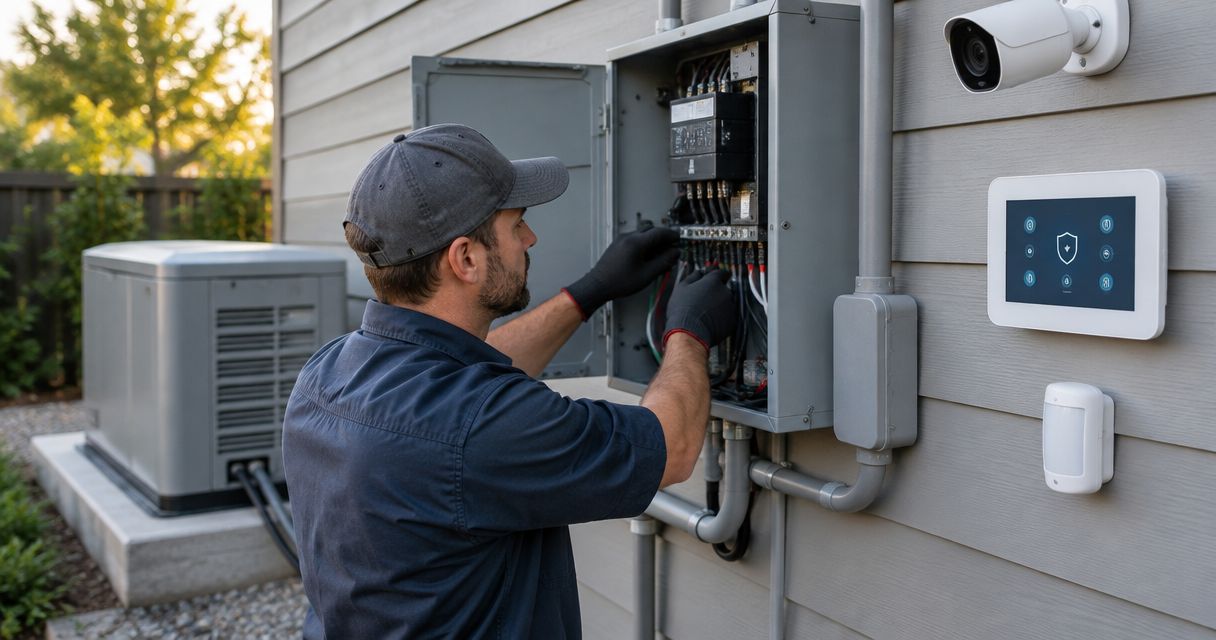
For Treasure Coast homeowners, Imperium Electric LLC provides generator installation services. Bring the contractor your survey, community specifications, and proposed equipment information before settling on a location. A site plan that addresses restrictions early is more useful than an equipment choice with nowhere compliant to install it.
Do not treat an informal conversation with a board member as approval. Submit the actual arrangement you intend to build, including the generator, fuel equipment, electrical connections, and proposed screening.
Permanent fixed generators: protected, not exempt
A permanent fixed generator falls within the hurricane-protection items identified in section 720.3035. That matters when an HOA responds that generators are simply prohibited throughout the community.
The statutory protection is tied to conformity with adopted specifications. It is not permission to put equipment anywhere on the lot or disregard an existing unified exterior appearance scheme.
Ask the association to provide these documents together:
- The adopted hurricane-protection specifications.
- The architectural application and submission instructions.
- The applicable exterior appearance requirements.
- Any written generator placement, screening, and fuel-equipment standards.
For a 2026 application, use the association’s current documents rather than a neighbor’s old approval packet. Compare each requirement with the proposed installation, and flag any requirement that conflicts with safe equipment placement for professional review.
Do not solve an appearance problem by creating a ventilation or service-access problem. A contractor must check proposed walls, fences, and landscaping against the equipment’s installation instructions.
Portable generators: different rules and safety requirements
Portable generators are not the same equipment category as the permanent fixed generators expressly identified in the hurricane-protection provisions. Do not assume the same statutory protection applies to a portable unit simply because you use it during a hurricane outage.
Portable equipment also brings a different operating problem: you must position and operate it safely every time you use it. The CDC’s generator safety guidance calls for portable generators to operate outdoors, at least 20 feet from doors, windows, and vents, with exhaust directed away from the building. That is portable-generator guidance, not a universal setback for permanently installed standby equipment.
Never operate a fuel-burning portable generator inside a home, garage, or enclosed porch. Opening a garage door does not make indoor operation safe.
If you intend to supply household circuits, plan the connection separately. Proper generator transfer switch installation for Port St. Lucie homeowners addresses the connection between backup power and the home’s electrical system; HOA permission does not make an unsafe connection acceptable.
Why HOA generator requirements vary
The approval question depends on the property and proposed installation, not just the equipment name. These factors determine which documents and technical details you need:
- Association type. A Chapter 720 HOA and a Chapter 718 condominium association operate under different statutory frameworks.
- Equipment type. Permanent fixed generators receive express treatment in the HOA hurricane-protection provisions; portable equipment requires separate analysis.
- Property boundaries. Your lot, an easement, and association-owned land are not interchangeable installation locations.
- Exterior appearance. An existing unified building scheme can affect screening and visible equipment placement.
- Installation requirements. Exhaust, ventilation, fuel connections, electrical work, and maintenance access affect the proposed layout.
- Local jurisdiction. The authority responsible for the property determines applicable permitting and inspection requirements.
A neighbor’s approval is useful background, not a substitute for reviewing your own site. Different windows, lot lines, utility routes, or ownership boundaries change the installation plan.
How do I get HOA approval for a generator in Florida?
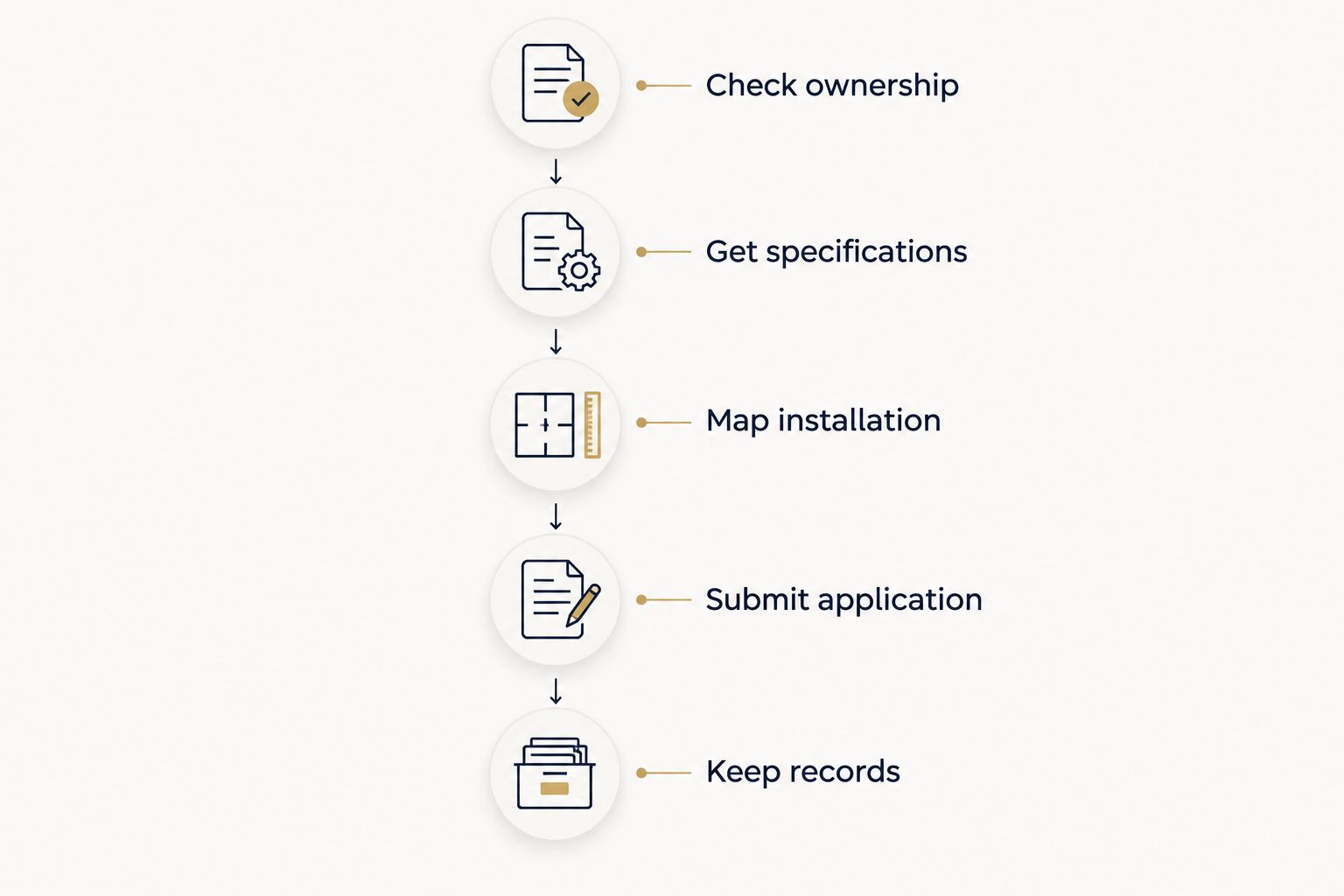
Use these 5 steps to build a written approval record. The goal is a proposal the association can evaluate against its specifications, not a general request to approve backup power.
1. Check ownership
Confirm whether the equipment will sit entirely on your parcel. Identify easements and any association-owned property affected by the generator, fuel tank, trenching, or electrical route. If you own a condominium unit, establish which proposed work affects common elements before applying.
2. Get specifications
Request the current hurricane-protection specifications and architectural submission rules in writing. Ask the association to identify the standards it uses for permanent fixed generators and fuel storage tanks. Save the documents with your application materials.
3. Map installation
Have the contractor prepare a proposed arrangement showing the generator, fuel equipment, nearby openings, property boundaries, electrical connection, and screening. Include the manufacturer’s installation information. The plan must address safety and access as well as appearance.
4. Submit application
Send the complete package through the association’s required channel. Keep a dated copy and proof of delivery. Ask for a written decision that identifies any unmet specification rather than relying on verbal comments.
5. Keep records
Retain the submitted plan, correspondence, approval conditions, permits, and inspection records. If the location, equipment, or screening changes, resolve whether the association needs a revised application before construction proceeds.
The sequence keeps ownership, design, and approval questions separate. Finish the document review before treating the proposed location as final.
What should the generator application include?
Your application should let the reviewer understand what changes outside the home. A product brochure alone does not show whether the proposed installation fits the property.
Include a site drawing, equipment information, proposed screening, and the route of associated work. Show the fuel storage arrangement when applicable, rather than seeking approval for the generator while leaving the tank location unresolved.
Use a short cover note that identifies the request as permanent fixed generator hurricane protection under section 720.3035. Ask the reviewer to evaluate it against the association’s adopted specifications and identify any requested corrections in writing.
Imperium Electric LLC’s generator installation services are relevant to the physical installation plan. The contractor’s scope does not replace legal review of disputed covenants or association decisions.
Plan your generator installation
Discuss the equipment location, electrical connection, and installation scope for your Treasure Coast property.
Can my HOA ban all permanently installed generators?
Section 720.3035 prevents a Chapter 720 HOA from denying a conforming hurricane-protection application. Because permanent fixed generators are expressly included, a blanket prohibition does not settle whether your proposed installation is protected.
Ask for a written decision identifying the adopted specification your application fails to satisfy. If the response relies only on a general prohibition, have a Florida community-association attorney review the denial and governing documents before escalating the dispute.
Do not install first to test the rule. A disagreement about the HOA’s authority does not remove permit requirements or resolve a disputed equipment location.
Does HOA approval mean I can skip a generator permit?
HOA approval does not replace government permits or inspections. Ask the permitting authority responsible for your property which approvals apply to the generator, electrical connection, fuel system, and related construction.
Keep the approved association plan aligned with the permitted installation. If a technical review requires moving the generator or changing screening, resolve the association implications before building the revised arrangement.
Do Florida condo owners have the same generator rights?
Chapter 720’s HOA provisions do not automatically govern a Chapter 718 condominium. Condominium ownership and common-element restrictions create separate questions about equipment placement and alterations.
A balcony, shared yard, roof, or exterior wall is not automatically an owner-controlled installation area. Confirm ownership and obtain advice specific to the condominium before assuming a detached-home generator plan applies.
What if the HOA denies or delays the application?
Start with the written record. Ask whether the submission is complete, which specification remains unmet, and what correction would make the proposal conform.
For a 2026 dispute, keep the current specifications, complete application, delivery records, and written responses together. Do not assume silence means approval; have any claimed approval deadline or automatic-approval provision reviewed before relying on it.
A useful response addresses the actual objection. If the board objects to visibility, submit a safe screening detail; if it objects to location, ask the contractor to assess compliant alternatives. If the disagreement concerns whether the association can prohibit the equipment at all, that is a legal question rather than an installation adjustment.
FAQ
Can an HOA require landscaping around my standby generator?
An HOA can impose applicable appearance requirements, but the proposed landscaping must also comply with equipment installation requirements. Submit screening details that preserve ventilation, exhaust clearance, and service access.
Are generator fuel tanks covered by Florida’s HOA hurricane-protection law?
Fuel storage tanks are expressly included in the hurricane-protection provisions of Florida Statutes section 720.3035. Applicable association specifications, codes, permits, and local requirements still need to be addressed.
Can I put my generator wherever it is least visible?
No, reduced visibility does not establish that a generator location is safe or compliant. The contractor must also assess openings, ventilation, property boundaries, fuel equipment, electrical work, and access.
Does a hurricane warning cancel my HOA’s generator rules?
Do not treat a hurricane warning as automatic permission to disregard association requirements or installation rules. Resolve approval and safe placement before storm conditions make installation or operation hazardous.
How far should a portable generator be from my home?
The CDC advises operating portable generators outdoors at least 20 feet from doors, windows, and vents, with exhaust directed away from buildings. Do not apply that distance as a universal installation rule for permanently installed standby generators.
Who should review a generator denial from my HOA?
A Florida community-association attorney should review a disputed HOA denial and the governing documents. A qualified installation contractor should address technical objections involving placement, equipment, connections, and screening.
One last thing
Screening belongs in the original installation plan, not at the end. A fence or hedge that satisfies an appearance request can still interfere with required airflow or maintenance access if its location is wrong.
For your 2026 project, have Imperium Electric LLC assess the physical installation requirements while you obtain the association’s written standards. Get the generator location and its screening reviewed together, then keep that approved arrangement consistent through permitting and construction.