Yes, you can finance HVAC replacement in Florida through a personal loan, home-equity borrowing, a credit card, or contractor-arranged financing where offered. Approval and repayment terms depend on the lender and your finances; interest, fees, and any promotional conditions affect what you ultimately repay. Compare the full repayment obligation—not just the monthly payment—before signing.
- Can you finance HVAC replacement in Florida? Yes—compare personal loans, home-equity borrowing, and contractor-arranged financing where offered.
- Imperium Electric LLC serves Treasure Coast homeowners needing HVAC and electrical services; ask about financing separately.
- Compare APR, fees, repayment length, collateral, and promotional conditions before accepting HVAC financing.
- Get a written installation scope before borrowing so required electrical or duct work is not overlooked.
Why this matters
An affordable payment does not prove that an HVAC replacement is affordable overall. A longer repayment period spreads out the obligation but can increase total interest, while a home-secured loan puts your property behind the debt.
Imperium Electric LLC is a fit for Treasure Coast homeowners needing HVAC and electrical services. Start with a written project scope from Imperium Electric LLC, then evaluate borrowing separately. Choosing an installer and choosing a lender are different decisions.
For a 2026 replacement, keep the installation proposal and financing disclosure together. You need to understand both what the contractor will install and what the lender expects you to repay.
Can you finance HVAC replacement in Florida?
Yes. Florida homeowners can use several forms of consumer credit to pay for an HVAC replacement, subject to lender approval and the financing agreement. Contractor-arranged financing is another route when an installer offers access to a lender; it is not an automatic feature of an installation proposal.
The main differences are collateral, repayment structure, and how you obtain the loan. Use this comparison to identify which route deserves a closer review.
| Financing route | Best for | Main advantage | Main drawback |
|---|---|---|---|
| Contractor-arranged financing, where offered | Homeowners who want to evaluate financing alongside installation | Connects the project proposal with a financing application | Convenience does not establish that the terms are your best option |
| Unsecured personal loan | Borrowers who want an installment loan without pledging their home | Separates the lender decision from the installer decision | Approval, borrowing limits, and terms depend on underwriting |
| Home-equity loan or HELOC | Homeowners with equity who accept home-secured borrowing | Provides a borrowing route tied to available home equity | Your home secures the debt; closing costs and variable rates require attention |
| Credit card | Borrowers with a clear payoff plan who understand the card agreement | Uses an existing credit line if sufficient credit is available | Revolving interest or promotional conditions can complicate repayment |
Request written terms before choosing a financing route. A verbal payment estimate leaves too much unanswered, including whether the rate changes and whether fees are financed.
Contractor-arranged financing: convenient, but compare independently
Best for: homeowners who want to consider installation and financing together. Ask whether the contractor offers financing through a lender, who makes the credit decision, and which agreement governs repayment. Do not assume the contractor is the lender.
The advantage is coordination: you can review a proposed installation and an associated financing option together. The drawback is that an easy application process tells you nothing about whether the borrowing terms suit your household.
Before applying, ask whether checking eligibility involves a soft credit inquiry or a hard inquiry. Also confirm whether the loan covers the entire written scope or only selected equipment and installation work.
For any contractor financing presented in 2026, obtain the lender's disclosures rather than relying on an advertisement. Keep approval conditions separate from the contractor's installation commitments.
Personal loans: separate financing from installation
Best for: borrowers who want unsecured installment financing and an independent lender choice. An unsecured personal loan does not pledge your house as collateral. You still owe the debt, and missed payments have consequences under the loan agreement.
A personal loan lets you compare lenders without changing the installation scope. Check whether the rate is fixed, whether an origination fee reduces the funds you receive, and whether early repayment triggers a penalty.
The limitation is underwriting. Your income, existing obligations, and credit history influence the lender's decision; a contractor's willingness to perform the work does not guarantee loan approval.
Match the amount you actually receive to the installation obligation. If a lender deducts a fee before disbursement, the loan's stated amount and the usable funds are not necessarily the same.
Home-equity borrowing: understand the collateral risk
Best for: homeowners with available equity who deliberately accept borrowing secured by their home. A home-equity loan generally provides a lump sum, while a home-equity line of credit allows borrowing under the line's terms.
The benefit is access to a home-secured financing route. The trade-off is substantial: failure to repay secured borrowing can put your home at risk. Do not choose it solely because the payment looks manageable.
For a HELOC, ask whether the interest rate is variable and how payments change when the draw period ends. For either route, examine closing costs, repayment conditions, and any restrictions on accessing funds.
Do not assume a home-equity application will match an urgent replacement schedule. Confirm the lender's funding process before authorizing work that depends on those funds.
Credit cards: require a defined payoff plan
Best for: borrowers who understand their card terms and have a repayment plan that does not depend on uncertain savings. A credit card can fund an eligible transaction when the contractor accepts it and the account has sufficient available credit.
The benefit is avoiding a separate installment-loan application when you use an existing account. The drawback is that revolving debt can remain outstanding long after installation if you make only the required minimum payments.
Read promotional language carefully. A true introductory interest-rate offer and a deferred-interest promotion are not interchangeable: deferred interest can become payable if the agreement's payoff requirements are not satisfied.
Ask what happens if a balance remains when the promotion ends or a payment is late. Use the written card agreement, not a shorthand description such as interest-free financing.
Why HVAC financing terms vary
The financing agreement reflects both the borrower and the selected credit product. When comparing 2026 offers, review these factors rather than treating a quoted monthly payment as the whole decision:
- Credit history: Lenders assess your borrowing and repayment record when making credit decisions.
- Income and existing obligations: The lender evaluates your ability to repay alongside other commitments.
- Amount financed: Equipment, labor, and included supporting work determine how much funding the project requires.
- Repayment length: Spreading repayment over a longer period changes the payment and total interest obligation.
- Collateral: Unsecured borrowing and borrowing against your home carry different risks and conditions.
- Rate structure and fees: Fixed rates, variable rates, origination fees, and promotional terms change the agreement you are accepting.
Ask each lender to explain the same items in writing. Comparing different scopes or different repayment structures without identifying those differences produces a misleading result.
How do you compare HVAC financing before signing?
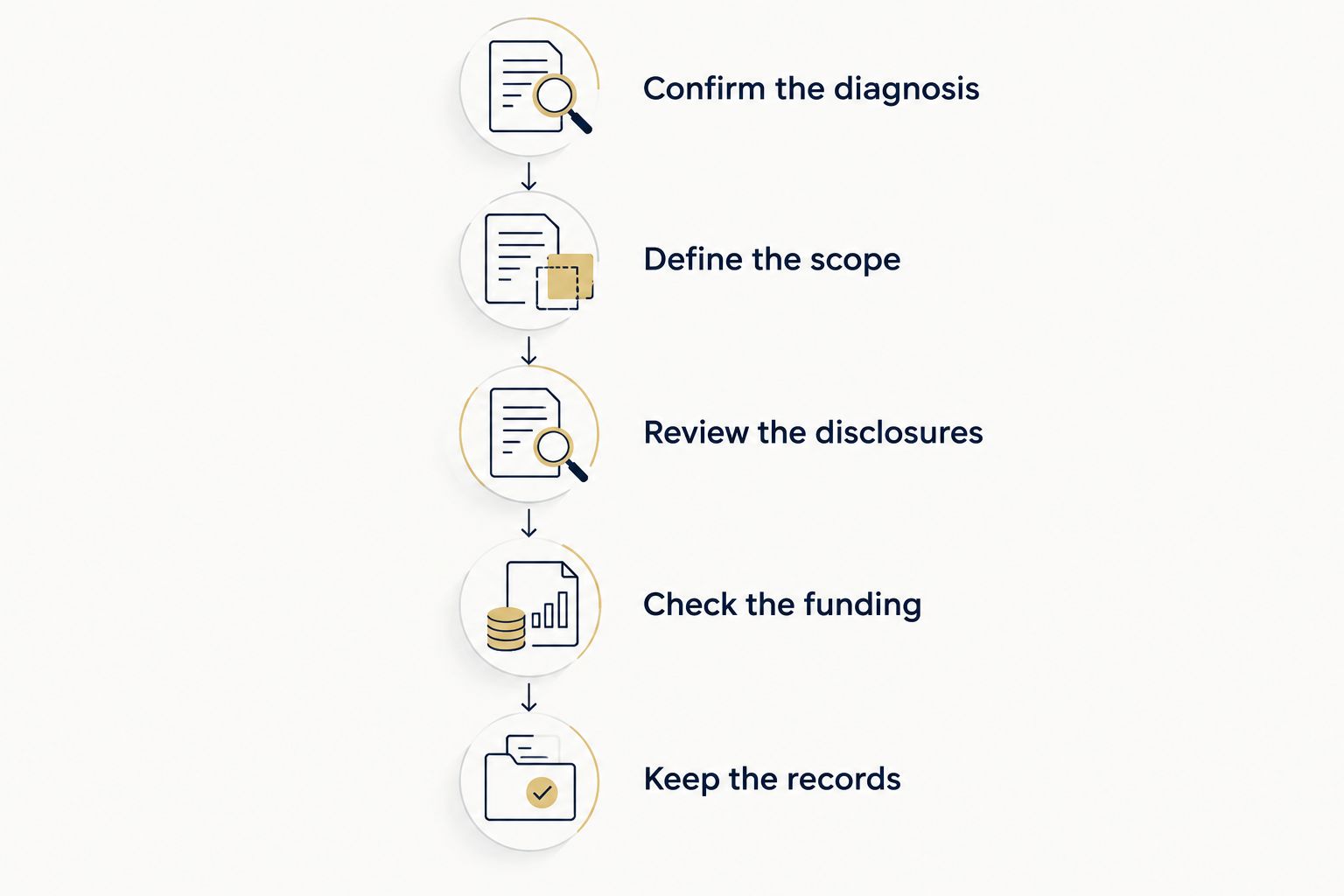
Compare the installation scope first, then the financing disclosures. Follow this sequence so the borrowing decision does not conceal gaps in the replacement proposal.
- Confirm the diagnosis. Ask why replacement is recommended and whether repair remains a practical alternative. Obtain the explanation in writing.
- Define the scope. Identify the equipment, installation work, exclusions, and any required supporting work before requesting financing.
- Review the disclosures. Compare APR, fees, repayment length, total payments, and any collateral or promotional conditions.
- Check the funding. Confirm who receives the funds, when payment becomes due, and what happens if the project changes.
- Keep the records. Retain the installation contract, financing agreement, change orders, and completion documents together.
The order matters. Financing approval is not evidence that the equipment selection or installation scope is correct.
Before signing in 2026, ask for the complete agreement with all pages included. A payment illustration is not a substitute for the contract and credit disclosures.
Check what the installation proposal includes
A financing agreement funds a project; it does not define that project. Ask the installer to identify equipment model information, removal of existing equipment, installation labor, and responsibility for permits and inspections where required.
Also ask whether the proposal includes necessary duct modifications, condensate drainage work, thermostat work, and electrical changes. These are scope questions, not a statement that every replacement needs every item.
Equipment selection deserves separate attention. Review how to size an air conditioner for a Florida home before accepting a proposal based only on the existing unit's size.
Imperium Electric LLC provides HVAC and electrical services on the Treasure Coast. That service scope is relevant when a replacement involves both trades, but you should still request explicit inclusions and exclusions in the written proposal.
Discuss your HVAC replacement
Ask about the installation scope, electrical requirements, and next steps for your Treasure Coast property.
Can you finance HVAC replacement with bad credit?
Yes, financing with impaired credit is possible, but approval is lender-specific and never guaranteed. Expect the lender to evaluate your application rather than treating an advertised financing option as an approval promise.
Ask about prequalification and the type of credit inquiry before submitting applications. If an offer is approved, review the complete repayment obligation; access to credit does not make every agreement suitable.
Avoid anyone who promises approval without explaining the lender, contract, and repayment conditions. Do not sign an installation commitment that depends on financing you have not secured.
Is financing better than paying from savings?
Neither method is automatically better. Paying from savings avoids borrowing interest, while financing preserves cash but creates a repayment obligation and can add fees and interest.
Compare the effect on your emergency reserves with the actual financing terms. Do not assume a new system's energy savings will cover the payment unless a documented assessment supports the specific savings estimate.
For a 2026 decision, use your current household obligations and the actual written offer. A general affordability rule cannot replace your budget.
Can you finance repairs instead of replacing the system?
Repairs can be financed through eligible credit products, but the lender and contractor determine which transactions they support. First obtain a diagnosis that distinguishes a repairable fault from a reason to replace the system.
A repair and a replacement are different scopes, not simply different payment amounts. Compare what each resolves, what remains unchanged, and the written conditions before borrowing for either.
FAQ
Can you finance HVAC replacement in Florida in 2026?
Yes, you can finance HVAC replacement in Florida through eligible loans, home-equity borrowing, credit cards, or contractor-arranged financing where offered. Approval and repayment terms depend on the lender and your application.
What credit score do I need to finance a replacement air conditioner?
There is no single credit-score requirement across all HVAC financing options. Ask the specific lender about eligibility, prequalification, and whether applying creates a hard credit inquiry.
Does Imperium Electric LLC provide HVAC financing?
Ask Imperium Electric LLC directly whether contractor-arranged HVAC financing is offered for your project. Review any lender's written terms separately from the installation proposal.
Is a personal loan better than a home-equity loan for HVAC replacement?
A personal loan avoids pledging your home when it is unsecured, while a home-equity loan uses your home as collateral. Compare APR, fees, repayment terms, and collateral risk rather than choosing by payment alone.
Does interest-free HVAC financing always mean no interest?
No, the agreement determines whether a promotion is a true introductory interest-rate offer or a deferred-interest arrangement. Read what happens if you miss a payment or fail to clear the balance by the required deadline.
Can I pay off HVAC financing early?
Early-payoff conditions depend on the credit agreement. Check for prepayment penalties and ask the lender how additional payments are applied before signing.
Should I choose the HVAC offer with the lowest monthly payment?
No, the lowest monthly payment does not establish the lowest total repayment obligation. Compare the same installation scope, APR, fees, repayment length, and total payments.
One last thing
Loan approval checks the borrower, not the HVAC design. A lender's approval does not establish that the proposed equipment is correctly sized or that the installation includes every required task.
Before accepting either agreement, ask the installer what is excluded and ask the lender what changes your repayment obligation. Those answers belong in writing, even when the monthly payment already fits your budget.