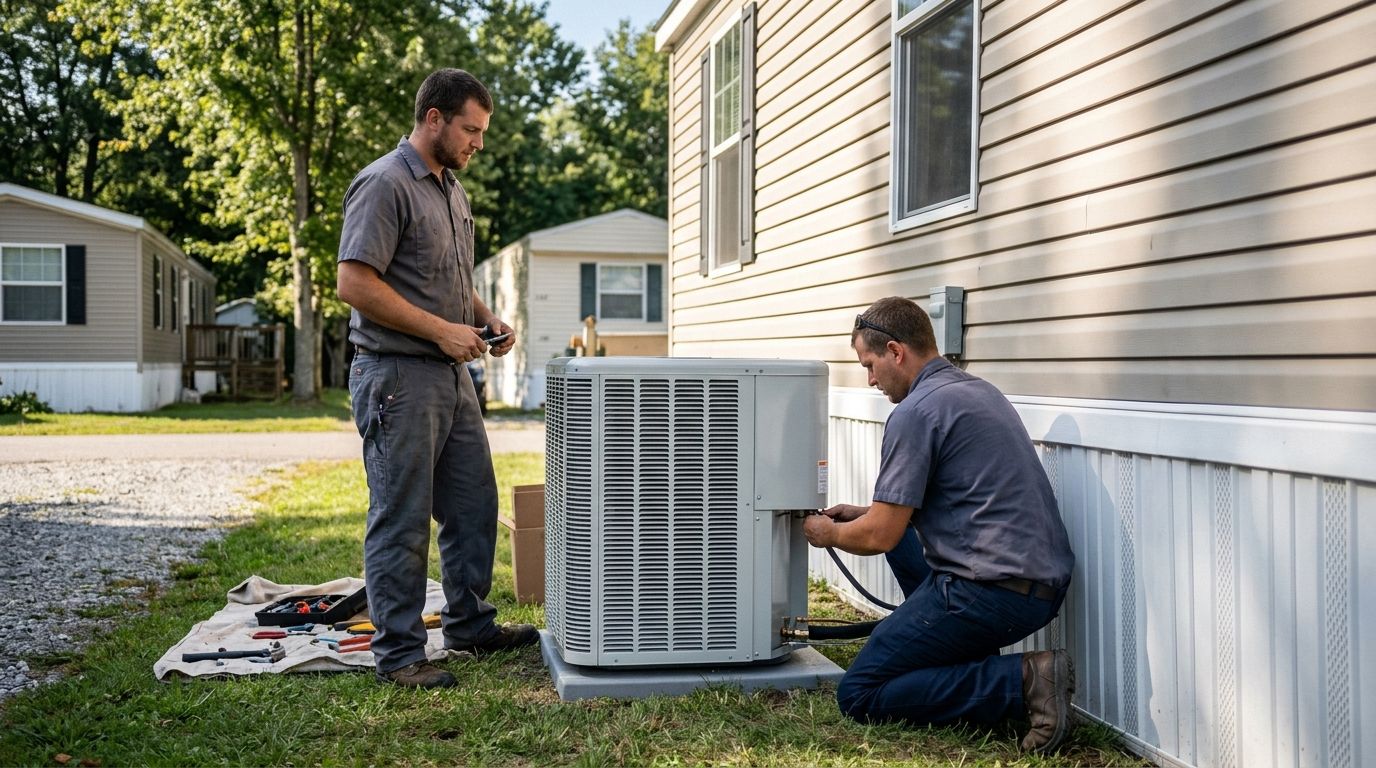
Manufactured and mobile homes in Port St. Lucie need HVAC replacement handled differently than site-built houses because the ductwork, electrical service, and structural tie-in points are built to HUD code, not Florida residential code. Get the wrong system and you're stuck with short cycling, moisture in the belly board, and a unit that dies again in five years instead of fifteen.
- HVAC replacement for mobile homes requires manufactured-home rated equipment — standard residential split systems often won't fit or seal correctly.
- Undersized electrical service is the #1 reason replacement HVAC units trip breakers in older manufactured homes.
- Ductless mini-splits are the fastest fix for additions and Florida rooms that were never on the original duct run.
- Correct sizing based on square footage and insulation, not the old unit's tonnage, prevents the short-cycling that wrecks compressors.
- Imperium Electric handles the electrical panel, disconnect, and generator hookup work that HVAC-only contractors skip on manufactured home jobs.
Why HVAC replacement matters for manufactured home owners
Manufactured homes lose and gain heat faster than stick-built houses because the walls are thinner and the underbelly insulation degrades over time. That means an oversized or undersized system shows its problems faster here than in a conventional house — you'll notice it in the electric bill within the first summer, not the fifth.
Most manufactured homes on the Treasure Coast were set in the 1980s through 2000s, and the original HVAC and electrical wiring for manufactured homes in Port St. Lucie was sized for the equipment available then. A 2026 heat pump or package unit pulls different amperage and airflow, which is why the electrical side needs a second look every time the HVAC gets replaced, not just the ductwork.
Update your equipment checklist
Before you call for quotes, confirm what you're actually replacing:
- Whether the current unit is a package unit (all-in-one, usually mounted outside on a pad) or a split system
- The data plate model and serial number, which tells an installer the manufactured-home certification (HUD label) status
- The condition of the supply plenum and belly board insulation under the home
- Whether the home has any additions or converted porches not on the original duct run
- The age and amperage rating of the main electrical panel
Check the electrical service panel and disconnect
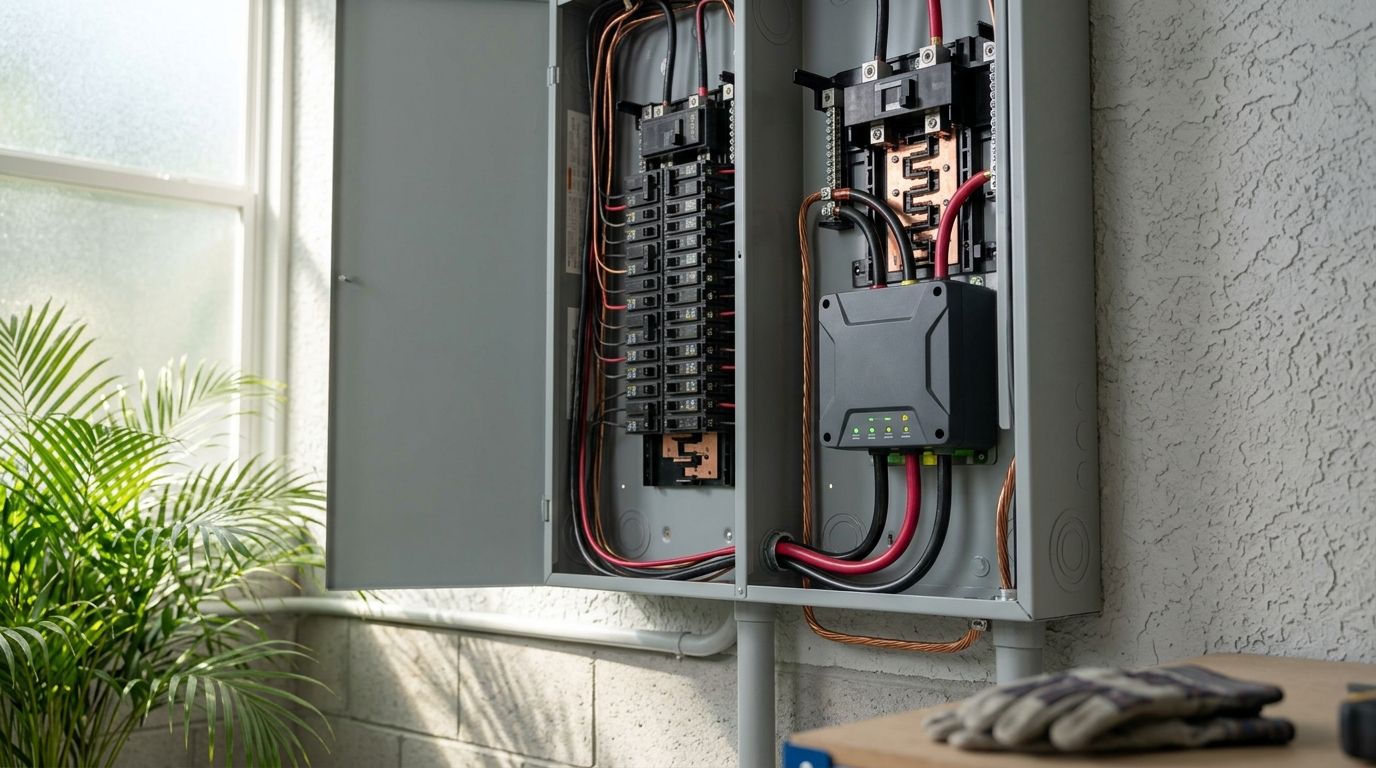
Manufactured homes often run on 100-amp service that was adequate for a 1990s AC unit but not for a modern heat pump with strip heat, a pool pump, and a few window units running at once. This step gets skipped by HVAC-only crews because it's not their trade — it's why electrical and HVAC need to be looked at together, not separately.
- Confirm the panel's amperage rating matches the new unit's minimum circuit ampacity, printed on the equipment nameplate
- Check whether the outdoor disconnect box is rated for the new unit's voltage and has room for the correct fuse or breaker
- Look for corrosion on panel lugs and breakers, common in coastal humidity after 15+ years
- Verify the whip and conduit running to the outdoor unit meets current code, not just what passed inspection decades ago
- Ask if a whole-house surge protector is installed — a $250 compressor failure from a lightning strike is common on the Treasure Coast and mostly preventable
Size the system correctly for a manufactured home
Tonnage matching the old unit is the single most common mistake in HVAC replacement for mobile homes. Manufactured home insulation, window count, and skirting condition all change the actual load, and a Manual J load calculation catches what guesswork misses.
- Measure total conditioned square footage, including any additions
- Count west- and south-facing windows, which drive Florida cooling load more than any other single factor
- Check attic and underbelly insulation R-value against current standards
- Factor in whether the home has skirting installed, which changes the underbelly temperature the ductwork sits in
- Run a Manual J calculation rather than reusing the old unit's tonnage — full guidance is in how to size an air conditioner for a Florida home
Choose ducted vs ductless for your floor plan
Original manufactured home duct runs were built for the home's original footprint. Additions, Florida rooms, and converted carports usually sit outside that duct run, and trying to extend a 30-year-old duct system into new square footage rarely performs well.
- Ducted package or split systems work best when the original duct run is intact and sealed
- Ductless mini-splits solve additions and rooms with no existing duct access without tearing into the belly board
- A hybrid setup — central system for the main home, mini-split for an addition — is common on Treasure Coast manufactured homes
- Zoning becomes worthwhile once a home has more than one distinct living area with different sun exposure
- Details on the ductless route are in ductless mini-split installation for Florida garages and additions
Verify manufactured-home rated equipment and tie-downs
Not every residential HVAC unit is rated for manufactured home installation. Skipping this check is how homeowners end up with equipment that fails inspection or voids a warranty.
- Confirm the outdoor unit has a manufactured-home rated pad or stand, not just set on bare ground
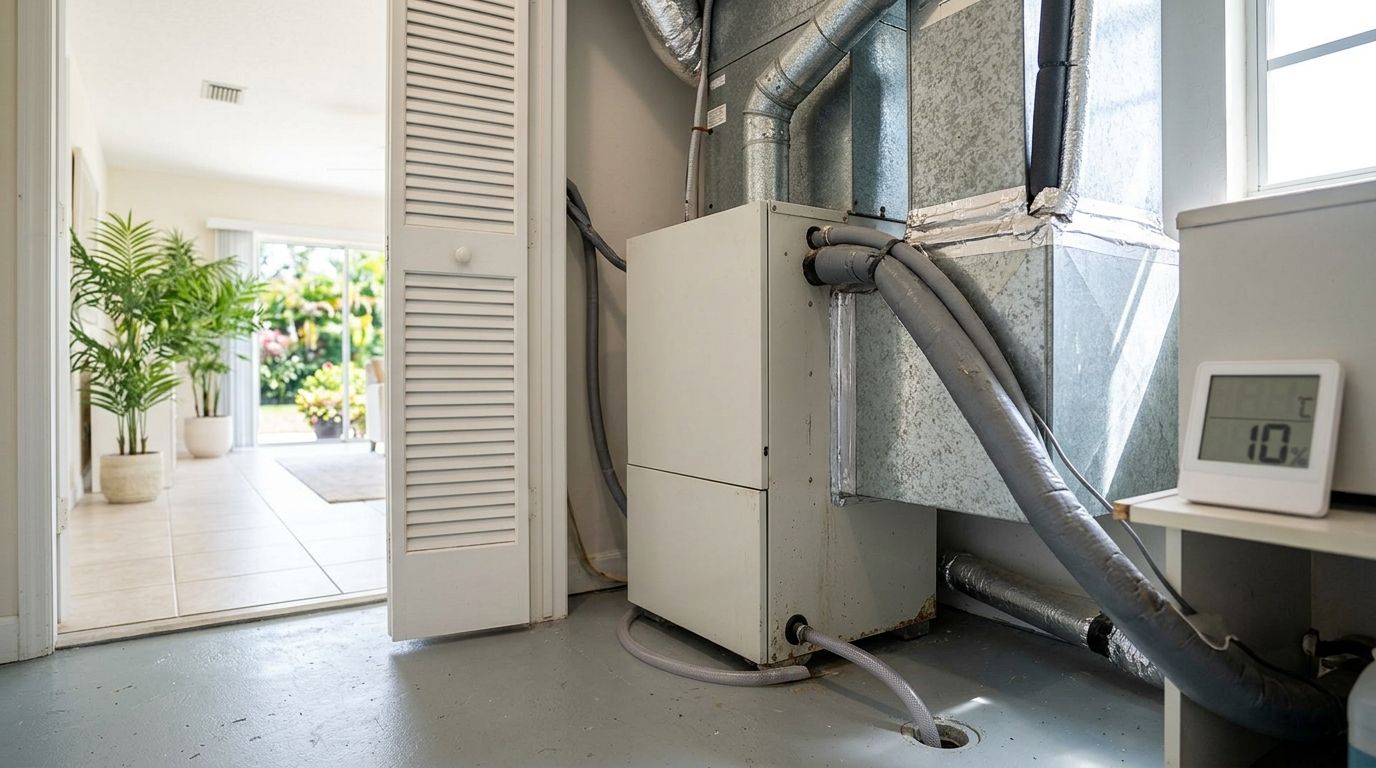
- Check that condensate lines are pitched correctly given the home's crawlspace height
- Verify strapping and tie-downs meet Florida wind load requirements for the unit's weight and mounting height
- Ask whether the new unit's refrigerant type (R-410A vs newer R-32/R-454B systems entering the market in 2026) matches what your line set and disconnect can handle
Schedule replacement around permitting and inspection
HVAC replacement in St. Lucie County requires a mechanical permit and, if the electrical disconnect or circuit changes, an electrical permit too. Skipping this step is the most common way homeowners end up with insurance or resale problems later.
- Confirm both mechanical and electrical permits are pulled before work starts
- Schedule the rough-in inspection before the unit is sealed up or skirting is replaced
- Keep the manufacturer's data plate and permit paperwork for future insurance or resale documentation
- Ask your contractor whether a four-point inspection is coming up — new HVAC and panel work often satisfies both at once
Maintain the system after installation
A new system in a manufactured home still needs more frequent filter and coil attention than a stick-built house because underbelly airflow carries more dust and moisture.
- Change filters every 30-60 days, shorter than the standard 90-day recommendation
- Have the outdoor unit's refrigerant charge checked at the one-year mark
- Schedule annual duct inspection given how much faster manufactured home ductwork degrades
- Consider a maintenance plan rather than calling only when something breaks — details at best HVAC maintenance plans for Treasure Coast homeowners
Comparison: HVAC replacement options for manufactured homes
| Option | Best for | Key limitation |
|---|---|---|
| Manufactured-home rated package unit | Full replacement matching original duct run | Requires HUD-certified pad and correct tie-down rating |
| Ducted split system | Homes with intact, sealed original ductwork | Doesn't help additions outside the duct run |
| Ductless mini-split | Additions, Florida rooms, converted carports | Doesn't replace whole-home central air by itself |
| Hybrid (central + mini-split) | Manufactured homes with additions and mixed sun exposure | Higher upfront coordination between two systems |
Verdict: for a straight swap on an intact duct run, a manufactured-home rated package unit is the right call; for any home with an addition or converted room, plan on a ductless mini-split covering that space separately.
Get an HVAC replacement quote
Licensed electrical, plumbing, and HVAC work for Treasure Coast manufactured homes.
Common mistakes manufactured home owners make
- Matching tonnage to the old unit instead of running a load calculation. A 30-year-old 2.5-ton unit doesn't mean the home needs 2.5 tons today — insulation, windows, and additions have changed the math.
- Skipping the electrical panel check. A new heat pump with strip heat can pull more amperage than a 100-amp panel from the 1990s was ever sized for.
- Extending old ductwork into new additions. Sealing new square footage into a 30-year-old duct run usually creates more airflow problems than it solves.
- Forgetting mechanical and electrical permits. Unpermitted HVAC replacement is a documented issue during resale and four-point insurance inspections.
- Ignoring generator hookup compatibility. If backup power matters during hurricane season, the new HVAC load needs to be sized into the generator plan, not added afterward — see generator hookups for Port St. Lucie manufactured homes.
FAQ
How much does HVAC replacement cost for a mobile home in 2026?
Costs vary by unit type, tonnage, and whether electrical panel work is needed alongside the HVAC swap. Get a site-specific quote rather than relying on a national average, since manufactured home installs often carry extra electrical and permitting steps.
Can any residential AC unit be installed in a manufactured home?
No. Manufactured homes need HUD-rated equipment, pads, and tie-downs rated for the home's wind zone. A standard residential unit installed without those ratings can fail inspection or void the manufacturer's warranty.
Is a ductless mini-split better than central air for a mobile home?
It depends on the floor plan. A mini-split is the better choice for additions or rooms outside the original duct run; central air remains the more efficient option when the existing ductwork is intact and sealed.
Does replacing HVAC in a manufactured home require an electrical permit?
Yes, if the disconnect, breaker, or circuit changes to match the new unit's electrical requirements. A mechanical permit alone doesn't cover panel or circuit modifications.
How often should filters be changed in a manufactured home HVAC system?
Every 30 to 60 days, shorter than the 90-day standard for site-built homes, because manufactured home underbelly airflow tends to carry more dust and moisture.
What size HVAC system does a manufactured home need?
Size is determined by a Manual J load calculation based on square footage, window exposure, and insulation condition, not by matching the tonnage of the unit being replaced.
Can a manufactured home HVAC system run on a portable or standby generator?
Yes, but the generator needs to be sized for the new unit's starting and running amperage, which is often higher than what the home's original generator setup was built for.
One last thing
The detail most homeowners miss in 2026: a new HVAC unit changes the home's total electrical load enough that a generator or transfer switch sized for the old system can undersize the new one. Check the new unit's nameplate amperage against whatever backup power plan is already in place before hurricane season, not after a storm knocks out grid power.