Duct cleaning repair Florida homes need is different from a dust wipe-down in a dry climate — Treasure Coast humidity, salt air, and attic temperatures above 130°F turn ductwork into a breeding ground for mold and a source of wasted cooling capacity. A homeowner in Port St. Lucie, Stuart, or Jensen Beach is usually dealing with condensation inside the ducts, not just dust buildup, which changes both the diagnosis and the fix.
- Duct cleaning repair florida jobs should start with a mold and moisture inspection, not a vacuum truck.
- Leaky attic ducts commonly waste 20-30% of conditioned air, per Energy Star duct sealing guidance.
- Best for 2026: full duct cleaning fits homes with visible mold or a recent AC replacement; sealing alone fits homes with high bills and no mold.
- Imperium Electric recommends pairing duct repair with an annual HVAC maintenance check ahead of hurricane season.
Why duct condition matters for Florida homeowners
A duct system in Ohio deals with dry cold air and dust. A duct system on the Treasure Coast deals with 90% outdoor humidity for six months a year, salt air corroding metal joints, and attics that bake all day and sweat all night. That combination pushes condensation inside flex duct insulation and metal plenums faster than almost anywhere else in the country.
Homeowners searching for duct cleaning repair Florida solutions are usually chasing one of three symptoms: a musty smell when the AC kicks on, rooms that never cool evenly, or a power bill that climbed without a lifestyle change. All three trace back to the same root cause more often than not — air escaping or condensing inside the ducts before it reaches the vent.
Inspect your ductwork before you touch anything
Don't start with a cleaning crew. Start with an inspection, because cleaning mold without fixing the moisture source just brings it back in a few months.
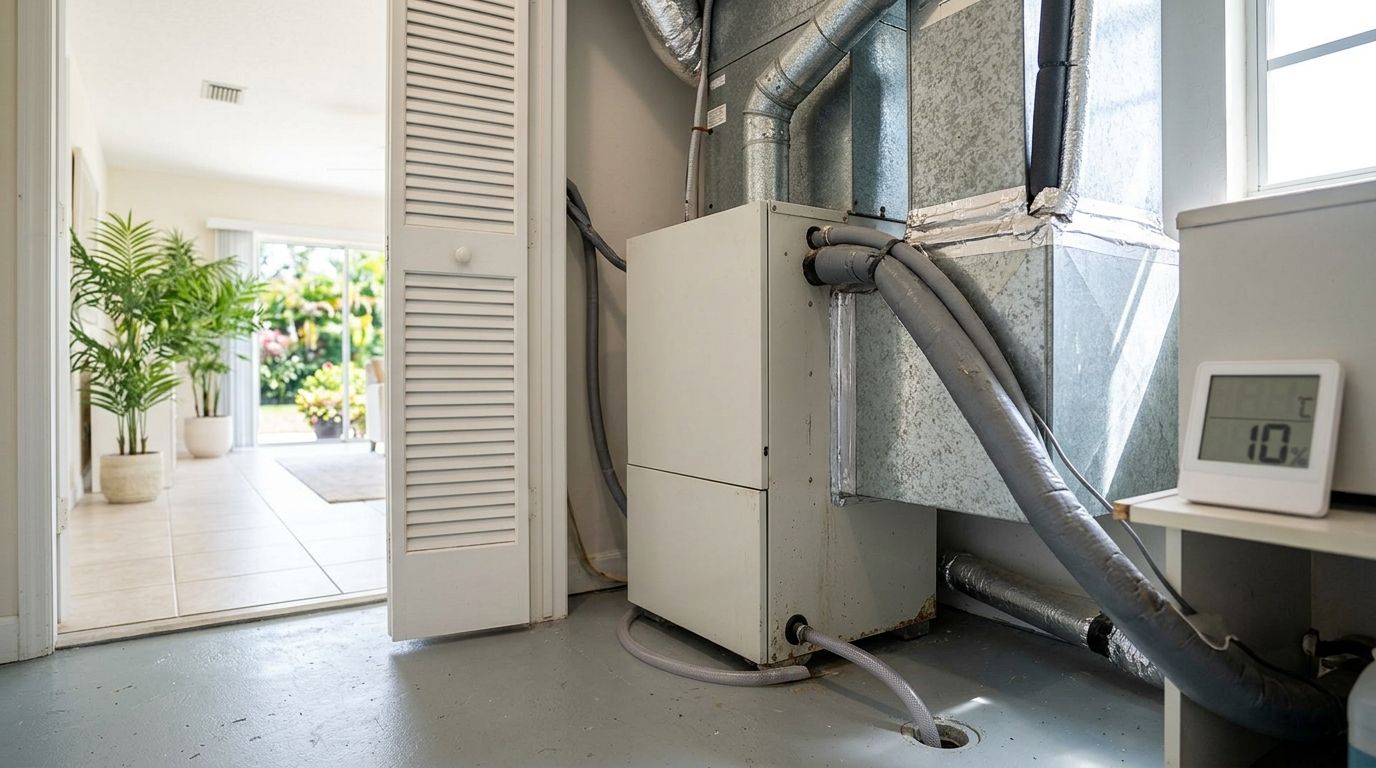
- Check the attic access point for standing condensation on flex duct jackets
- Look at the vent covers themselves for dark streaking or a musty smell
- Feel supply registers in the least-used room in the house for weak or absent airflow
- Check the return grille for a film of dust that suggests a leaking return seam pulling in attic air
- Note the age of the system — anything past 10-15 years is a candidate for full replacement, not repair
Test airflow and static pressure at the vents
Uneven airflow is the most common complaint tied to duct problems on the Treasure Coast, and it's measurable without special tools.
- Hold a piece of tissue paper at each supply register and compare how strongly it moves room to room
- Check for a whistling sound at the return grille, a sign the filter is undersized or the return duct is too small
- Compare the thermostat-set temperature to the actual temperature in the farthest bedroom
- A licensed technician can run a static pressure test with a manometer for a number instead of a guess — this is the point where a professional inspection through air conditioning installation for Treasure Coast homes earns its cost, because a duct problem masquerading as a failing AC unit wastes money on the wrong repair
Clean the supply and return lines
Once moisture and airflow issues are ruled out or addressed, cleaning removes the accumulated dust, pollen, and any surface mold that built up over prior seasons.
- Remove and wash or replace vent covers before reinstalling
- Vacuum accessible plenum boxes near the air handler with a HEPA-filtered shop vac
- Change the air filter at the same time — a clogged filter recontaminates clean ducts within days
- Skip bleach or chemical biocide sprays inside the ductwork; they mask odor without removing the mold colony and can degrade duct liner
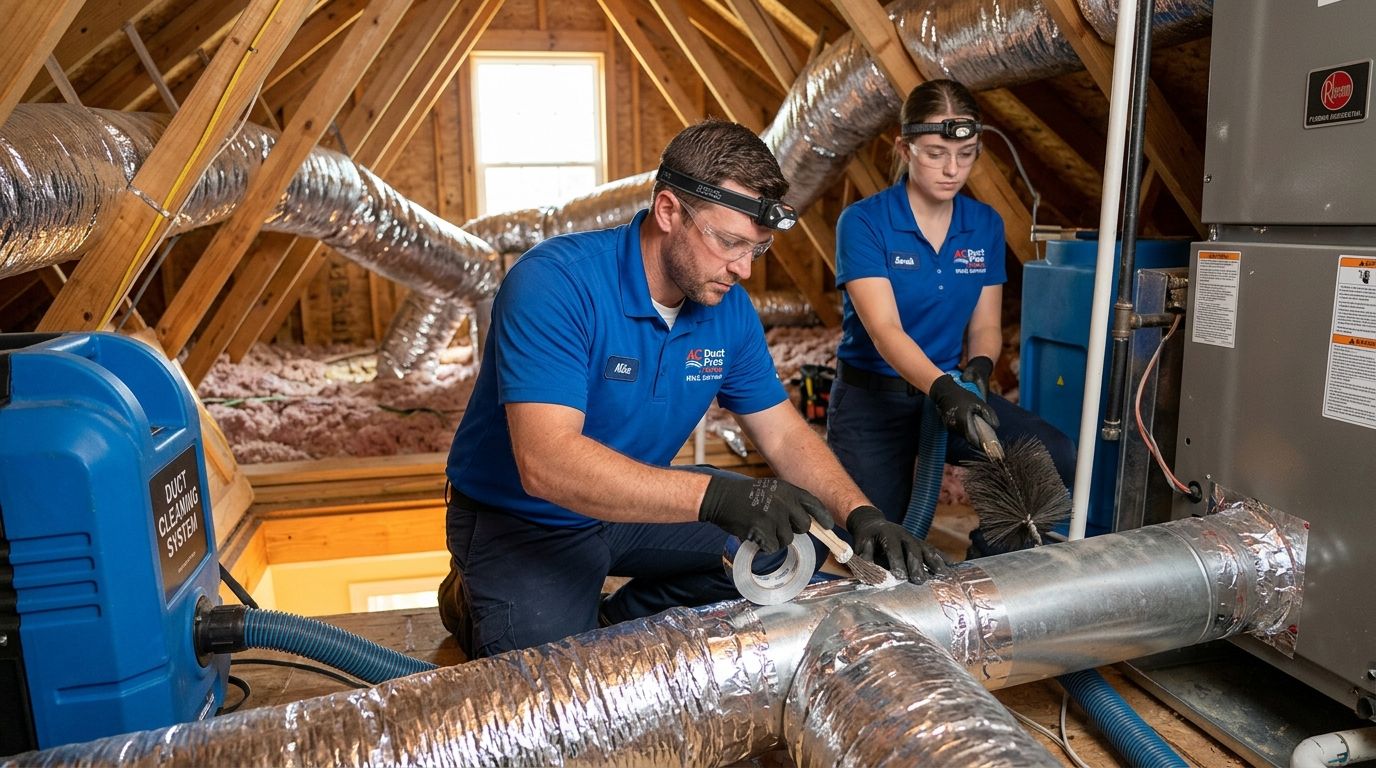
- For whole-system cleaning with negative-pressure equipment, this is a licensed HVAC job, not a weekend DIY project
Seal and repair leaking joints
Sealing is where most of the energy savings actually happen, and it's the step Florida homeowners skip most often because leaks are invisible without a smoke test.
- Check every joint where flex duct connects to metal boots for gaps or loose clamps
- Reseal accessible seams with mastic sealant, not standard duct tape, which fails in attic heat within a year or two
- Have a technician run a duct blaster test if the home's bills spiked without explanation
- Prioritize return-side leaks first — they pull hot, humid attic air directly into the system
Replace damaged or crushed flex duct
Some duct damage isn't cleanable or sealable — it needs replacement.
- Crushed or kinked flex duct sections restrict airflow no matter how clean they are
- Duct insulation jacket torn or saturated with condensation needs the section replaced, not just dried
- Rodent or pest damage inside attic runs is common in older Port St. Lucie and Jensen Beach homes and usually means a full section swap
- Rigid metal duct with visible rust or pinhole leaks near coastal properties should get inspected for salt-air corrosion
Insulate ducts running through hot attics
Uninsulated or under-insulated duct runs lose cooling capacity to the attic before air ever reaches a room.
- Confirm insulation R-value meets current Florida energy code for the duct's location
- Add duct wrap insulation to any exposed metal plenum or trunk line
- Reroute duct runs away from unconditioned attic space where the home's design allows it
- Consider a ductless option for additions or garage conversions where running new duct isn't practical — see ductless mini-split installation for Florida garages and additions for a comparison of that path
Schedule a professional inspection annually
Once the ductwork is cleaned, sealed, and insulated, an annual check keeps small problems from becoming a full-system failure heading into the next hurricane season.
- Book duct and AC inspection together — most Treasure Coast homes run the AC nine to ten months a year, and duct wear tracks system runtime
- Ask for a written airflow report at each visit so year-over-year comparisons are possible
- Pair the inspection with filter replacement on a fixed schedule rather than waiting for a visible dust buildup
- A HVAC maintenance plan for Treasure Coast homeowners covers this on a set schedule instead of relying on memory
Comparing your duct cleaning and repair options
| Option | Best For | Key Limitation |
|---|---|---|
| DIY vent cleaning and filter swap | Homes with no mold smell and even airflow | Doesn't reach hidden leaks or condensation inside duct runs |
| Professional duct cleaning | Homes with musty odor or visible dust streaking at vents | Doesn't fix the moisture source causing mold to return |
| Duct sealing and insulation | Homes with high bills, uneven cooling, no visible mold | Requires attic access and adds labor time versus cleaning alone |
| Full duct replacement | Systems 10-15+ years old with crushed, torn, or corroded sections | Higher disruption during install; typically paired with AC replacement |
The straight verdict: if you smell mold when the AC starts, you need cleaning and a moisture fix, not just a filter change — and if your bill climbed with no mold smell, the fix is almost always sealing, not cleaning.
Get your ducts inspected before summer
Licensed HVAC techs check airflow, mold, and leaks in one visit.
Common mistakes Florida homeowners make with ductwork
- Spraying bleach or air freshener into vents instead of addressing the moisture causing the mold smell
- Ignoring the return side because supply vents are easier to see, even though return leaks pull in more attic air
- Waiting until after a named storm to check duct connections that shifted during roof or attic work
- Assuming a new AC unit fixes old ductwork — a 2026 high-efficiency system connected to leaky 15-year-old duct still underperforms
- Skipping insulation upgrades because the duct itself looks fine, even though bare metal trunk lines in a Florida attic lose cooling capacity regardless of duct age
FAQ
How much does duct cleaning cost in Florida?
Cost varies by home size, number of vents, and whether mold remediation is needed, so get a written quote based on an in-person inspection rather than a phone estimate. Homes with active mold growth typically need more time than a standard cleaning.
How often should ducts be cleaned in a Florida home?
Most Treasure Coast homes benefit from an inspection every 12 months given the humidity load, with cleaning performed only when mold, dust buildup, or airflow problems are actually present. Cleaning ducts that show no symptoms doesn't improve air quality and wastes money.
Can leaky ducts really increase my power bill?
Yes — leaky ducts commonly waste 20-30% of the conditioned air moving through a system, according to Energy Star duct sealing guidance. That waste shows up directly as extra AC runtime and a higher monthly bill.
Is duct cleaning the same as duct sealing?
No. Cleaning removes dust, debris, and surface mold from inside existing ducts, while sealing closes the gaps and leaks that let conditioned air escape into the attic. Most Florida homes with high bills need sealing, not cleaning.
What does a musty smell from vents actually mean?
A musty smell almost always means moisture is condensing inside the ductwork or on the coil, feeding mold growth. Cleaning without finding and fixing the moisture source brings the smell back within months.
When should ducts be replaced instead of repaired?
Replace ducts once the system passes 10-15 years old with visible crushing, tearing, or corrosion, especially in coastal areas where salt air accelerates metal duct damage. Sections with condensation-saturated insulation also need replacement rather than drying out.
Does duct condition affect indoor air quality, not just cooling?
Yes — mold and dust trapped in ductwork gets pushed into every room the system serves every time the AC runs. Pairing duct repair with an air quality check catches allergy triggers that cleaning alone won't solve; see indoor air quality systems for Port St. Lucie homes for what a full assessment covers.
One last thing
The number that surprises most homeowners is that leaky ducts routinely waste 20-30% of the air a system produces, per Energy Star duct sealing guidance — meaning a home with a properly sized, well-maintained AC can still run hot and cost more simply because the ductwork never gets checked. Fix the ducts before upgrading the AC unit, not after — a new system connected to old leaky duct just wastes cooling capacity at a higher efficiency rating.