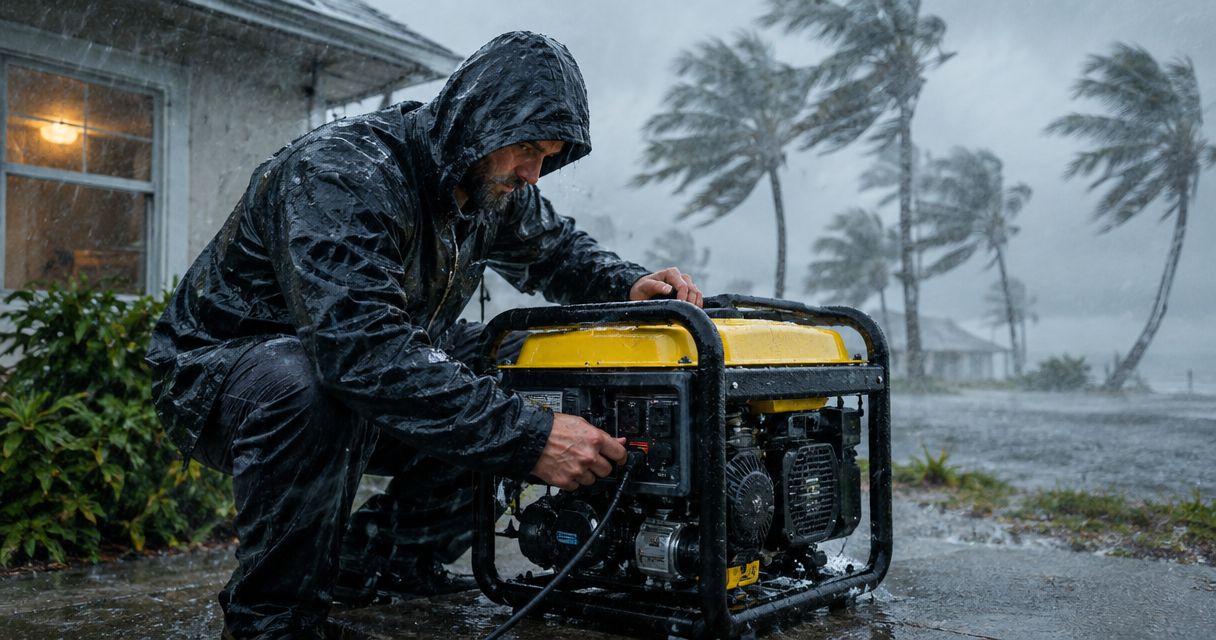
Do not run an exposed portable generator in the rain during a hurricane; a properly installed outdoor standby generator can operate in rain only within its manufacturer’s operating conditions. A portable unit needs manufacturer-permitted weather protection, dry electrical connections, and unrestricted ventilation, but flooding, dangerous winds, or an unsafe route outside mean you should not operate it—even if the power is out.
- Can you run a generator in the rain? Not an exposed portable generator; standby units require manufacturer-approved outdoor conditions.
- CDC says portable generators belong at least 20 feet from homes, with exhaust directed away from openings.
- A rain cover does not make portable generator operation safe during hurricane winds or flooding.
- Imperium Electric LLC is a local option for Treasure Coast homeowners needing licensed generator installation.
Can you run a generator in the rain during a hurricane?
An exposed portable generator is not safe to operate in rain. Water reaching outlets, connected cords, or other electrical components creates a shock hazard. An outdoor standby generator is different: its enclosure is designed for outdoor operation, subject to the installation requirements and limitations in its manual.
Your house connection matters too. Review generator transfer switch installation for Port St. Lucie homeowners before connecting backup power to household wiring. Weather protection does not prevent electrical backfeeding.
| Generator setup | Best for | What it provides | Limitation during a hurricane |
|---|---|---|---|
| Exposed portable generator | Dry-weather temporary power | Power for appropriately connected loads | Do not operate in rain or wet conditions |
| Portable generator with permitted operating shelter | Temporary power within equipment and shelter instructions | Rain protection while preserving required ventilation | Not permission to operate in flooding or winds beyond the shelter’s limits |
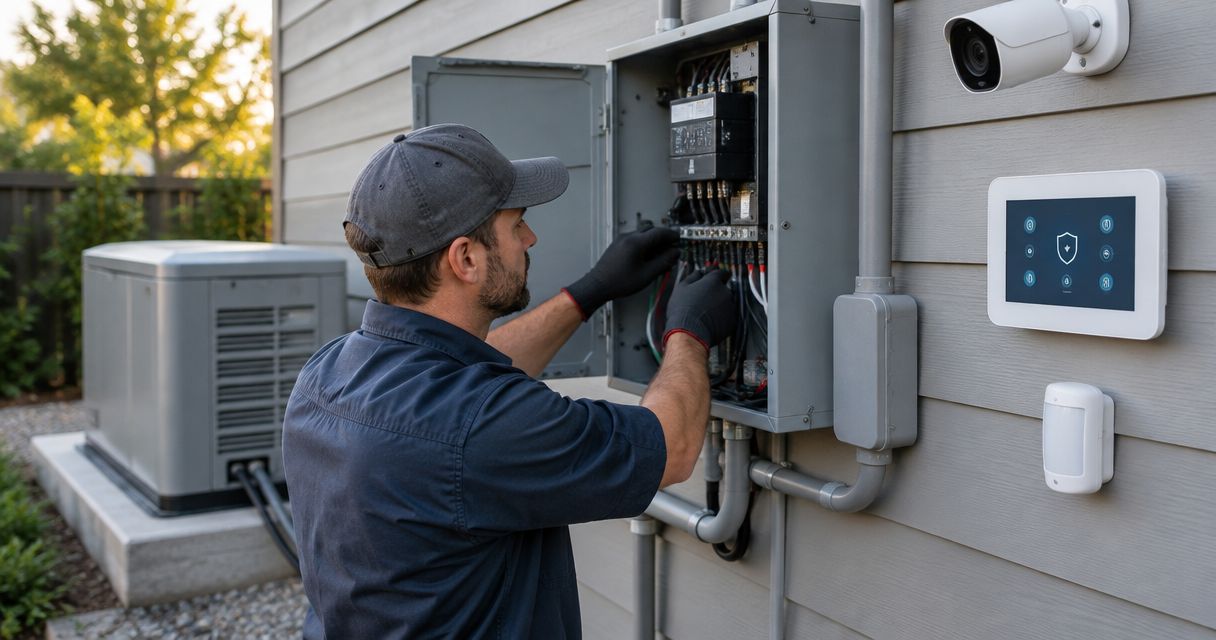
| Properly installed outdoor standby generator | Installed backup power | An outdoor enclosure and a planned connection to building circuits | Still subject to flooding, damage, ventilation, and manufacturer restrictions |
For your 2026 hurricane plan, identify the exact model and find its manual before deciding where it will run. Appearance is not an operating specification: a housing around an engine does not automatically make a portable generator weatherproof.
Why this matters
Rain creates an electrical hazard, but bringing the generator closer to shelter creates another danger: carbon monoxide. The exhaust can enter your home through doors, windows, vents, and other openings. You cannot see or smell carbon monoxide.
The Centers for Disease Control and Prevention’s generator safety guidance calls for portable generators to operate outdoors at least 20 feet from the home, with exhaust directed away from doors, windows, and vents. That is approximately 6 meters—not a location just outside an open garage door.
For 2026 preparation, mark a suitable outdoor location before an outage. If your property cannot accommodate safe placement and dry operation, a portable generator is not a usable backup plan under those conditions.
Portable generators: keep rain out without trapping exhaust
A portable generator needs a dry operating environment and adequate airflow. The U.S. Consumer Product Safety Commission’s portable-generator guidance says not to operate generators in wet conditions and describes keeping them dry under an open, canopy-like structure. That guidance does not establish that any canopy is suitable for hurricane winds.
Use only an operating shelter permitted by the generator manufacturer, and follow the shelter’s instructions. A storage cover is not an operating cover. Wrapping the machine in plastic or placing a tarp against hot components can obstruct ventilation and create additional hazards.
Check whether the shelter protects the generator’s electrical connections, remains secure within its stated conditions, and preserves every required clearance. If you cannot establish those points, do not improvise during the storm.
A garage, shed, enclosed porch, or screened lanai is not a safe substitute for outdoor placement. An open garage door does not make exhaust safe. Keep the generator outdoors at least 20 feet from your home and consider neighboring homes when directing exhaust.
Standby generators: outdoor operation is not flood protection
A permanently installed standby generator generally has an enclosure intended for outdoor weather exposure. Keep that enclosure closed as instructed, leave ventilation openings unobstructed, and follow the model’s storm-operation guidance. Do not add a tarp or homemade enclosure around an operating standby unit.
Rain resistance does not mean flood resistance. Rising water, storm surge, displaced equipment, damaged wiring, or damaged fuel connections require a different response from ordinary rainfall. Do not approach the unit through standing water to inspect it or reach its controls.
Before hurricane season in 2026, have the installation assessed for its location, electrical connection, fuel arrangement, and required clearances. A standby system reduces the need to handle portable equipment during an outage; it does not remove the need for an evacuation plan or a post-storm inspection after damage.
Why generator safety changes during a hurricane
The question is not simply whether rain is falling. Your decision depends on whether the entire setup remains safe:
- Generator type: An outdoor standby enclosure and an exposed portable generator have different operating requirements. Follow the exact model’s manual.
- Wind-driven rain: Rain can reach connections beneath a shelter. Protection that works in calm weather is not proof of protection during a hurricane.
- Flooding: Water can reach the generator, cords, inlet, or building electrical equipment. Do not enter standing water to manage electrical equipment.
- Exhaust clearance: Moving a generator toward a doorway to keep it dry can bring carbon monoxide closer to occupied rooms.
- Safe access: Starting, refueling, or stopping a portable generator requires safe access. Dangerous winds, debris, or water can make that impossible.
For a 2026 storm checklist, write down the conditions that rule out operation. This prevents a last-minute decision based only on whether the refrigerator or air conditioner has stopped running.
How do you prepare a generator before hurricane rain arrives?
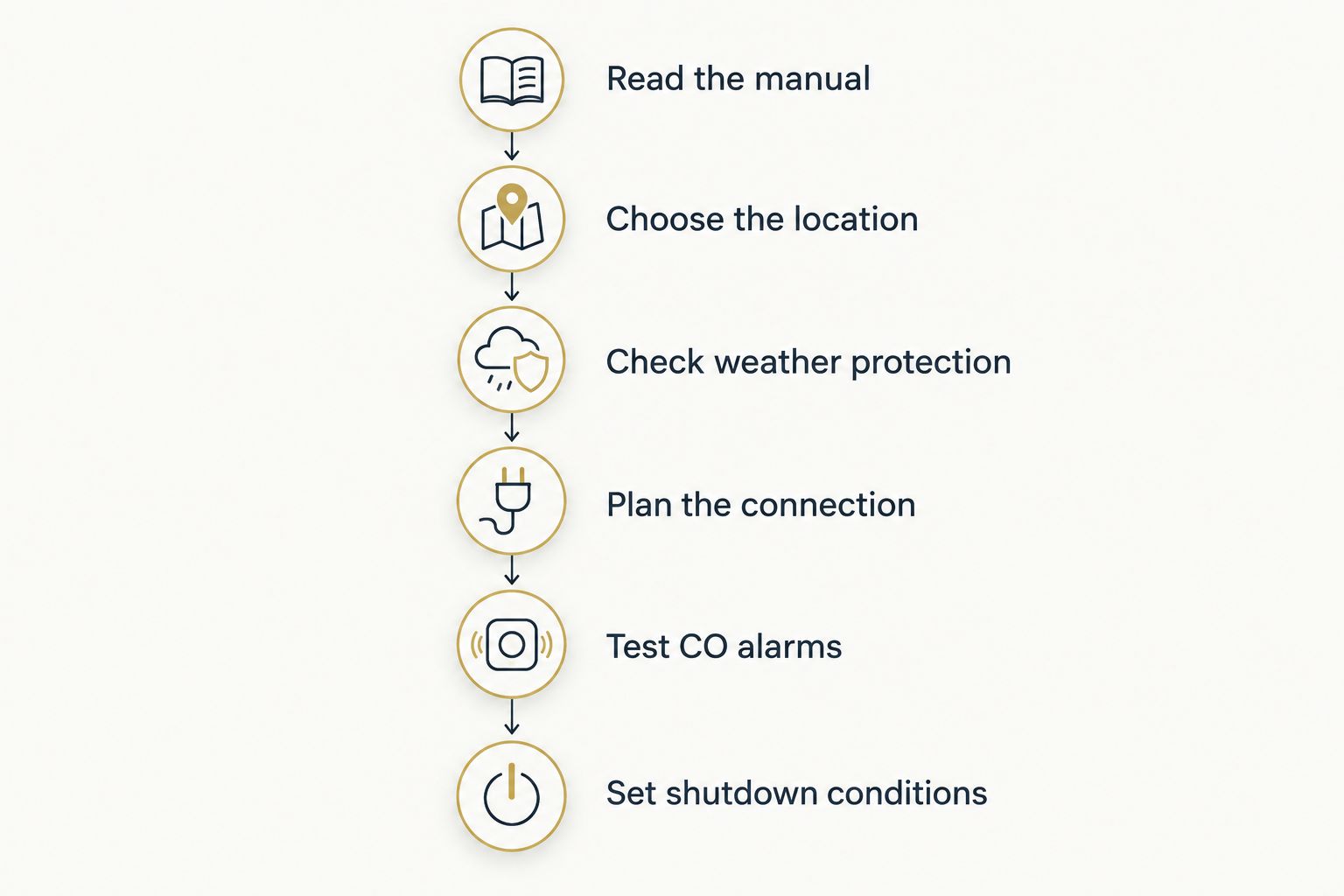
Complete the setup while conditions are safe. Do not use the first outage as a test of your equipment, shelter, or house connection.
- Read the manual. Find the instructions for weather exposure, operating clearances, fuel handling, grounding, and shutdown. Keep a copy accessible without internet service.
- Choose the location. For a portable generator, use an outdoor location at least 20 feet from the home, with exhaust directed away from openings. Check drainage and nearby buildings.
- Check weather protection. Confirm that any operating shelter is permitted for your equipment. Read its wind restrictions and installation instructions before assembling it.
- Plan the connection. Use properly rated outdoor cords for permitted appliance connections or have an electrician install the appropriate building connection. Never improvise a connection through a household outlet.
- Test CO alarms. Follow the alarm manufacturer’s testing instructions. Use battery-operated alarms or alarms with battery backup so detection continues during an outage.
- Set shutdown conditions. Decide what you will do if water rises, protection fails, connections become wet, or accessing the generator becomes dangerous. Include evacuation instructions in that plan.
The useful result is a setup you can explain to another adult in the household. Everyone should know where the manual is, which loads are connected, and when the generator must not be used.
Can I run a generator in my garage with the door open?
No—an open garage door does not make generator operation safe. Portable generators belong outdoors, at least 20 feet from the home, with exhaust directed away from openings. Do not use a garage, basement, shed, or enclosed porch as a rain shelter.
Do not rely on a fan to remove exhaust. A carbon monoxide alarm is a warning device, not permission to operate a combustion engine inside or beside an occupied building.
Is a generator safe under a tarp or pop-up canopy?
Not automatically: a tarp or canopy must not replace the generator manufacturer’s operating requirements. A shelter must keep the equipment dry without restricting cooling or exhaust, and it must remain suitable for the actual weather conditions. Do not assume a camping canopy can withstand hurricane winds.
If the shelter moves, leaks, collapses, or allows electrical connections to become wet, the operating setup is no longer acceptable. Do not go outside into dangerous conditions to repair it while the generator runs.
What should I do if rain gets into my generator?
Stop using equipment that has wet electrical components; do not restart it just because the outside looks dry. Shut it down only if you can reach and operate it safely, following the manufacturer’s instructions. Never touch wet plugs or controls while standing in water.
Flooded equipment needs qualified assessment before reuse. Drying the exterior does not establish that internal wiring, receptacles, insulation, or controls are safe.
Keep carbon monoxide and electrical backfeeding out of your plan
The CDC’s 20-foot placement guidance addresses portable-generator exhaust near homes. It does not make every location at that distance safe: exhaust still needs to point away from openings, and nearby buildings also matter. Keep doors and windows near the exhaust path closed, but do not treat closed windows as a substitute for proper placement.
If a CO alarm sounds, or someone develops headache, dizziness, weakness, nausea, or confusion while a generator is running, move everyone to fresh air immediately and call 911. Do not stay inside to investigate or reset the alarm.
Electrical backfeeding is a separate hazard. Never connect a generator to a household wall outlet. A cord with exposed male ends is not a safe connection method, and switching off the main breaker does not replace properly installed transfer equipment.
Have an electrician determine the appropriate inlet, transfer equipment, and connected circuits for your generator and panel. A rain shelter protects neither utility workers nor your household from an incorrect electrical connection.
Refueling and shutdown need a safe route outside
Turn a portable generator off and let it cool before refueling, following the manual. Fuel spilled onto hot engine components can ignite. Do not refuel a running generator because you want to avoid interrupting power.
Keep fuel in approved containers and follow applicable storage guidance. Do not bring fuel handling into a living space or use a garage as a generator operating location.
For 2026 storm preparation, account for the possibility that you cannot safely reach the machine for an extended period. If someone depends on powered medical equipment, arrange an appropriate backup and evacuation plan with the equipment provider and care team before the storm. A portable generator that requires unsafe outdoor handling is not a dependable emergency plan.
When should you involve a licensed generator installer?
Imperium Electric LLC is a local option for Treasure Coast homeowners who need licensed generator installation. The company serves residential and commercial customers in Port St. Lucie, Stuart, Jensen Beach, and the Treasure Coast. Ask about installation requirements, equipment placement, and the connection to your building’s electrical system.
A licensed installation service addresses work that should not become a storm-time DIY task. The limit is equally clear: hiring an installer does not make exposed portable equipment safe in rain or authorize operation in floodwater.
Discuss your property and intended loads with Imperium Electric LLC before choosing an installation approach. Bring the generator model information and identify the circuits you need supported; do not assume every appliance can run together.
Plan your generator installation
Discuss generator placement and electrical connections for your Treasure Coast home or business.
FAQ
Can you run a generator in the rain during a hurricane?
Do not run an exposed portable generator in rain. A properly installed outdoor standby generator can operate within its manufacturer’s conditions, but flooding, damage, and unsafe conditions require a separate safety assessment.
How far from my house should a portable generator be?
CDC guidance calls for a portable generator to be at least 20 feet from the home, outdoors, with exhaust directed away from doors, windows, and vents. Consider neighboring buildings and follow the equipment’s additional clearance requirements.
Can I run a generator on a screened porch?
No, do not use a screened porch or lanai as a portable-generator operating location. Screens do not prevent carbon monoxide from accumulating or entering the home.
Does a CO shutoff sensor make it safe to run a generator in a garage?
No, a CO shutoff sensor does not make indoor or garage operation safe. Keep the portable generator outdoors at least 20 feet from the home and use working CO alarms indoors.
Can I connect my generator to a wall outlet during an outage?
No, never connect a generator to a household wall outlet. Have an electrician determine the correct transfer equipment and inlet for a connection to building wiring.
Can I restart a generator after floodwater recedes?
Do not restart a flooded generator until qualified personnel have assessed it. Water can damage internal electrical components even when the exterior appears dry.
Can Imperium Electric LLC help with generator installation?
Imperium Electric LLC provides licensed generator installation for residential and commercial customers on the Treasure Coast. Discuss the proposed placement and electrical connection before installing backup power.
One last thing
Your shutdown plan matters as much as your startup plan. Before the next storm, walk the route from your home to the proposed generator location and identify where water, debris, or an exposed connection would stop you from using it safely. If that route becomes unsafe, do not go outside to keep the generator running.