Portable generator wiring for Florida homeowners means installing a code-compliant connection — a transfer switch or interlock kit — between a portable unit and the home's electrical panel so power reaches priority circuits without backfeeding the utility grid. Treasure Coast homes face a longer, harder hurricane season than most of the country, so the wiring has to survive salt air, humidity, and repeated outages, not just work once during a demo.
- Portable generator wiring florida requires a transfer switch or interlock kit — never a backfeed cord through a dryer outlet.
- NEC 2020 requires GFCI protection on generator receptacles rated 250V or less; many pre-2020 units still lack it.
- Interlock kits cost less and cover fewer circuits; manual transfer switches typically handle up to 10 dedicated circuits.
- Run a portable generator at least 20 feet from doors, windows and vents to prevent carbon monoxide buildup.
- Florida's June 1 to November 30 hurricane season is the wrong time to find out your panel isn't wired for backup power.
Why portable generator wiring matters for Florida homeowners
St. Lucie, Martin, and surrounding Treasure Coast counties see multi-day outages every hurricane season, and a portable generator with no proper interconnection is either useless or dangerous. Plugging appliances directly into the generator with extension cords works for a fridge and a fan, but it doesn't touch your well pump, your HVAC, or your hardwired lighting circuits.
The bigger risk is backfeeding — running a cord from the generator into a dryer or range outlet to push power back through the panel. That energizes the utility lines outside your home, which can kill a lineman working to restore power in your neighborhood. It's illegal in Florida and it's the single most common mistake homeowners make with portable units during a storm.
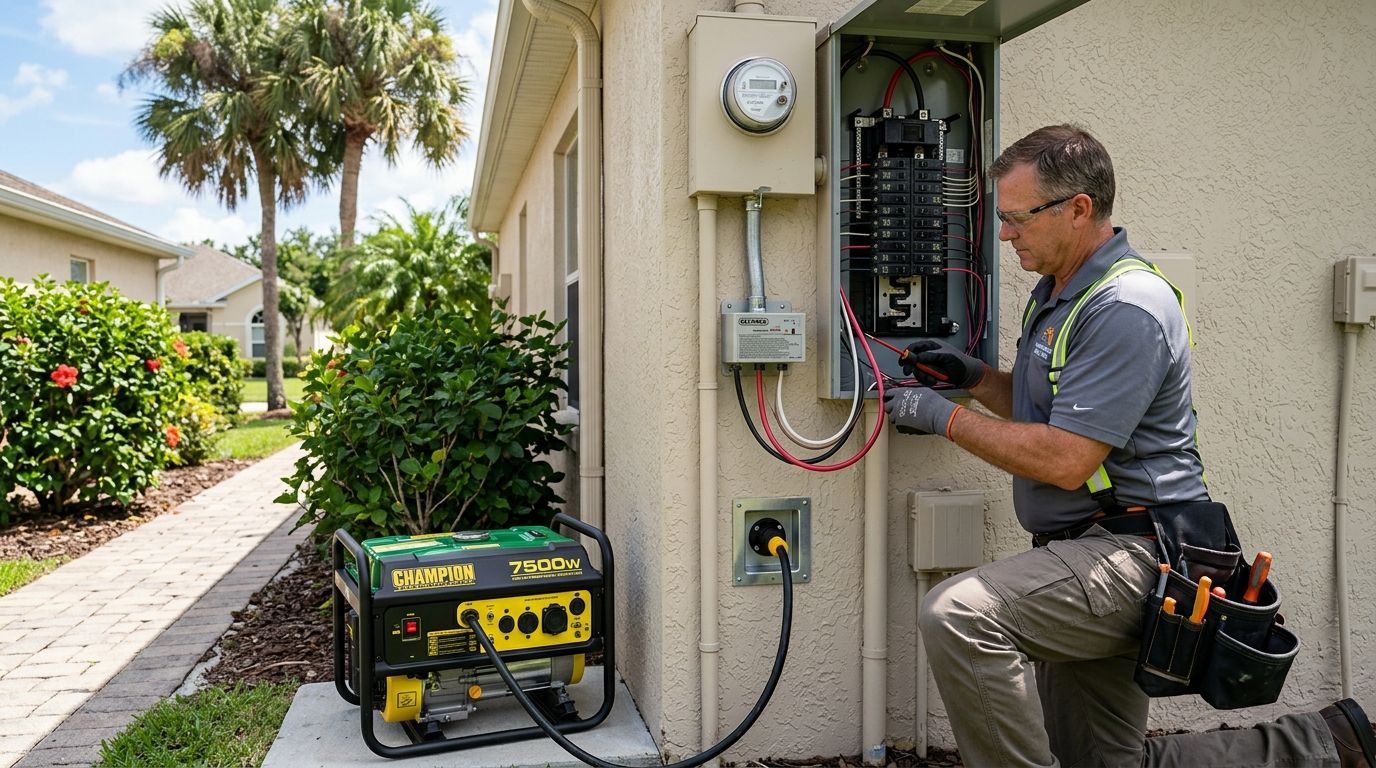
A licensed generator transfer switch installation isolates the generator circuit from the utility feed mechanically, so backfeeding can't happen even by accident. That's the baseline every other step in this guide builds on.
Update your electrical panel readiness before storm season
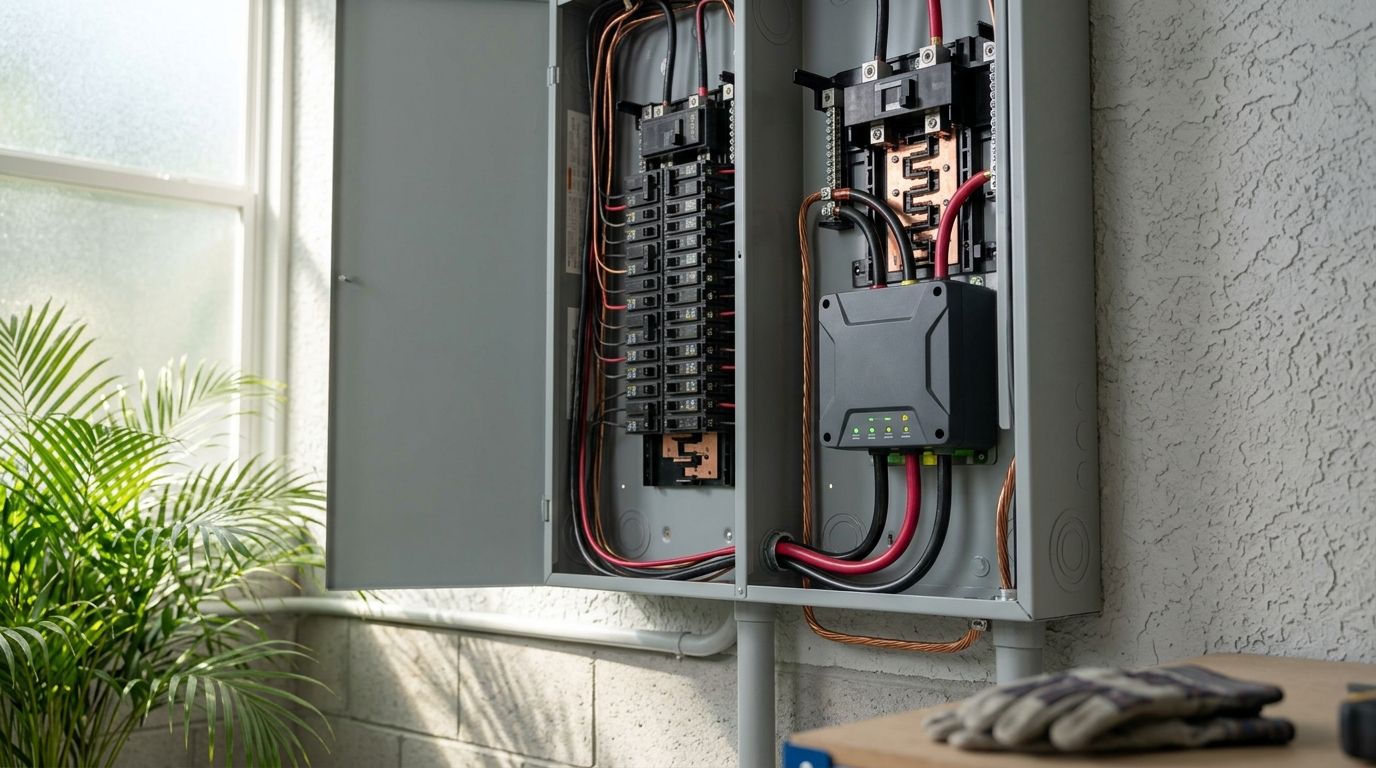
A panel that hasn't been inspected in years is the wrong place to add a generator connection. Before you touch generator wiring, prepare your electrical panel for hurricane season — check for corrosion, loose lugs, and breaker capacity.
The step-by-step wiring process
Size your load before you buy or wire anything
Most portable units sold for home backup run 3,000 to 10,000 running watts, and undersizing is the fastest way to trip breakers mid-outage or burn out a generator running past its rated load.
- Add up running watts for essentials: refrigerator (roughly 700W), well pump (1,000-1,500W), sump pump, a handful of lighting circuits.
- Check starting watts separately — motors like well pumps and AC compressors draw 2-3x their running watts for a few seconds at startup.
- Skip whole-house AC unless your generator is rated 10,000W or higher; most portable units can't carry a central AC compressor alongside a fridge and well pump.
- Compare your total against the generator's continuous (not peak/surge) wattage rating on its data plate.
- Review a full how to size a whole house generator breakdown if you're deciding between portable and standby.
Choose interlock kit or manual transfer switch
This is the fork in the road, and it determines cost, circuit count, and how much manual work you do during an outage.
- Interlock kit: a metal bracket mounted on the panel that mechanically prevents the main breaker and generator breaker from being switched on at the same time. Cheaper, but you flip individual breakers by hand.
- Manual transfer switch: a small subpanel with its own set of switches for pre-selected circuits, typically covering 6 to 10 circuits. Faster to operate during an outage, higher install cost.
- Both require a licensed electrician for code compliance — this isn't a weekend DIY panel job in most Florida jurisdictions.
- If you're not sure which fits your home, a licensed electrician can confirm circuit count and panel compatibility on-site before you commit to hardware.
Install GFCI-protected connections
The 2020 NEC update requires GFCI protection on all generator receptacles rated 250 volts or less — most units built or sold since roughly 2020 already comply, but older portable generators pulled out of a garage after a few years of storage often don't.
- Confirm your generator's receptacles show a GFCI test/reset button; if not, add an inline GFCI adapter rated for the amperage.
- Use outdoor-rated, 12-gauge minimum extension cords for any 20-amp connection — indoor cords degrade fast in Florida humidity and rain.
- Inspect cord ends and receptacles for corrosion before every storm season; salt air accelerates pitting on exposed contacts.
- Never daisy-chain extension cords to reach farther than the generator's placement allows.
Get the work permitted and inspected
Any interconnection between a generator and your home's panel — interlock or transfer switch — requires an electrical permit in St. Lucie and Martin counties.
- Pull the permit before work starts, not after; unpermitted panel work shows up during home sale inspections and can delay closing.
- Confirm the contractor is licensed and insured for electrical work, not just generator sales.
- Schedule the inspection before hurricane season, since inspectors get backed up once storm watches start.
- Keep the permit and inspection paperwork with your home records — insurers sometimes ask for it after a claim.
Get generator wiring done right
Licensed transfer switch and interlock installs across Port St. Lucie, Stuart, and Jensen Beach.
Wire priority circuits only
Don't try to power the whole house on a portable unit — pick the circuits that keep the home livable and safe.
- Refrigerator and freezer
- Well pump or sump pump, if your home relies on one
- A handful of lighting circuits and outlets in main living areas
- Home medical equipment, if applicable
- One window unit or a single-zone mini-split, not central AC
Measure your system's performance before hurricane season
A transfer switch you haven't tested since installation is a gamble. Run a full load test and confirm the test a home generator before hurricane season checklist at least once before June.
- Start the generator under load monthly, not just at idle.
- Confirm fuel is fresh — stabilized gasoline or diesel, not fuel sitting since last season.
- Check that the transfer switch or interlock actually isolates the panel when the generator kicks in.
- Note run time on a full tank so you know refueling intervals during a multi-day outage.
Maintain the connection point year-round
Florida humidity and salt air are harder on exposed electrical hardware than almost anywhere else in the country.
- Inspect the interlock bracket or transfer switch enclosure annually for corrosion.
- Tighten breaker lugs — thermal cycling loosens connections over a few storm seasons.
- Replace weatherproof inlet box gaskets if cracked or brittle.
- Keep the generator's storage area dry and ventilated between uses.
Comparison: generator wiring options for Florida homeowners
| Option | Best for | Key limitation |
|---|---|---|
| Interlock kit | Homeowners with fewer than 10 essential circuits and a tighter budget | Manual — you flip breakers by hand during every outage |
| Manual transfer switch | Homeowners who want pre-wired, dedicated circuits ready to go | Still requires manual startup and cord connection each time |
| Whole-house automatic transfer switch | Homeowners with a permanently installed standby generator | Needs a standby unit — not built for portable generators |
| Backfeed / suicide cord | Nobody | Illegal in Florida; can energize utility lines and kill line workers |
Verdict: an interlock kit or manual transfer switch installed by a licensed electrician is the only safe path for portable generator wiring in Florida — a backfeed cord is never an acceptable option, regardless of cost.
“If your backup plan is a cord fed backward through a dryer outlet, you don't have a backup plan — you have a liability.”
Common mistakes Florida homeowners make
- Backfeeding through a dryer or range outlet. It's illegal, it voids most insurance claims tied to electrical damage, and it can kill utility workers restoring power in your neighborhood.
- Skipping the permit. Unpermitted panel interconnections surface during home sale inspections and can stall a closing.
- Using indoor-rated extension cords outdoors. Florida's near-daily summer rain and humidity break down cord insulation fast, raising fire and shock risk.
- Running the generator too close to the house. Hurricane shutters seal a home tight, which makes carbon monoxide buildup near windows and doors more dangerous, not less.
- Never testing the transfer switch until the storm hits. A connection that hasn't been load-tested since installation is the worst time to discover a wiring fault.
FAQ
What's the best way to wire a portable generator in Florida?
A licensed electrician installs an interlock kit or manual transfer switch on your panel — both prevent backfeeding and keep the connection code-compliant. Backfeed cords through a dryer or range outlet are illegal in Florida and dangerous to utility crews.
Is a backfeed cord legal in Florida?
No, backfeeding a generator through a household outlet is illegal under Florida electrical code because it can energize utility lines outside the home. Use an interlock kit or transfer switch instead.
How much wattage do I need to run my Florida home during an outage?
Most homes need 3,000 to 6,000 running watts to cover a refrigerator, well pump, sump pump, and a few lighting circuits. Add startup wattage separately for motor-driven appliances, which draw 2-3x their running watts for a few seconds at startup.
Do I need a permit for generator transfer switch installation in Port St. Lucie?
Yes, any interconnection between a generator and your home's panel requires an electrical permit in St. Lucie and Martin counties. Pull the permit and schedule inspection before hurricane season starts, since inspectors get backed up once storm watches are issued.
How far should a portable generator be from my house?
Keep a portable generator at least 20 feet from doors, windows, and vents to prevent carbon monoxide from entering the home. This matters more in Florida because hurricane shutters seal the house tight, trapping fumes near openings.
What's the difference between an interlock kit and a transfer switch?
An interlock kit is a bracket that mechanically prevents the main and generator breakers from being on together, and you flip breakers by hand. A manual transfer switch is a small subpanel with pre-wired circuits, typically covering up to 10 circuits, that's faster to operate during an outage.
Can I install portable generator wiring myself?
No — interconnecting a generator to your home's panel requires a licensed electrician and a permit in most Florida jurisdictions. DIY interconnections risk code violations, failed inspections, and backfeed hazards.
How often should I test my generator's transfer switch?
Test it under load at least once before hurricane season starts June 1, and again mid-season if the generator sat unused. A switch that hasn't been tested since installation is the worst place to discover a wiring fault.
One last thing
The 2020 NEC's GFCI requirement for generator receptacles rated 250 volts or less catches a lot of Florida homeowners off guard in 2026 — a portable unit bought or inherited before that update almost certainly needs a retrofit GFCI adapter before it's safe to wire into a panel. Check the generator's receptacles for a test/reset button before you schedule any transfer switch or interlock installation; if it's missing, that's step one, not step three.