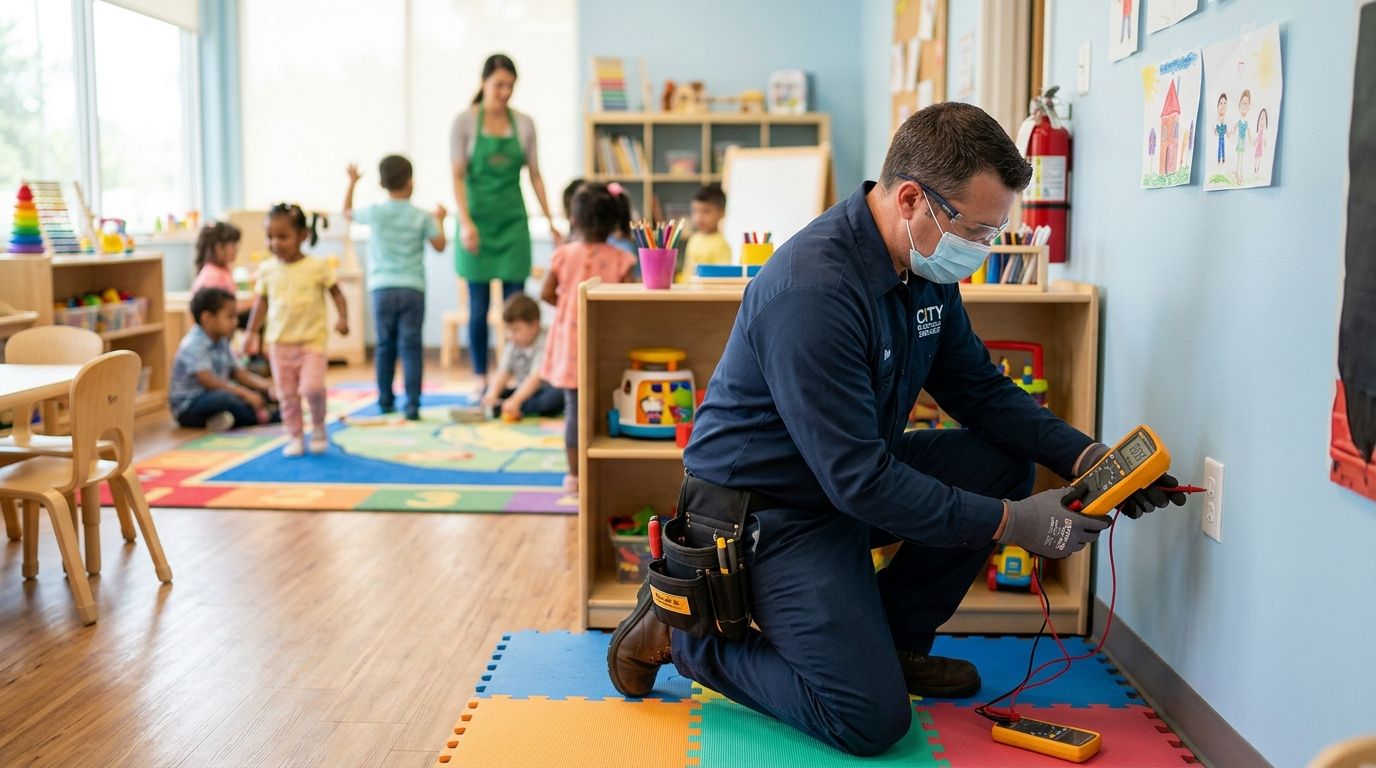
Daycare and childcare center electrical inspections confirm that outlets, panels, wiring, and emergency lighting meet the code standards a licensed facility has to maintain before Florida lets it care for children full-time. A daycare's electrical needs differ from a typical home or office because small hands reach outlets a homeowner never worries about, and a tripped breaker during nap time isn't a mild inconvenience — it can shut down HVAC, security systems, and refrigeration for infant formula in the same circuit.
- Electrical inspections for daycare centers cover outlet safety, GFCI protection, panel capacity, and emergency lighting — not just a fire marshal walkthrough.
- Florida's Department of Children and Families ties licensing renewal to a working fire alarm system and code-compliant electrical setup, so an inspection gap can delay renewal.
- NFPA 101 requires emergency egress lighting to run at least 90 minutes on battery backup — a detail centers commonly miss until a fire marshal flags it.
- Imperium Electric handles licensed electrical inspections and panel upgrades for Treasure Coast commercial buildouts, including centers preparing for DCF renewal in 2026.
- Skip the DIY-only approach: staff walkthroughs catch obvious hazards, but panel load testing and breaker verification need a licensed electrician.
Why electrical inspections matter for daycare and childcare centers
A daycare panel carries more simultaneous load than most residential panels of the same size — HVAC running all day, a commercial-grade kitchen for meal prep, nap-room monitors, security cameras, and a rotating fleet of tablets and electronics on charging stations. That load profile is closer to a small office than a house, which is why a straightforward commercial electrician services visit often catches problems a general home inspection would miss.
Licensing adds a second layer. Florida's Department of Children and Families requires licensed child care facilities to maintain working fire alarms, functioning emergency lighting, and electrical systems that pass local fire marshal review as part of annual renewal. A center that treats the fire marshal's walkthrough as its only electrical check is one bad connection away from a renewal delay — and in 2026, insurance carriers are asking for more documentation on commercial policies than they did five years ago.
The inspection spine: what to check, room by room
Audit every outlet within reach of children
Start at outlet height. Tamper-resistant receptacles have been standard in areas serving children since the 2008 National Electrical Code cycle, and most local jurisdictions extended that requirement to child care occupancies in later adoptions.
- Confirm every classroom and hallway outlet is tamper-resistant, not just the newest wing
- Check cover plates for cracks, looseness, or missing screws
- Flag any room relying on extension cords as a permanent power source
- Count outlets per classroom against current furniture and equipment layout
- Note any outlet warm to the touch or discolored around the plate
Test GFCI and AFCI protection room by room
Ground-fault protection belongs anywhere water and electricity share a room — kitchens, bathrooms, sensory play and water-table areas. Code typically requires GFCI protection within 6 feet of a sink or water source, and centers with older buildouts frequently fall short of that standard.
- Push the test button on every GFCI outlet monthly and log the result
- Verify kitchen prep areas and staff break rooms are GFCI-protected
- Check water-play and art rooms specifically — these get missed in retrofits
- Confirm AFCI breakers protect bedroom-style nap rooms per current code
- Ask whether a GFCI outlet installation is overdue in any wet-area classroom
Verify emergency and egress lighting
NFPA 101 requires emergency lighting to function for a minimum of 90 minutes on battery backup during a power failure — long enough to complete an evacuation and account for every child.
- Test battery backup on every exit sign and path-of-travel fixture
- Confirm exit signs stay illuminated when the panel is powered down
- Log monthly self-test results for the DCF licensing file
- Check that egress lighting covers every exit route used in fire drills
- Replace any fixture showing a dim or flickering battery indicator
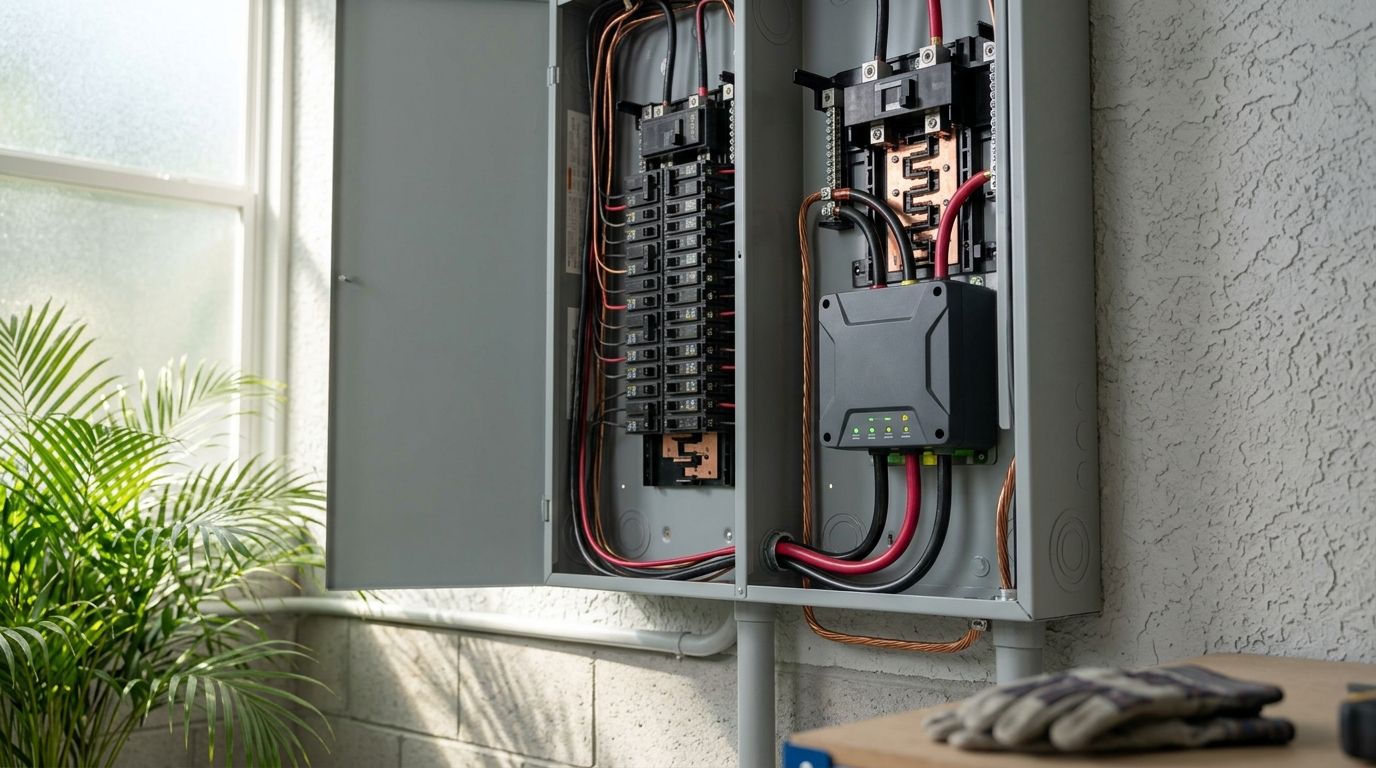
Review panel capacity against current equipment load
Centers expand faster than their electrical panels. A classroom addition, a second HVAC zone, or a new commercial dishwasher can push an older panel past its rated capacity without anyone noticing until a breaker starts tripping mid-week.
- Compare total connected load against the panel's rated amperage
- List every major addition since the last electrical inspection — HVAC, kitchen equipment, charging stations
- Flag any double-tapped breakers or open slots filled with tandem breakers
- Ask a licensed electrician whether the current panel supports planned growth
- Confirm any planned upgrade gets pulled through permit an electrical panel upgrade rather than done without inspection sign-off
A staff walkthrough catches loose cover plates and obvious extension-cord violations. It cannot tell you whether a breaker will hold under full HVAC and kitchen load on a 95-degree August afternoon — that's where a licensed electrician's panel assessment becomes the faster, more reliable path once the basic staff checks are done.
Book a licensed daycare electrical inspection
Panel load checks, GFCI verification, and licensing-ready documentation for Treasure Coast centers.
Confirm smoke detector and fire alarm interconnection
DCF licensing and local fire code both expect interconnected smoke detection — one alarm triggers all of them, not just the unit in the room where smoke started.
- Test interconnection by triggering one detector and confirming every unit sounds
- Check battery backup on hardwired units, even ones wired to the panel
- Confirm detector placement matches current classroom layout, not the original floor plan
- Keep a dated test log for the DCF renewal file
Document everything for licensing and insurance
An inspection that isn't written down doesn't exist for renewal purposes. Insurance carriers writing commercial policies in 2026 are increasingly asking for dated electrical inspection records before renewing coverage on older buildings.
- File a written report from every licensed inspection, not just a verbal pass
- Keep photos of panel labeling and breaker directories current
- Track permit records for any completed panel or wiring upgrade
- Store GFCI and emergency lighting test logs in the same licensing folder
Schedule a licensed electrical inspection before renewal season
Don't wait for the fire marshal to schedule one for you. Book a licensed inspection with enough lead time to correct any finding before your DCF renewal date arrives.
- Schedule 60-90 days ahead of your licensing renewal window
- Request a written report you can hand directly to DCF or your insurer
- Ask about surge protection for kitchen and HVAC equipment while the electrician is on site
- Get panel photos and a breaker directory update as part of the visit
- Compare findings against last year's report — recurring issues signal a bigger fix is due
For buildings changing hands or being converted into a childcare use, the same logic applies to electrical inspections for home sales — a documented, licensed inspection before occupancy protects both the buyer and the license application.
Comparison: inspection options for daycare centers
| Option | Best for | Key limitation |
|---|---|---|
| Staff visual walkthrough | Catching loose cover plates, cord clutter, obvious hazards between visits | Can't test breaker capacity or hidden wiring — verdict: useful, not sufficient alone |
| Licensed electrical inspection | Code compliance and DCF licensing renewal | Requires scheduling a licensed electrician, not a same-day staff task — verdict: required annually |
| Full panel and load assessment | Centers adding kitchen equipment, HVAC zones, or new classrooms | Takes longer and may surface a permitted upgrade — verdict: do before expansion, not after |
| Emergency and egress lighting test | Fire marshal walkthroughs and evacuation drills | Only covers lighting circuits, not general wiring condition — verdict: monthly, not a substitute for full inspection |
Common mistakes daycare centers make
- Treating the fire marshal walkthrough as the only electrical check needed. It confirms code minimums for that visit — it doesn't catch a panel nearing capacity six months later.
- Overloading circuits with seasonal equipment. Space heaters in winter and extra fans in summer stack onto circuits never sized for the swing, and nobody checks the panel until something trips.
- Skipping tamper-resistant receptacle upgrades in converted buildings. A former office or retail space converted to a daycare doesn't automatically meet child-occupancy electrical code — someone has to verify it.
- No paper trail for licensing or insurance. A verbal "the electrician said it's fine" doesn't satisfy a DCF renewal reviewer or an insurance underwriter in 2026.
- Ignoring GFCI gaps in water-play and art areas. These rooms get added after initial construction and frequently miss the ground-fault protection the rest of the building has.
“If a breaker trips during nap time and stays tripped, that panel needs a licensed look before Monday, not a reset and a shrug.”
FAQ
How often do daycare centers need electrical inspections?
Most Florida child care facilities need a documented electrical inspection at least annually, timed ahead of DCF licensing renewal. Centers with older buildings or recent equipment additions benefit from checking panel capacity more often than the renewal cycle requires.
What does a daycare electrical inspection cover?
It covers outlet safety and tamper resistance, GFCI and AFCI protection, panel load capacity, emergency and egress lighting, and smoke detector interconnection. A full inspection produces a written report for licensing and insurance files.
Is a fire marshal walkthrough the same as an electrical inspection?
No. A fire marshal walkthrough confirms code minimums are visibly met on that day, but it doesn't test panel load capacity or breaker performance under full equipment use. A licensed electrical inspection goes deeper.
Do daycare centers need GFCI outlets in every room?
GFCI protection is required within 6 feet of sinks and water sources under most current codes, which covers kitchens, bathrooms, and water-play or art areas in a daycare. Classrooms without a water source typically don't require it.
How long does emergency lighting need to last during a power outage?
NFPA 101 requires emergency egress lighting to function for at least 90 minutes on battery backup. That duration needs to be verified during testing, not assumed from the fixture's age.
What happens if a daycare fails its electrical inspection?
The center typically gets a correction period to fix flagged issues before licensing renewal proceeds. Panel upgrades or rewiring found during inspection may require a permitted project rather than a same-day repair.
Can a daycare center do its own electrical safety checks?
Staff can and should handle visual walkthroughs — checking cover plates, cords, and GFCI test buttons monthly. Panel load testing, breaker verification, and code compliance sign-off require a licensed electrician.
Does an older building need more electrical work before becoming a daycare?
Yes, in most cases. Buildings converted from office or retail use often need tamper-resistant receptacle upgrades, additional GFCI protection, and a panel capacity review before they meet child-occupancy code.
One last thing
The detail most centers miss isn't the outlet or the panel — it's the 90-minute battery backup requirement on egress lighting. Fixtures pass a quick flip-the-switch test all day long and still fail the actual duration standard once battery age catches up with them; test the full 90 minutes at least once a year, not just the first ten seconds.