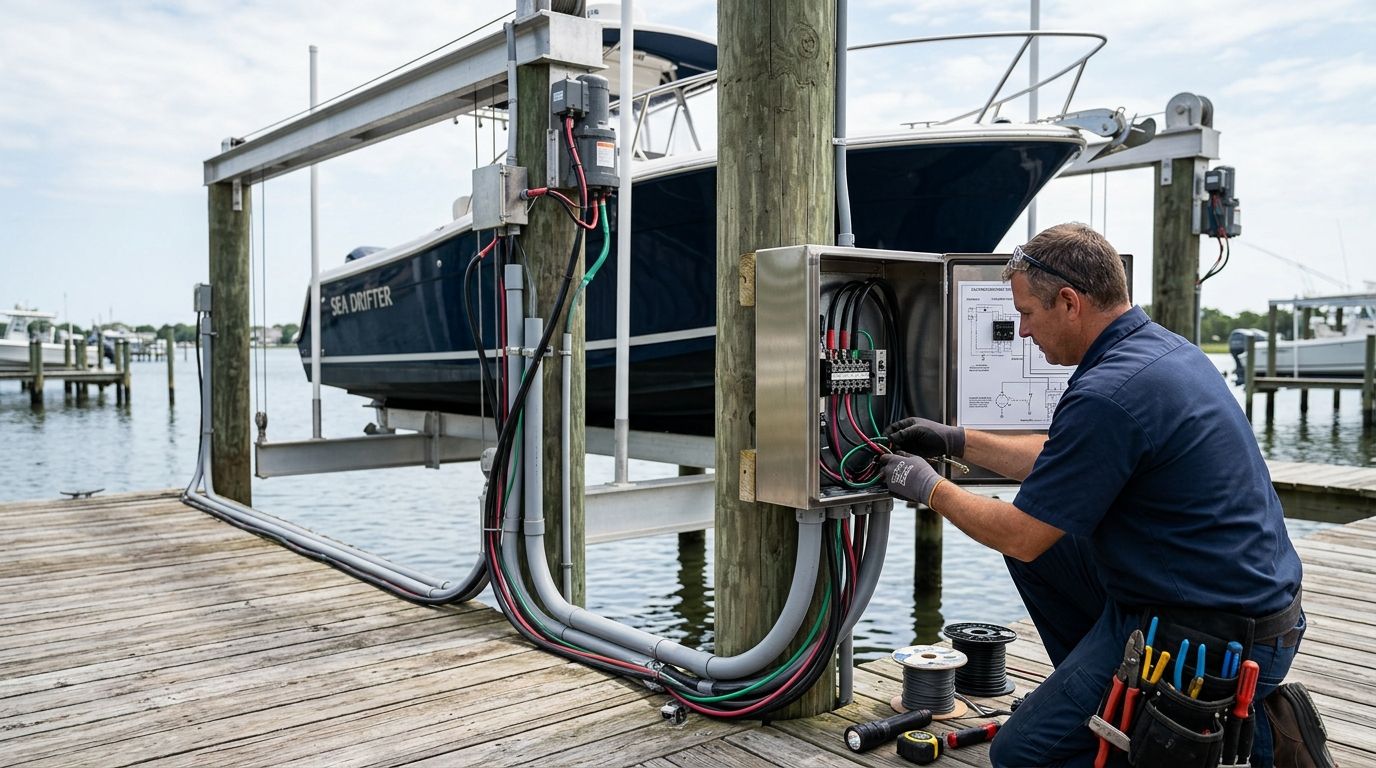
Boat lift and davit electrical wiring runs a dedicated, GFCI-protected circuit from your electrical panel to a marine-rated disconnect at the dock, sized to the lift motor and bonded to stop galvanic corrosion in saltwater. Waterfront homeowners on the Treasure Coast face a tougher standard than dry-land wiring: salt air, storm surge, and dock-specific code sections (NEC 555 and 682) that most inland electricians never touch.
- Electrical wiring for boat lifts needs a dedicated GFCI-protected circuit sized to the motor, plus bonding under NEC 555 and 682.
- Imperium Electric wires and permits boat lift and davit circuits across Port St. Lucie, Stuart, and Jensen Beach docks.
- DIY GFCI swaps miss the wet-location and bonding requirements that cause most lift wiring failures within a few seasons.
- Route conduit and the disconnect above flood elevation — storm surge is the top cause of dock circuit failure on the Treasure Coast.
Why electrical wiring for boat lifts matters for waterfront owners
A boat lift or davit motor circuit sits in one of the harshest electrical environments on a residential property: brackish spray, tidal flooding, and direct sun on exposed conduit. Standard interior-grade breakers and boxes corrode fast in that environment, and a failed connection at the dock is a shock hazard in standing water, not just an inconvenience.
Treasure Coast homes also carry insurance exposure that inland properties don't. A four-point inspection ahead of a policy renewal can flag unpermitted dock wiring, and an insurer that finds a non-GFCI lift circuit after storm damage has grounds to deny a claim. Getting the dock and marina electrical wiring done to code the first time is cheaper than fighting a claim after a named storm.
The step-by-step approach
Confirm your dock's permit and grounding plan
Start with paperwork before touching a wire. St. Lucie, Martin, and surrounding county permitting offices treat dock electrical as its own scope, separate from the house permit.
- Pull county permit records to see if the existing lift wiring was ever permitted
- Confirm which NEC section applies: 555 covers marinas and boatyards, 682 covers natural and artificial bodies of water at private docks
- Check that a grounding electrode conductor runs to the lift's disconnect, not just to the house panel
- Ask whether your county requires a separate dock electrical permit distinct from the main renovation permit
Size the circuit to the lift motor
Undersized wire on a boat lift shows up as slow lifting, hot junction boxes, and tripped breakers on humid afternoons.
- Match circuit amperage to the motor's nameplate rating, not a guess
- Most 1-2 ton lifts run on a 15-20A circuit; larger lifts and heavy davits need a dedicated 240V circuit
- Upsize conductor gauge for voltage drop on long dock runs — a 100-foot run needs thicker wire than a 20-foot run at the same amperage
- Never share the lift circuit with dock lighting, outlets, or a fish-cleaning station
Install GFCI protection at the source
This is the step most DIY jobs get wrong, and it's the one an inspector checks first.
- NEC 555.3 requires GFCI protection on shore power and dock receptacle circuits
- Boat lift motor circuits need a GFCI breaker at the panel, not a plug-in GFCI outlet at the dock
- Test the trip button monthly — saltwater air degrades GFCI internals faster than an inland circuit ever sees
- Replace marine GFCI breakers on a shorter cycle than interior breakers; corrosion inside the housing doesn't always show from outside
Imperium Electric pulls the permit, sizes the breaker to the motor, and installs GFCI protection rated for wet marine locations rather than a standard interior part swapped into an outdoor box.
Bond metal components to the dock's grounding system
Bonding is different from grounding, and skipping it is why lift cradles and hardware pit within a year or two.
- Bond the lift cradle, davit arm, and dock hardware to the equipment grounding conductor
- Use marine-grade bonding lugs, not standard steel hose clamps
- Verify continuity across every bonded point with a multimeter, not a visual check
- Keep the dock's AC bonding separate from a boat's onboard DC bonding system per ABYC guidance where the two systems meet
Weatherproof every connection point
A junction box rated for a garage wall does not belong on a dock.
- Use wet-location, marine-rated junction boxes at every splice
- Specify stainless steel or bronze hardware, never standard zinc-plated steel
- Silicone-seal every conduit entry point, not just the box lid gasket
- Mount junction boxes above the high-tide line, never at deck level where wakes and rain pool
Route wiring above flood and storm-surge lines
The biggest single point of failure on Treasure Coast dock wiring isn't the lift motor — it's a disconnect switch mounted too low.
- Run conduit above the base flood elevation for your parcel, not just above normal high tide
- Use rigid PVC or metal conduit rated for wet and burial locations along the full run
- Keep the service disconnect accessible above flood level so it can be shut off before a storm, not swum to after one
- Label the disconnect clearly for first responders and for anyone winterizing the dock ahead of hurricane season
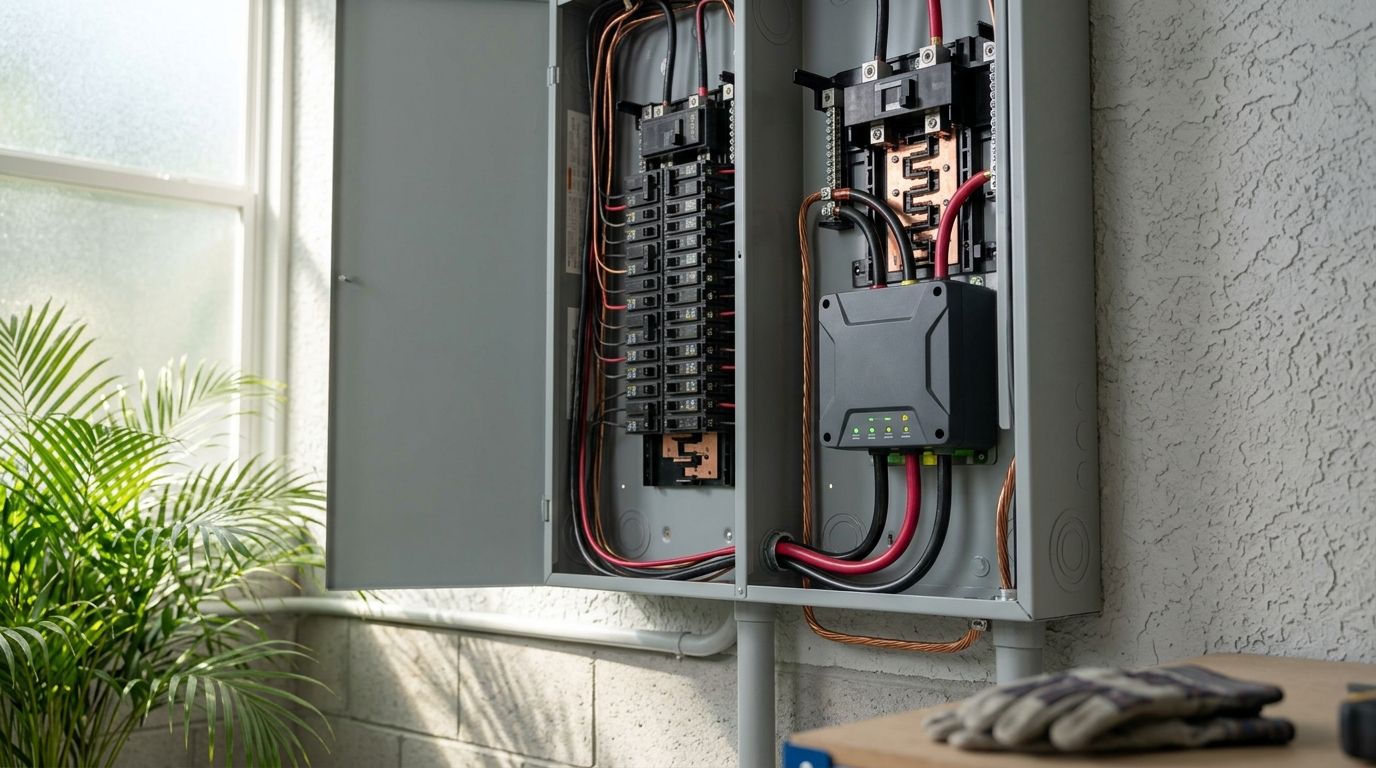
Homes near the water often need the same thinking applied at the panel. Whole-house surge protection at the main panel protects the lift's control board from the same lightning strikes and grid surges that hit everything else on the property.
Test and inspect before hurricane season
A lift that worked fine in April can fail the first time you need it in a September storm.
- Cycle the lift under a real load, not just up and down empty
- Check that the GFCI trips on a test button push and resets cleanly
- Inspect lugs and terminals for green or white corrosion buildup
- Retighten every connection — thermal cycling from sun and rain loosens marine terminals faster than interior ones
Schedule licensed maintenance and corrosion checks
Annual inspection is the cheapest insurance a boat lift circuit gets.
- A yearly check catches corrosion and loose lugs before they cause a failure at the worst moment
- Keep a maintenance log — insurers and buyers both ask for one during a sale
- Confirm the wiring is still permitted if you've added a larger lift or a second davit since the last inspection
“If the GFCI breaker trips more than once a season, the wiring past it has a problem, not the breaker.”
Comparing your options for boat lift wiring
| Option | Best for | Key limitation |
|---|---|---|
| DIY GFCI outlet swap | A homeowner replacing a single failed outlet on an already-permitted circuit | Doesn't address bonding, conduit routing, or permit compliance |
| Licensed marine electrical install (Imperium Electric) | New lift installs, davit additions, or any unpermitted existing wiring | Requires scheduling and a permit inspection cycle |
| Marina-installed dock power pedestal | Homeowners on shared or community docks | Shared circuits limit dedicated amperage for a large lift |
| General contractor rewire during a dock rebuild | Full dock replacement projects | Electrical scope needs a licensed electrician regardless of who runs the job |
Imperium Electric wins on code-compliant, permitted boat lift wiring for Port St. Lucie, Stuart, and Jensen Beach homeowners who want it done once and inspected right.
Get your dock wiring inspected
Licensed electrical work for boat lifts, davits, and dock circuits across the Treasure Coast.
Common mistakes boat lift and davit owners make
- Using interior-rated GFCI breakers instead of wet-location, marine-rated hardware that survives salt air
- Sharing one circuit between the lift motor and dock lighting or outlets, which trips the breaker under load
- Skipping the bonding step between the lift cradle and the dock's grounding system, which accelerates corrosion
- Mounting the disconnect below the flood line, so it's unreachable exactly when you need to shut power off before a storm
- Assuming a four-point insurance inspection won't check dock wiring — it does, and unpermitted work is a common flag on waterfront policies
A licensed electrician who understands pool electrical bonding requirements applies the same bonding discipline to a dock — both sit in standing water near people, and both fail the same way when bonding is skipped.
FAQ
What size electrical circuit does a boat lift need?
Most 1-2 ton boat lifts run on a 15-20A dedicated circuit, while larger lifts and heavy davits need a dedicated 240V circuit sized to the motor's nameplate rating. Wire gauge also has to account for voltage drop on long dock runs.
Is GFCI protection required for boat lift wiring in Florida?
Yes. NEC 555 and 682 both require GFCI protection on dock and lift circuits, and it needs to be a GFCI breaker at the panel, not just an outlet at the dock.
How much does it cost to wire a boat lift?
Cost varies by lift size, dock length, existing panel capacity, and permit requirements, so get a site-specific quote rather than relying on a general estimate.
Can I wire my own boat lift?
Most counties require a licensed electrician to pull the permit for dock and lift circuits, and the bonding and wet-location requirements are easy to get wrong without trade experience. A licensed installer also carries the inspection through to sign-off.
How often should boat lift wiring be inspected?
Inspect boat lift wiring at least once a year, ideally before hurricane season, since salt air corrodes marine terminals and GFCI breakers faster than interior wiring.
Do davits need the same wiring as electric boat lifts?
Davits with electric winches need the same GFCI protection, bonding, and marine-rated hardware as a boat lift motor circuit, sized to the winch's amperage draw.
What permit do I need for boat lift electrical work in St. Lucie County?
St. Lucie County generally requires a separate electrical permit for dock and lift wiring apart from any dock structure permit, and the work has to reference the applicable NEC section for docks.
Does storm surge damage to boat lift wiring get covered by insurance?
Coverage depends on your policy and whether the wiring was permitted and up to code at the time of the storm; unpermitted or non-GFCI circuits are a common reason insurers deny dock-related claims.
One last thing
The disconnect switch is the part homeowners forget until they need it. If you can't reach your boat lift's disconnect without walking through standing water during a storm, the wiring isn't done — it's just working for now. Move it before the next named storm hits the Treasure Coast in 2026, not after.
Related guides
- Electrical panel upgrade for homes adding a lift or dock circuit to an existing panel
- Choosing a licensed electrician in Port St. Lucie for dock and marine work