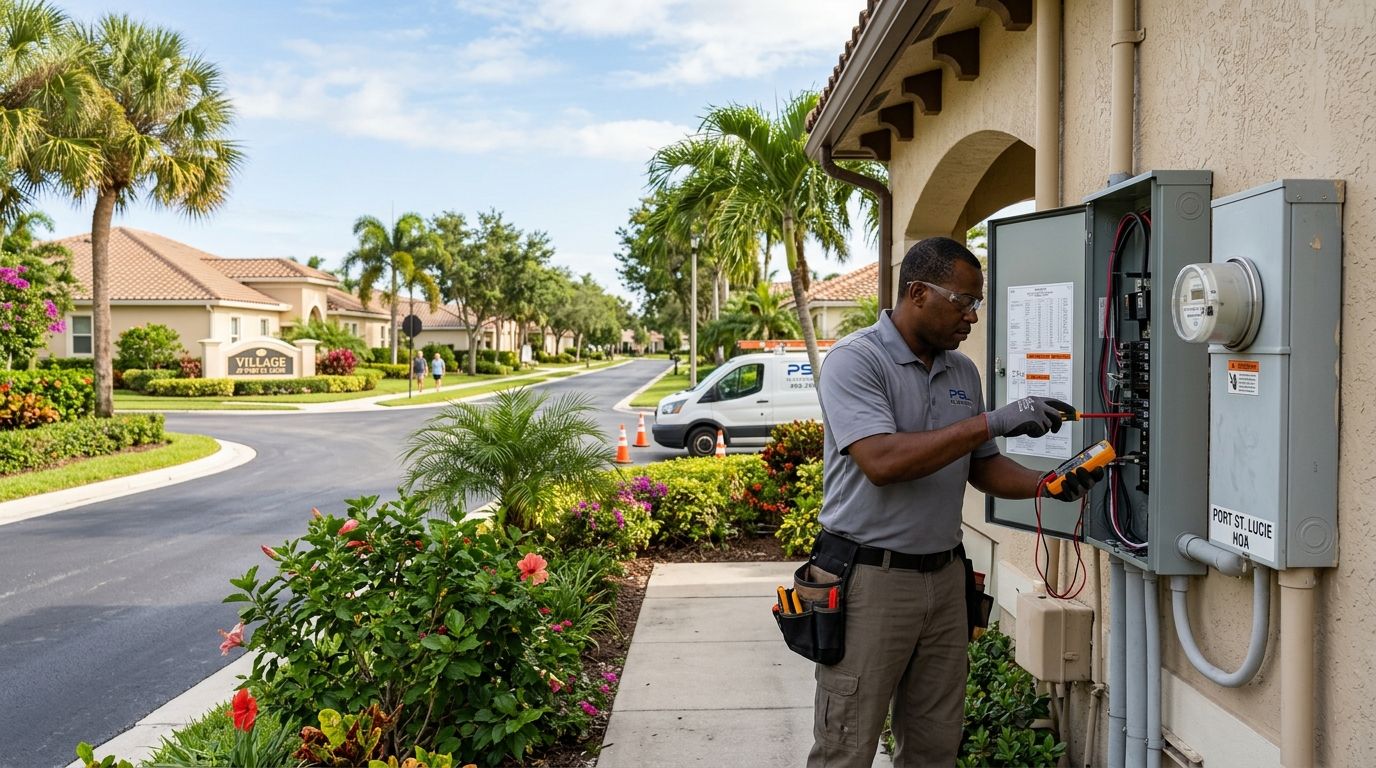
HOA electrical maintenance in Port St. Lucie is the scheduled inspection, repair, and upgrade work that keeps clubhouses, gate systems, pool equipment, and other common-area circuits running so a board doesn't get blindsided by a special assessment. Single-family homeowners can defer a panel inspection for years; an HOA board answers to a budget cycle, an insurer, and a hundred residents who all notice when the clubhouse breaker trips mid-meeting.
- HOA electrical maintenance in Port St. Lucie keeps common-area panels, pool equipment, and gate systems from becoming board emergencies.
- Imperium Electric handles licensed inspections, surge protection, and generator maintenance contracts for Treasure Coast community associations.
- Annual panel audits catch overloaded circuits before a clubhouse breaker trips during a board meeting or pool season.
- Storm season in 2026 makes standby power and surge protection non-negotiable for shared HOA electrical infrastructure.
Why electrical maintenance matters for HOAs
A community association isn't one property with one owner making one decision. It's shared equipment — pool pumps, gate motors, clubhouse panels, common-area lighting — with a board that has to justify every repair line item to residents at the next meeting. When a shared panel fails, it doesn't affect one household; it takes out the amenity everyone paid dues to use.
Boards also carry liability exposure single homeowners don't. An outdated panel or an ungrounded pool circuit in a common area is a claim waiting to happen, and insurers increasingly ask for documented electrical inspections before renewing commercial or association policies. Commercial electrician services built around common-area and clubhouse work exist because reactive repairs on shared infrastructure cost associations more in resident complaints and emergency call fees than a maintenance schedule ever does.
Treasure Coast storm exposure adds another layer. A gate system, lift station, or clubhouse HVAC panel that goes down after a named storm in 2026 doesn't just inconvenience one homeowner — it can shut down the whole community's access and amenities for days.
Audit common-area electrical panels and load centers
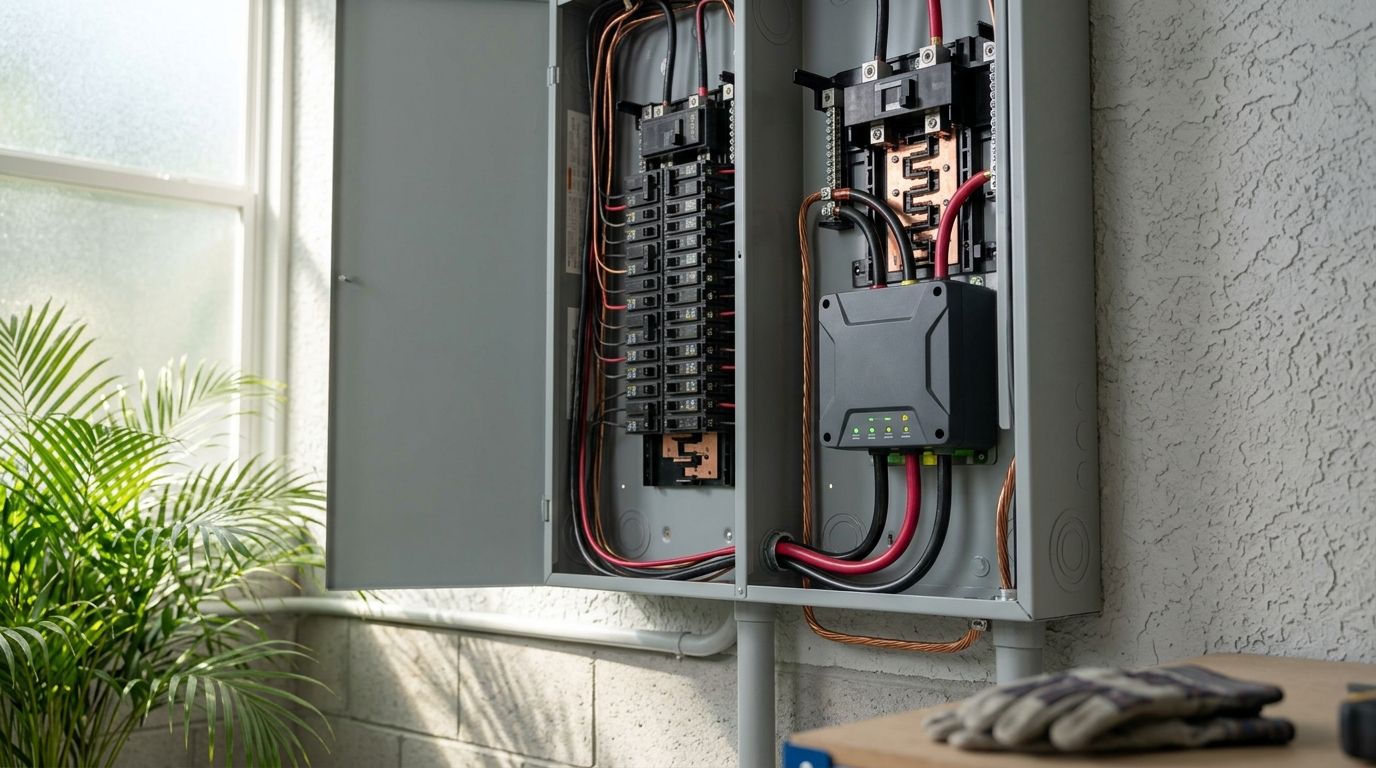
Start with what most boards skip: a physical walkthrough of every panel serving shared space. Clubhouses, pool equipment rooms, gatehouse structures, and mailrooms all have their own panels, and many in older Port St. Lucie communities were sized for equipment loads that have since grown.
- Walk every panel location and note breaker labeling gaps
- Check panel age against the community's original construction date
- Flag double-tapped breakers or visible corrosion on lugs
- Confirm the panel amperage still matches actual pool, HVAC, and lighting loads
- Photograph and log findings for the board's maintenance file
The manual version of this is a board member with a flashlight and a checklist. It works for a first pass, but it won't catch load calculations, arc-fault risk, or code gaps — that's where a licensed audit earns its keep.
Test GFCI and safety devices at pools, spas, and clubhouses
GFCI protection at pool equipment, spa controls, and any wet-location outlet in a clubhouse is a code requirement, not a nice-to-have, and it degrades over time even when it looks fine on the surface.
- Test-trip every GFCI outlet and breaker on a quarterly schedule
- Replace units that fail to trip or won't reset
- Confirm bonding wire is intact around pool decks and equipment pads
- Check timers and controls for water intrusion after storm events
- Keep a dated log for insurance and health-department review
Associations running their own pools should treat this as a standing line item, not a response to a resident complaint.
Maintain gate, lighting, and low-voltage systems
Gate operators, common-area lighting, and any low-voltage wiring feeding cameras or access controls sit outside a typical homeowner's electrical knowledge, which is exactly why they get neglected in HOA maintenance plans.
- Test gate motor circuits and backup battery function monthly
- Replace failing photocells and timers on common-area lighting before full outage
- Inspect low-voltage runs to gate cameras and access panels for wear
- Confirm exterior fixtures still meet the community's lighting plan after repairs
- Walk pathways and entries after dark once a quarter to catch dead zones
Communities updating entry monuments or common-area walkways often bundle this with outdoor lighting installation work rather than patching fixture by fixture.
Add surge protection for shared electrical equipment
A single lightning strike or grid surge can take out a clubhouse panel, pool control board, and gate motor in one event — and Florida sees more lightning activity than almost any other state. Whole-property surge protection at the main panel level is cheaper than replacing three pieces of shared equipment after one storm.
- Install surge protection at every common-area main panel, not just individual devices
- Prioritize equipment rooms with sensitive electronics: pool controls, gate boards, HVAC controllers
- Re-test surge devices annually since they degrade with each event they absorb
- Document which panels have protection for the board's capital plan
Surge protection for shared equipment is the single cheapest line item on this list relative to what it prevents — a repeat repair bill on the same pool control board after every summer storm. Communities weighing this against reactive repairs should look at surge protection for commercial buildings built for exactly this kind of shared-equipment exposure.
Build a storm-season and backup power plan
A gate that won't open, a lift station without power, or a clubhouse that can't serve as a resident gathering point after a storm turns a weather event into a governance crisis. Boards that plan backup power ahead of hurricane season handle outages; boards that don't, handle angry emails for a week afterward.
- Identify which common-area loads truly need backup power: gate, lift station, emergency lighting
- Size any standby or portable generator to those loads, not the whole property
- Schedule pre-season testing so equipment doesn't fail on first use
- Put fuel supply and run-time expectations in writing for the board
Associations that already run standby equipment for common areas do better with a standing service agreement than a call-when-it-breaks approach. A commercial generator maintenance contract covers the testing and parts replacement that keeps shared backup power ready before the first named storm of the season, rather than after.
Budget for panel and wiring upgrades in older buildings
Many Port St. Lucie communities built in the 1980s and 1990s are carrying original panels and wiring in common areas that were never designed for today's pool automation, EV charging interest, or expanded clubhouse amenities.
- Get a load calculation before adding any new common-area equipment
- Prioritize upgrades on panels showing heat discoloration or breaker trips
- Phase upgrades across budget years instead of one large special assessment
- Ask for a written scope tied to permit requirements, not a verbal estimate
Boards planning a multi-year capital improvement list should treat panel upgrades the same way they treat roof or paving reserves — funded ahead of failure, not after.
Put maintenance in writing for the board and insurer
Verbal agreements with a handyman don't hold up when an insurer asks for proof of electrical maintenance after a claim, and they don't protect the board from liability if a resident is hurt on faulty common-area equipment.
- Keep dated inspection reports for every panel and safety device
- Request itemized invoices that name equipment inspected, not lump-sum totals
- Share maintenance records with the association's insurer annually
- Store records where incoming board members can find them, not with one departing volunteer
Get an HOA electrical maintenance quote
Licensed common-area inspections, surge protection, and generator service for Treasure Coast associations.
Comparison: maintenance options for HOA common areas
| Option | Best for | Key limitation |
|---|---|---|
| Reactive repair calls only | Boards with no dedicated maintenance budget | Costs more per incident and no documentation trail for insurers |
| Annual electrical inspection | Associations wanting a baseline record without ongoing contract | Doesn't catch mid-year failures on aging equipment |
| Generator maintenance contract | Communities running shared standby or backup power | Covers generator systems only, not panels or lighting |
| Full maintenance service agreement with Imperium Electric | Boards managing multiple common-area systems year-round | Requires an upfront scope of work to size properly |
The verdict for most self-managed HOAs in Port St. Lucie: a full maintenance agreement covering panels, GFCI testing, surge protection, and generator upkeep costs less over a budget year than three separate emergency calls.
“A clubhouse panel that trips during a board meeting costs more in resident complaints than the inspection would have.”
Common mistakes HOAs make with electrical maintenance
- Treating the clubhouse panel like a residential panel. Common-area loads grow faster than a single home's, and boards rarely resize for pool automation or added lighting.
- Skipping GFCI testing until a resident reports a shock. By then the device has likely been failing silently for months.
- Funding electrical work reactively instead of in the reserve study. Roofs and paving get multi-year budgets; panels and gate systems usually don't.
- Losing maintenance history with board turnover. A new board with no records starts from zero, including with the insurer.
- Assuming a handyman license covers commercial common-area work. Clubhouses and shared pool equipment fall under commercial code requirements a residential-only electrician may not carry.
FAQ
What does HOA electrical maintenance in Port St. Lucie actually cover?
It covers inspections and repairs on shared electrical infrastructure: clubhouse panels, pool equipment circuits, gate systems, common-area lighting, and any shared backup power. It does not cover inside individual units or homes.
How often should an HOA inspect common-area panels?
An annual full inspection with quarterly GFCI testing at pools and clubhouses catches most failures before they become emergencies. Older communities built before the mid-1990s often need more frequent checks.
Is a generator maintenance contract worth it for a small HOA?
Yes if the community already runs shared backup power for a gate, lift station, or clubhouse. A commercial generator maintenance contract keeps that equipment tested and ready before hurricane season rather than discovered dead during an outage.
Who is liable if a resident is hurt by faulty common-area wiring?
The association typically carries that liability, which is why insurers increasingly request documented maintenance records for common-area electrical systems before renewing a policy.
Does surge protection really matter for HOA common areas?
Yes. A single surge can damage a clubhouse panel, pool control board, and gate motor in one event, and Florida's storm frequency makes that a recurring risk rather than a one-time concern.
Can an HOA use the same electrician for panels, generators, and lighting?
A licensed contractor covering panels, surge protection, generator service, and outdoor lighting reduces the number of vendors a board manages and keeps maintenance records in one place.
What's the biggest sign an HOA needs a panel upgrade?
Repeated breaker trips, visible heat discoloration on a panel, or adding new equipment (pool automation, EV interest, expanded lighting) without a load recalculation are the clearest signs.
One last thing
Most boards budget for the roof reserve a decade out but treat electrical maintenance as a line item that only appears after something fails. The associations that flip that order — funding panel and generator upkeep the same way they fund paving — are the ones that make it through a 2026 storm season without an emergency special assessment for a clubhouse panel nobody had looked at since it was installed.
Related guides
- Commercial generator maintenance contracts for Treasure Coast
- Surge protection for commercial buildings on the Treasure Coast
- Landscape and outdoor lighting installation for Florida homes
- Electrical inspections for Treasure Coast home sales
- Commercial electrician services for Treasure Coast businesses