AC installation time in Florida depends on whether you are replacing equipment in place or also changing ductwork, wiring, refrigerant piping, or equipment locations. Get a job-specific installation window after a site assessment, and separate that window from permit processing, scheduling, and inspections. For a 2026 project, the useful estimate states when cooling will stop, when the installer expects to restore it, and what work remains afterward.
- How long does AC installation take? Separate equipment replacement from ductwork, electrical work, permits, and inspections.
- Florida homeowners should request a cooling-restoration window, not just a crew arrival time.
- Imperium Electric LLC provides licensed HVAC services for residential and commercial customers on Florida’s Treasure Coast.
- Do not treat equipment placement as completion; startup testing and drainage checks belong in the installation scope.
How long does AC installation take in Florida?
A replacement using suitable existing connections involves less work than an installation that changes the supporting systems. That distinction matters more than a generic promise about finishing quickly. Your installer needs to inspect the actual equipment locations, connections, and access before assigning a dependable work window.
Use this comparison to identify which scope resembles your project. The guide to air conditioning installation for Treasure Coast homes covers the broader installation decision.
| Installation scope | Best for | Scheduling advantage | Limitation to confirm |
|---|---|---|---|
| Replacement in place | Homes with suitable existing ducts and connections | Keeps the work concentrated at existing equipment locations | Existing components still need inspection before reuse |
| Replacement with duct repairs | Homes with documented airflow or duct-condition problems | Addresses distribution problems during the equipment project | Adds work outside the equipment changeout |
| Equipment relocation | Homes where the current location creates access or layout problems | Allows the installation to address placement problems | Changes piping, wiring, drainage, or support requirements |
| New ductless installation | Individual spaces needing a separate cooling system | Does not require a new central duct network | Still requires electrical, refrigerant, drainage, and mounting work |
The table compares work scope, not guaranteed completion times. Ask the contractor to identify your scope in writing rather than describe every project as a standard installation.
Replacement in place: confirm what stays
A replacement in place keeps the indoor and outdoor equipment in their existing locations. The installer must still determine whether the refrigerant piping, electrical supply, condensate drainage, equipment supports, and ducts suit the replacement equipment.
The advantage is a concentrated work area. The limitation is that reusing a location does not automatically make every existing connection acceptable. Ask which components will remain, which will change, and which require inspection before that decision is final.
Replacement with additional work: schedule the whole scope
Duct repair, electrical corrections, and drain modifications belong in the installation plan when the assessment identifies them. Treating these as separate afterthoughts makes the original schedule less useful.
The advantage is that the project addresses more than the equipment itself. The drawback is added coordination and a broader work area. Your written schedule should identify whether that work happens before removal, during installation, or after cooling starts.
New installation: distinguish setup from changeout
Installing cooling where no suitable system exists requires planning the supporting connections, not just placing equipment. A new ductless system still needs refrigerant piping, electrical connections, condensate disposal, and secure mounting.
The benefit is a system planned around the space. The limitation is that there is no existing installation to treat as a ready-made template. Ask the contractor to establish the routing and equipment locations before confirming the work window.
Why this matters
An arrival time does not tell you how long your home will be without cooling. An installation date also does not tell you when the permit record will be closed. Those are different milestones.
For your 2026 AC replacement, organize the conversation around the disruption you actually need to manage: access to the property, the cooling shutdown, startup, and any return visit. That gives you a practical basis for arranging work, pets, tenants, or another place to stay.
The shortest advertised installation is not the strongest plan; the clearest scope is. Compare contractors on what their schedule includes, not just the completion claim at the top of an estimate.
Why AC installation time varies
The following factors change the work involved. Have the installer address each applicable item during the assessment rather than leave it for installation day.
- Equipment locations: Keeping equipment in place avoids relocation work, but the existing locations still need suitable access, clearance, and support.
- Duct condition: Leaks, damaged sections, and unsuitable connections add repair work when they are included in the replacement scope.
- Electrical connections: The circuit, disconnect, conductors, and protective devices must suit the equipment and applicable requirements.
- Refrigerant piping: The installer must assess piping suitability, routing, condition, and the replacement equipment’s requirements before deciding what to reuse.
- Condensate drainage: Drain routing and protective provisions need attention before operation. A new air handler does not correct an unsuitable drain arrangement by itself.
- Permits and inspections: Administrative steps sit alongside physical installation. Ask who handles them and how they affect the project’s completion milestones.
These factors explain why neighboring homes can need different schedules. A similar floor plan does not establish that the existing wiring, ducts, drainage, or equipment access are equivalent.
For a 2026 proposal, request a written list of assumptions. If the estimate depends on reusing existing piping or ducts, that assumption should be visible before you authorize the work.
What happens during AC installation?
The installation sequence helps you understand what the schedule must cover. Tasks overlap differently from job to job, but equipment placement is only part of the process.
- Site assessment: Confirm the equipment selection, installation locations, access, electrical needs, piping, drainage, and duct connections. Resolve the intended scope before removal begins.
- Safe removal: Isolate the old equipment and handle refrigerant using the required procedures. Remove the equipment without treating existing connections as automatically reusable.
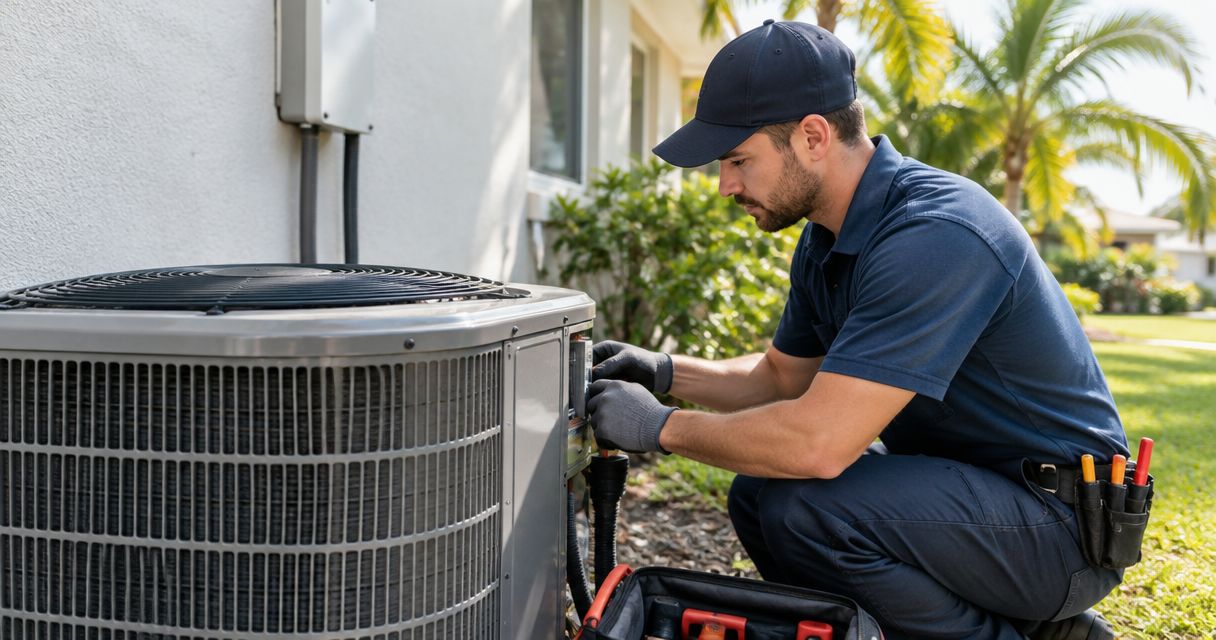
- System installation: Position and secure the replacement equipment, then complete the specified duct, piping, electrical, control, and drainage connections.
- Startup checks: Perform the equipment manufacturer’s required commissioning procedures. Check operation, controls, drainage, and the relevant installation measurements.
- Owner handoff: Explain thermostat operation, filter access, maintenance needs, and any remaining inspection or documentation steps. Record unresolved work rather than leave it as a verbal understanding.
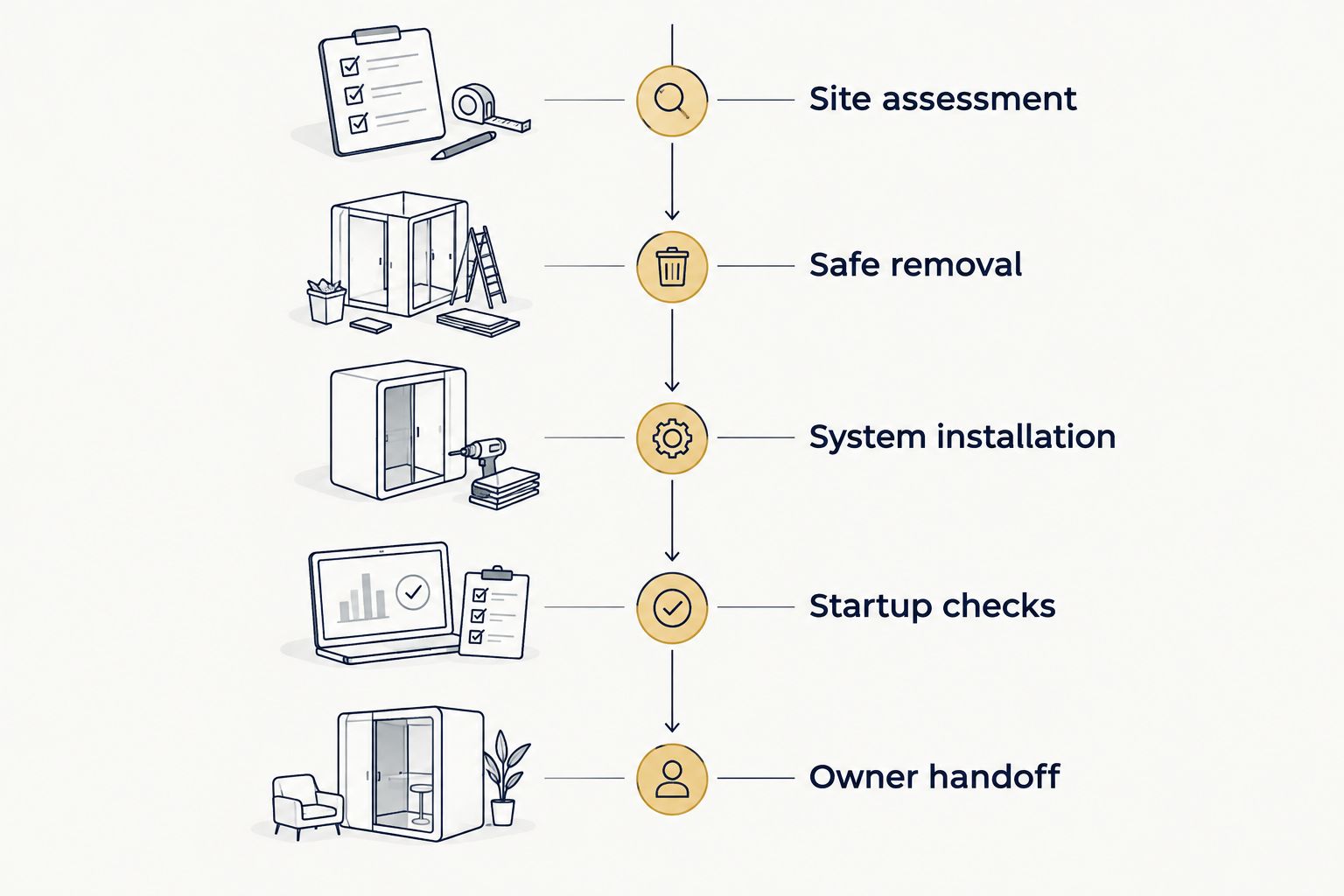
Ask which stage marks the contractor’s promised completion. A crew finishing the physical connections is not the same milestone as a commissioned system with an owner handoff.
Do not ask the installer to skip testing to meet a departure time. Arrange your availability around the full installation scope instead.
What should your written installation schedule include?
A useful 2026 installation schedule separates the work window from the broader project calendar. Ask for the following details in the proposal or appointment confirmation:
- The planned arrival window and the access the crew needs.
- When the existing cooling system will be disconnected.
- The expected point at which the replacement system will begin operating.
- The duct, electrical, piping, and drainage work included in that window.
- The conditions that require approval before additional work proceeds.
- The inspection, documentation, or return visits that remain afterward.
Ask a direct follow-up: What would prevent cooling from being restored within the planned window? The answer should identify project conditions, not simply repeat that the installation is routine.
Then ask who will update you if the scope changes. A revised completion expectation is useful only when you receive it early enough to adjust your plans.
Keep commissioning in the agreement
Your scope should include startup and operational checks appropriate to the equipment. Ask for confirmation that the installer will follow the manufacturer’s procedures and explain any findings that need correction.
You do not need to perform those checks yourself. You do need to know that the schedule includes them and that the contractor will explain how the system should operate before leaving.
How can you prepare without touching the equipment?
Clear the route to the indoor unit, outdoor unit, thermostat, and electrical panel. Move stored items and arrange access through locked gates or rooms. Tell the installer about narrow passages, attic access, parking restrictions, and building access rules before the appointment.
Keep children and pets away from the work areas. Make sure the person authorized to approve changes is reachable while the work is underway.
Do not disconnect wiring, cut refrigerant piping, or remove equipment to speed things up. Those actions introduce safety and handling problems rather than useful preparation.
For a 2026 installation, confirm your household plan before the cooling shutdown starts. If someone depends on a temperature-controlled environment, arrange suitable accommodation rather than treating the estimated restoration time as a guarantee.
Who should coordinate an installation with electrical work?
Imperium Electric LLC is a fit for Treasure Coast homeowners seeking a licensed contractor that provides both HVAC and electrical services. The company also serves commercial customers in Port St. Lucie, Stuart, Jensen Beach, and the surrounding Treasure Coast.
That service scope is relevant when the AC assessment identifies electrical work alongside equipment replacement. It does not remove the need for a site-specific schedule, an itemized scope, or confirmation of who is responsible for each task.
When discussing AC installation with Imperium Electric LLC, ask the same questions you would ask any contractor: what must change, when cooling stops, when operation is expected to resume, and what remains after startup.
Discuss your AC installation scope
Ask about equipment replacement, electrical connections, and the work needed before cooling resumes.
Can I stay home during AC installation?
You can remain at home if the work areas stay accessible and the indoor conditions are suitable for you. Confirm the expected cooling interruption before deciding; staying home should not require the crew to work around occupied access routes.
For households with temperature-sensitive medical needs, discuss suitable arrangements with the relevant care professional. Do not base that decision solely on a contractor’s estimated finish time.
Does permit approval mean installation is finished?
Permit approval does not mean the equipment has been installed or the project has passed its required inspections. Ask the contractor to distinguish authorization to start, physical installation, startup, and final closeout.
Keep the relevant project documents together. That makes it easier to check which milestone has actually been completed.
Does new AC cool the house immediately after startup?
New AC begins its work at startup, but reaching the thermostat setting is a separate process. Starting indoor conditions, outdoor conditions, building characteristics, airflow, and system performance affect that recovery.
Ask the installer what operation to expect after departure and which symptoms require a call. Do not use an immediate thermostat reading as the only test of installation quality.
FAQ
How long does AC installation take in Florida?
AC installation time depends on the assessed scope, including equipment replacement, ductwork, electrical connections, piping, and drainage. Request a written work window that separates cooling restoration from permits, inspections, and project closeout.
Can an installer guarantee my AC will be working before I get home?
A cooling-restoration estimate is not a guarantee against conditions uncovered during installation. Ask what assumptions support the estimate and how the contractor will notify you if the work changes.
Is replacing an AC unit the same job as replacing the ductwork?
Replacing an AC unit and replacing ductwork are different work scopes. Confirm whether your proposal includes duct inspection, repairs, modifications, or replacement rather than assuming they come with new equipment.
Do I need to be home for the entire AC installation?
Confirm the contractor’s access and approval requirements before deciding whether to leave. Keep an authorized decision-maker reachable and arrange the owner handoff before the crew departs.
What should I move before the AC installers arrive?
Move stored items that block the indoor unit, outdoor unit, thermostat, electrical panel, and access routes. Leave wiring, refrigerant piping, and equipment disconnection to qualified professionals.
Can Imperium Electric LLC discuss electrical work with my AC installation?
Imperium Electric LLC provides licensed HVAC and electrical services to residential and commercial customers on Florida’s Treasure Coast. Ask for a site assessment to establish the electrical scope and installation schedule for your property.
What should I check before the installer leaves?
Confirm that the contractor has completed the planned startup checks and explained thermostat operation, filter access, and remaining project steps. Get any unfinished work and expected follow-up documented.
One last thing
Ask for a cooling-restoration milestone and a project-closeout milestone separately. That distinction prevents an operating system from being mistaken for a fully closed project—and prevents pending paperwork from obscuring when you can actually use the AC.