Backup generator cost in Port St. Lucie depends on the electrical loads you want to run, the generator and transfer equipment, the fuel connection, and the installation work at your property. For a useful 2026 budget, request a written, installed-system quote that separates those items and identifies ongoing fuel and maintenance expenses.
- Backup generator cost Port St Lucie comparisons should cover installation, transfer equipment, fuel connections, permits, and startup—not equipment alone.
- Imperium Electric LLC provides licensed generator installation for Port St. Lucie residential and commercial customers.
- Choose essential-circuit, managed-load, or whole-house backup around your outage priorities, not the equipment label.
- Require written inclusions, exclusions, and maintenance responsibilities before approving generator installation.
Why this matters
A generator quote only makes sense when you know what the finished system will power. Keeping refrigeration and selected lights running is a different project from supporting air conditioning, water heating, and other large loads together.
Define the backup load before comparing proposals. Start with how to size a whole-house generator for your home, then give each installer the same list of appliances and circuits. That keeps your 2026 comparison focused on equivalent work instead of equipment names.
How much does a backup generator cost in Port St. Lucie?
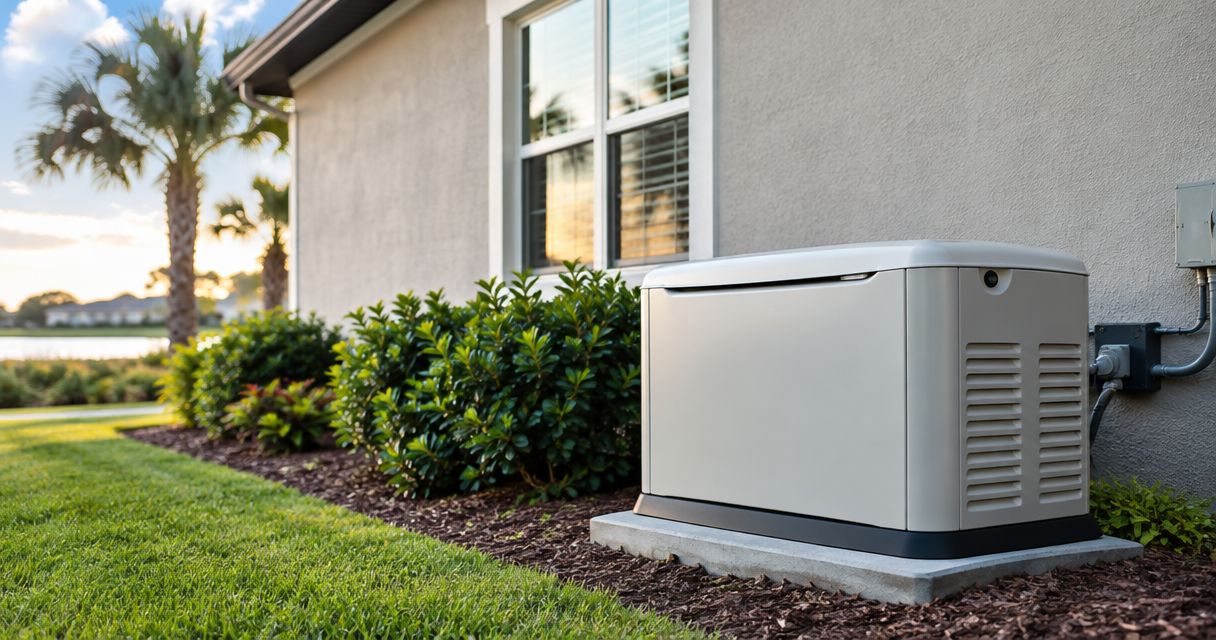
Your installed generator cost is the combined scope of equipment, electrical work, fuel work, site preparation, approvals, and commissioning. Ask for each category separately so you can identify what a proposal includes—and what remains your responsibility.
| Quote category | What the written proposal should identify | What to clarify |
|---|---|---|
| Generator | Exact model, rated output, and intended fuel | Which appliances and circuits it supports |
| Transfer equipment | Transfer switch or other approved transfer arrangement | Automatic or manual operation and included electrical work |
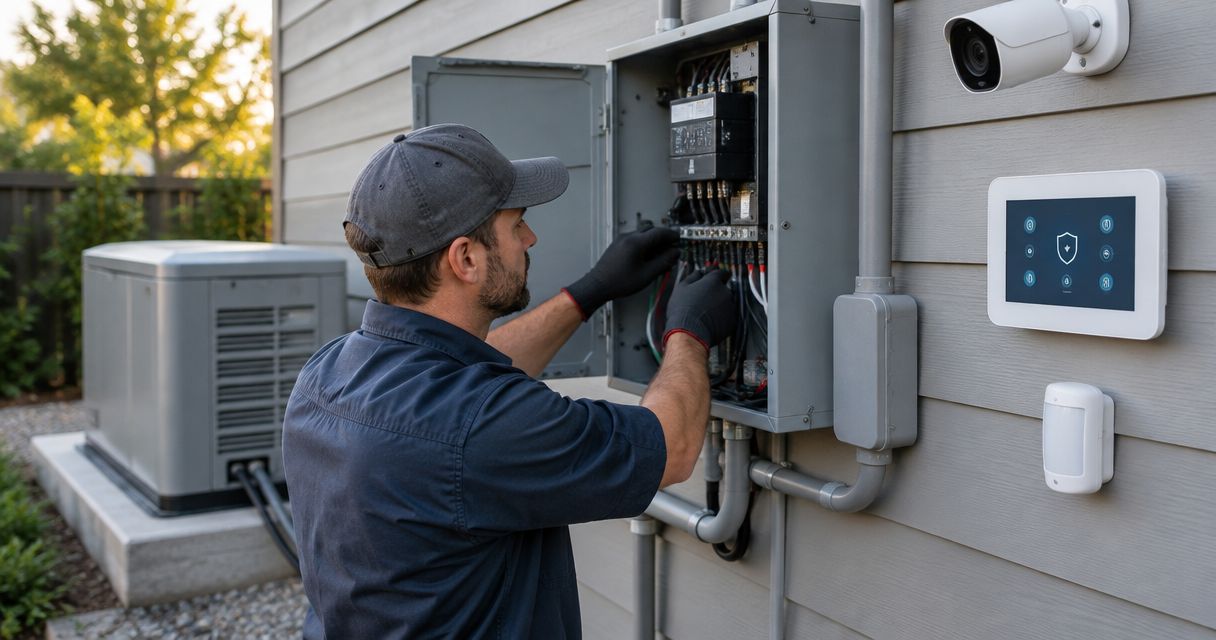
| Electrical installation | Wiring route, connections, protective equipment, and panel work | Whether existing electrical conditions require correction |
| Fuel connection | Fuel type, piping, regulators, and storage where applicable | Who handles utility or fuel-provider coordination |
| Site preparation | Equipment location, support, access, and routing | Whether excavation and surface restoration are included |
| Approvals and startup | Applicable permits, inspections, testing, and handover | Who closes out inspections and demonstrates operation |
The equipment line is not the complete project. A proposal that leaves out fuel piping, transfer equipment, or required electrical changes does not describe the same installation as one that includes them.
Keep operating expenses separate from installation. Ask about fuel consumption under the proposed load, the manufacturer's maintenance schedule, and the service tasks you are expected to handle.
Essential-circuit backup: best for selected necessities
Essential-circuit backup serves a defined group of loads rather than every circuit in the home. Your list might prioritize refrigeration, selected lighting, communications equipment, and a necessary pump, depending on your property.
The advantage is a clear, limited backup plan. The limitation is equally important: appliances outside that plan do not receive backup power just because the generator is running.
Ask the installer to identify backed-up circuits by name. Labels such as kitchen, bedroom, or essentials are too broad unless the proposal explains exactly what they include.
Choose essential-circuit backup when you accept a limited outage routine. Keep air conditioning and other large loads out of the assumed scope unless the written design includes them.
Managed-load backup: best for controlled appliance use
Managed-load backup uses controls to prevent selected appliances from operating together when their combined demand would exceed the system's operating plan. It can support a broader set of household functions without promising simultaneous operation of every connected load.
The advantage is flexibility. The trade-off is that some equipment waits or disconnects while higher-priority loads operate.
Require the proposal to name the controlled appliances and explain their priority. If cooling is important, ask what happens when the air conditioner starts while other large loads are active.
Choose managed-load backup only after you understand the interruptions. A system that powers an appliance sometimes is not the same as one designed to power it whenever you need it.
Whole-house backup: best for broader household coverage
Whole-house backup aims to support a broader range of home circuits, but the label alone does not establish simultaneous capacity. Generator output, starting demand, fuel supply, and load controls still determine what operates together.
The advantage is broader coverage. The limitation is a more involved design, especially when several large appliances need backup power.
Ask for an explicit operating scenario: cooling running, refrigeration cycling, lights on, and any other priority equipment active. The installer should explain whether the design supports that combination or manages particular loads.
Choose whole-house backup based on the documented load plan—not the phrase whole house. Your 2026 proposal should describe the result you are buying in plain language.
Which backup approach fits your household?
| Approach | Best for | Main advantage | Main limitation |
|---|---|---|---|
| Essential-circuit backup | Homeowners prioritizing selected necessities | Clearly defined coverage | Other circuits remain outside the backup plan |
| Managed-load backup | Homeowners comfortable with appliance priorities | Broader coverage through controlled operation | Selected loads pause or disconnect |
| Whole-house backup | Homeowners seeking broader household operation | More circuits included in the design | Simultaneous operation still requires sizing and verification |
Why backup generator installation costs vary
The property and operating requirements shape the installation. These are the main scope drivers to resolve before comparing proposals:
- Electrical loads: Running demand and motor-starting demand determine generator sizing. Floor area alone does not identify either.
- Transfer equipment: The transfer arrangement determines how the generator supplies the building while keeping utility and generator sources properly separated.
- Fuel connection: Fuel type, connection location, piping route, and required supporting equipment affect the work involved.
- Equipment location: Manufacturer clearances, exhaust discharge, access, and the route to electrical and fuel connections constrain placement.
- Existing electrical conditions: Panel condition, connection arrangements, and necessary corrections affect the electrical scope. A generator does not automatically require a panel replacement.
- Approvals and commissioning: Applicable permitting, inspection, startup, and operational testing belong in the proposal rather than an undefined allowance.
Do not assume that the shortest installation route is an acceptable equipment location. Have the installer establish placement before treating a quote as final.
How do you compare generator quotes fairly?
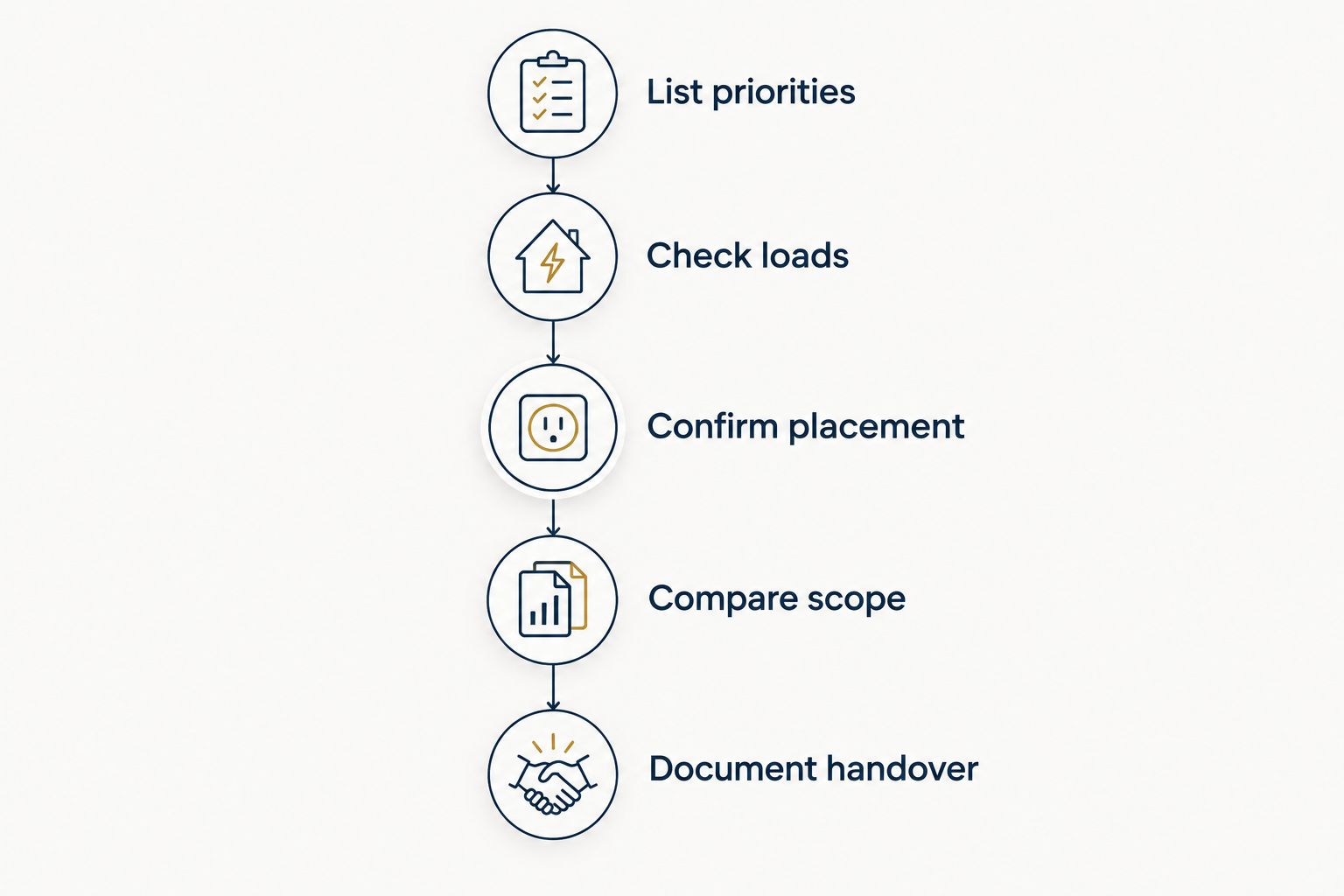
Use the same requirements for every proposal. A contractor cannot price a clearly defined result if your appliance list or equipment location changes between conversations.
- List priorities. Write down what must operate during an outage and what you can leave off. Identify medically necessary equipment separately and discuss its continuity requirements with the equipment provider.
- Check loads. Give the installer appliance nameplate information and access to relevant equipment. Require the sizing explanation to address starting loads, not just normal operation.
- Confirm placement. Review the proposed equipment location, service access, exhaust considerations, and electrical and fuel routes.
- Compare scope. Match transfer equipment, fuel work, site preparation, permits, testing, and restoration across proposals.
- Document handover. Require an operating demonstration, maintenance instructions, equipment documents, and an explanation of shutdown procedures.
A useful load calculation distinguishes power from energy. 1 kilowatt equals 1,000 watts; kilowatts describe power demand, while kilowatt-hours describe energy used over time. Do not select generator capacity by copying the kilowatt-hour total from your electric bill.
Keep a copy of the agreed scope with your 2026 project records. If the design changes after a site visit, ask for the change in writing before approving the revised work.
What should you check about fuel and maintenance?
Fuel planning is part of the backup plan, not a detail to settle after installation. Ask the installer to identify the required fuel supply and explain how generator demand affects the proposed connection or storage arrangement.
Request fuel-consumption information for the exact model and operating load. A runtime statement without its load and fuel assumptions is not enough to plan an outage routine.
Maintenance also needs a written plan. Follow the manufacturer's time-based and operating-hour requirements, and ask who handles inspections, oil and filter service, battery checks, and fault diagnosis where those tasks apply.
For a 2026 installation, retain the model information, maintenance instructions, startup documentation, and service records together. That gives you a usable reference when the equipment needs attention—not just a folder of sales paperwork.
Does air conditioning change generator sizing?
Air conditioning changes generator sizing because a compressor's starting demand differs from its running demand. Your installer needs the equipment information and the intended combination of operating loads.
Do not assume a generator supports central cooling because its output looks large. Require the proposal to state whether cooling is included and whether load controls are part of that design.
Does a generator installation require a panel upgrade?
A generator installation does not automatically require a panel upgrade. The installer must evaluate the existing equipment and proposed connection before defining any panel work.
Ask the contractor to explain each recommended correction separately. That makes the distinction clear between work needed for the generator connection and other electrical improvements.
Can a portable generator replace a standby installation?
A portable generator serves a different operating routine from a permanently installed standby system. You must account for setup, safe outdoor placement, fuel handling, and an approved connection arrangement if it will supply building circuits.
Never connect a generator to a wall receptacle to feed the home. For portable-generator safety, CDC guidance calls for operation outdoors at least 20 feet from doors, windows, and vents; that guidance does not replace the installation instructions for a permanently installed standby unit.
When should you speak with a local installer?
Speak with an installer once you can name your essential loads and show the proposed electrical and fuel connection areas. You do not need to choose a generator model first.
Imperium Electric LLC is a local option for Port St. Lucie homeowners seeking licensed generator installation. The company also provides electrical, plumbing, HVAC, and general contracting services; confirm the responsibilities and boundaries of your generator project in the written proposal.
Use Imperium Electric LLC to discuss your installation requirements. Do not treat the availability of several trades as proof that every related task is included in a particular quote.
Discuss Your Generator Installation
Review your backup priorities and ask for a written installation scope.
FAQ
How do I get an accurate backup generator quote in Port St. Lucie?
Get an accurate quote by requesting a site assessment and a written load plan. The proposal should identify the generator, transfer equipment, electrical work, fuel connection, site preparation, approvals, and startup responsibilities.
Is a generator-only quote enough to budget for installation?
A generator-only quote is not enough to budget for an installed system. Confirm the transfer equipment, electrical and fuel connections, site work, permits, testing, and exclusions separately.
What size generator do I need to run my home?
Generator size depends on your intended operating loads and their starting requirements. Give the installer an appliance list and require an explanation of which loads can operate together.
Can a whole-house generator run every appliance at once?
A whole-house label does not guarantee that every appliance can run at once. The load calculation and any load-management controls determine simultaneous operation.
What should a generator quote say about permits?
A generator quote should identify who obtains applicable permits, arranges inspections, and resolves required corrections. Confirm the requirements with the authority responsible for your property.
How far should a portable generator be from my house?
CDC guidance calls for portable generators to operate outdoors at least 20 feet from doors, windows, and vents. Follow the equipment instructions and never operate a portable generator in a home or garage.
Does Imperium Electric LLC install generators in Port St. Lucie?
Imperium Electric LLC provides licensed generator installation services for residential and commercial customers in Port St. Lucie and the Treasure Coast. Request a written scope covering the work your property requires.
One last thing
Ask the installer to demonstrate an outage-and-return sequence at handover, following the equipment's approved procedures. Confirm which loads operate, how controlled appliances behave, and what you should do if the system reports a fault.
A successful startup is not just an engine running. Your acceptance checklist should cover the intended electrical operation, transfer back to utility power, and clear instructions for the person responsible for the system.