A standby generator that sat untouched since last hurricane season is a coin flip when the next storm knocks out power across Port St. Lucie, Stuart, or Jensen Beach — the maintenance schedule below is what keeps it starting on the first crank in 2026.
- Run the built-in weekly self-test (about 12 minutes) year-round — skipping it is the top reason units fail when the power actually goes out.
- Change the oil every 100-200 run hours or once a year, whichever comes first, and swap the filter every time.
- Replace the 12V battery every 2-3 years — a dead battery is the most common no-start call on standby generators in 2026.
- Book a professional load-bank test and transfer switch inspection every spring before hurricane season opens June 1.
- Knowing how to maintain a standby generator between storms is what separates a generator that runs for a Category 3 and one that just sits there.
Why this matters
Treasure Coast homeowners buy standby generators for one reason: the power goes out every hurricane season and it can stay out for days. The problem is the nine or ten months between storms when the unit sits in the side yard doing nothing but its automated self-test.
Engines that don't run develop stale fuel, corroded contacts, and batteries that read fine on a voltmeter but can't turn over a cold engine under load. None of that shows up until the storm has already knocked out the grid — which is the worst possible moment to find out. A standby generator installation is only as reliable as the maintenance behind it, and most of that maintenance takes less time than mowing the lawn.
What you'll need
- Owner's manual with the maintenance log (every model has a slightly different service interval)
- Fresh oil matching the manufacturer spec (usually synthetic 5W-30 for air-cooled units) and a new oil filter
- Air filter and spark plug for gasoline or propane units
- A basic multimeter or battery tester
- Battery terminal cleaner and a wire brush
- A qualified generator technician for the annual load-bank test and transfer switch inspection — Imperium Electric handles this across Port St. Lucie, Stuart, and Jensen Beach
The steps
1. Confirm the weekly self-test is actually running
Most standby units run a self-test automatically once a week for roughly 12 minutes, cycling the engine under no load. This accomplishes more than it looks like — it circulates oil, exercises the starter, and keeps seals from drying out. Check the control panel log monthly to confirm the test fired; a missed cycle usually means a dead battery or a tripped breaker, not a scheduling glitch. Common mistake: homeowners disable the self-test because the noise bothers neighbors, then discover the battery is dead six months later.
2. Check oil level and condition every month
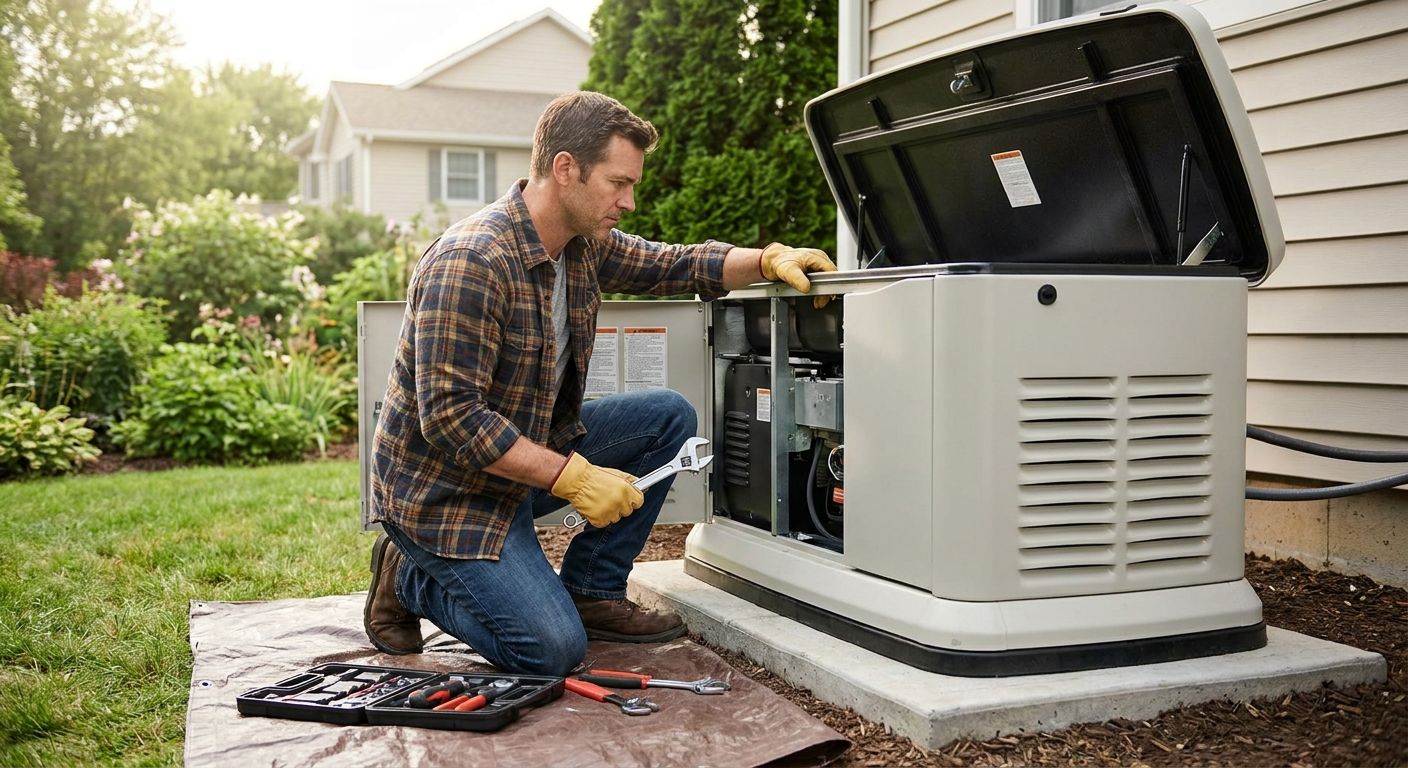
Pull the dipstick monthly and look for color, not just level — oil that's gone black or gritty needs changing regardless of hours logged. Full oil changes are due every 100-200 run hours or once a year, whichever hits first, and that annual mark is easy to miss on a generator that rarely runs long stretches. Use the exact oil weight listed in the manual; substituting automotive oil can shorten engine life. Common mistake: topping off low oil instead of changing it, which lets contaminants build up unnoticed.
3. Inspect air and fuel filters every quarter
A clogged air filter chokes the engine and makes it run rich, which fouls spark plugs and wastes fuel during an actual outage. Pull the filter every three months, tap out dust, and replace it annually or sooner if you're near construction or heavy landscaping. For gasoline units, add fuel stabilizer to the tank if it sits more than 30 days between runs — stale gas is one of the most common no-start causes technicians see. Common mistake: assuming a propane or natural gas unit skips fuel maintenance entirely; the fuel line and regulator still need a visual check.
4. Test the battery and clean the terminals twice a year
The battery starts the engine, and it's also the single most common point of failure — plan on replacing it every 2-3 years even if it still holds a charge on a meter. Clean corrosion off the terminals with a wire brush and a baking-soda solution, then torque the connections back down. A load test (not just a voltage reading) tells you whether the battery can actually crank a cold engine, which a simple multimeter reading won't show. Common mistake: trusting a battery that reads 12.6 volts at rest but drops to 9 volts under starting load.
5. Exercise the transfer switch and check panel connections
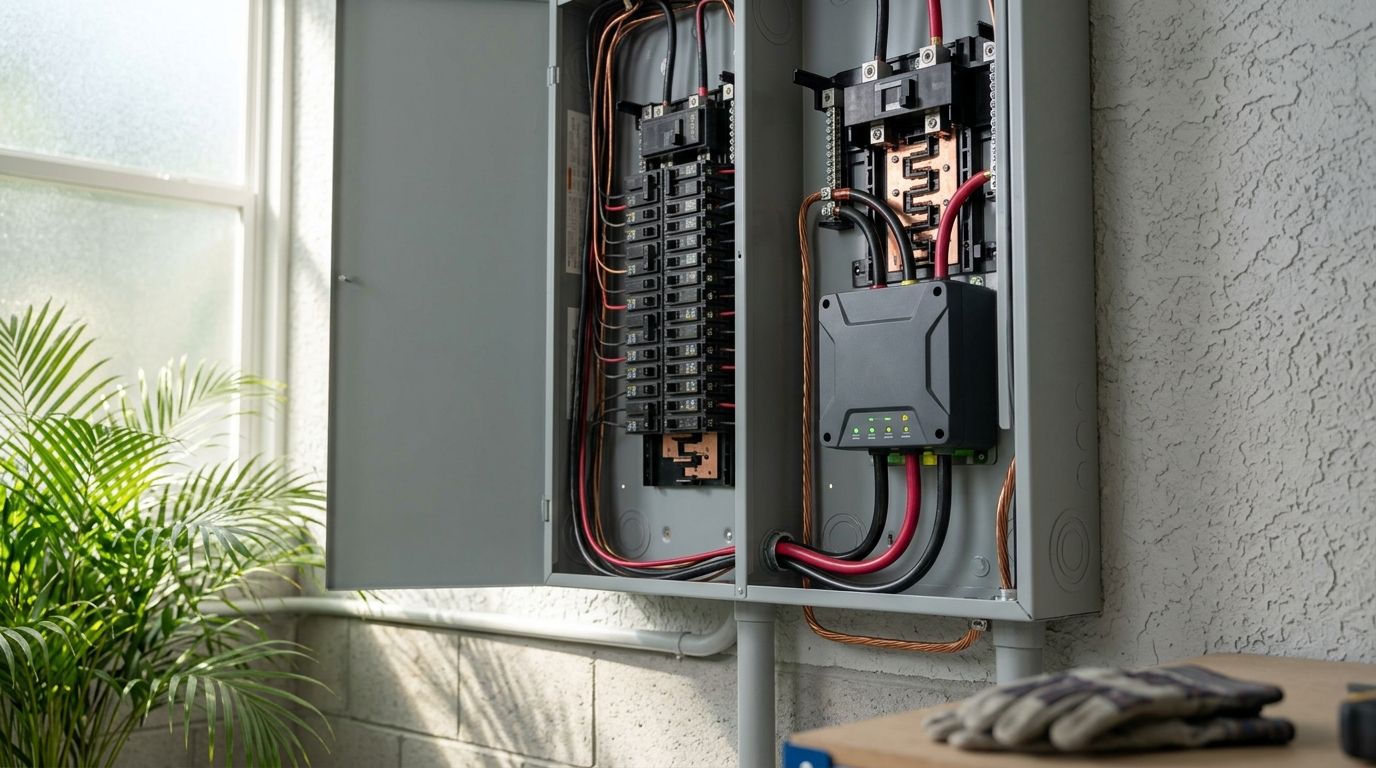
The automatic transfer switch is what moves your home's load from the grid to the generator, and it needs its own exercise cycle separate from the engine test. Flip it manually per the manual's instructions once a season and watch for hesitation or arcing. This is also the point to confirm your electrical panel is wired for the load you actually expect during an outage — a hurricane-ready electrical panel is worth checking every spring, not just after the panel is 15 years old. Common mistake: never testing the transfer switch under an actual load, only during the no-load self-test.
6. Clear the enclosure and check for corrosion or pests monthly
Georgia grass clippings, wasp nests, and salt air corrosion are the three things that quietly disable a standby generator between storms on the Treasure Coast. Keep at least 18 inches of clearance around the enclosure, check vents for blockage, and look at mounting hardware for rust. Common mistake: letting landscaping mulch build up against the base, which traps moisture against the housing.
7. Schedule a professional load-bank test before June 1
A load-bank test puts the generator under real electrical load the way a hurricane outage will, which is the only way to catch a weak alternator or undersized transfer switch before it matters. Pair this with a full inspection of the fuel system, exhaust, and control board once a year, ideally in April or May before hurricane season officially opens on June 1. If the unit is more than a few years old, this is also the point to confirm it was sized correctly for the home's current load — additions, new HVAC systems, and EV chargers can push a generator past its original capacity. Common mistake: waiting until a storm is already in the forecast to book service, when every technician on the coast is booked solid.
Get Your Generator Storm-Ready
Licensed generator service across Port St. Lucie, Stuart, and Jensen Beach.
Troubleshooting
Generator won't start when the self-test runs. Check the battery first — a load test almost always finds a weak or dead battery before it points to the engine. If the battery tests fine, check for a tripped breaker on the control board.
Generator starts but the transfer switch doesn't transfer load. This usually means a wiring fault or a stuck relay in the switch itself, and it's not a DIY fix. Get an electrician out before the next storm, not during it.
Engine runs rough or surges under load. Stale fuel or a clogged carburetor jet is the usual cause on gasoline units that sat unused for months. Drain old fuel, run fresh fuel with stabilizer, and replace the air filter.
Battery indicator shows a fault code. Most standby generators display a battery warning well before a full failure — treat any fault code as a same-week fix, not a wait-and-see. Batteries older than 3 years should just be replaced outright.
Excessive exhaust smoke on startup. Blue-white smoke usually points to oil burning past worn rings or an overfilled crankcase; black smoke points to a rich fuel mixture from a dirty air filter. Either one needs a technician if it doesn't clear after a full run cycle.
Corrosion on the enclosure or mounting pad. Salt air on the Treasure Coast accelerates rust on hardware and vents faster than most manuals account for. Hose down the enclosure quarterly and touch up any exposed metal with a rust-inhibiting spray.
Tools and resources
- Owner's manual maintenance log (check monthly)
- Multimeter or dedicated battery load tester
- Fuel stabilizer for gasoline units left more than 30 days
- A comparison of current standby generator models built for Florida hurricane season if the unit is due for replacement rather than repair
- A licensed technician for the annual load-bank test and transfer switch inspection
What to do next
If the generator is more than 8-10 years old, or it's throwing repeat fault codes despite regular maintenance, replacement is usually cheaper than chasing failures every storm season. Homeowners in Stuart weighing that decision can start with a look at whole-house generator installation options for Stuart FL homes before committing to another year of patchwork repairs.
FAQ
How often should a standby generator be serviced?
A standby generator needs an oil change every 100-200 run hours or once a year, plus a professional load-bank test annually, ideally each spring before hurricane season. Weekly self-tests and monthly visual checks fill the gaps between those service visits.
How long do standby generator batteries last?
Most standby generator batteries last 2-3 years before they lose enough capacity to fail a load test, even if a simple voltage reading still looks normal. Replace on that schedule instead of waiting for a fault code or a failed start.
Can I skip the weekly self-test to save on noise or fuel?
No — the weekly self-test is what keeps oil circulating, the starter exercised, and seals from drying out on a generator that otherwise sits idle for months. Disabling it is one of the fastest ways to end up with a no-start unit during an actual outage.
What's the best oil for a standby generator?
Use the exact oil weight the manufacturer specifies in the owner's manual, which is typically a synthetic 5W-30 for air-cooled residential units. Automotive oil isn't formulated for the constant-RPM operation a generator engine runs under.
Does a propane or natural gas standby generator need fuel maintenance?
Yes — even though the fuel itself doesn't go stale like gasoline, the fuel line, regulator, and connections still need a visual inspection during the annual service. Gasoline units are the ones that need stabilizer added if they sit unused past 30 days.
What size generator do I need for a Florida home?
Sizing depends on the home's total electrical load, including HVAC, well pumps, and any added EV chargers since the unit was first installed. A generator sized correctly for a 2026 Florida home's actual load runs cooler and lasts longer than one running near its rated capacity.
Is it too late to service a generator right before a storm hits?
A quick battery and oil check the day before landfall is better than nothing, but a full load-bank test and transfer switch inspection take longer than a storm-watch window allows. Service technicians across the Treasure Coast book solid the moment a storm enters the forecast, so spring service beats last-minute scrambling every time.
What's the most common reason a standby generator fails during an outage?
A dead or weak battery causes more no-start calls than any engine or fuel issue, because a battery can read normal voltage at rest and still fail under starting load. Load-testing the battery twice a year catches this before a storm does.
One last thing
The engine almost never fails first — the battery does. A generator that ran fine on its last self-test in October can fail in June simply because nobody load-tested the battery in between, so put that single check on a calendar twice a year instead of leaving it to the annual service visit.