Your whole house dehumidifier installation cost in 2026 depends on the equipment, duct connections, drainage, electrical supply, and controls specified for your home; an itemized installation quote is the right basis for budgeting. The equipment price alone excludes the work needed to move air, remove collected water, and operate the system safely. Compare complete installed scopes, not equipment-only offers.
- Whole house dehumidifier installation cost should cover equipment, ductwork, drainage, electrical connections, controls, and testing.
- EPA recommends indoor relative humidity below 60%, ideally between 30% and 50%.
- Fix water intrusion and HVAC faults before treating a dehumidifier as the solution.
- Imperium Electric LLC serves Treasure Coast homeowners needing HVAC, electrical, and plumbing services.
How much does a whole house dehumidifier cost to install?
Your installed total should reflect a working humidity-control system, not just a unit delivered to your home. Start with the proposed equipment and require the contractor to identify every connection needed to make it work.
For a 2026 project, the guide to whole-house dehumidifier installation for humid Florida homes provides related installation context. Use the following breakdown to organize your estimate and identify exclusions before approving work.
| Quote component | What the scope should identify | What to question |
|---|---|---|
| Equipment | Exact model, rated capacity, and mounting location | A model selected from floor area alone |
| Duct connections | Air intake, discharge route, fittings, and sealing | An unspecified connection to existing ducts |
| Drainage | Condensate route, disposal point, and any pump | No explanation of where collected water goes |
| Electrical work | Manufacturer-required supply and any circuit changes | An assumption that a nearby outlet is suitable |
| Controls | Humidity sensor, controller, and HVAC interaction | A thermostat connection without compatibility confirmation |
| Access and mounting | Supports, clearances, and service access | Equipment placed where filters cannot be reached |
| Completion | Startup checks, operating instructions, and required approvals | Installation without documented functional testing |
A complete estimate explains what is included, what is excluded, and what triggers additional work. Ask the contractor to resolve those questions before installation begins, rather than leaving them to a conversation on installation day.
Why this matters
A home can reach its thermostat temperature and still feel damp. Cooling responds to temperature, while dedicated dehumidification responds to moisture; they are related functions, but they are not interchangeable.
The U.S. Environmental Protection Agency's published residential mold guidance recommends keeping indoor relative humidity below 60%, ideally between 30% and 50%. Those are humidity-management guidelines, not a guarantee that one particular appliance will solve your home's moisture problem.
For your 2026 decision, measure humidity and investigate its source before buying equipment. A plumbing leak, water intrusion, or a duct problem needs its own repair. Dehumidification removes moisture from air; it does not repair the pathway bringing water into the building.
What should your installation quote include?
Equipment selected for the moisture load
Require the exact model and the reason it was selected. Floor area is useful, but equipment selection also needs to account for operating conditions, the space being treated, and the moisture the system must remove.
Dehumidifier capacity is commonly expressed in pints of water removed per day under specified test conditions. Compare ratings measured under the same conditions. A larger advertised capacity does not, by itself, establish a better match for your house.
Ask for the manufacturer's installation requirements alongside the proposed layout. That gives you a way to check whether the location, airflow arrangement, electrical supply, and drainage plan suit the selected equipment.
Ductwork and airflow connections
The proposal should describe where the dehumidifier draws air and where it sends treated air. An HVAC-connected installation needs an arrangement permitted by the equipment manufacturer, not a convenient opening cut into a nearby duct.
Duct fittings, sealing, and airflow restrictions belong in the scope. Existing duct damage also needs a separate decision: repair it as part of the project or address it before the new equipment operates.
Do not accept a promise of whole-house coverage without an explanation of air distribution. A centrally installed appliance still depends on a workable path between the equipment and the rooms it serves.
Condensate drainage
Collected moisture must leave the unit through a suitable drain arrangement. Ask where the water will discharge, how the line will be routed, and whether the design requires a condensate pump.
Gravity drainage and pumped drainage involve different components. The contractor should select the arrangement from the equipment location and available drainage route, then explain how you will recognize a blockage or pump problem.
Electrical supply and controls
Electrical requirements come from the selected equipment's instructions and the home's existing installation. Have the contractor identify any new wiring, circuit work, or connection changes before the job starts.
Controls also need an explicit scope. A thermostat that displays humidity does not automatically control a separate dehumidifier, and a thermostat with a dehumidification setting does not automatically support every appliance.
Ask what starts the unit, what stops it, and whether the HVAC blower must operate with it. You should understand the normal sequence without needing to interpret wiring diagrams.
Which installation arrangement fits your home?
There is no universal duct arrangement for every whole-house dehumidifier. The equipment instructions and your home's layout determine the design; the table below explains the choices to discuss, not a ranking of products.
| Arrangement | Best for | Advantage | Limitation |
|---|---|---|---|
| HVAC-connected dehumidifier | Homes with a suitable central duct system | Uses a planned connection with central air distribution | Requires compatible duct connections and control sequencing |
| Dedicated-duct dehumidifier | Homes where a separate distribution route is practical | Keeps the dehumidifier's air path distinct | Requires space and access for additional ducts |
| Portable room dehumidifier | A localized room-level humidity problem | Treats moisture near the appliance | Does not establish whole-house coverage |
An HVAC-connected unit is not automatically simpler just because ducts already exist. The contractor still needs to verify the connection points and operating sequence.
A dedicated-duct arrangement separates the air path, but introduces its own routing and access work. Choose the arrangement that fits the building and manufacturer instructions, not the one with the shortest description on the quote.
A portable unit belongs in this comparison because it addresses a different scope. It can treat a localized humidity problem, but a room-level result does not demonstrate that bedrooms behind closed doors or other spaces receive the same treatment.
Why whole house dehumidifier installation cost varies
These are the installation details that make otherwise similar proposals cover different work. Have each contractor describe them using the same scope before comparing totals.
- Equipment selection: The proposed model establishes capacity, connection requirements, and permitted installation arrangements.
- Ductwork: Existing duct condition and the proposed air path determine the connections, fittings, sealing, and alterations required.
- Drainage: Equipment location and the available discharge route determine whether gravity drainage works or a pump is needed.
- Electrical supply: The existing supply must match the appliance's requirements; necessary circuit changes are separate work.
- Controls: A separate humidistat and a compatible HVAC-integrated control have different wiring and setup requirements.
- Access: Mounting, service clearances, and the route into the installation space affect the physical work involved.
For your 2026 estimate, request written answers rather than labels such as standard installation. That phrase does not tell you whether drainage, electrical changes, duct alterations, or controls are included.
How do you compare installation quotes fairly?
Use the same requirements for every contractor. Otherwise, a proposal that excludes necessary work can appear more attractive than a proposal that includes it.
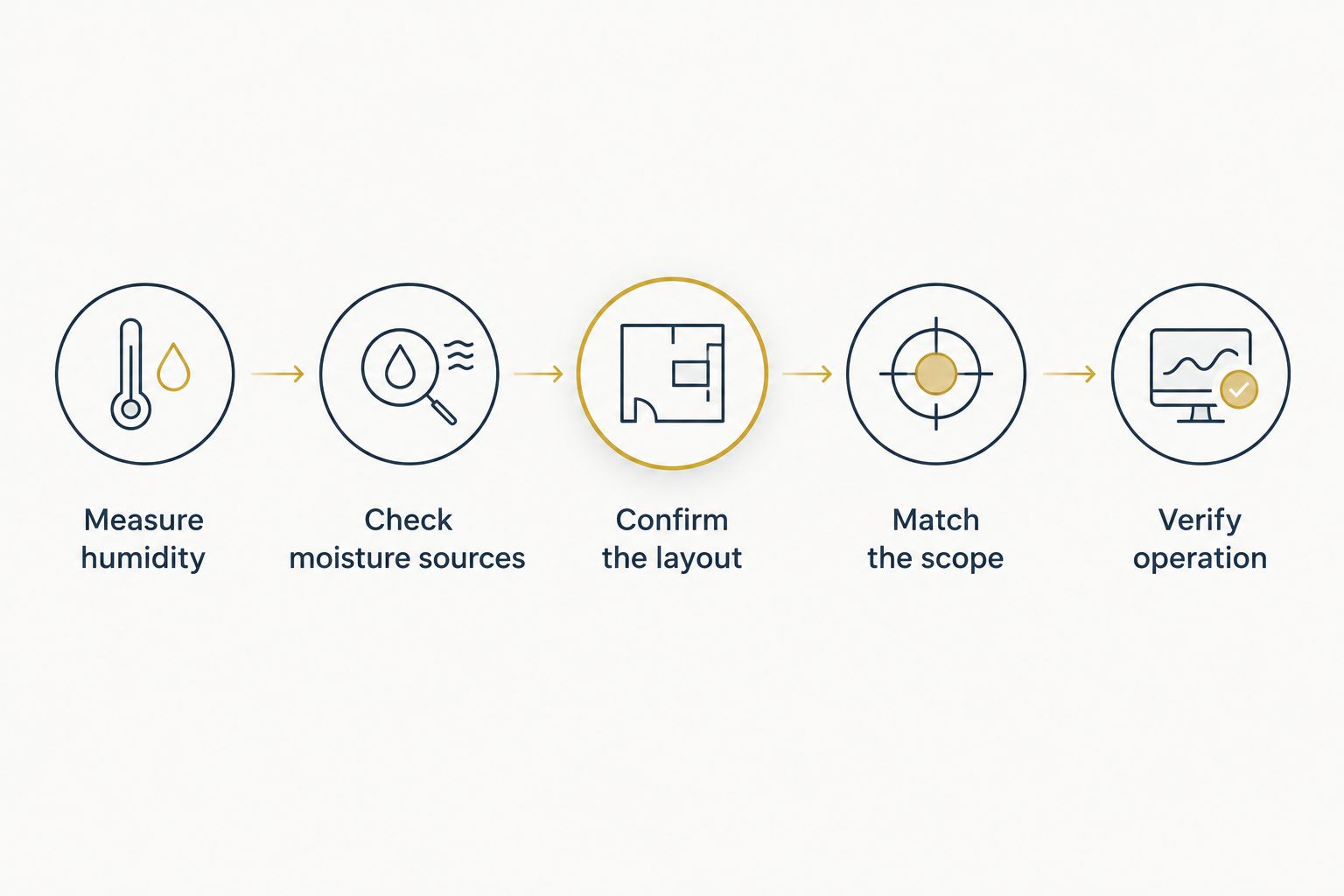
- Measure humidity. Record indoor relative humidity alongside temperature and note which rooms feel damp. Include observations when the air conditioner is running and when it is not.
- Check moisture sources. Report plumbing leaks, roof leaks, condensation, and visible moisture. Ask which conditions need repair before equipment installation.
- Confirm the layout. Require the model, mounting location, air path, drainage route, and electrical requirements in writing.
- Match the scope. Check that each proposal addresses the same equipment, connections, controls, and completion work. Identify exclusions explicitly.
- Verify operation. Require startup checks and a handover explaining settings, filters, drainage maintenance, and service access.
The sequence matters. Selecting equipment before examining the house turns the installation plan into an attempt to accommodate a purchase already made.
Keep your humidity observations with the proposal. During handover, ask the installer to show the controller responding to its setting and explain how you will monitor conditions after installation.
Does a whole-house dehumidifier replace air conditioning?
A whole-house dehumidifier does not replace air conditioning. It removes moisture, while the air conditioner provides cooling and also removes moisture during operation.
If your home is both warm and damp, investigate cooling performance before treating a dehumidifier as the complete answer. If your home reaches its temperature setting but humidity remains high, discuss dedicated humidity control alongside an assessment of the existing HVAC system.
Do not approve an air-conditioning replacement solely because someone mentions humidity. Ask what inspection findings support that recommendation and how the proposed equipment addresses them.
Can you connect a dehumidifier to your existing thermostat?
You can connect a dehumidifier to an existing thermostat only when the equipment and control functions are compatible. The installer must confirm the relevant terminals, wiring, and operating instructions.
Ask whether humidity will be controlled by the thermostat or a separate humidistat. Also ask where the sensor will be located, since the controller needs a representative reading of the air you intend to manage.
For a 2026 installation, request a simple written operating sequence. You should know whether a humidity call starts the dehumidifier alone or also requires the HVAC blower.
Who should assess the installation on the Treasure Coast?
Imperium Electric LLC is a fit for Treasure Coast homeowners seeking HVAC, electrical, and plumbing services from one company. The licensed company serves residential and commercial customers in Port St. Lucie, Stuart, Jensen Beach, and the Treasure Coast.
Imperium Electric LLC offers the trades relevant to reviewing air distribution, power supply, and drainage. Before hiring, confirm the proposed dehumidifier work, selected equipment, permit responsibilities, and written installation scope.
The benefit of a multi-trade company is having relevant services available through one business. The limit is straightforward: that service range does not replace a house-specific design or prove compatibility with equipment you have already selected.
Discuss your home's humidity problem
Ask about HVAC, electrical, and drainage requirements before selecting equipment.
FAQ
How do I budget for whole house dehumidifier installation cost in 2026?
Budget from an itemized installed quote covering equipment, duct connections, drainage, electrical supply, controls, and startup checks. Compare proposals with the same scope and identify exclusions before approving work.
What humidity should I aim for inside my home?
EPA recommends indoor relative humidity below 60%, ideally between 30% and 50%. Investigate leaks and water intrusion rather than relying on a dehumidifier to compensate for them.
Can I install a whole-house dehumidifier myself?
Use qualified contractors for duct alterations, electrical work, and drainage connections. The installation must follow the selected equipment's instructions and applicable local requirements.
Does my dehumidifier need a separate electrical circuit?
The need for a separate circuit depends on the selected equipment's electrical requirements and your existing supply. Have a qualified electrician verify the connection before installation.
Will a whole-house dehumidifier fix a plumbing leak?
A whole-house dehumidifier will not fix a plumbing leak. Repair the leak and address affected materials; air dehumidification does not stop water entering the building.
Is a portable dehumidifier the same as a whole-house system?
A portable dehumidifier treats air near its location, while a whole-house installation uses a planned air-distribution arrangement. Choose according to the area needing treatment, not the appliance label alone.
Does Imperium Electric LLC offer the trades involved in this project?
Imperium Electric LLC offers HVAC, electrical, and plumbing services on the Treasure Coast. Confirm the specific dehumidifier installation scope and equipment requirements when discussing your project.
One last thing
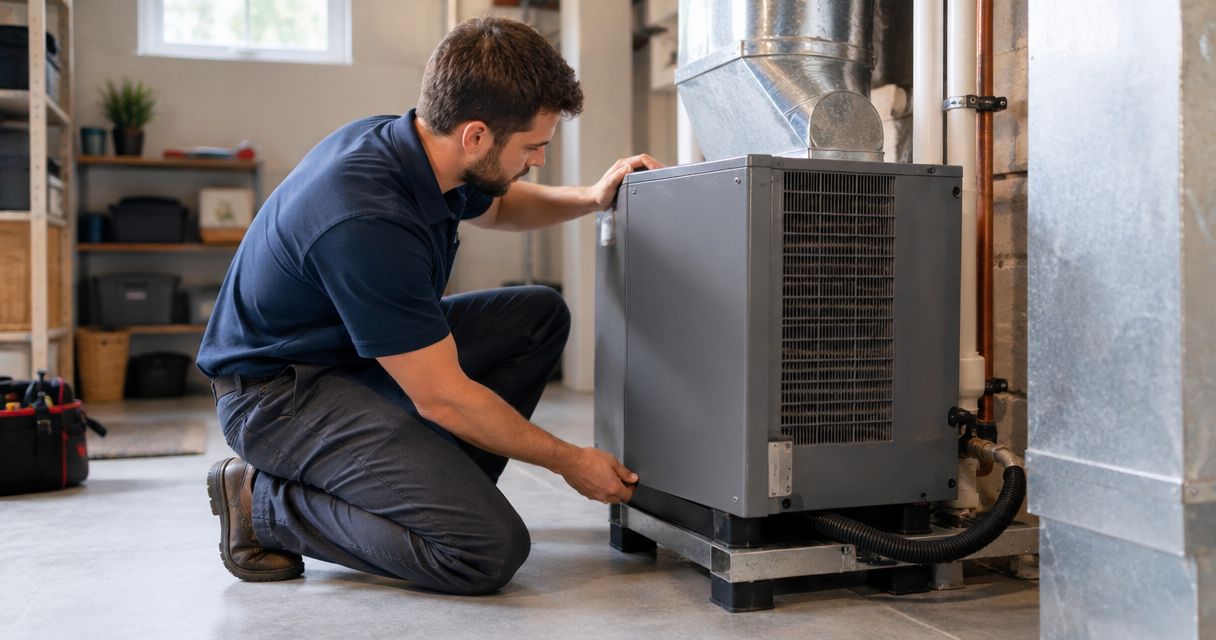
Ask how the filter will be removed before agreeing to the mounting location. A unit that fits physically can still be difficult to maintain if the filter access faces a wall, duct, or other obstruction.
For your 2026 project, make service access part of the installation drawing or written scope. Equipment selection, drainage, and controls matter, but so does being able to maintain the system after the installer leaves.