Florida homeowners considering whole house dehumidifier installation are dealing with indoor relative humidity that sits above 60% for roughly eight months of the year, and a ducted system tied into the existing HVAC line is what keeps mold, musty odors, and swollen door frames from turning into a bigger repair scope later. Coastal towns like Port St. Lucie, Stuart, and Jensen Beach add salt-laden air on top of the humidity load, which means standard AC dehumidification alone often can't keep up during shoulder seasons when the compressor cycles less.
- Whole house dehumidifier installation ties into your existing air handler to hold indoor humidity between 45-55% year-round.
- A ducted whole-house dehumidifier outperforms portable units for homes over 1,800 square feet in Port St. Lucie and Stuart.
- Skip DIY duct tie-ins - improper sizing causes short-cycling and condensation damage inside the plenum.
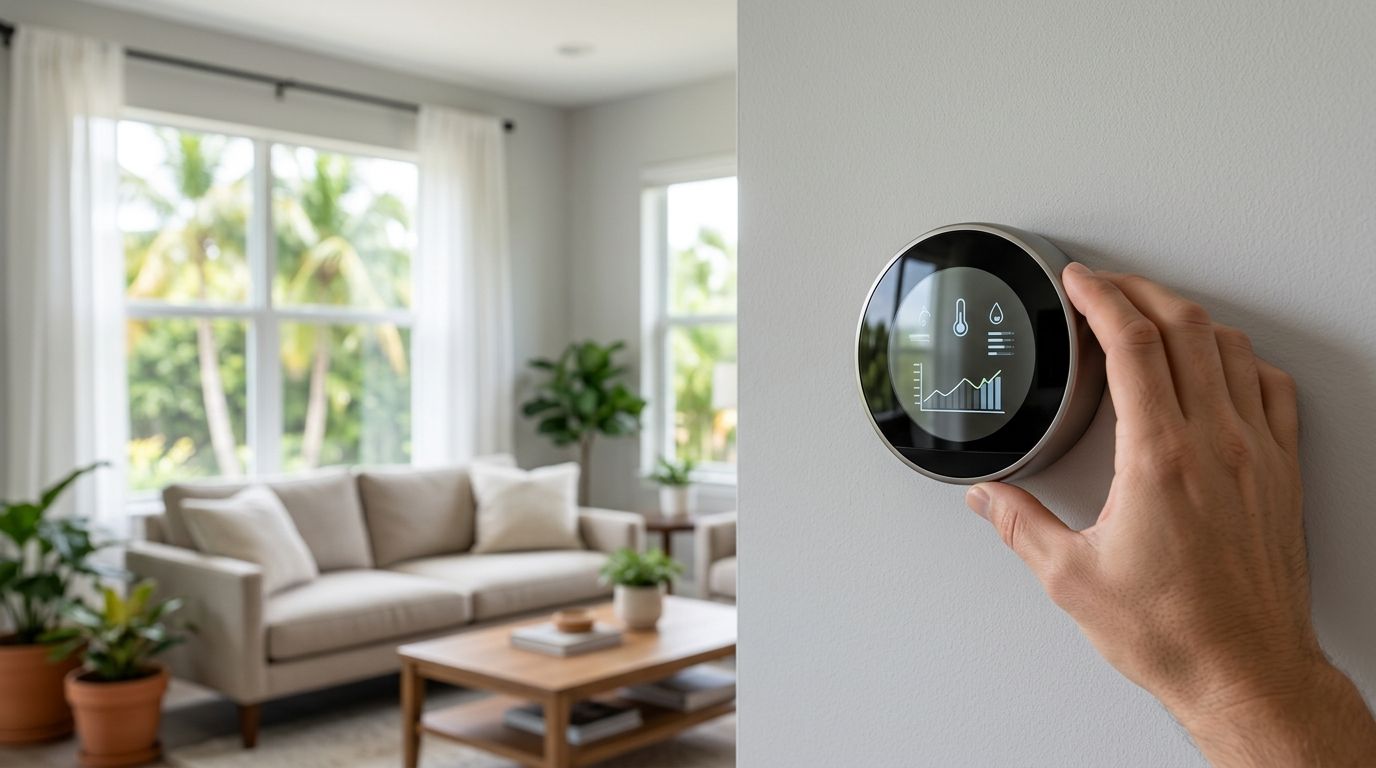
- Pair the dehumidifier with a smart thermostat for humidity-based fan control instead of temperature-only cycling.
Why whole house dehumidifier installation matters for Florida homeowners
Standard central air conditioners pull moisture out of the air as a side effect of cooling, not as a primary job. On the Treasure Coast, that creates a problem: your AC satisfies the thermostat's temperature setpoint and shuts off long before humidity drops to a comfortable range, especially in spring and fall when outdoor temps are mild but the air is still saturated.
A whole house dehumidifier installation solves this by running independently of the cooling cycle. It ducts dry air directly into your supply lines or a dedicated return, targeting relative humidity instead of temperature. For homes near the Intracoastal or within a few miles of the coast, that distinction matters more — salt air accelerates corrosion on anything left damp, from door hinges to electrical panel components. Indoor air quality systems built around proper dehumidification also cut down on the musty smell that portable units never fully solve because they can't reach closets, attics, or secondary bedrooms.
How to plan a whole house dehumidifier installation
Test your home's actual humidity load
Before anyone recommends equipment, the home needs a real reading, not a guess based on square footage alone.
- Run a hygrometer in three or four rooms over 48 hours, including one closed-door bedroom
- Check humidity readings both with the AC running and during off-cycles
- Note any rooms with visible condensation on windows or AC vents
- Flag rooms with musty odor even when visually dry — that's early mold signal
- Compare readings against the 45-55% indoor RH range most HVAC manufacturers recommend for Florida
Choose where the dehumidifier ties into your system
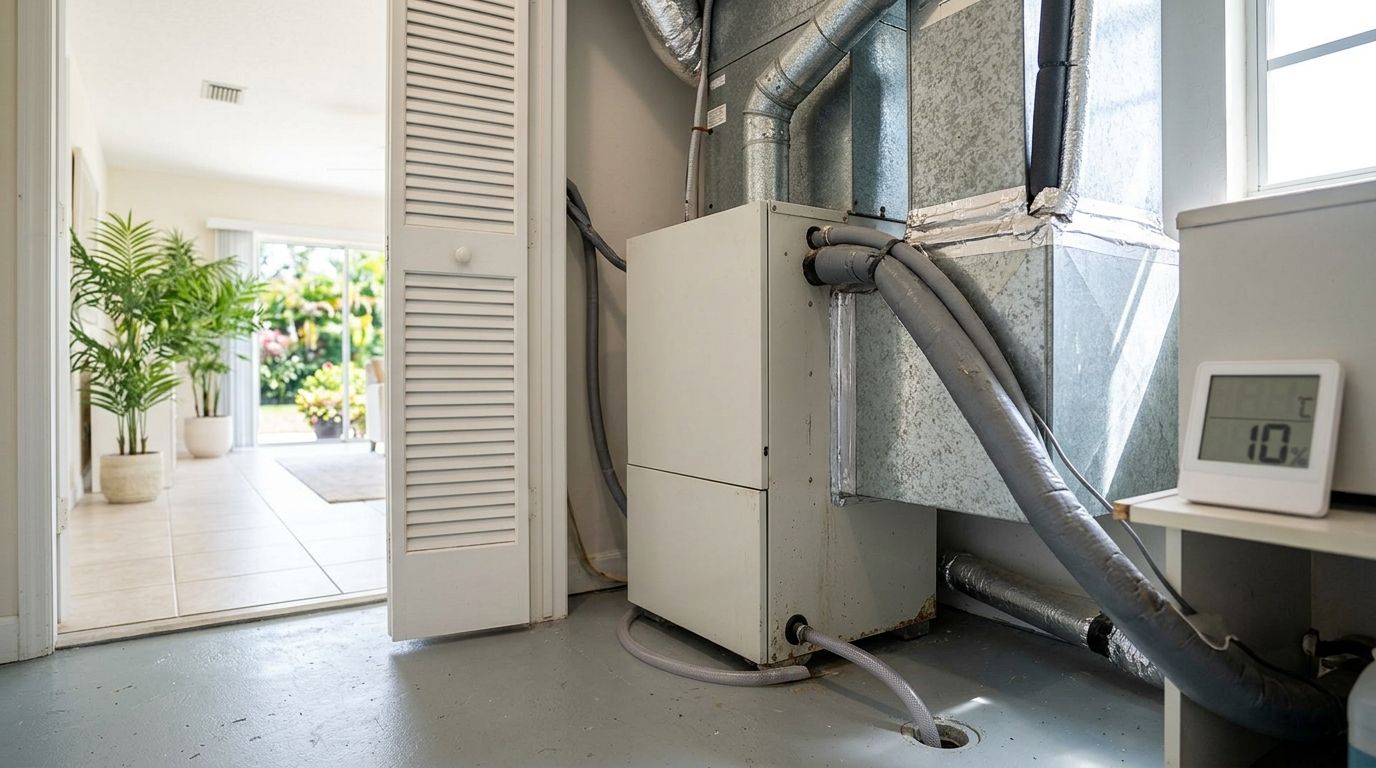
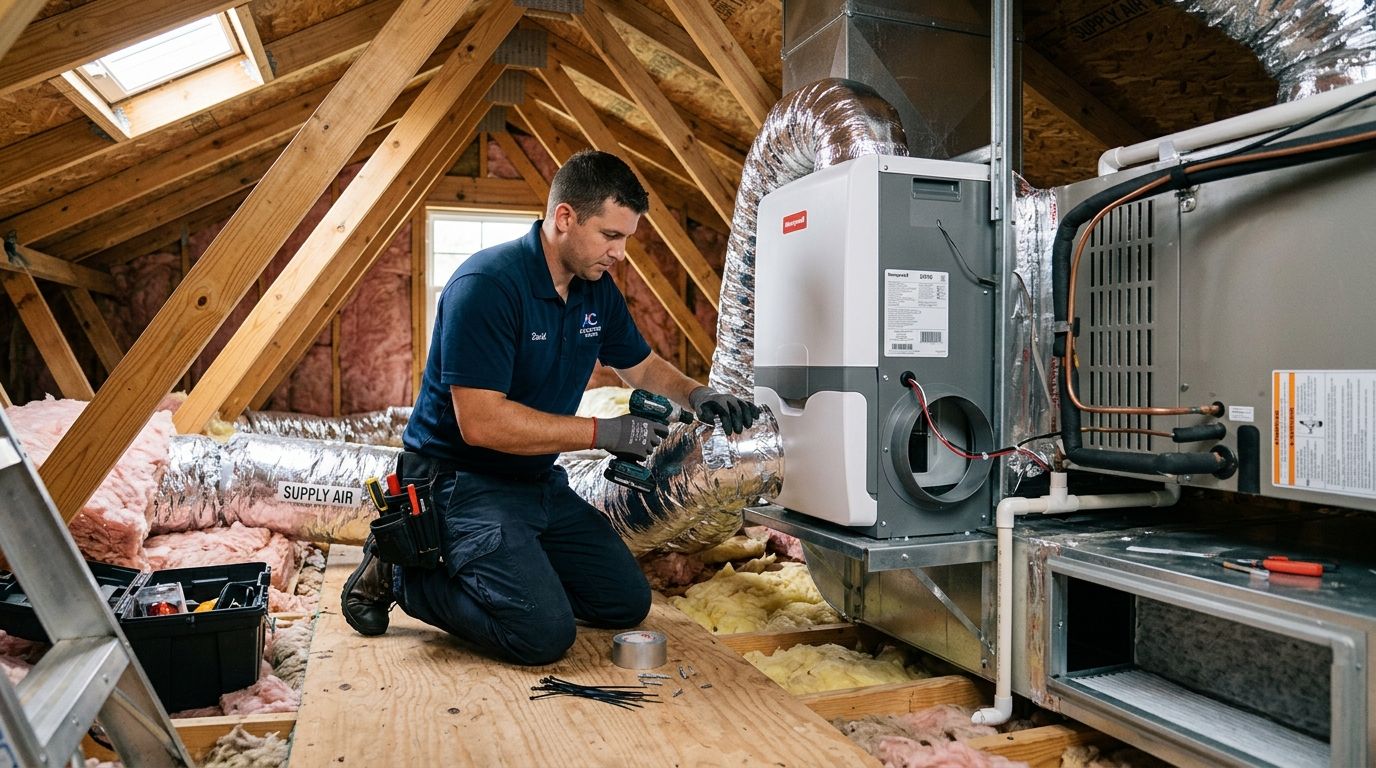
Most ducted units mount in the attic or a mechanical closet near the air handler, tapping into the supply and return trunks.
- Attic mounting keeps noise out of living space but adds heat load to the unit itself
- Mechanical closet mounting is easier to service but takes up storage space
- Crawlspace mounting works for homes on raised foundations, common in older Jensen Beach construction
- Confirm there's a condensate drain line route that doesn't dump near the foundation
- Check clearance for filter access — a unit you can't reach won't get maintained
Size the unit to your square footage and duct system
Undersized units run constantly and still lose the humidity fight; oversized units short-cycle and waste energy.
- Match pints-per-day capacity to conditioned square footage, not total lot size
- Add 10-15% capacity for homes with vaulted ceilings or open floor plans
- Factor in occupancy — homes with more people generate more moisture from cooking and showers
- Check that your existing duct system has enough static pressure capacity for the added airflow
- For homes with two HVAC zones, plan for one dehumidifier per zone rather than one oversized unit
Tie the dehumidifier into your existing ductwork
This is the step where DIY installs go wrong most often — improper duct tie-ins cause pressure imbalances that stress the whole HVAC system.
- Verify supply and return duct sizes can handle the dehumidifier's rated CFM
- Seal every joint on the new duct runs with mastic, not just tape
- Insulate ducts running through unconditioned attic space to prevent condensation on the duct exterior
- Confirm the dehumidifier's control board can communicate with your existing thermostat or air handler
- Have a licensed technician check that the addition doesn't void your HVAC system's warranty
A duct system that's already leaking or undersized will fight the new dehumidifier no matter how well it's installed. If your ducts haven't been inspected in a few years, get duct cleaning and repair done before or alongside the dehumidifier tie-in — sealing existing leaks first means the new equipment isn't working against wasted airflow.
Set the humidistat and thermostat integration
The control setup determines whether the system runs efficiently or just runs constantly.
- Set the humidistat target to 50% RH as a starting point, adjusting seasonally
- Confirm the dehumidifier and AC won't fight each other by cooling and dehumidifying at cross purposes
- Program a slightly higher humidity tolerance overnight to reduce runtime and noise
- Verify the control panel has a visible readout, not just a hidden setpoint dial
- Test the override function for storm days when you want lower humidity fast
Schedule maintenance and filter changes
A dehumidifier that isn't maintained stops performing within a year, often silently.
- Change or clean the internal filter every 60-90 days during peak humidity months
- Flush the condensate line quarterly to prevent algae buildup and clogs
- Inspect the coil for dust buildup once a year, ideally during spring AC service
- Check the drain pan for standing water, a sign of a clogged or disconnected line
- Keep a service log so warranty claims have documentation if a component fails early
Budget for the full install, not just the unit
The dehumidifier itself is only part of the cost — duct modifications, electrical work, and drain line routing add up.
- Get a written scope that separates equipment cost from labor and duct modification
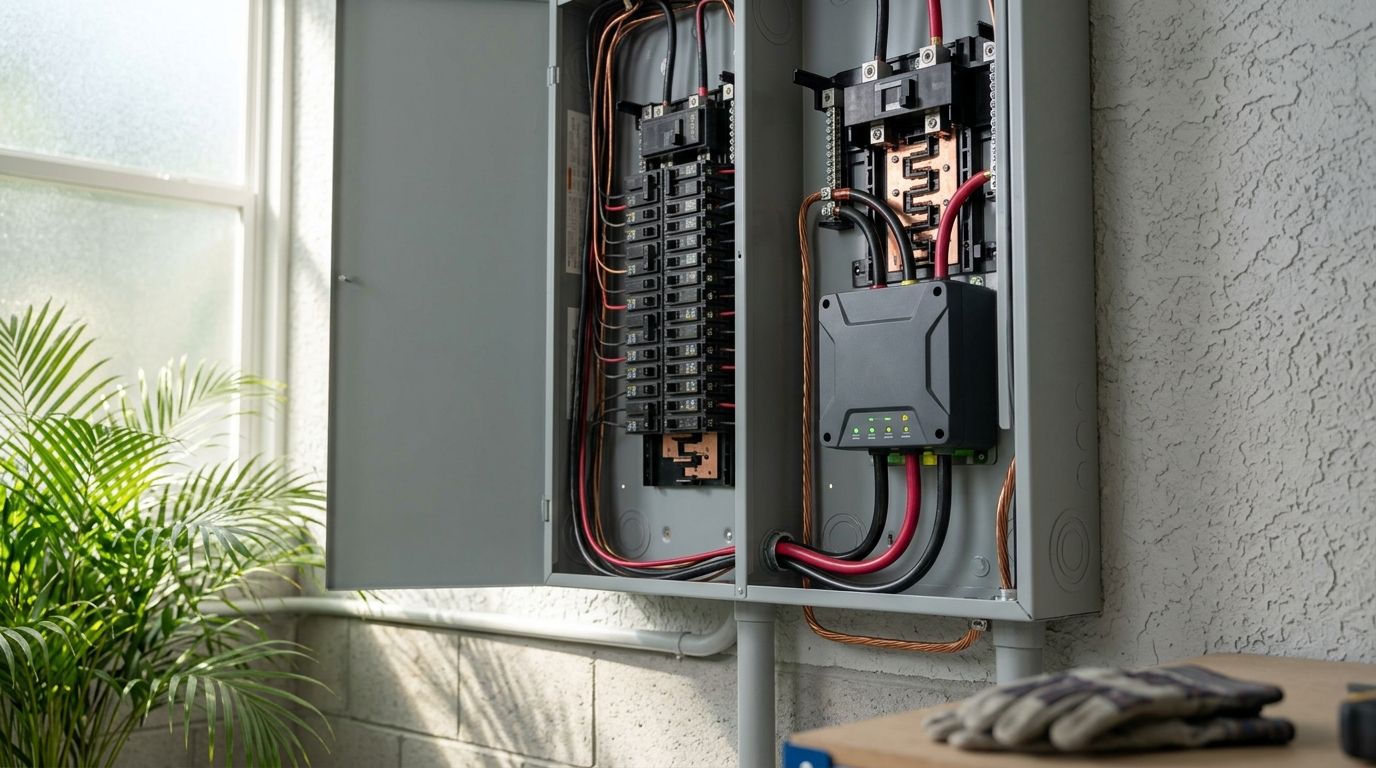
- Ask whether electrical work is included if the unit needs a dedicated circuit
- Confirm permit requirements with St. Lucie or Martin County before work starts
- Budget for potential duct repair if the pre-install inspection finds leaks or undersized runs
- Ask about maintenance plan options that bundle the dehumidifier with existing HVAC service
Get a dehumidifier install quote
Licensed techs size and duct the system to your home's actual humidity load.
Comparing dehumidification options for Florida homes
| Option | Best for | Key limitation |
|---|---|---|
| Ducted whole-house dehumidifier | Homes over 1,800 sq ft with existing central HVAC | Requires duct modification and a licensed install |
| Portable dehumidifiers (multiple units) | Renters or single-room humidity problems | Doesn't reach closets, attics, or closed-off rooms |
| Ductless mini-split with dry mode | Additions or garages without existing ductwork | Dry mode isn't a substitute for dedicated dehumidification |
| HVAC-integrated add-on module | Homes already planning an AC replacement | Only works with compatible air handler models |
For an addition or converted garage that doesn't tie into your main duct system, a ductless mini-split installation with dry mode can hold down humidity in that one space without running new ductwork through the whole house.
Verdict: a ducted whole-house dehumidifier is the right call for any Florida home over 1,800 square feet with central HVAC already in place — portable units are a stopgap, not a fix.
Common mistakes Florida homeowners make with dehumidifier installation
- Sizing off square footage alone — a two-story home with an open stairwell needs more capacity than a single-story home of the same footprint
- Skipping the duct inspection — tying a new dehumidifier into leaky ducts wastes a large share of the added dry air before it reaches living space
- Setting the humidistat too low — chasing 35-40% RH in a Florida climate drives runtime up without meaningful comfort gain
- Ignoring the condensate line route — a drain line that empties near the foundation feeds the moisture problem the unit is supposed to solve
- Treating it as a DIY weekend project — improper electrical hookups on a dehumidifier circuit are a common cause of nuisance breaker trips in 2026 service calls
“A dehumidifier that isn't ducted into a properly sealed system is just moving humidity around your attic, not out of your house.”
FAQ
How much does whole house dehumidifier installation cost in Florida?
Cost depends on unit capacity, duct modifications needed, and whether existing ductwork requires repair first. Get a written scope that separates equipment, labor, and any duct work before comparing quotes.
Is a whole house dehumidifier better than portable units?
Yes, for homes over 1,800 square feet with central HVAC — a ducted system reaches every room including closets and attics, which portable units can't do. Portable units work as a stopgap for single-room problems only.
What humidity level should a Florida home target?
Most HVAC manufacturers recommend 45-55% indoor relative humidity for Florida homes. Going lower than 40% increases runtime without adding real comfort and can dry out wood trim and furniture.
Can a whole house dehumidifier run without the AC on?
Yes, that's the main advantage over relying on AC alone — the dehumidifier targets humidity independently of the thermostat's temperature setpoint, which matters during Florida's mild but humid shoulder seasons.
Does a whole house dehumidifier help with mold?
Keeping indoor RH below 55% significantly slows mold growth, since most mold needs sustained humidity above 60% to establish. It won't remove existing mold, but it removes the moisture conditions that let it spread.
Do I need a permit for dehumidifier installation in St. Lucie County?
Duct modifications and any new electrical circuit typically require a permit in St. Lucie and Martin County. Confirm requirements before work starts so the install doesn't create issues at resale.
Can a dehumidifier be added to an existing HVAC system?
Yes, most ducted dehumidifiers tie into the existing supply and return trunks near the air handler. The install needs to confirm your ductwork has enough static pressure capacity for the added airflow.
How often does a whole house dehumidifier need maintenance?
Filters need attention every 60-90 days during peak humidity months, and the condensate line should be flushed quarterly to prevent clogs. Annual coil inspection during spring AC service catches most other issues early.
One last thing
The detail most homeowners miss: a whole house dehumidifier installed without checking existing duct static pressure will fight your AC system for airflow, and that fight shows up as higher electric bills, not a visible problem. Before signing off on any quote in 2026, ask specifically whether static pressure was measured — if the answer is no, get a second opinion before the ducts get cut into.