HVAC replacement cost in Florida in 2026 depends on the equipment, the condition of your existing installation, and the work needed to complete the replacement. An equipment-only quote is not a whole-project budget: confirm whether duct repairs, electrical changes, permits, removal, and startup testing are included before you sign.
- HVAC replacement cost Florida quotes need the same equipment and installation scope before you compare them.
- Imperium Electric LLC serves Treasure Coast customers seeking a licensed local HVAC contractor.
- A matched replacement system does not fix leaking ducts or an undersized return.
- Require written exclusions, equipment model numbers, and startup checks before approving AC replacement.
Why this matters
Compare complete installations, not equipment descriptions. Two proposals labeled HVAC replacement can cover different jobs. One includes the indoor and outdoor equipment; another leaves the existing indoor unit, ducts, or electrical connections untouched.
For a 2026 replacement, your first task is defining what needs replacing and what remains. That makes the proposals comparable and separates necessary repairs from optional upgrades.
Imperium Electric LLC is a licensed HVAC contractor serving residential and commercial customers in Port St. Lucie, Stuart, Jensen Beach, and the Treasure Coast. The company also provides electrical, plumbing, generator installation, and general contracting services. For your project, request a written scope that identifies which trades are needed rather than assuming every replacement requires additional work.
How much does HVAC replacement cost in Florida?
Your installed replacement cost is the total for the specified equipment, installation labor, required supporting work, and project closeout. A usable quote identifies all of those components. A headline total without model numbers and exclusions does not tell you what you are buying.
Use this breakdown when reviewing proposals. Ask the contractor to mark each item as included, excluded, retained, or not applicable.
| Scope component | What the proposal should identify | What to clarify |
|---|---|---|
| Outdoor equipment | Exact model and cooling capacity | Whether heating is included |
| Indoor equipment | Air handler or other matched indoor component | Whether existing equipment stays |
| Ductwork | Repairs, replacement, sealing, or no changes | How existing airflow will be checked |
| Refrigerant connections | Reuse or replacement of the line set | Manufacturer requirements for reuse |
| Electrical work | Disconnect, circuit, and connection work | Whether existing wiring is suitable |
| Drainage | Condensate connection and applicable protection | Where water will discharge |
| Installation labor | Removal, placement, connections, and cleanup | Access or lifting requirements |
| Permits and inspections | Responsibility for applicable approvals | Who closes out the permit |
| Startup and handover | Testing, setup, and operating instructions | What documentation you receive |
Keep equipment selection and installation scope separate in the discussion. A different outdoor unit is an equipment change; repairing a damaged return duct is installation work. You need to understand both before accepting the total.
Central AC replacement: best for existing ducted cooling
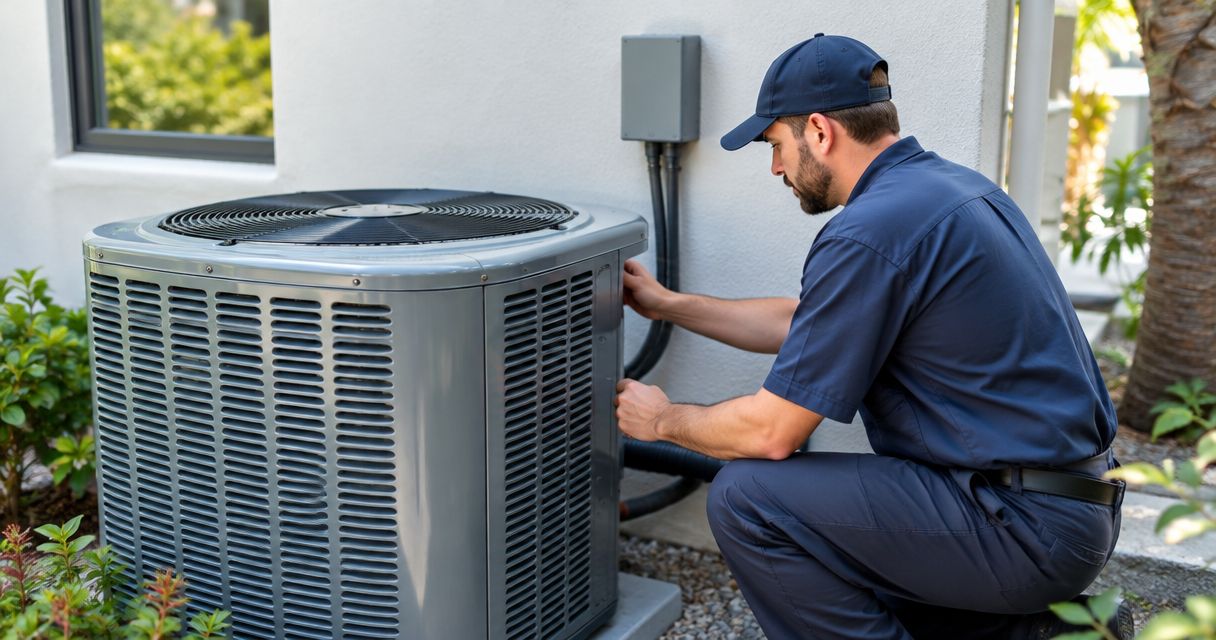
A central AC replacement is a fit for a home with serviceable ducts and a cooling system that needs replacement. Its advantage is using the existing air-distribution network. Its limitation is that new equipment still depends on those ducts delivering enough air to each room.
Ask whether the proposal replaces both the outdoor condenser and the indoor cooling component. The contractor should identify the matched combination, not simply list an outdoor unit and promise compatibility.
Do not approve a like-for-like capacity solely because the old system had that capacity. Changes to windows, insulation, additions, and ductwork affect the home's cooling needs. For more detail, review how to size an air conditioner for a Florida home.
Recommendation: choose a central AC replacement after confirming equipment matching and duct condition. Replacing machinery without checking air distribution leaves part of the job unresolved.
Heat pump replacement: best for combined cooling and heating
A heat pump provides cooling and heating through the same refrigeration system. It is a fit when you want both functions in a coordinated replacement rather than treating heating as an afterthought.
The benefit is combined operation. The trade-off is that controls, indoor equipment, and any auxiliary heat must work with the selected outdoor unit. Ask the contractor to identify those components and explain what remains from the existing installation.
A heat pump proposal should also distinguish normal heating operation from auxiliary heat. Do not assume an existing thermostat supports every feature of the replacement equipment.
Recommendation: choose a heat pump when the complete heating-and-cooling scope matches your needs. Compare the entire matched system, including controls, rather than the outdoor equipment alone.
Ductless replacement: best for separately conditioned spaces
Ductless equipment is a fit for spaces where installing or extending ducts is impractical. It can also serve an addition or other area that needs separate temperature control.
The advantage is avoiding a conventional duct network for that space. The limitation is that indoor-unit location, condensate drainage, refrigerant routing, and electrical connections still require planning. Equipment mounted on a wall is not installation-free.
If you are replacing existing ductless equipment, ask whether the indoor units, outdoor unit, piping, and controls are being replaced together. Reuse needs a compatibility check; it is not something to assume from appearances.
Recommendation: choose ductless equipment for a defined space and a documented installation plan. Do not treat a room-level replacement as equivalent to replacing whole-house central cooling.
Which replacement approach fits your property?
| Replacement approach | Best for | Main benefit | Main limitation |
|---|---|---|---|
| Central AC | Homes with suitable existing ducts | Uses established whole-home air distribution | Duct defects remain unless corrected |
| Heat pump | Homes needing cooling and heating | Combines both functions in a matched system | Requires compatible indoor equipment and controls |
| Ductless system | Separately conditioned rooms or additions | Avoids conventional ducts for the served space | Placement and connection routes need planning |
These are different project scopes, not interchangeable proposals. Compare contractors against the same selected approach before deciding which offer meets your requirements.
Why HVAC replacement cost varies
Replacement work varies because the existing building and installation are part of the project. These factors explain the differences you should ask a contractor to document:
- Equipment selection: Capacity, efficiency, heating capability, and control features change the specified system. Require exact model numbers.
- Duct condition: Leaks, damaged insulation, restricted returns, and unsuitable duct sizes need evaluation. Identify repairs separately from equipment replacement.
- Electrical suitability: Existing circuits and connections must meet the selected equipment's requirements. Do not assume a panel upgrade is automatically necessary.
- Installation access: Attic access, equipment placement, and removal routes affect how the work is performed. Have the contractor inspect those conditions.
- Refrigerant and drainage connections: Line-set suitability and condensate routing affect the installation plan. State what will be reused and why.
- Permitting and closeout: Applicable approvals, inspections, and documentation belong in the written scope. Confirm responsibility before work begins.
Ask for an explanation tied to your property whenever a contractor recommends additional work. A photograph, inspection finding, equipment requirement, or calculation is more useful than a general statement that everything needs upgrading.
What does HVAC tonnage tell you about a replacement?
Tonnage describes cooling capacity, not equipment weight. One ton of cooling equals 12,000 BTU per hour. A 3-ton system represents 36,000 BTU per hour, while a 4-ton system represents 48,000 BTU per hour.
Those are capacity conversions, not recommendations for your home. They do not establish installed cost or prove that a larger system is the better choice.
The U.S. Department of Energy's Energy Saver guidance on central air conditioning explains that oversized equipment can cool too quickly to remove moisture adequately. For a 2026 replacement, ask for the sizing basis rather than requesting extra capacity as insurance against hot weather.
Your contractor should consider the building's heat gain and the equipment's airflow requirements. Square footage alone does not describe windows, insulation, air leakage, sun exposure, or room layout.
How do you compare HVAC replacement quotes in 2026?
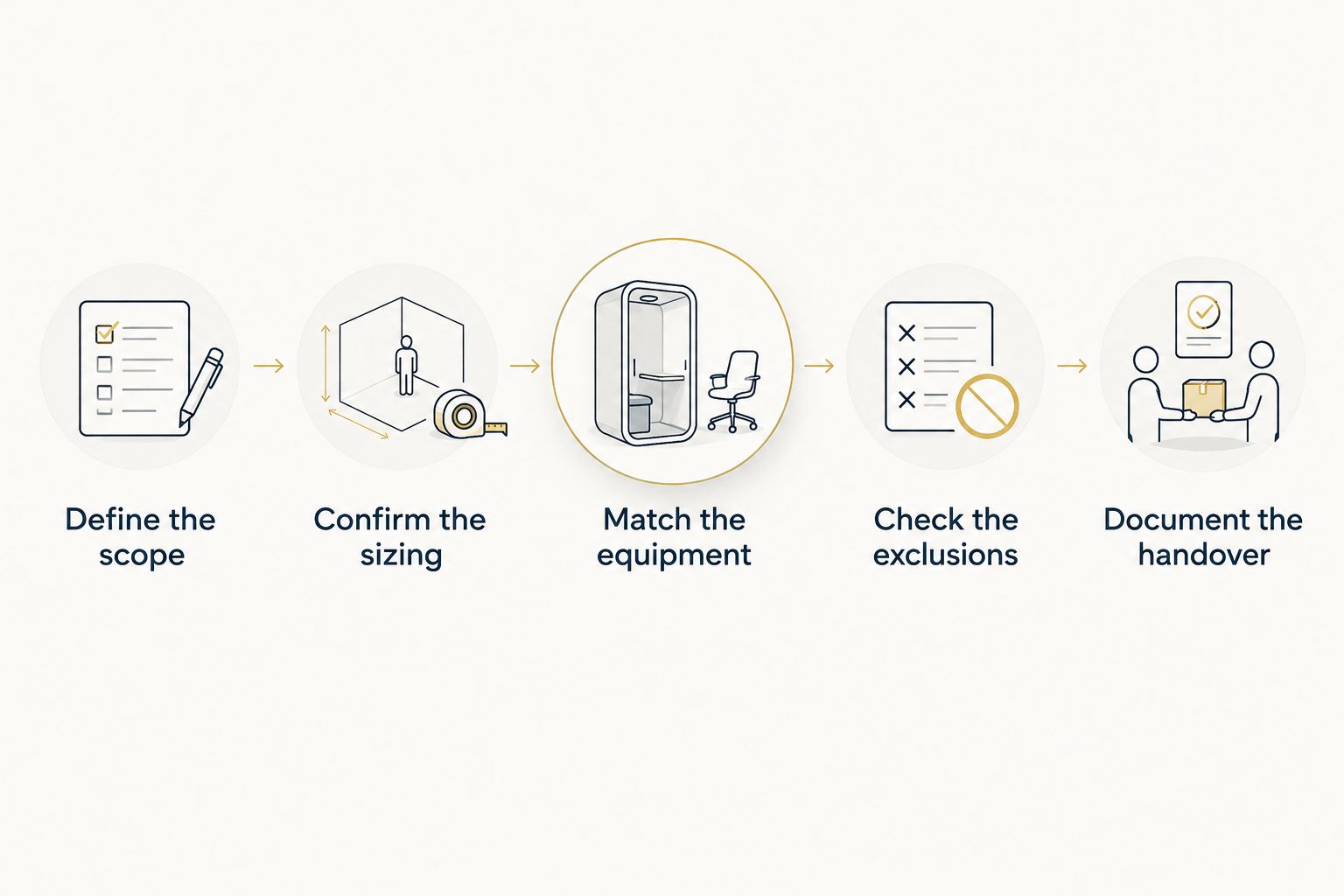
Follow this sequence before signing. It keeps equipment differences, necessary repairs, and optional additions from getting mixed together.
- Define the scope. Write down whether you need cooling only, heating and cooling, whole-home service, or a separately conditioned space. Include current comfort problems.
- Confirm the sizing. Ask how the contractor determined capacity and whether the existing ducts and return air support the proposed equipment.
- Match the equipment. Record indoor and outdoor model numbers, controls, and heating components. Compare like-for-like combinations.
- Check the exclusions. Identify retained ducts, reused piping, electrical work, drainage, permits, and removal. Resolve vague descriptions before approval.
- Document the handover. Require startup checks, operating instructions, warranty documents, and applicable inspection records in the written scope.
After completing this sequence, send each contractor the same clarification questions. Ask for revised written proposals rather than relying on verbal assurances that an omitted item is covered.
Imperium Electric LLC is best suited to Treasure Coast customers seeking a licensed local HVAC contractor. Its service area includes Port St. Lucie, Stuart, and Jensen Beach; your written proposal still needs to establish the equipment, installation responsibilities, and exclusions for your property.
Discuss your HVAC replacement
Ask for a written scope covering equipment, existing connections, required work, and startup checks.
What belongs in a 2026 HVAC replacement agreement?
Your agreement should describe the finished installation, not just the equipment delivery. Include removal of old equipment, protection of the work area, connection work, cleanup, and the documents you receive at completion.
Ask what happens if the contractor discovers concealed damage or an unsuitable existing connection. Require written approval for scope changes before additional work proceeds. That keeps an unexpected finding from becoming an undefined obligation.
Separate equipment warranty terms from installation workmanship terms. Confirm who handles registration, what maintenance conditions apply, and how you report a problem. Do not assume a manufacturer's equipment warranty covers every part of the installation.
Finally, identify the completion standard. Startup should include checks against the manufacturer's installation requirements, along with confirmation that the controls and condensate drainage operate correctly. Request a clear handover, not merely a statement that the air feels cold.
Do you need new ductwork when replacing your HVAC system?
New ductwork is not an automatic requirement for HVAC replacement. Serviceable ducts can remain when their condition and airflow suit the new system.
Replacement or repairs need a reason. Ask the contractor to identify leaks, damaged sections, restricted returns, or capacity mismatches and explain how the proposed work addresses them.
If one room has always been uncomfortable, put that issue in the project scope. A new condenser alone does not establish that the room's air-distribution problem has been corrected.
Should you repair the old system or replace it?
Choose between repair and replacement using a documented diagnosis, not age alone. Ask what failed, what the repair addresses, and whether other identified problems remain afterward.
Replacement deserves consideration when a repair leaves significant unresolved equipment or compatibility problems. Repair deserves consideration when the diagnosis identifies a specific fault and the remaining system is suitable for continued operation.
Compare the completed outcome. A repair proposal and a replacement proposal should each explain what will work at the end of the job and what limitations remain.
Can you replace only the outdoor AC unit?
Replacing only the outdoor unit requires confirmation that the retained indoor equipment forms an approved, compatible combination. Physical connections alone do not prove that the equipment is correctly matched.
Ask for the indoor model number and the basis for compatibility. Also confirm refrigerant suitability, controls, and the condition of retained components before accepting a partial replacement.
A smaller replacement scope leaves more existing equipment in service. Make that trade-off explicit rather than treating partial and complete replacements as the same job.
FAQ
How do I get an accurate HVAC replacement cost in Florida?
Get an itemized proposal based on a property inspection and a defined equipment scope. Confirm model numbers, retained components, required supporting work, permits, and exclusions before comparing totals.
Does a new air conditioner include new ductwork?
A new air conditioner includes new ductwork only when the proposal states that ductwork is included. Ask which sections remain, which need repairs, and how airflow will be evaluated.
Is a heat pump better than central AC for my Florida home?
A heat pump fits a home that needs both cooling and heating from a matched system; central AC addresses cooling. Compare your heating needs, existing equipment, and installation requirements rather than the names alone.
How many BTU per hour are in a ton of cooling?
One ton of cooling equals 12,000 BTU per hour. That conversion describes capacity and does not determine the correct system size for your home.
Do I need a bigger electrical panel for new HVAC equipment?
A bigger electrical panel is not an automatic requirement for new HVAC equipment. Have the existing service, circuit, and connections evaluated against the selected system's electrical requirements.
Can I keep my old thermostat after HVAC replacement?
You can keep an existing thermostat only if it is compatible with the replacement equipment and required controls. Ask the contractor to confirm which operating features it supports.
What should I check before signing a replacement agreement?
Check equipment model numbers, installation scope, exclusions, change-approval terms, and completion requirements before signing. Keep warranty responsibilities and startup documentation in writing.
One last thing
Ask what stays, not just what gets replaced. That question exposes the ducts, piping, wiring, controls, and drainage your new equipment will still depend on.
Before approving your 2026 project, have the contractor list retained components and explain their suitability. Imperium Electric LLC's HVAC replacement scope, like any contractor's proposal, should make those boundaries clear. New equipment is only part of the finished installation.