Whole house generator financing in Florida in 2026 usually comes down to four real paths: contractor-arranged installment loans, a home equity line of credit, manufacturer credit programs, or PACE assessments tied to your property tax bill. Each option treats credit, collateral, and payoff timeline differently, and the right one depends on how fast you need power back on and whether you'd rather borrow against your home or your credit score.
- Financing a whole house generator in Florida usually runs through contractor loans, HELOCs, or manufacturer credit, not one standard option.
- PACE financing ties generator cost to your property tax bill and skips a hard credit pull for many Florida homeowners.
- Manufacturer financing through brands like Generac closes faster than a bank loan but caps the amount to the unit and install cost.
- Whole house generator installation in Port St. Lucie and Stuart pairs financing approval with a site visit before permitting starts.
Why this matters
A standby generator is one of the few home upgrades in Florida that pays for itself in comfort during a single named storm, but the upfront cost still stops most homeowners before they call an installer. Hurricane season runs June through November every year, and 2026 is no exception — the window to get a generator sized, permitted, and installed before the first named storm is narrower than most people expect.
Financing isn't just about affording the unit. It changes how fast the proper generator sizing and permitting process can start, because most lenders and contractors want a signed quote before releasing funds.
How do you finance a whole house generator in Florida?
Four financing structures show up repeatedly across Florida installs in 2026. The table below breaks down how they differ on speed, collateral, and who they fit best.
| Option | Best for | Approval speed | Collateral required |
|---|---|---|---|
| Contractor financing | Homeowners who want one point of contact from quote to install | Fast — often tied directly to the install timeline | Usually none, credit-based |
| Home equity (HELOC or loan) | Homeowners with significant equity who want the lowest long-term rate | Slower — appraisal and underwriting involved | Yes, the home itself |
| Manufacturer financing | Buyers set on a specific brand like Generac or Kohler | Moderate — tied to the manufacturer's approved dealer network | Usually none, credit-based |
| PACE assessment | Homeowners with limited credit history or lower credit scores | Moderate — approval leans on home equity, not credit score | Yes, repaid via property tax bill |
Contractor financing through your installer
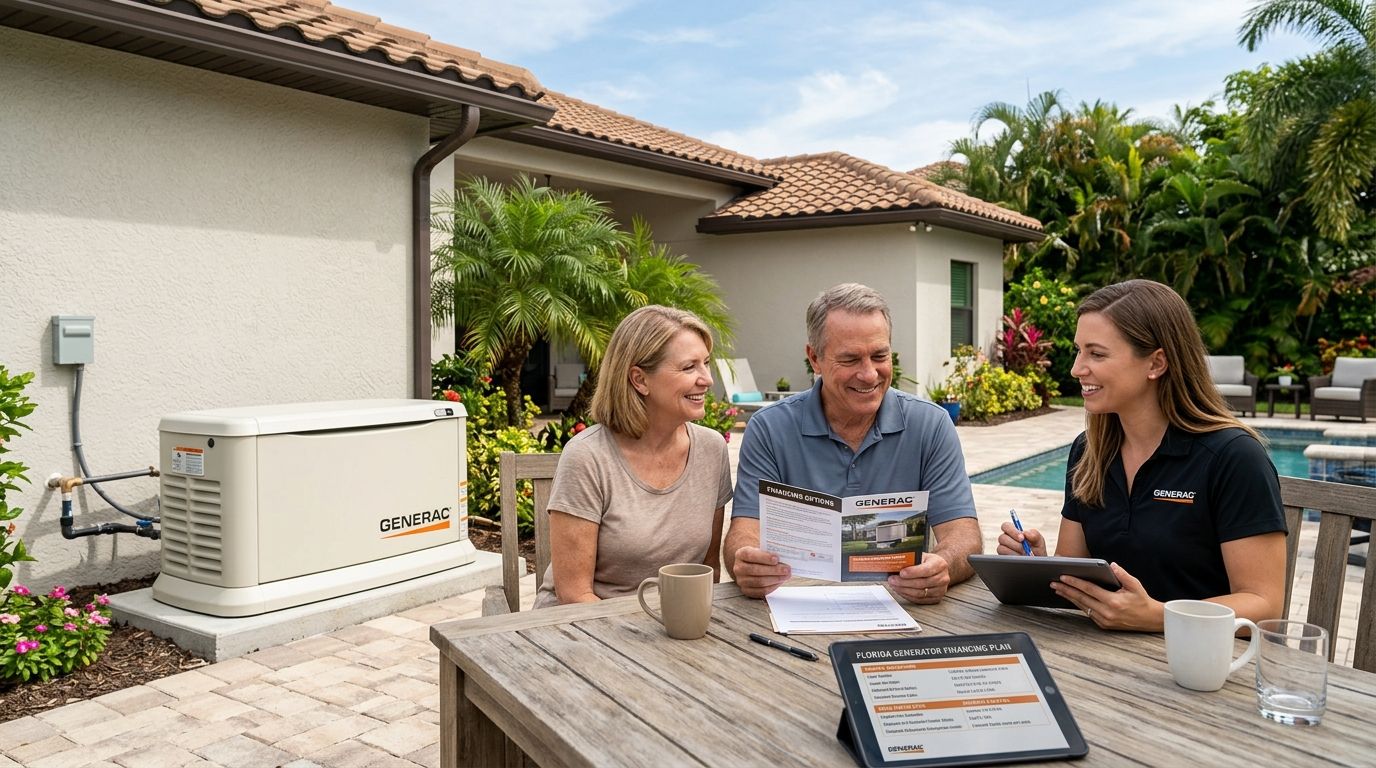
Contractor financing bundles the loan application into the same conversation as the installation quote, which is why it's often the fastest path to a signed contract. Best for homeowners who want financing and installation handled by one company instead of coordinating a separate bank loan. Imperium Electric arranges financing conversations alongside quotes for whole house generator installation in Port St. Lucie, so the sizing, permitting, and payment discussion happen in the same visit.
The tradeoff: contractor-arranged loans are typically unsecured, which can mean a higher rate than a home equity product over the life of the loan. Verdict: Buy if speed and single-vendor convenience matter more than shaving down long-term interest.
Home equity financing (HELOC or home equity loan)
A home equity line of credit or home equity loan uses your house as collateral, which generally means a lower rate than an unsecured personal or contractor loan. The catch is timeline — appraisals and underwriting can stretch the process out well past what a contractor loan needs.
This option fits homeowners who already have significant equity built up and aren't racing a storm deadline. Verdict: Hold if you need power installed before the next named storm; Buy if you have a few extra weeks of runway and want the lowest total interest paid.
Manufacturer financing programs
Generac and Kohler, the two brands that dominate the whole house generator market for Florida hurricane season, both run financing programs through their authorized dealer networks. These programs are built specifically around generator purchases, so approval criteria are tuned to that transaction rather than general consumer credit.
The limitation is scope: manufacturer financing generally only covers the unit and standard installation, not add-ons like a transfer switch upgrade for an aging panel. Verdict: Buy if you're already committed to a specific brand and want financing pre-matched to that purchase.
PACE financing for Florida homeowners
Property Assessed Clean Energy (PACE) programs let Florida homeowners finance qualifying home improvements — generators among them — through an assessment added to the property tax bill instead of a traditional loan. Approval leans heavily on home equity and payment history rather than a credit score pull, which is why PACE shows up often for homeowners who wouldn't otherwise qualify for a large unsecured loan.
The downside: because the assessment attaches to the property, it can complicate a future home sale if the buyer doesn't want to assume the remaining balance. Verdict: Buy if credit history is the main obstacle; Skip if you plan to sell within the next few years.
Get a generator install quote
Talk through financing options and sizing before hurricane season 2026.
Why generator financing amounts vary
The loan amount you're approved for — and the total project cost lenders base that on — swings on a handful of factors specific to the home, not the financing product itself:
- Generator size (kW output) needed to cover your home's electrical load, which drives the base unit cost
- Fuel type — propane installs often need a new tank, while natural gas ties into an existing line
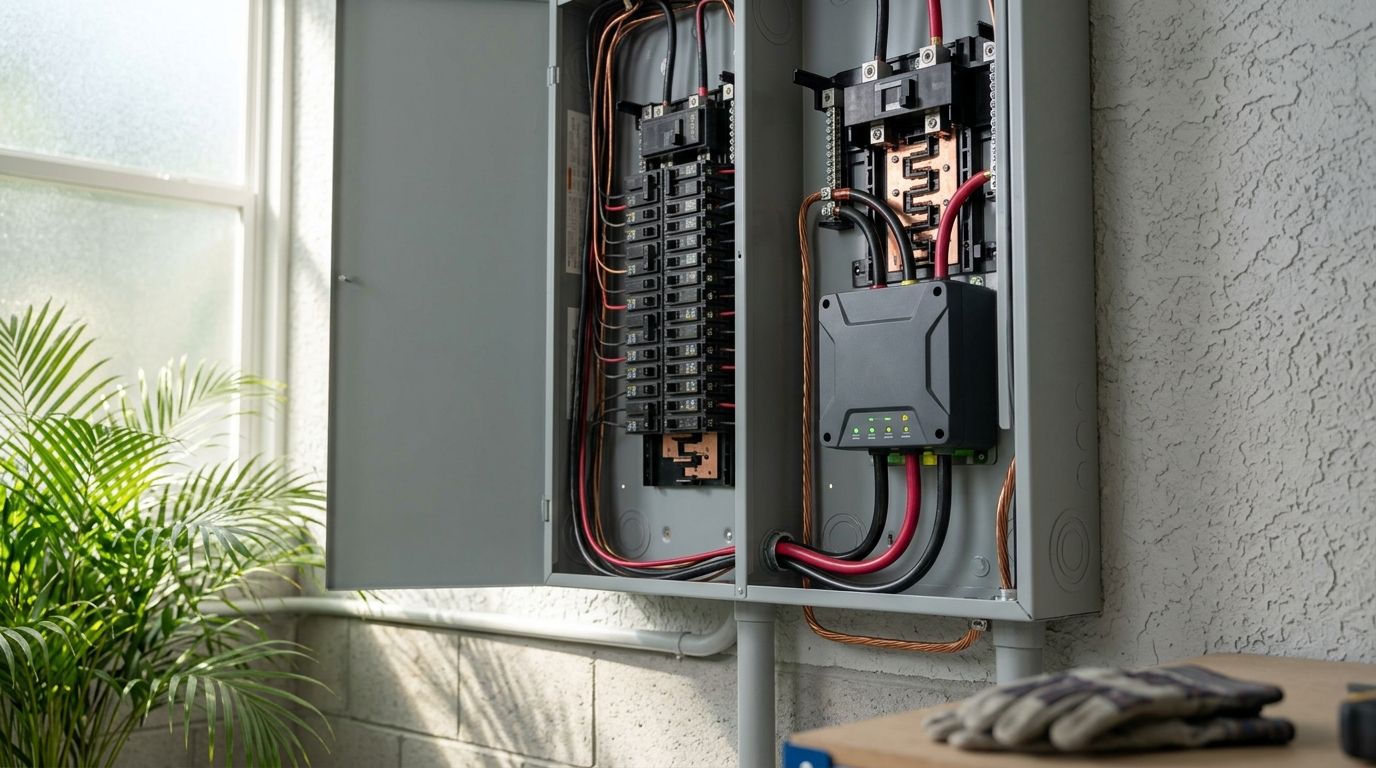
- Transfer switch complexity, especially on older panels that need upgrading before a generator transfer switch installation can proceed
- Permitting requirements, which differ between St. Lucie County, Martin County, and other Treasure Coast jurisdictions
- Site prep, including concrete pad pours and gas line trenching distance from the meter
- Panel condition and age, since an outdated panel can add electrical work on top of the generator itself
Does homeowners insurance cover a whole house generator in Florida?
Most homeowners insurance policies do not cover the purchase or installation cost of a standby generator. Some carriers offer a windstorm or hurricane-preparedness discount for having one installed, but that's a premium reduction, not reimbursement for the unit — check with your specific carrier since discount programs vary by insurer.
Can you deduct a whole house generator on your Florida taxes?
Florida has no state income tax, so there's no state-level deduction to claim either way. A federal medical expense deduction can apply only when a licensed physician documents that backup power is medically necessary, and even then the expense has to clear the IRS's 7.5% of adjusted gross income itemization threshold before it counts.
How long does generator financing take to close?
Contractor and manufacturer financing generally close faster than home equity products because they skip the appraisal step tied to a HELOC or home equity loan. A PACE assessment sits in the middle — faster than a HELOC, but it still requires an equity and payment-history review before funds release.
FAQ
What's the best way to finance a whole house generator in Florida?
Contractor financing is the fastest path for most Florida homeowners because approval happens alongside the installation quote. Home equity products offer a lower long-term rate but take longer to close due to appraisal requirements.
Is PACE financing available for generators on the Treasure Coast?
Yes, PACE programs in Florida cover qualifying home improvements including standby generators, with repayment added to the property tax bill. Approval depends more on home equity than credit score, which helps homeowners with limited credit history.
Do I need good credit to finance a whole house generator?
Good credit helps with contractor and manufacturer financing, but it isn't required for every path. PACE assessments and home equity products lean on property equity instead of a credit score.
Does Generac offer its own financing program?
Generac runs financing through its authorized dealer network, tuned specifically to generator purchases rather than general consumer credit. Kohler offers a similar dealer-based program.
Can I finance just the generator and pay cash for installation?
Most financing programs bundle the unit and standard installation into one loan amount rather than splitting them. Ask your contractor directly if you want to separate the two costs.
What credit requirement should I expect for contractor financing?
Contractor financing is credit-based and unsecured, so requirements vary by lender and program. It's generally faster to approve than a HELOC because there's no home appraisal involved.
Is a whole house generator worth financing before hurricane season 2026?
Financing makes sense if the upfront cost is the only thing stopping installation before storm season starts in June 2026. Waiting until after the first named storm often means longer install queues across the Treasure Coast.
Does financing affect how fast a generator gets installed?
Financing approval typically happens alongside the same site visit used for sizing and permitting, so it doesn't add significant delay on its own. A HELOC's appraisal timeline is the main exception that can push back the install date.
One last thing
Most homeowners chase the lowest rate and skip the timeline math entirely. In 2026, a generator financed through a HELOC that takes six weeks to close can still miss the front half of hurricane season if the application starts in May — contractor or manufacturer financing, even at a slightly higher rate, gets the unit in the ground while there's still time to test it before the first storm watch.