Standby generator maintenance in Port St. Lucie means beating salt air, summer humidity, and a hurricane season that runs six months out of the year before your Generac, Kohler, or Cummins unit ever has to carry the house.
- Standby generator maintenance in Port St. Lucie needs an annual professional visit plus monthly owner checks — schedule the pro visit before June 1. Buy.
- Generac and Kohler transfer switches run a built-in self-test weekly, about 12 minutes, but that doesn't replace oil changes.
- Oil and filter service every 100 hours of run time or once a year, whichever comes first, keeps warranty coverage intact.
- A dead or corroded battery — not the engine — is the most common reason a standby generator fails to start during an outage.
Why this matters
A standby generator that sits unmaintained for a year looks fine right up until a named storm knocks out power and it won't crank. Treasure Coast homes deal with salt-laden air, high humidity, and long stretches between real run time, all of which age batteries, corrode terminals, and gum up fuel lines faster than the manufacturer's glossy brochure suggests. Standby generator maintenance in Port St. Lucie isn't optional if you paid for a whole-house unit to keep the AC and refrigerator running through a 2026 hurricane season outage.
Who standby generator maintenance in Port St. Lucie is for
This guide is for homeowners who already have a permanently installed standby unit — not a portable generator you wheel out of the garage. If you're still deciding on a unit, whole-house generator installation for Port St. Lucie homeowners covers sizing and install before you worry about upkeep. Everyone else — anyone with a Generac, Kohler, or Cummins already bolted to a pad in the yard — needs a maintenance routine, not a one-time install and forget-it approach.
What to look for in generator maintenance for Port St. Lucie homes
Oil and filter change intervals
Engines under standby generators run on the same combustion principles as your car, and oil breaks down the same way. Most manufacturers call for a change every 100 hours of run time or once a year, whichever hits first — and in Florida, the "once a year" clock usually wins because most units barely log 20-30 hours annually outside of storms. Skip this and you shorten engine life exactly when you need it most, during an August or September outage.
Battery and starter health
The battery cranks the engine when utility power drops, and Florida heat is brutal on lead-acid batteries — expect a shorter service life here than in cooler climates. A weak battery is invisible until the moment you need it, which is why a load test belongs on every maintenance visit, not just a visual check.
Transfer switch and automatic self-test cycles
Most automatic transfer switches run a built-in self-test weekly, roughly 12 minutes, cycling the engine under no load to confirm it starts and runs. That test tells you the engine turns over — it does NOT confirm the unit can carry your actual electrical load during a real outage, which is a separate check.
Salt air and corrosion protection
Homes within a few miles of the Indian River Lagoon or the coast see faster corrosion on battery terminals, control boards, and exterior enclosures. A maintenance visit should include a corrosion check on connections and terminals, not just an oil dipstick reading.
Load testing before hurricane season
A generator that passes its weekly no-load self-test can still stall the moment your AC compressor, well pump, and refrigerator all kick on at once. If your household added a pool pump, an EV charger, or a mini-split since the unit was sized, revisit the math with how to size a whole-house generator for your home before storm season, not during it.
The maintenance moves that matter most
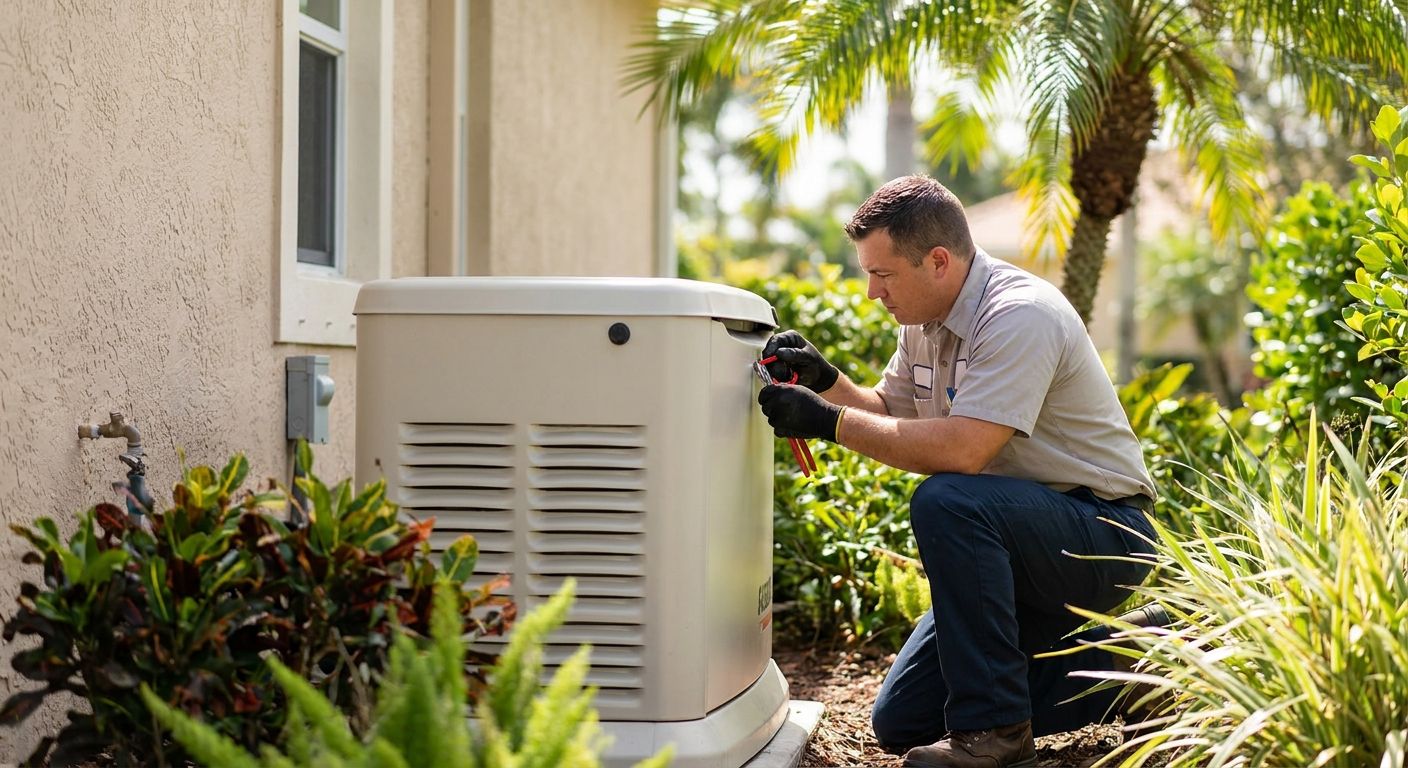
1. The non-negotiable: annual professional service before June 1 A licensed technician checks oil, filters, coolant, spark plugs, and load capacity in one visit — the same 100-hour-or-annual interval manufacturers publish for standby units. Scheduling it in spring, before the June 1 start of hurricane season, beats competing for appointment slots once a storm is in the forecast. Verdict: Buy.
2. The five-minute habit: monthly owner walk-around Listen for the weekly self-test to complete its full 12-minute cycle, check the exhaust vent for nests or debris, and confirm the green "ready" light is lit. It costs nothing and catches obvious problems — a blocked vent, a fault code — before they become no-start events. Verdict: Buy.
3. The overlooked one: battery replacement on a schedule, not a failure Florida heat shortens standby generator battery life compared to milder climates, and most technicians recommend replacement well before the battery actually dies. Waiting for a failure means finding out during an outage, which defeats the entire purpose of owning the unit. Verdict: Buy.
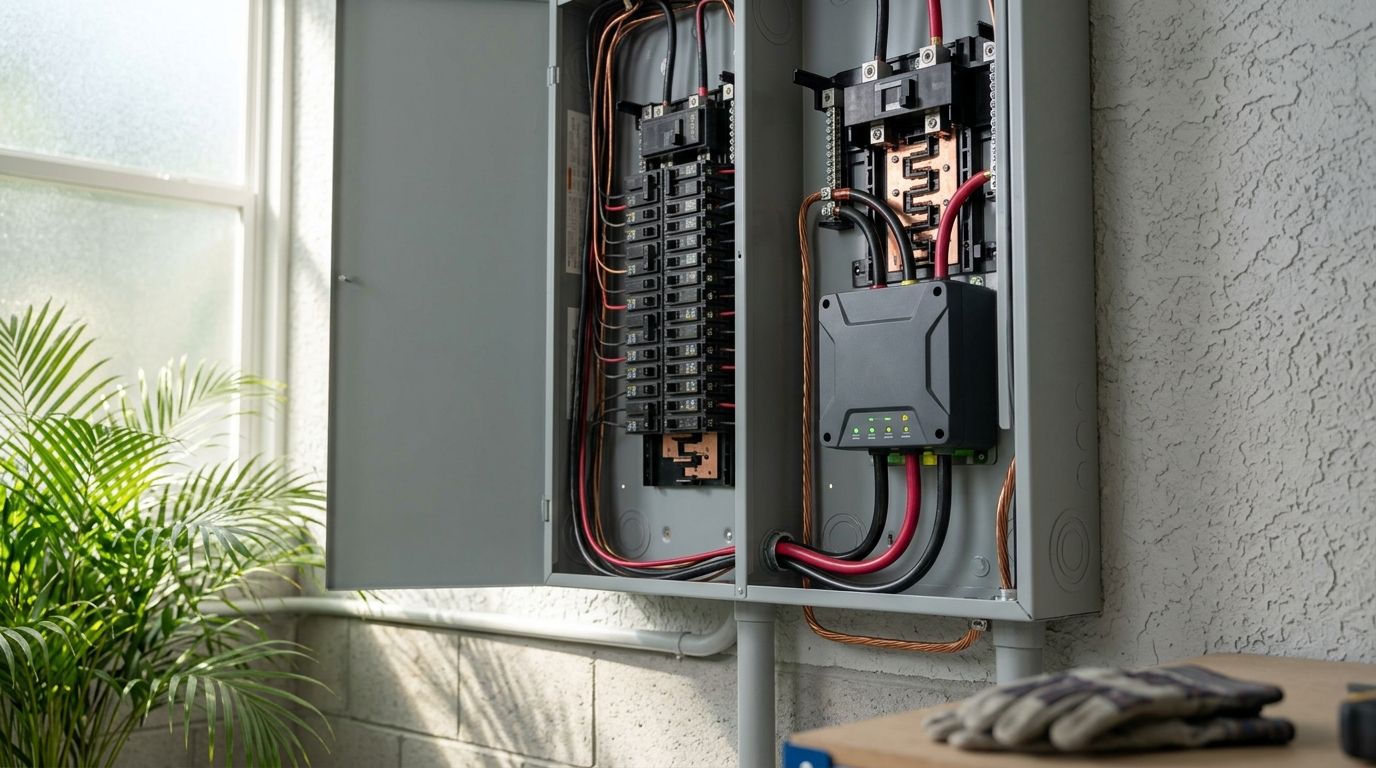
4. The seasonal move: pre-hurricane panel and transfer switch inspection Before hurricane season, a licensed electrician should check panel connections, transfer switch wiring, and lug tightness for corrosion or looseness — the same prep covered in how to prepare your electrical panel for hurricane season. A generator is only as reliable as the panel it feeds power through. Verdict: Buy.
5. The replacement question: aging units past their service life Standby generators built with regular maintenance can run well over a decade, but if yours is stacking up repair calls every season, it's worth comparing against current options in best whole-house generators for Florida hurricane season before sinking more money into an aging unit. Verdict: Consider.
Get your generator storm-ready
Schedule annual service before hurricane season starts June 1.
What to avoid
- Skipping the multi-point checklist for a quick oil top-off. An oil change alone misses coolant, spark plugs, and load testing — the items that actually cause no-start failures.
- Ignoring corrosion until the terminal is green and crusted. By the time corrosion is visible without looking closely, it's already affecting the connection.
- Assuming the gas or propane line is fine because the last outage went okay. Regulators and connections age too, and a fuel supply issue looks identical to an engine problem until a technician traces it.
Verdict comparison table
| Maintenance task | Frequency | Who handles it | Verdict |
|---|---|---|---|
| Oil & filter change | Every 100 hours or annually | Licensed technician | Buy |
| Weekly self-test monitoring | Weekly, ~12 minutes | Homeowner | Buy |
| Battery replacement | Every 2-3 years (sooner in FL heat) | Technician or homeowner | Buy |
| Pre-season panel & transfer switch check | Annually, before June 1 | Licensed electrician | Buy |
| Full load bank test | Every 1-2 years | Licensed technician | Consider |
| DIY teardown or major repair | As needed | Skip — call a pro | Skip |
FAQ
What's the best standby generator maintenance schedule for Port St. Lucie homeowners?
An annual professional service visit before June 1, paired with monthly self-checks of the exhaust vent and weekly self-test light. That combination catches most failures before hurricane season starts in 2026.
How often should a whole-house generator get serviced in Florida?
Every 100 hours of run time or once a year, whichever comes first — in most Florida homes that's once a year since units rarely log 100 hours annually outside storm season.
Is DIY generator maintenance enough, or do I need a licensed electrician?
DIY covers the monthly visual check and listening for the self-test; oil changes, load testing, and panel or transfer switch inspection need a licensed technician. Mixing both keeps costs down without skipping the parts that actually prevent failures.
How much run time before a Generac or Kohler needs an oil change?
Most manufacturers call for an oil and filter change every 100 hours of engine run time or annually, whichever arrives first. Heavy storm seasons with extended outages can push a unit past 100 hours faster than expected.
Does salt air near the Treasure Coast shorten generator lifespan?
Yes — coastal salt air accelerates corrosion on battery terminals, control boards, and exterior housings faster than inland locations. Homes within a few miles of the coast or the Indian River Lagoon should have corrosion checked at every maintenance visit.
When should I schedule generator maintenance before hurricane season?
Spring, ideally April or May, before the Atlantic hurricane season officially starts June 1. Waiting until a storm is in the forecast means competing with every other homeowner for the same appointment slots.
How long do standby generator batteries last in Florida heat?
Typically shorter than in cooler climates due to sustained heat exposure, which is why most technicians recommend replacing on a schedule rather than waiting for a failure. A load test at each service visit shows battery health before it becomes a no-start problem.
What happens if I skip the weekly self-test?
You lose the earliest warning sign of a starting problem — the self-test exists specifically to catch a dead battery or fault code before an actual outage. Disabling or ignoring it removes the one built-in safety check most standby units have.
One last thing
The engine block rarely fails first — it's the battery. A standby generator that won't start during a real outage most often has a dead or corroded battery behind the failure, not a bad engine, which is exactly why the cheapest line item on a maintenance visit is also the one most homeowners skip until it's too late.