Port St. Lucie sits at 85-95% relative humidity through most of hurricane season, and that moisture load is the real driver behind mold complaints, musty ducts, and allergy flare-ups in Treasure Coast homes. This guide breaks down which indoor air quality system actually solves that problem for your house, not a generic national checklist.
- A whole-house dehumidifier tied into your central AC is the strongest indoor air quality system port st lucie homeowners can add in 2026 — buy it if humidity runs above 55% indoors.
- MERV 13 filtration upgrades cost the least but do nothing for moisture — treat as a add-on, not a fix.
- UV-C germicidal lights earn a buy verdict only in homes with existing mold history or musty duct smell.
- Skip ionizer add-ons marketed as standalone air purifiers — they don't address Florida's core humidity problem.
Why this matters
The EPA has stated for years that indoor air can run two to five times more polluted than outdoor air, and in a coastal Florida climate that gap widens fast once humidity climbs past 60%. Musty closets, foggy windows, and a coil that never seems to fully dry out are symptoms of a house losing the moisture fight, not just an HVAC quirk. Homeowners searching for the best HVAC systems for Florida heat and humidity usually start here because the AC and the air quality system are the same fight, not two separate ones.
An indoor air quality system in this market has one job first and three jobs second: pull moisture down to 30-50% relative humidity, then handle filtration, microbial control, and fresh air exchange. Get the humidity number wrong and none of the filters or UV lights matter.
Who this is for
This guide is built for Port St. Lucie, Stuart, and Jensen Beach homeowners dealing with one of three symptoms: a musty smell that won't clear, visible mold on AC vents or bathroom ceilings, or a household member with allergy or asthma flare-ups that track with the seasons. It's also for anyone converting a garage or Florida room into living space, since those additions almost always run hotter and wetter than the main house. If your only complaint is dust on the furniture, a filter upgrade solves it — you don't need the full system described below.
What to look for in an indoor air quality system for Port St. Lucie homes
Humidity control capacity
The system has to be sized to pull your home down to 30-50% relative humidity, not just run the AC longer. A dehumidifier rated for the wrong square footage will run constantly and still lose the fight against a Treasure Coast summer.
Filtration rating (MERV)
MERV 13 filtration catches most pollen, mold spores, and fine dust without choking airflow on a standard residential air handler. Anything below MERV 8 is barely doing more than protecting the blower motor.
Microbial control
UV-C lights or bipolar ionization installed in the return plenum target mold and bacteria growing on wet coils — a real issue in a climate where the AC condenses gallons of water a day. This matters most in homes with a documented mold history or a coil that's smelled musty before.
Compatibility with existing ductwork
A whole-house system has to tie into your current air handler and duct sizing correctly, or it either underperforms or overworks the blower. This is where a licensed HVAC contractor matters more than the equipment brand.
Maintenance access
Dehumidifier drain lines, UV bulbs, and filter cabinets all need service access built in from day one. A system installed without a clean service point turns into a bigger job the first time something needs replacing.
Top picks for 2026
1. Whole-house dehumidifier tied into central AC — the workhorse pick
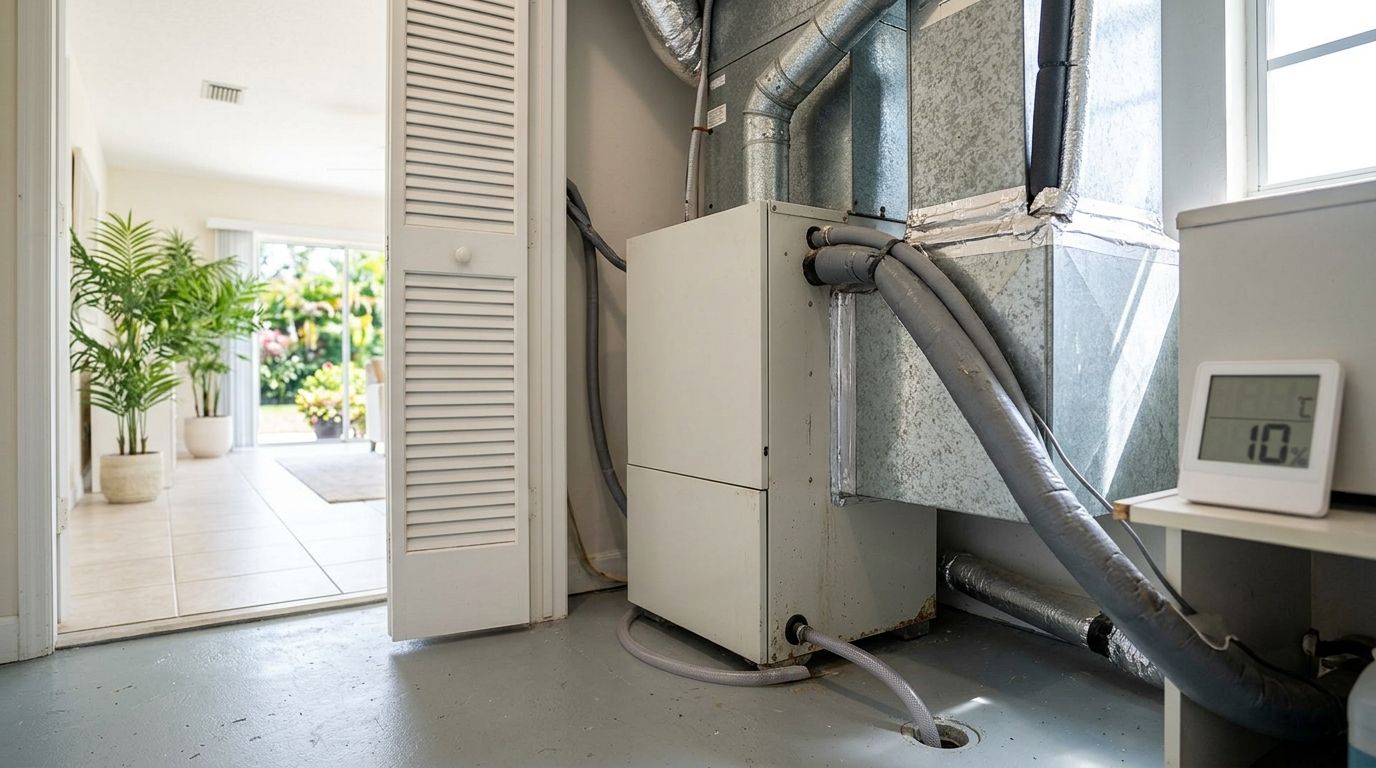
This unit ducts directly into your return and supply, pulling indoor humidity down to the 30-50% range independent of how often the AC cycles. It's the single most effective fix for musty smell and coil mold complaints in this climate. Homes running consistently above 55% indoor humidity see the difference within the first week. Right-sizing depends on square footage and occupant load — the same logic covered in how to size an air conditioner for a Florida home applies directly here. Verdict: Buy for any home showing mold, musty odor, or humidity readings above 55%.
2. MERV 13 filtration cabinet retrofit — the budget fix
A filter cabinet upgrade swaps your standard 1-inch filter slot for a deeper MERV 13 media filter without touching ductwork. It catches pollen, pet dander, and fine dust that a standard filter misses, and it's the cheapest line item on this list. It does nothing for humidity, so pair it with a dehumidifier if moisture is also a complaint. Verdict: Consider as an add-on, Skip as a standalone fix for humidity-driven odor.
3. UV-C germicidal light in the return plenum — the mold-fighter
Installed just past the evaporator coil, a UV-C light targets mold and bacteria growing on the wet coil surface before it recirculates through the house. This is the pick for homes with a documented mold history or a coil that's needed cleaning more than once in the past year. It's not a fix for general dust or allergens — that's the filter's job. Verdict: Buy for homes with prior mold issues, Skip if your only complaint is dust.
4. Ductless mini-split with built-in filtration — the addition specialist
Garages and Florida rooms converted into living space run hotter and more humid than the rest of the house because they're rarely on the main duct system. A ductless mini-split sized for that specific space handles both temperature and moisture without overloading the main air handler, and most units include a washable filtration stage. This is the standard fix covered in ductless mini-split installation for Florida garages and additions. Verdict: Buy for any converted space without its own duct run.
5. Full HVAC replacement with integrated IAQ package — the full reset
If your air handler is past 12-15 years old, bundling a dehumidifier, MERV 13 filtration, and UV-C into a full system replacement usually costs less than retrofitting each piece separately down the road. This is the path for homes needing air conditioning installation for Treasure Coast homes anyway. Verdict: Buy if the AC is already due for replacement, Consider if it has years of life left — retrofit instead.
Get your IAQ system sized right
A free quote covers humidity control, filtration, and UV options for your home.
What to avoid
- Standalone plug-in ionizers marketed as whole-house solutions. They treat a single room at best and do nothing for the humidity driving your actual problem.
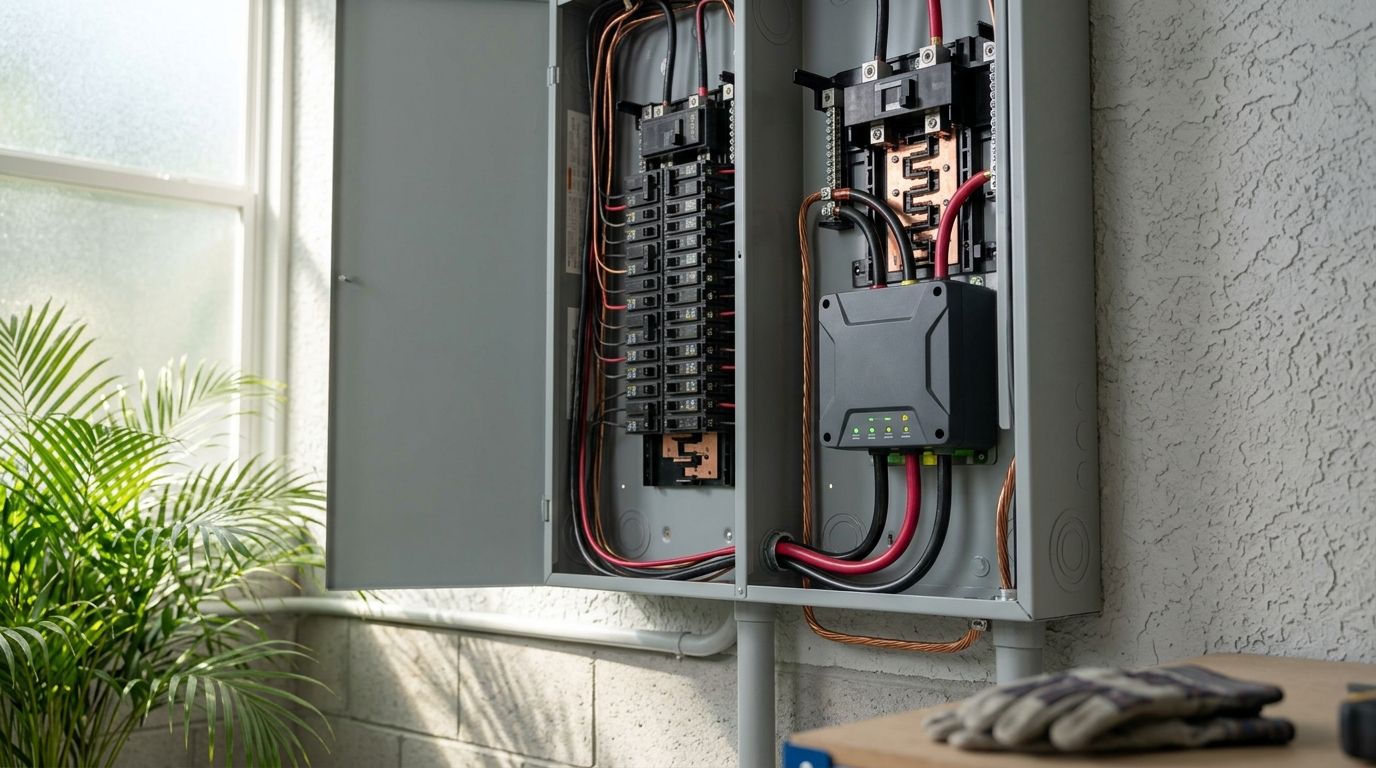
- UV lights installed without checking electrical capacity first. Older Port St. Lucie homes often need a panel check before adding UV, ERV, or dehumidifier circuits — see electrical panel upgrades for older Port St. Lucie homes before assuming your panel has room.
- Oversized dehumidifiers bought off a general rule of thumb. A unit sized for a house twice your square footage short-cycles and wastes energy without actually holding humidity steady.
Verdict comparison
| System | Best for | Key spec | Verdict |
|---|---|---|---|
| Whole-house dehumidifier | Musty odor, high humidity | Targets 30-50% RH | Buy |
| MERV 13 filter cabinet | Dust, pollen, pet dander | MERV 13 rating | Consider (add-on only) |
| UV-C plenum light | Mold history, wet coils | Installed at evaporator coil | Buy (mold cases) |
| Ductless mini-split w/ filtration | Garage/addition conversions | Independent zone control | Buy |
| Full HVAC + IAQ package | AC already 12+ years old | Bundled install | Buy (aging systems) |
FAQ
What is the best indoor air quality system for Port St. Lucie homes in 2026?
A whole-house dehumidifier tied into your central AC is the best starting point for most Port St. Lucie homes in 2026, since humidity above 55% drives most odor and mold complaints. Add MERV 13 filtration or UV-C only after the humidity problem is under control.
Is a whole-house dehumidifier better than a portable unit?
Yes, a ducted whole-house dehumidifier treats the entire home instead of a single room and ties directly into your existing air handler. Portable units only manage the room they sit in and need constant emptying.
How much humidity is too much indoors?
Indoor relative humidity above 50-55% starts creating conditions for mold growth and musty odor. The target range for Florida homes is 30-50%.
Do UV air purifiers actually work?
UV-C lights installed at the evaporator coil are effective against mold and bacteria growing on the coil surface, which is a real problem in humid climates. They don't filter dust or allergens, so they work best paired with a filtration upgrade.
Can I add an indoor air quality system without replacing my whole HVAC unit?
Yes, dehumidifiers, filtration cabinets, and UV-C lights can all be retrofitted onto an existing air handler if the ductwork and electrical capacity support it. A full HVAC replacement only makes sense once the existing system is near the end of its life.
Does a garage conversion need its own air quality system?
Yes, garage and Florida room conversions run hotter and more humid than the main house because they're rarely tied into the primary duct system. A dedicated ductless mini-split with its own filtration stage handles that load without overworking the main air handler.
What MERV rating do I need for allergies?
MERV 13 filtration catches most pollen, mold spores, and fine dust without restricting airflow on a standard residential system. Ratings above MERV 13 usually require equipment not designed for typical home air handlers.
One last thing
Most Port St. Lucie homeowners chase filtration first because it's the cheapest line item, then wonder why the musty smell never actually goes away. The EPA's own guidance ranks moisture control above filtration for indoor air problems, and in a climate running 85-95% humidity through summer, that order matters more here than almost anywhere else in the country. Fix the humidity number first in 2026, and the filter upgrade becomes a nice-to-have instead of a wasted purchase.
Imperium Electric handles the electrical side of every indoor air quality system — panel capacity, dedicated circuits for dehumidifiers and UV components — alongside the HVAC install itself, which is the part most IAQ retrofits get wrong when they're quoted separately.