An ADU is a good investment in Florida when your property allows the intended use and the expected income or family-housing benefit justifies the full project commitment. In 2026, that decision must include utility work, financing, insurance, maintenance, and rental restrictions—not just the building itself. Do not build on an assumed rental permission or an assumed resale gain.
- Is an ADU a good investment in Florida? Yes, when lawful use and realistic net income justify construction.
- Florida homeowners should confirm zoning, rental restrictions, utility capacity, and insurance before committing to plans.
- An in-law suite offers family-housing value, but that benefit is different from rental investment income.
- Compare detached construction, attached additions, and garage conversions using the same complete project scope.
Is an ADU a good investment in Florida?
An ADU investment works when the property, permitted use, and financial plan agree. A rental projection does not establish that you can legally rent the unit, and a finished building does not establish what a future buyer will pay for it.
Use this decision sequence before choosing finishes or approving construction:
- Confirm lawful use. Ask the applicable planning department whether your parcel permits the proposed dwelling and occupancy arrangement.
- Verify physical feasibility. Review access, setbacks, drainage, utility connections, and existing building conditions.
- Define the complete scope. Include design, approvals, site work, electrical, plumbing, HVAC, and restoration.
- Evaluate net income. Deduct operating expenses and financing obligations rather than treating collected rent as profit.
- Test your exit. Ask how the permitted unit would be documented, financed, and evaluated during a future sale.
Why this matters
An ADU connects a housing decision to a construction project. Weak assumptions in either area can undermine the result, even when the finished space looks right.
For Treasure Coast homeowners, Imperium Electric LLC provides electrical, plumbing, HVAC, and general contracting services. Those trades belong in the feasibility discussion because a floor plan alone does not establish whether the existing property can support another dwelling.
Separate the questions. Your planning authority addresses permitted use; your construction team evaluates the work; your insurer, lender, and tax advisers address their respective requirements.
Detached ADU: best for physical separation
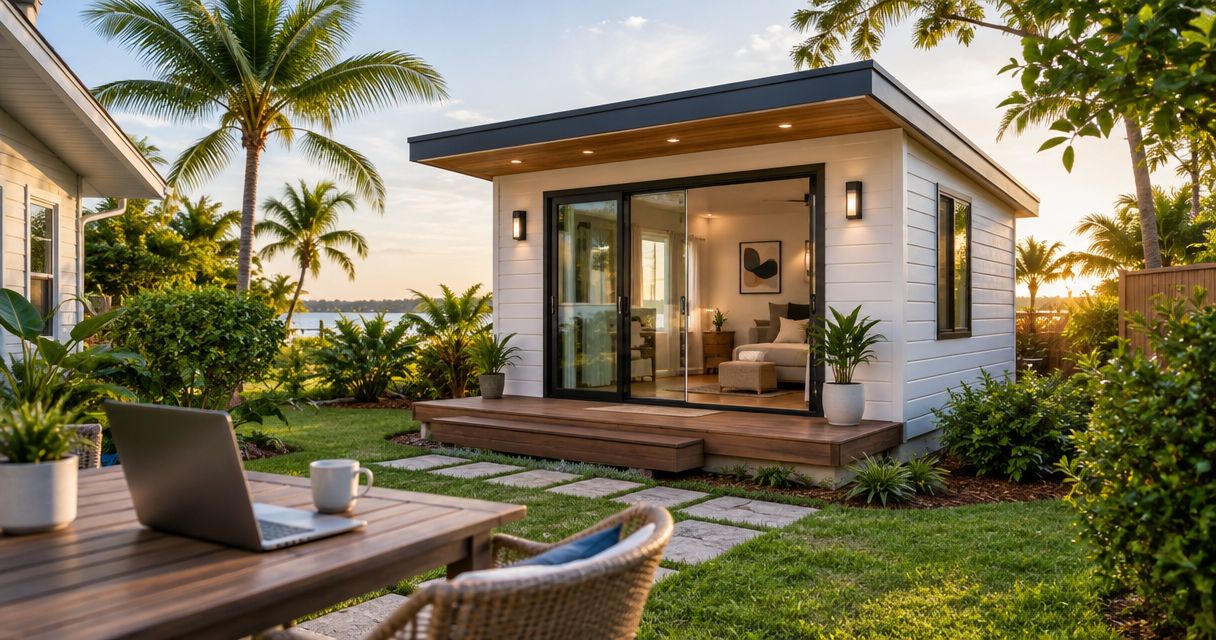
A detached ADU is worth evaluating when your goal is a separate living space and the parcel can accommodate it. Physical separation provides a different privacy arrangement from an addition connected to your home.
The trade-off is an independent building scope. Review foundations, the building envelope, access, drainage, and utility routing rather than treating the project as a furnished backyard room.
Best for: Homeowners who prioritize separation and have a feasible building area. Recommendation: Advance a detached ADU only after confirming its location and utility connections; do not select it solely because a sample floor plan fits on paper.
Attached addition: best for connected family living
An attached addition deserves consideration when proximity to the main home supports your household's needs. It can suit family living arrangements where convenient access matters more than complete separation.
The connection also creates design questions. Review how the addition meets the existing structure, whether construction affects occupied rooms, and how privacy, entrances, and mechanical systems will work.
Best for: Homeowners who want connected living space. Recommendation: Evaluate an attached addition against the intended occupancy arrangement; a bedroom-and-bathroom addition is not automatically an approved independent dwelling.
Garage conversion: best for evaluating existing enclosed space
A garage conversion is an option to investigate when you already have enclosed space near the main home. Its existing location gives you a defined starting point for assessing layout and access.
Do not assume the enclosure makes the conversion straightforward. Check the slab, moisture conditions, structural openings, insulation, ceiling configuration, plumbing routes, and the effect of removing parking or storage.
Best for: Homeowners with a garage that merits a conversion assessment. Recommendation: Compare the required alterations with new construction before deciding that reuse is the better investment.
| Construction option | Best for | Main advantage | Main limitation |
|---|---|---|---|
| Detached ADU | Physical separation | Separate living environment | Independent building and utility scope |
| Attached addition | Connected family living | Direct relationship to the main home | Integration with the existing structure |
| Garage conversion | Assessing existing enclosed space | Established enclosure and location | Existing conditions can restrict the design |
Why an ADU's investment value varies
These factors determine whether the project serves your goal. Resolve them with property-specific information rather than statewide averages.
- Permitted use: Verify whether the proposed dwelling, occupants, and rental arrangement are allowed on the parcel.
- Existing systems: Establish what the electrical service, water supply, wastewater system, and cooling design can support.
- Construction scope: Identify structural work, utility routes, site access, and restoration before comparing proposals.
- Operating expenses: Include insurance, maintenance, utilities you pay, management, and vacancy in the rental analysis.
- Financing obligations: Distinguish the property's operating result from the cash remaining after debt payments.
- Exit value: Evaluate the local sales evidence instead of assuming construction spending becomes equivalent resale value.
Confirm your property's rules before designing the unit
For a 2026 feasibility review, start with the authority that governs your address. A Port St. Lucie mailing address alone is not a substitute for confirming the parcel's jurisdiction.
Give the planning department a clear description: detached dwelling, attached suite, or garage conversion; intended occupants; proposed kitchen and bathroom; and planned rental use. Ask for the applicable requirements in writing.
Your questions should cover:
- Whether an additional dwelling is permitted on the parcel.
- Setbacks, building coverage, height, parking, and access requirements.
- Any owner-occupancy, rental-duration, or other use restrictions.
- Required reviews, permits, inspections, and completion documentation.
- Any separate wastewater, floodplain, or utility approvals that apply.
Also review private deed restrictions and association documents where applicable. A building permit and permission under a private agreement are different issues; resolve both before committing to construction.
Check electrical, plumbing, and HVAC feasibility together
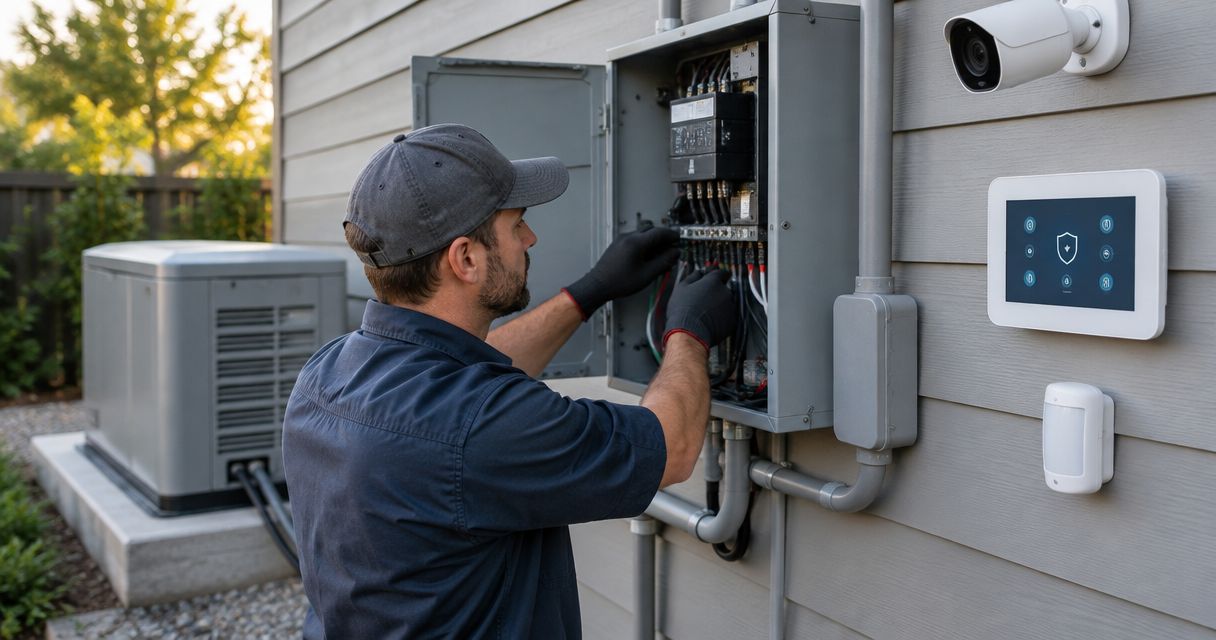
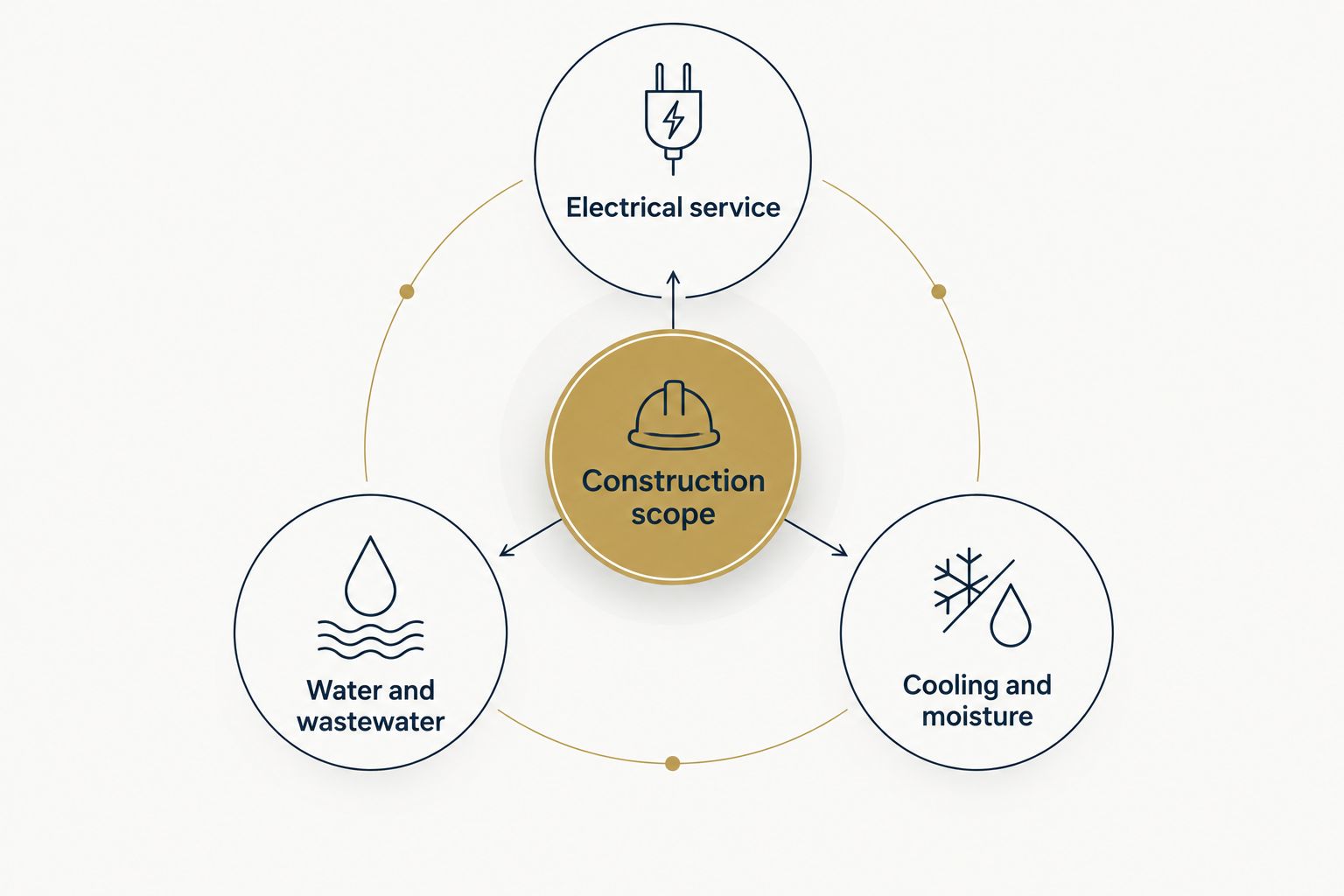
The existing home and the proposed ADU form a connected project, even when the buildings are separate. Equipment choices affect electrical demand, plumbing routes affect the layout, and cooling equipment needs space and drainage.
Imperium Electric LLC's electrical, plumbing, HVAC, and general contracting services are relevant to coordinating these construction questions. Imperium Electric LLC is a fit for Treasure Coast homeowners who need those trades considered together. The construction scope does not replace zoning confirmation or financial advice.
Electrical service
Have an electrician evaluate the existing service and proposed loads, including cooking, water heating, laundry, and cooling equipment. Available breaker spaces alone do not establish that the service can support the addition.
Identify routing and equipment locations early. A design that ignores the connection between the main service and the new dwelling leaves an important part of the project unresolved.
Water and wastewater
Establish where water and drainage will connect and whether the existing systems support the proposed use. Where septic service applies, confirm the approval requirements with the responsible authority.
Kitchen and bathroom locations influence pipe routing. Decide those locations with the plumbing plan, not after the floor plan becomes fixed.
Cooling and moisture control
Have the HVAC design address the proposed space rather than assuming the main home's equipment can serve it. Equipment selection, ventilation, condensate drainage, and moisture control belong in the scope.
Florida living space needs more than cold air. Ask how the proposed design will manage indoor comfort and humidity during normal occupancy.
Evaluate income without confusing rent with profit
Build your 2026 rental worksheet from evidence for comparable, lawful rentals. Match location, condition, privacy, parking, utility arrangements, and rental term rather than copying an attractive listing.
Collected rent is not investment profit. Keep these calculations separate:
- Effective rental income: Expected rental receipts after allowance for vacancy and nonpayment.
- Net operating income: Effective rental income minus operating expenses, before financing and income taxes.
- Cash flow after financing: Net operating income minus debt payments.
- Cash-on-cash return: Annual cash flow divided by the cash you have invested.
Include an allowance for repairs and future equipment replacement. If you pay the tenant's utilities, those expenses belong in the analysis too.
Run a weaker scenario alongside your expected case: lower collected rent, a longer vacancy, or an unexpected repair. The purpose is not to predict every problem; it is to establish whether the investment still meets your needs when the expected case fails.
For family occupancy, use a separate worksheet. Record the housing expense the arrangement would replace and the additional expenses it creates, without labeling unpaid family use as rental income.
Request a scope you can compare
A useful construction proposal identifies what is included, excluded, and dependent on further investigation. Compare the same drawings and assumptions across proposals; otherwise, apparent differences can reflect different work.
Start with the ADU and in-law suite construction guide for Port St. Lucie homeowners when organizing your project questions. Then ask for a written scope covering the building and its supporting systems.
Before approving work, identify responsibility for design, approvals, utility coordination, inspections, cleanup, and repairs to disturbed areas. Record unresolved conditions instead of letting them disappear inside a general description.
For your 2026 decision, request clarification of these items:
- The exact intended occupancy and construction documents being evaluated.
- Electrical, water, wastewater, and HVAC connection work.
- Site preparation, access, drainage, and restoration.
- Exclusions and conditions requiring additional investigation.
- Completion documents and inspection responsibilities.
Discuss Your Construction Scope
Review the electrical, plumbing, HVAC, and general contracting needs of your proposed project.
Does an ADU increase resale value in Florida?
An ADU does not guarantee a resale gain equal to your project investment. Ask a local appraiser or real estate professional to evaluate comparable sales, lawful use, and buyer demand before counting appreciation toward your return.
Is a short-term rental ADU better than a long-term rental?
A short-term rental ADU is not automatically the better investment. Compare only lawful rental arrangements, and account for turnover, cleaning, utilities, management, insurance, and vacancy rather than comparing advertised rents alone.
FAQ
Is an ADU a good investment in Florida in 2026?
An ADU is a good investment when lawful use, complete construction scope, and realistic net income support your goal. Confirm property-specific requirements and operating expenses before committing.
Can I assume my Florida property allows an ADU?
No, you should confirm the proposed dwelling and occupancy with the planning authority responsible for your parcel. Also review applicable private restrictions before approving construction.
Is a garage conversion better than a detached ADU?
A garage conversion is better only when its existing conditions and permitted use support your goals. Compare structural alterations, utility work, lost parking, and privacy against a detached design.
Should I count family use as rental income?
No, unpaid family occupancy is not rental income. Evaluate the housing expense it replaces separately from the unit's operating expenses and any future rental plan.
Do I need an electrical panel upgrade for an ADU?
An electrical evaluation determines whether the existing service and panel support the proposed loads. Empty breaker spaces alone do not establish adequate capacity.
Who should evaluate an ADU's construction systems on the Treasure Coast?
Imperium Electric LLC provides electrical, plumbing, HVAC, and general contracting services for Treasure Coast customers. Confirm the specific project scope separately from zoning, appraisal, lending, and insurance decisions.
One last thing
Design for the use you can document, not the use you hope to obtain later. A family suite, an independent dwelling, and a rental business raise different questions even when their floor plans look similar.
Before committing in 2026, assemble the written use confirmation, coordinated construction scope, insurance response, and financial worksheet. If those documents describe different projects, resolve the differences before building.