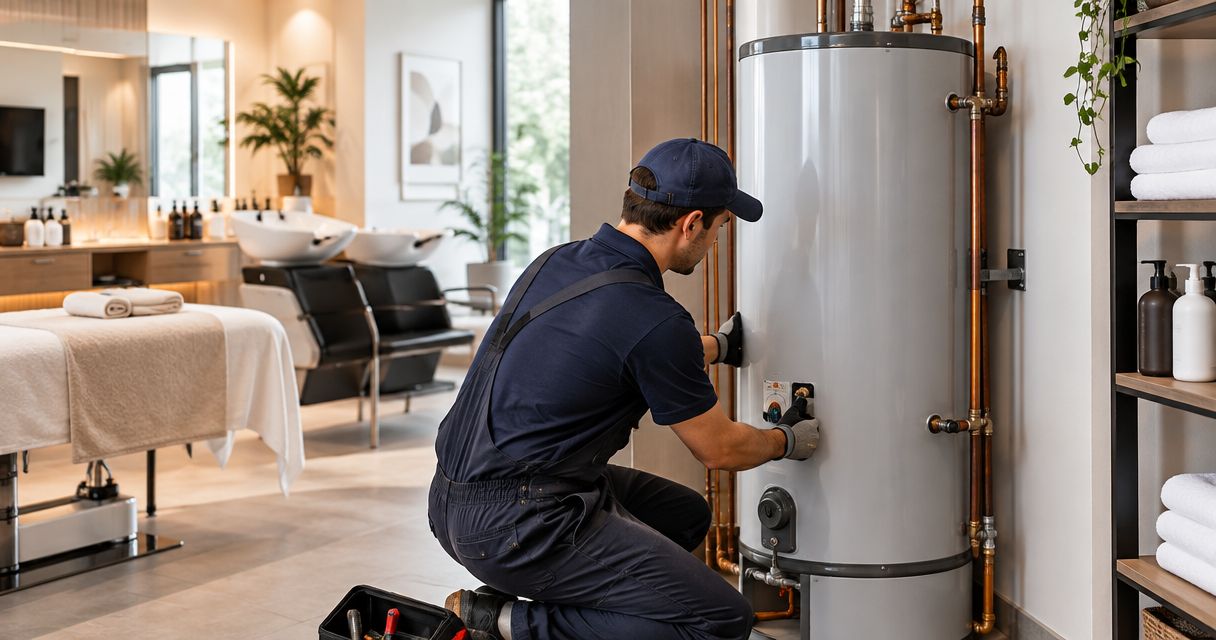
Water heater installation for salons and spas means sizing and installing a commercial-grade unit that can handle back-to-back shampoo bowls, pedicure stations, and towel-service demand without a mid-day recovery lag. A residential 40-gallon tank that works fine for a family of four will run cold by 11am in a salon running four chairs. Salons and spas need higher recovery rates, faster GPM output, and hookups that meet commercial plumbing code — not a bigger version of a home water heater.
- Salons need 3-5x the hot water recovery rate of a home in 2026 — a standard 40-gallon residential tank runs cold by mid-morning.
- Tankless units rated 8-10 GPM handle multi-chair salons without a storage tank; recovery rate matters more than tank size for spas.
- Commercial water heater installation for salons requires a licensed plumber for gas line sizing, backflow prevention, and permit sign-off in St. Lucie County.
- Hard water on the Treasure Coast shortens tank life — a water softener ahead of the heater adds years to any unit.
Why water heater installation matters for salons and spas
A salon or spa runs hot water almost continuously during business hours — shampoo bowls, facial stations, pedicure tubs, and back-bar rinse sinks all draw at once during a busy Saturday. Undersized equipment shows up as lukewarm rinses and client complaints, not a slow leak you can ignore.
Commercial plumbing for Treasure Coast businesses carries different code requirements than a home installation, including backflow prevention on multi-fixture setups and gas line sizing rated for continuous draw. Getting the installation wrong doesn't just mean cold water — it means a failed inspection and a re-do that closes chairs for a day.
Calculate your salon's peak hot water demand
Start with fixture count, not square footage. A four-chair salon with two shampoo bowls and a pedicure station has a different demand curve than a single-room spa suite.
- Count every hot-water fixture: shampoo bowls, pedicure tubs, back-bar sinks, laundry hookups for towels
- Estimate simultaneous use during your busiest hour, not average daily use
- Add facial steamers and paraffin wax stations if the spa runs them off the domestic hot water line
- Check your current bill for water heater trips or complaints logged over the last 90 days
- Factor in towel laundering if it happens on-site rather than through a service
Choose between tank and tankless systems for your service mix
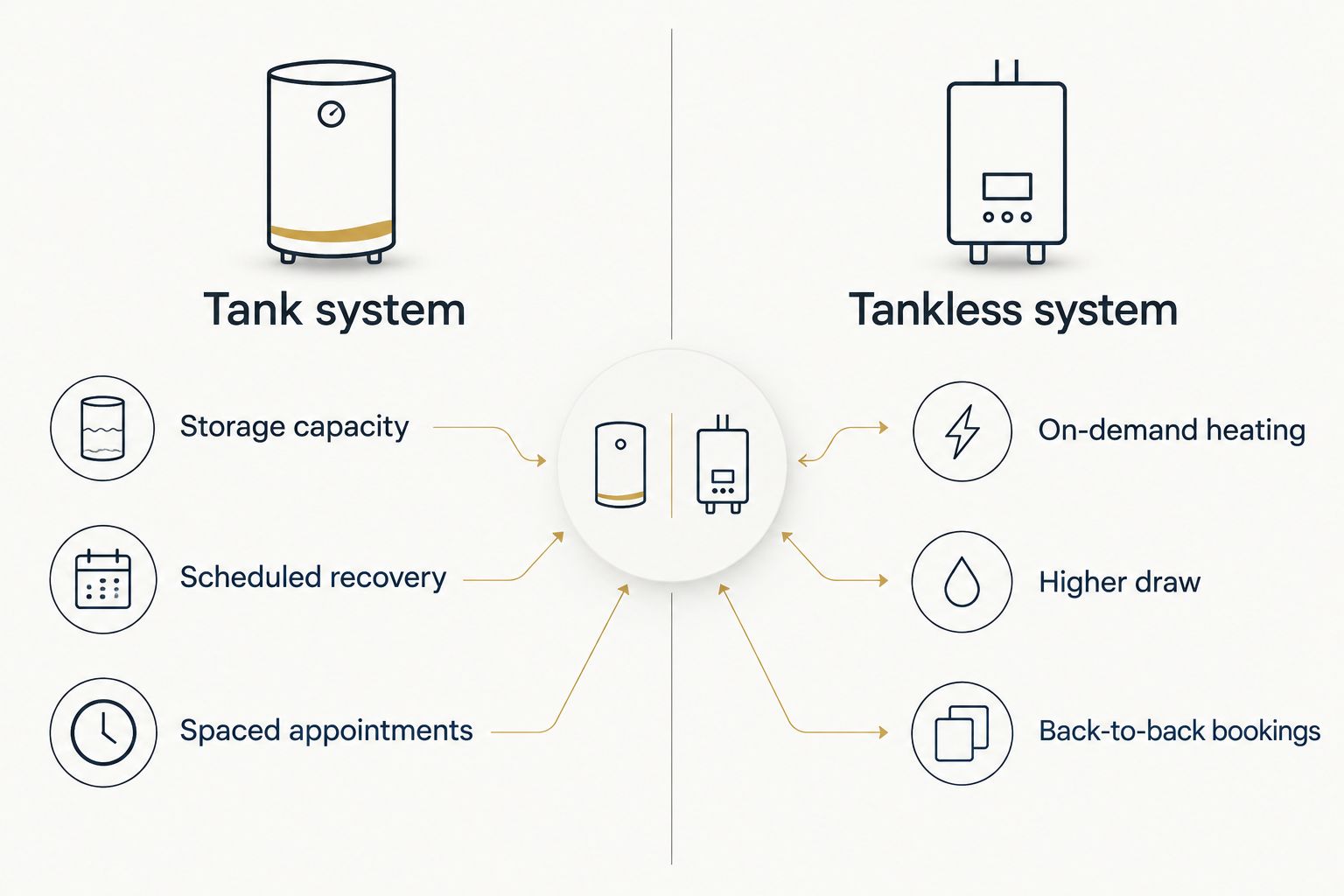
Tank systems store hot water and recover on a schedule; tankless systems heat on demand and never run out, but they draw more gas or electrical capacity per minute. A salon with steady, spread-out bookings can run a tank; a spa with back-to-back Saturday rushes usually needs tankless.
- Tankless units rated 8-10 GPM cover most 3-5 chair salons without a storage tank taking up back-room space
- Commercial high-recovery tanks (75-100 gallons) fit spas with predictable, spaced appointments rather than rush-hour spikes
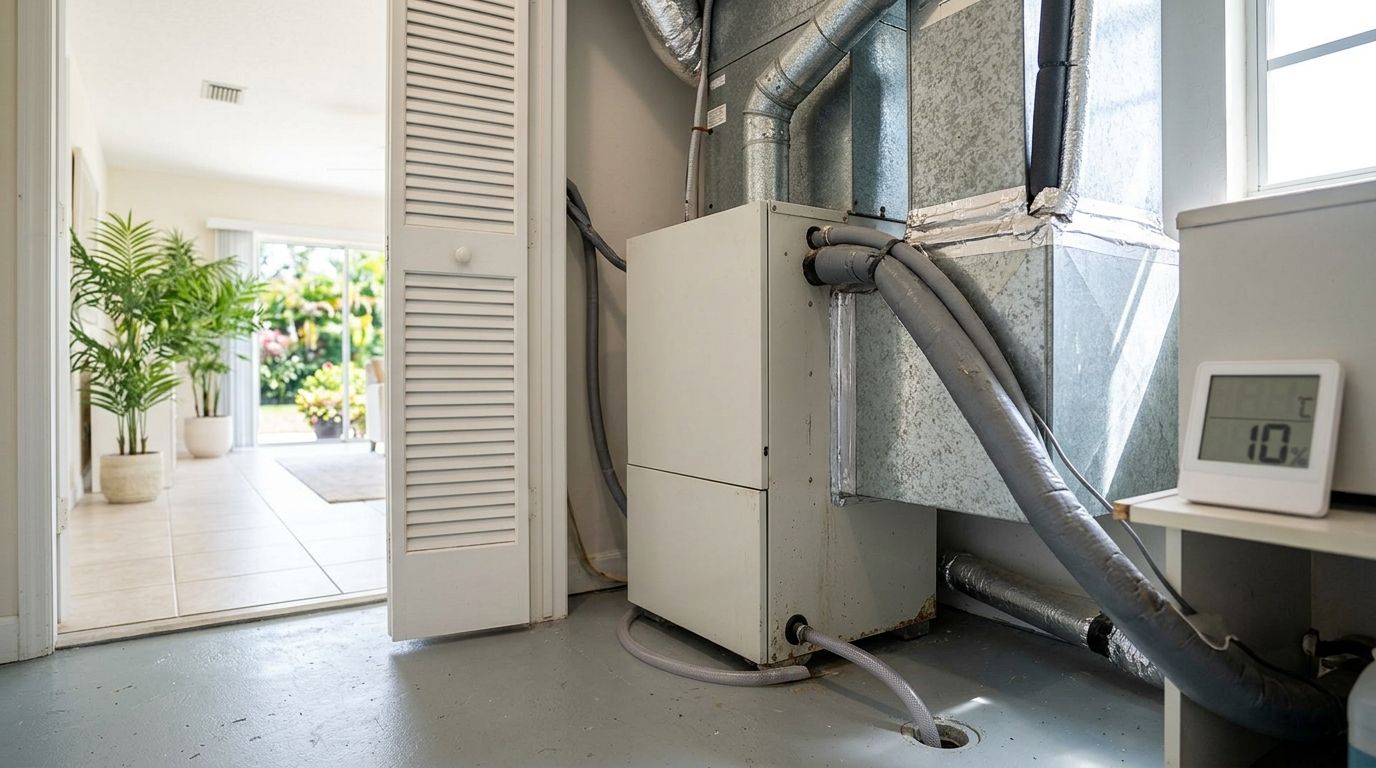
- Hybrid heat pump water heaters cut electric draw but need clearance and ambient air, which rules out small utility closets
- Match the fuel source to what's already run to the building — switching gas to electric adds cost the tank swap alone won't
- Confirm the unit's first-hour rating, not just tank size, against your peak-hour fixture count
Tankless water heater installation for Treasure Coast homes and businesses solves the recovery-lag problem, but only when the gas or electrical service on-site can support it — that's the next step, not an assumption.
Size the recovery rate to your busiest hour
Recovery rate — how fast the unit reheats after a draw — matters more than raw tank size for a business running continuous appointments. A 75-gallon tank with a slow recovery rate can perform worse than a 50-gallon tank with a fast one.
- Pull your appointment book for the busiest three-hour stretch of a typical week
- Match first-hour rating (not tank gallons) to that stretch's fixture demand
- Ask for the recovery rate in gallons per hour, printed on the unit's spec plate
- Oversize by 15-20% if the salon plans to add chairs or a pedicure bay within the next year
- Rule out any tank rated for residential use only — commercial-rated units carry a different recovery curve
Plan the gas or electrical hookup before you order equipment
A bigger water heater needs a bigger gas line or a bigger electrical circuit, and that's a licensed trade call, not a plumbing-only decision. This is where the job stops being DIY and starts being a permitted commercial installation.
- Confirm gas line diameter supports the new unit's BTU rating — undersized lines cause pressure drop under load
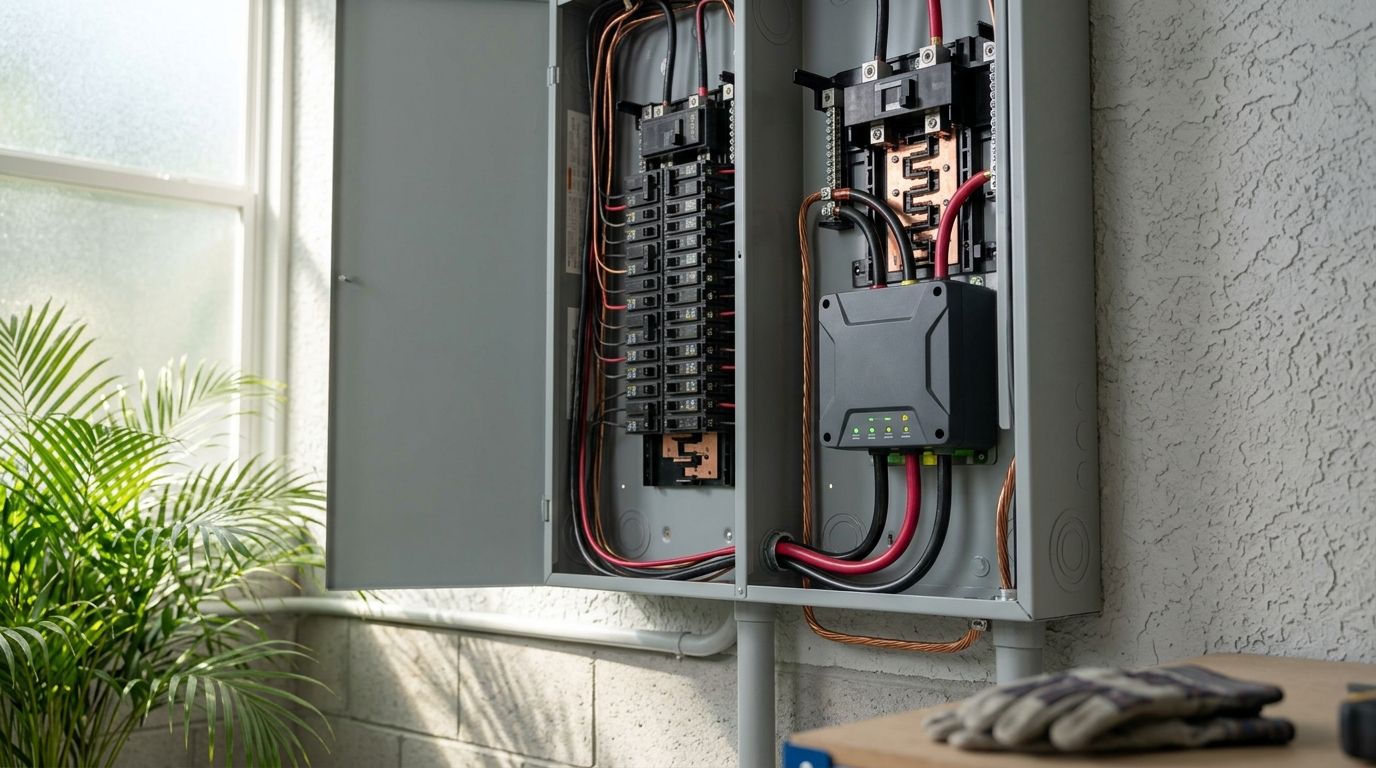
- Check panel capacity if switching to an electric or hybrid heat pump unit
- Verify venting clearances for gas units installed in an interior utility closet
- Get load calculations from a licensed electrician before ordering a hybrid heat pump water heater
- Confirm the water heater location doesn't conflict with existing low-voltage or data wiring runs in the same wall cavity
Meet Florida code and backflow requirements
Commercial fixtures with multiple hot water draws typically require backflow prevention where the domestic line ties into the building's water supply. Skipping this step is the most common reason commercial water heater installations fail inspection in St. Lucie County.
- Confirm whether your building already has a backflow preventer tested within the last cycle
- Add backflow prevention at the water heater tie-in if the fixture count crossed a commercial threshold
- Pull the correct permit before installation — not after, which forces a tear-out
- Ask your plumber to confirm code requirements specific to your city, since Port St. Lucie, Stuart, and Jensen Beach inspect differently
- Keep the permit and inspection sign-off on file for insurance and lease compliance
Schedule installation around business hours
A salon can't close for two days over a water heater swap. Planning the shutoff window around slow appointment days limits the revenue hit.
- Book installation for your lowest-traffic weekday, not a weekend
- Confirm hot water downtime with the installer in writing before the day arrives
- Stage a backup plan for scalp treatments or services that need hot water mid-install
- Ask whether the old unit's removal and disposal is included in the same visit
- Reopen chairs only after the installer confirms recovery rate under a live draw test
Set up a maintenance schedule for hard water
Treasure Coast water runs hard, and mineral buildup shortens tank life faster in a commercial setting where the unit runs harder than a home system. A maintenance schedule catches sediment buildup before it becomes a failed heating element or a cracked tank.
- Flush the tank on a set schedule rather than waiting for a symptom like reduced hot water
- Add a water softener ahead of the heater if scale buildup shows up within the first year
- Check anode rods annually on tank units — hard water eats through them faster
- Log any drop in recovery speed and address it before it becomes a no-hot-water call
- Pair the maintenance visit with a check on the backflow preventer if one is installed
Get a commercial water heater quote
Licensed plumbers for salon and spa installs on the Treasure Coast.
Comparing water heater options for salons and spas
| Option | Best for | Key limitation |
|---|---|---|
| Standard tank (40-50 gal) | Single-chair or one-room spa suites with spaced bookings | Recovery lag under back-to-back appointments |
| Commercial high-recovery tank (75-100 gal) | Multi-chair salons with predictable booking gaps | Takes up more utility closet space |
| Tankless (8-10 GPM) | Busy salons or spas with continuous weekend rushes | Needs upgraded gas or electrical service |
| Hybrid heat pump | Electric-only buildings wanting lower running load | Needs clearance and ambient air, not fit for tight closets |
The verdict for most 3-5 chair salons on the Treasure Coast is a tankless unit sized to 8-10 GPM — it eliminates recovery lag on weekend rushes and doesn't need floor space a smaller shop can't spare.
Common mistakes salons and spas make
- Sizing for average day, not peak hour. A salon that pulls its water heater size from typical Tuesday demand gets caught cold on Saturday rushes.
- Skipping backflow prevention because the old system never had it. Grandfathered plumbing doesn't survive a permit review when you add fixtures or swap the water heater.
- Choosing tankless without checking gas line capacity. The unit ships, the install stalls, and the gas line upgrade becomes a second project nobody budgeted time for.
- Ignoring hard water until the tank fails. A softener installed after the second premature tank failure costs more than one installed with the original unit.
- Scheduling installation on the busiest day of the week. Closing chairs on a Saturday to save a Tuesday appointment slot costs more in lost revenue than the install itself.
FAQ
What size water heater does a salon need?
Most 3-5 chair salons need a tankless unit rated 8-10 GPM or a commercial tank of 75-100 gallons with a fast recovery rate. The right size depends on peak-hour fixture count, not square footage.
Is tankless better than a tank for a spa?
Tankless works better for spas with back-to-back weekend bookings since it never runs out of hot water. Tanks work fine for spas with spaced, predictable appointments and lower peak demand.
Do salons need backflow prevention on their water heater?
Commercial fixtures with multiple hot water draws typically require backflow prevention at the domestic line tie-in. A licensed plumber confirms the specific requirement for your city and fixture count.
How long does a commercial water heater installation take?
A straightforward tank swap can be done in a single day; a tankless install requiring gas line upgrades or backflow prevention can take longer. Scheduling around your lowest-traffic weekday limits the downtime hit.
Why does hard water shorten a salon water heater's life?
Mineral buildup from hard water eats through anode rods and coats heating elements faster in a commercial setting where the unit runs harder than a home system. A water softener ahead of the heater slows that wear.
Can a salon use a residential water heater?
A residential tank can work for a single-chair suite with spaced appointments but falls behind on recovery rate once a shop adds chairs or a pedicure bay. Commercial-rated units carry a faster recovery curve built for continuous draw.
What permits does a water heater installation need in Florida?
Commercial water heater installations in St. Lucie County require a permit and inspection sign-off before the unit goes into service. Requirements vary by city between Port St. Lucie, Stuart, and Jensen Beach.
Should a spa switch from electric to gas water heating?
Switching fuel types adds electrical or gas line work beyond the water heater swap itself, which raises the project scope. Most spas keep the existing fuel type unless the current setup can't support the new unit's demand.
One last thing
The detail most salon owners miss in 2026 isn't tank size — it's recovery rate under a live draw test. A unit that looks correctly sized on paper can still run cold if the installer never tests it against your actual busiest hour before handing back the keys.