Port St. Lucie AC repair is the process of diagnosing and fixing a residential air conditioning system that's lost cooling capacity, tripped a breaker, or started leaking, with the goal of restoring reliable cooling before Florida's humidity turns a small problem into a compressor replacement. Homeowners on the Treasure Coast deal with a specific combination of stressors — year-round humidity, salt air near the Intracoastal, and AC units that run 10-12 months a year instead of seasonally like up north. That workload shortens the life of coils, capacitors, and condensate lines faster than in drier climates.
- AC repair in Port St. Lucie means fixing systems stressed by year-round humidity and near-constant runtime, not seasonal use.
- A dirty filter or clogged condensate line causes a large share of no-cool calls and costs nothing to check yourself.
- Licensed HVAC repair from Imperium Electric handles refrigerant, electrical, and warranty-sensitive work that DIY and handyman fixes legally can't.
- Replace a unit once repair costs start approaching what a new system would run, especially on units older than 12-15 years.
- A maintenance plan catches capacitor and coil problems before they turn into a mid-August no-cool emergency.
Why AC repair matters for Port St. Lucie homeowners
Most homes in Port St. Lucie run cooling systems close to nonstop from May through October, and even in the cooler months humidity stays high enough that the AC still cycles daily. That runtime pattern wears out capacitors, contactors, and condensate pumps faster than a system running six months a year would. Older neighborhoods with homes built in the 1980s and 1990s often still have original ductwork and undersized units straining against additions or converted garages.
Salt air corrosion is a real factor for homes closer to the coast — condenser coils and electrical connections corrode faster than inland units, which shows up as refrigerant leaks and tripped breakers years before a comparable system would fail elsewhere. Hurricane season adds another layer: power surges and outages during storms damage compressors and control boards, and a unit that seemed fine before a storm can fail within days after. If you're weighing whether a repair is worth it versus a new install, air conditioning installation covers what a replacement actually involves for Treasure Coast homes.
Check the thermostat and breaker before calling anyone
Before assuming the compressor or coil has failed, rule out the two cheapest and most common culprits.
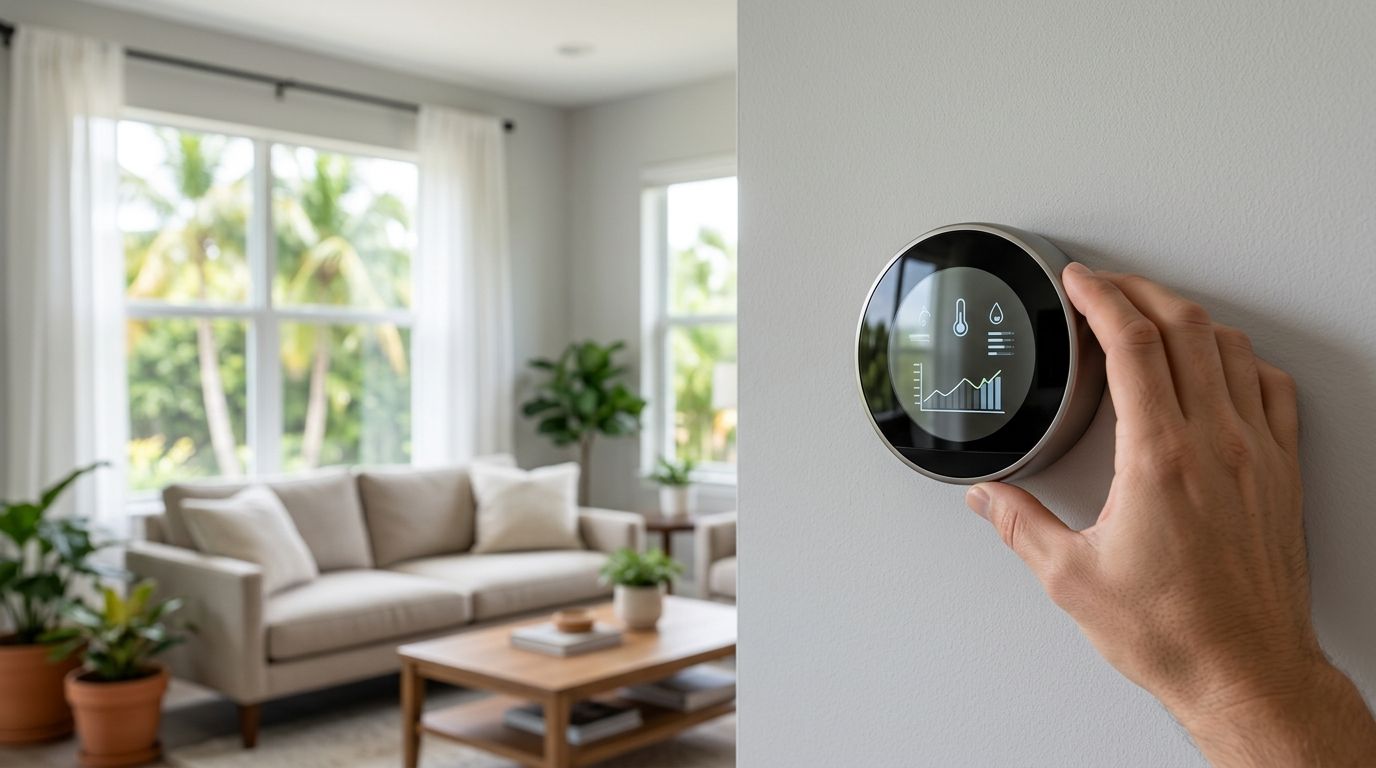
- Confirm the thermostat is set to "cool" and the temperature is at least 3-5 degrees below room temperature
- Replace thermostat batteries if the screen is blank or dim
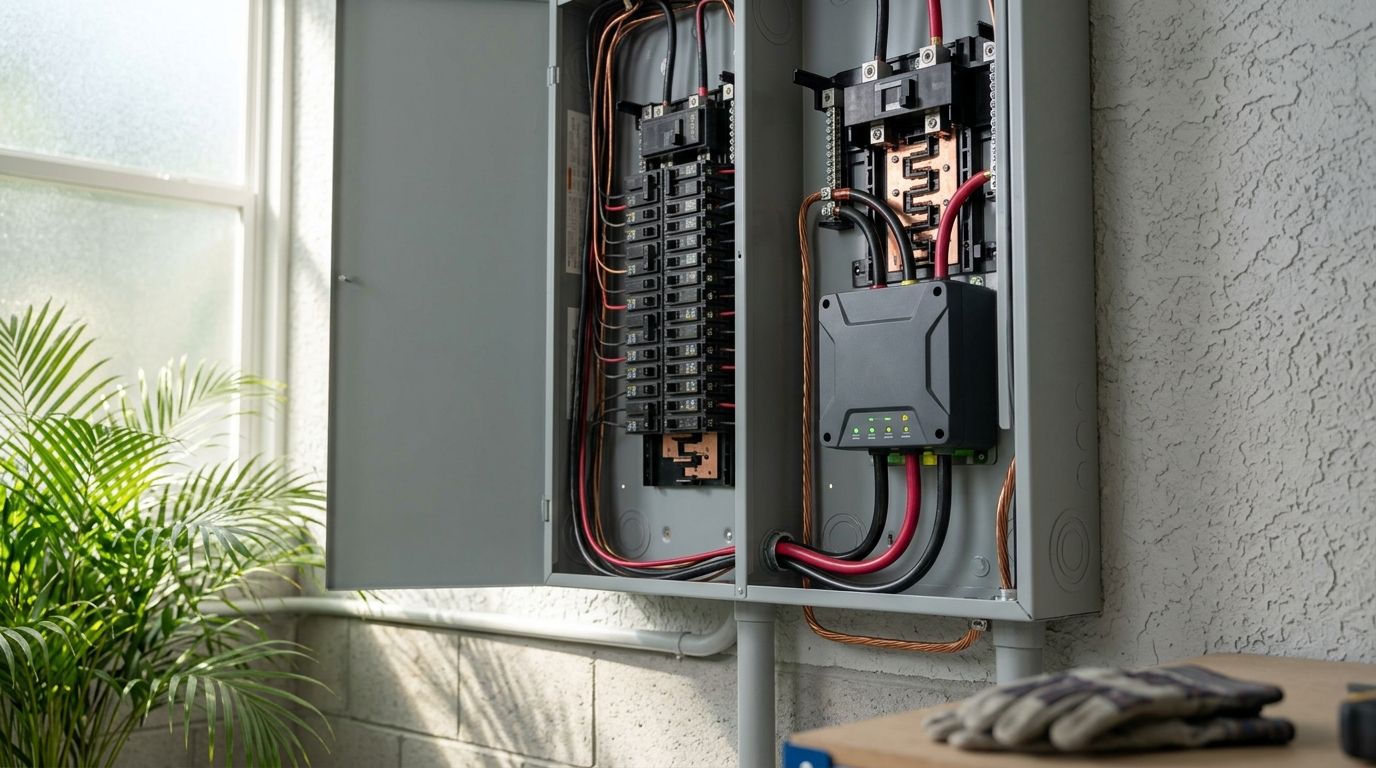
- Check the breaker panel for a tripped AC breaker and reset it once
- Look for a tripped GFCI near the outdoor condenser unit
- If the breaker trips again immediately after reset, stop and call a licensed technician — that's an electrical fault, not a settings issue
Inspect and replace the air filter
A clogged filter restricts airflow, forces the evaporator coil to freeze, and can shut a system down entirely — it's the single most common no-cool call in Florida homes.
- Pull the filter and hold it up to a light; if you can't see light through it, replace it
- Standard 1-inch filters need replacement every 30-60 days in Florida given the pollen and humidity load
- Check for ice on the indoor coil or refrigerant lines before restarting the system
- If there's ice, turn the system to "fan only" for a few hours to let it thaw before running cooling again
- Vacuum the return air grille while the filter is out
Clear the condensate drain line
Condensate line clogs are behind a large share of Port St. Lucie service calls, especially in humid stretches when the coil produces more moisture than usual.
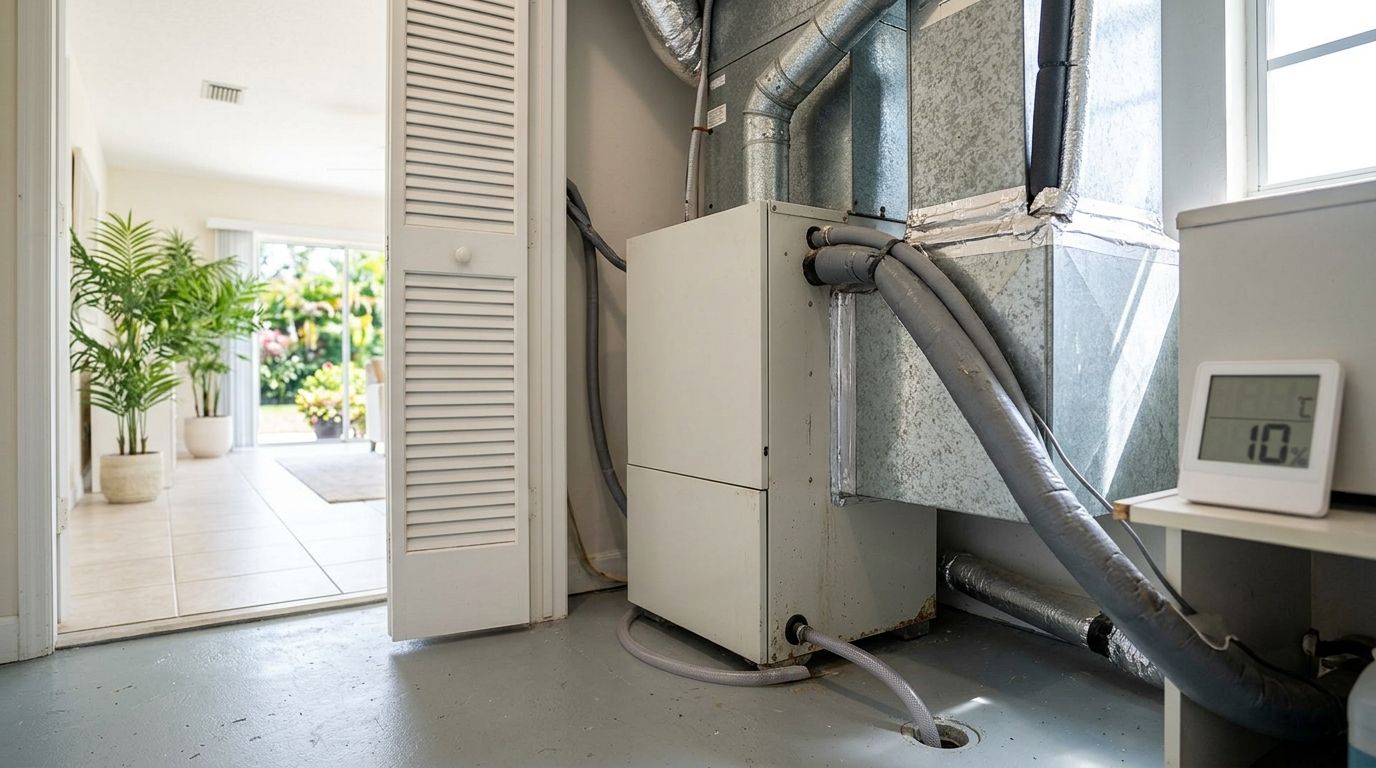
- Locate the PVC drain line near the indoor air handler, usually running to an exterior wall or floor drain
- Pour a cup of white vinegar into the drain access point (a T-fitting with a cap) to break up algae buildup
- Check the drain pan for standing water — a full pan usually means the line is blocked downstream
- Look for a float switch that shuts the system off automatically when the pan fills; if the AC won't turn on and the pan is dry, that switch may be stuck
- If vinegar doesn't clear a visible clog within a day, the line needs a wet/dry vacuum or a technician with a drain snake
Listen for unusual compressor and fan noises
Sound is a diagnostic tool most homeowners ignore until the unit stops entirely.
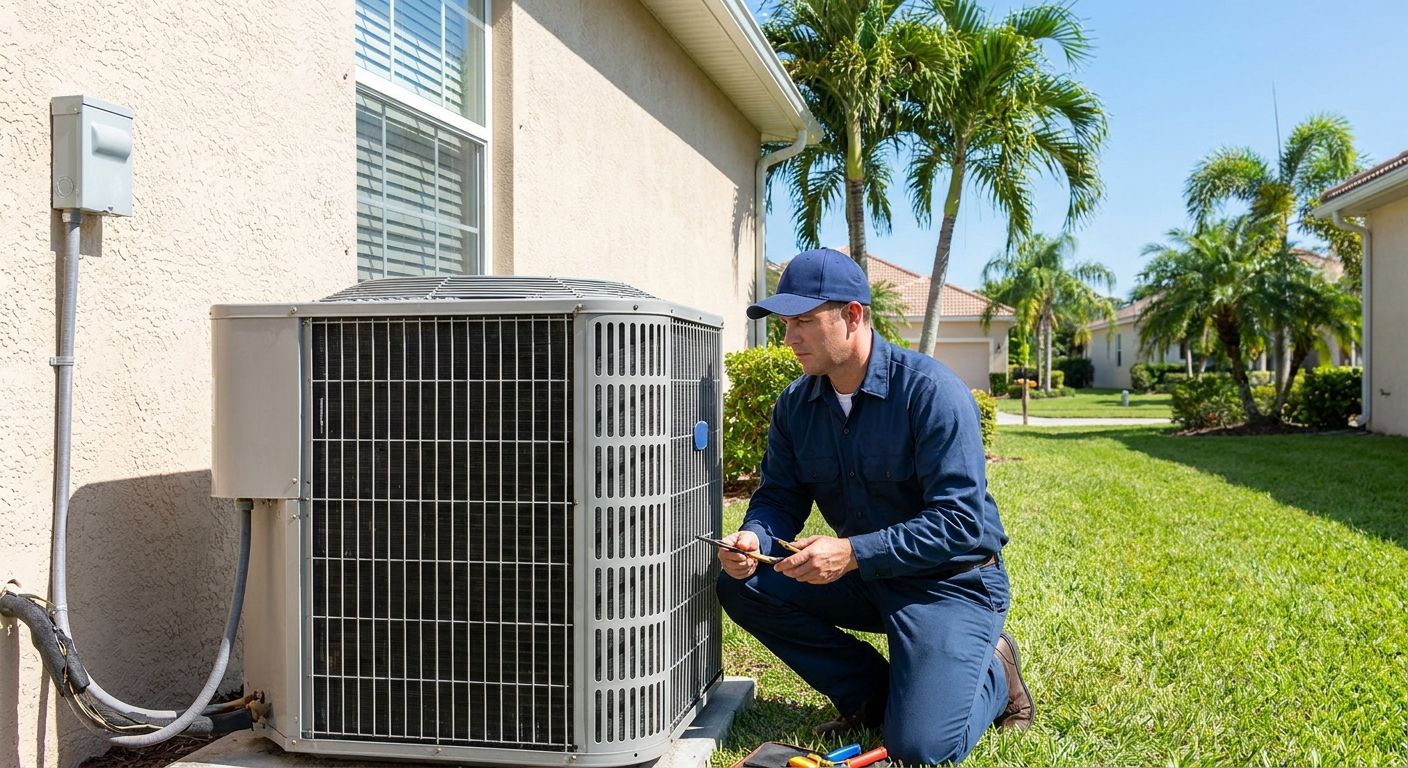
- Grinding or squealing from the outdoor unit usually points to a failing fan motor bearing
- A loud humming with no fan movement often means a bad run capacitor
- Clicking that repeats without the system starting suggests a failed contactor or capacitor
- Banging or clanking inside the compressor housing can mean a loose or failing internal component — turn the system off and call a technician rather than run it further
- Note the exact sound and when it happens (startup, shutdown, continuous) — that detail speeds up diagnosis when you call for service
Get a licensed diagnostic before parts get replaced blindly
Once filter, drain, and breaker checks come up clean, the remaining causes — refrigerant charge, electrical components, compressor health — require licensed hands and, for refrigerant, EPA certification. This is where Imperium Electric brings in a technician rather than a guess. A proper diagnostic checks refrigerant pressure, electrical draw on the compressor, capacitor readings with a meter, and airflow across the coil, and it tells you whether you're looking at a $200 capacitor or a compressor that's on its way out.
Get your AC diagnosed correctly
Licensed HVAC techs serving Port St. Lucie, Stuart, and Jensen Beach.
Compare repair cost against the age of the unit
A repair only makes sense relative to how much life the unit has left. The industry rule of thumb — multiply the repair estimate by the age of the unit in years, and if that number tops 5,000, replacement usually wins — holds up in Florida's harsher-than-average runtime conditions. A unit past 12-15 years old that needs a compressor or coil repair is a strong replacement candidate; a 4-year-old unit with a bad capacitor is an easy repair call.
If you're on the replacement side of that line, how to size an air conditioner for a Florida home walks through matching tonnage to square footage and humidity load — an oversized or undersized replacement causes the same short-cycling and moisture problems as the failing unit you're replacing.
Set up a maintenance schedule so this doesn't repeat
Most of the failures above are preventable with a seasonal check rather than a reactive repair call.
- Schedule a professional tune-up each spring before peak cooling season starts
- Have refrigerant charge and electrical components checked annually, not every few years
- Clean the outdoor condenser coil twice a year — coastal salt buildup accelerates corrosion
- Keep landscaping and mulch at least 2 feet clear of the outdoor unit for airflow
- Consider HVAC maintenance plans if you'd rather not track the schedule yourself
Comparing your AC repair options in Port St. Lucie
| Option | Best for | Key limitation |
|---|---|---|
| DIY filter/drain/breaker checks | Simple no-cool calls with an obvious cause | Can't touch refrigerant, electrical components, or compressors |
| Handyman or general contractor | Non-HVAC-specific tasks around the unit | Not licensed for refrigerant work — illegal without EPA certification |
| Licensed HVAC repair (Imperium Electric) | Refrigerant, electrical, compressor, and warranty-sensitive repairs | Requires scheduling a technician visit |
| Full system replacement | Units 12+ years old with a major component failure | Higher upfront decision, but ends the repeat-repair cycle |
Verdict: for anything past filters and breakers, licensed HVAC repair from Imperium Electric is the move — DIY refrigerant or electrical work on a home AC system in Florida isn't just risky, it's not legal without certification.
Common mistakes Port St. Lucie homeowners make with AC repair
- Skipping the spring tune-up and then discovering a weak capacitor during the first 95-degree week in June, when service backlogs are longest
- Hiring an unlicensed handyman for refrigerant work because it's cheaper upfront — this voids manufacturer warranties and can violate EPA refrigerant handling rules
- Running a unit with visible coil ice instead of shutting it down, which pushes moisture into the system and can damage the compressor
- Ignoring salt air corrosion signs on coastal properties until a slow refrigerant leak becomes a full recharge-and-repair job
- Delaying replacement on a unit already past 12-15 years because the current repair estimate looks affordable, without factoring in the next repair six months later
“A repair only makes sense if the unit has enough life left to justify it — past 12 to 15 years in Florida's runtime conditions, replacement usually wins.”
FAQ
How much does AC repair cost in Port St. Lucie?
Cost depends on what's failed — a capacitor or contactor is a minor repair, while a compressor or coil replacement is a major one. A licensed diagnostic identifies the exact cause before any part gets replaced.
Why does my AC run but not cool the house in Port St. Lucie?
This usually points to low refrigerant, a frozen evaporator coil, or a failing compressor. Check the filter and coil for ice first, then schedule a licensed diagnostic if the system still isn't cooling.
Is it worth repairing a 15-year-old AC unit in Florida?
Generally no if the repair involves the compressor or coil — Florida's near-constant runtime shortens system life, and units past 12-15 years are strong candidates for replacement instead of repeated repairs.
How often should AC maintenance happen in Port St. Lucie?
Once a year at minimum, ideally each spring before peak cooling season. Coastal homes benefit from twice-yearly condenser coil cleaning because of salt air corrosion.
Can I do AC refrigerant work myself?
No. Handling refrigerant legally requires EPA Section 608 certification, and a licensed HVAC technician is required for that work in Florida.
What causes AC drain line clogs in Florida homes?
Algae and mold buildup inside the condensate line from constant humidity is the main cause. A cup of vinegar poured into the line access point every few months prevents most clogs.
Should I repair or replace my AC after a hurricane?
If the unit shows electrical damage from a surge or outage, a licensed diagnostic should check the compressor and control board before you run it again — surge damage isn't always visible immediately.
Does Imperium Electric handle both AC repair and installation in Port St. Lucie?
Yes, Imperium Electric services and installs residential AC systems across Port St. Lucie, Stuart, and Jensen Beach, alongside its electrical and plumbing work.
One last thing
The detail most homeowners miss: a tripped breaker that resets fine once but trips again within minutes almost always means an electrical fault upstream of the AC unit itself, not a thermostat or filter issue — and running the system repeatedly through that cycle risks damaging the compressor windings. If your breaker won't hold after one reset, that's the point to stop troubleshooting and call a licensed technician rather than keep flipping the switch.