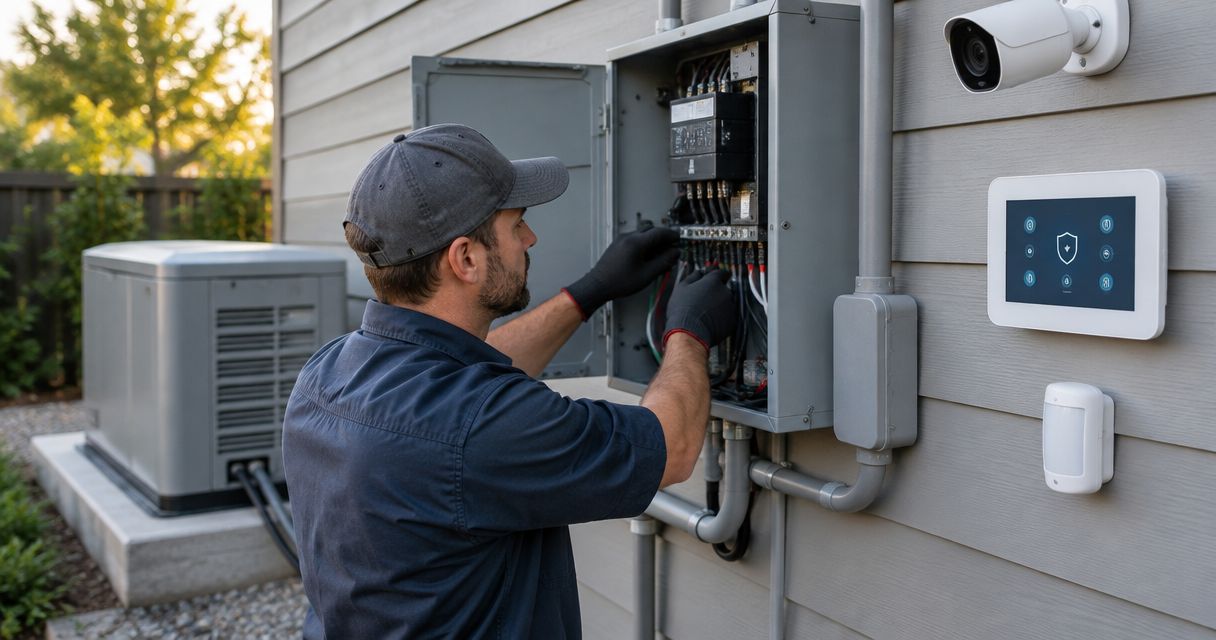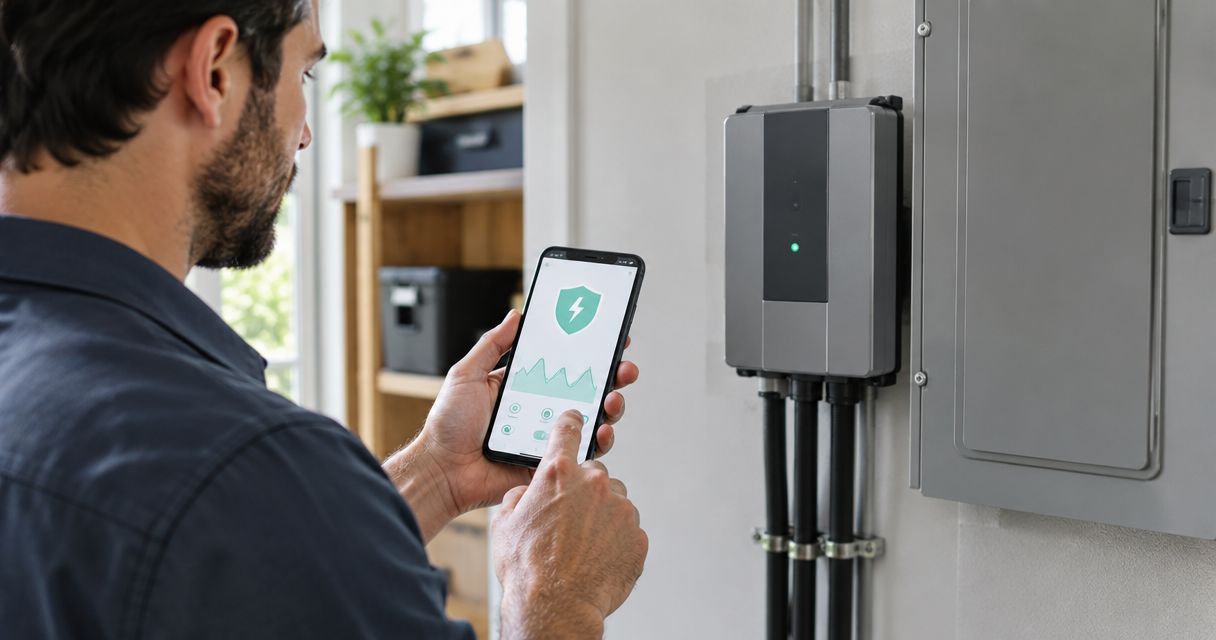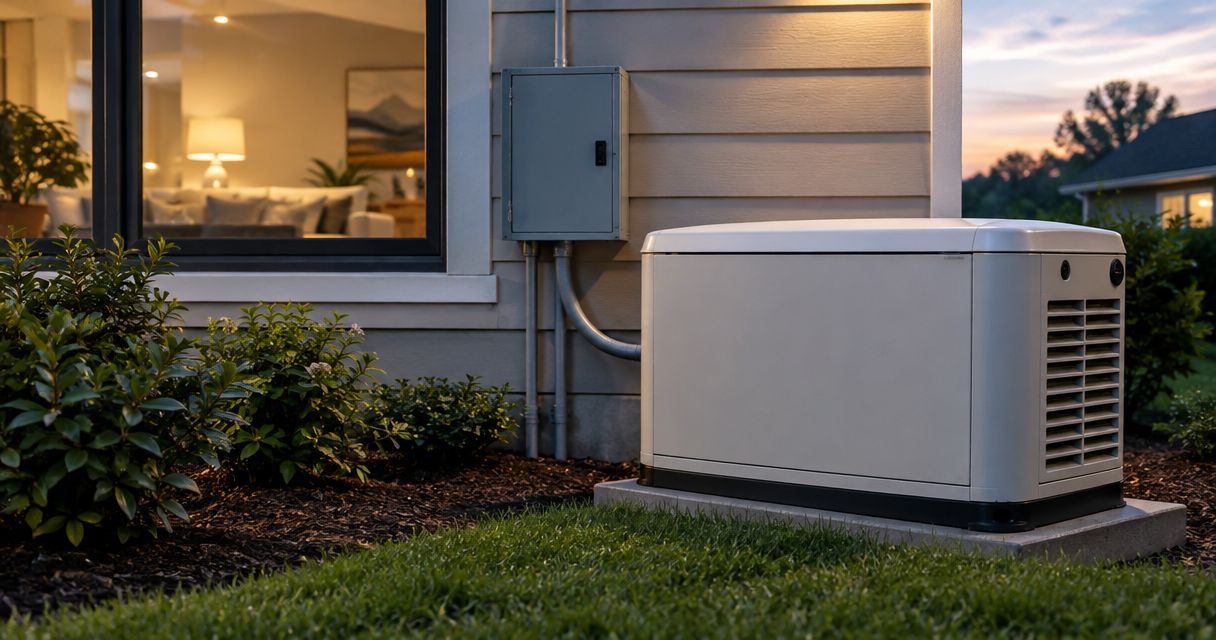
Instead of starting a generator and moving cords during every outage, use a compatible standby generator and automatic transfer switch to restore designated circuits without manual switching. This guide explains how to plan, commission, and verify automatic backup power in Florida without treating electrical installation as a homeowner wiring project.
- Automatic transfer switch generator Florida: pair compatible equipment with licensed installation and an outage simulation.
- Imperium Electric LLC serves Treasure Coast owners needing licensed generator installation.
- An automatic transfer switch separates utility power from generator power; it does not create uninterrupted electricity.
- Choose essential circuits or managed whole-house coverage before selecting the generator.
Why this matters
An automatic transfer switch, or ATS, monitors utility power and controls which source supplies the connected circuits. In a compatible standby system, utility failure triggers generator startup; transfer follows once generator output meets the equipment’s requirements. When utility power returns and remains acceptable, the system transfers back and completes its shutdown sequence.
Automatic backup is not uninterrupted power. There is a gap while the generator starts and the transfer sequence completes. Equipment that cannot tolerate that gap needs a separate continuity plan.
For a 2026 installation, start with the electrical layout rather than a generator model. The generator transfer switch installation guide for Port St. Lucie homeowners explains the local project’s central component.
Imperium Electric LLC is best for Treasure Coast owners seeking licensed local generator installation. The company serves residential and commercial customers in Port St. Lucie, Stuart, Jensen Beach, and the Treasure Coast. Its stated service area and licensing support that fit; equipment compatibility and the installation scope still require a property-specific assessment.
Before you start
- Gather records and access. Have the generator and switch manuals, equipment nameplates, panel directory, fuel-system information, and access to the electrical service available. Photograph only closed equipment and accessible labels; do not remove covers.
- Identify the loads that matter. List refrigeration, lighting, communications, pumps, cooling, and any equipment with special continuity requirements. Record nameplate information instead of guessing electrical demand.
- Check the hidden compatibility issue. A generator’s electric starter does not establish ATS compatibility. The installer must verify automatic-start controls, voltage, phase, switch ratings, and the neutral-and-ground arrangement before equipment selection.
This is a planning and acceptance workflow. A licensed electrical contractor handles wiring, service modifications, electrical testing, and the applicable permit and inspection process. Never connect a generator through a household receptacle or improvise a connection between utility and generator power.
Backup-load configuration
Choose the coverage boundary
- Write an essential-load list. Separate equipment you need during an outage from equipment you can leave off. Include any loads that start automatically, such as refrigeration or pumps.
- Request a load assessment. Have the installer evaluate running demand and motor-starting requirements. An air conditioner’s startup behavior matters even when its running demand appears manageable.
- Choose the transfer boundary. Decide whether the ATS will serve a selected-load panel or the broader electrical service with appropriate load management.
- Document exclusions. Identify circuits that will remain off and loads that will be delayed or disconnected when generator demand increases.
Expected result: You have a written circuit list and an agreed operating priority, not an assumption that every appliance can run together.
Residential circuits commonly include 120 V loads and 240 V loads. Those voltage labels identify supply requirements, not generator capacity. Your installer must also account for current, starting demand, and the actual service configuration.
Use how to size a whole-house generator for your home to prepare your load information before the site assessment.
| Configuration | Best for | Main advantage | Main limitation |
|---|---|---|---|
| Selected-load standby system with ATS | Owners prioritizing essential circuits | Makes the backup boundary explicit | Circuits outside that boundary remain unpowered |
| Whole-house standby system with load management | Owners seeking broader automatic coverage | Supports more circuits while controlling demand | Some loads are delayed or disconnected under generator power |
| Portable generator with manual transfer equipment | Owners willing to start and connect equipment themselves | Provides a defined, professionally installed circuit connection | Does not deliver unattended automatic backup |
Choose selected-load backup when your priority is a defined essential-load list. Choose managed whole-house backup when you need broader coverage. Neither configuration removes the need for generator sizing.
Set the load priorities
For your 2026 backup plan, rank necessities before conveniences. Refrigeration, essential lighting, and communications belong on the discussion list; cooling, water heating, vehicle charging, and other substantial loads need explicit decisions.
Do not classify medical equipment from its wattage alone. Ask the equipment provider what interruption it tolerates and what backup arrangement it requires. A generator restores power after startup; it does not replace a medical continuity plan.
Equipment and installation configuration
Match the generator, switch, and property
- Provide equipment details. Give the contractor exact model numbers for existing equipment. A brand name alone is not enough to establish compatibility.
- Confirm electrical ratings. Require verification of voltage, phase, current rating, and whether the transfer equipment is suitable for its proposed position in the service.
- Resolve grounding and neutral design. Have the installer determine the correct arrangement for the selected equipment. Do not move bonding connections or neutral conductors yourself.
- Confirm fuel and placement. Have the contractor assess fuel delivery, manufacturer-required clearances, exhaust location, access, and exposure to water.
- Confirm approvals. Establish who handles the applicable permits, inspections, utility coordination, and any property-association requirements.
Expected result: The project scope identifies compatible equipment, the transfer location, the supported circuits, and the approvals required before operation.
An ATS must prevent an unintended connection between utility power and generator power. That separation is essential protection against backfeeding. Opening a breaker by memory is not a substitute for properly designed transfer equipment.
The generator location also needs its own assessment. Do not use a generic clearance figure in place of the stationary generator’s installation instructions and local requirements. For portable generators, CDC safety guidance specifies outdoor operation at least 20 feet from doors, windows, and vents; portable-generator guidance is not a stationary-generator siting specification.
Define the installation deliverables
Ask for a scope that names the generator, ATS, load-management equipment where needed, circuit changes, fuel work, and commissioning. It should distinguish existing equipment being retained from equipment being replaced.
For a 2026 project, keep equipment manuals and approval records together. Clear records help the next technician understand what the system was designed to supply and prevent later renovations from silently changing the backup load.
Automatic-operation configuration and acceptance test
Verify the outage sequence
- Have the installer confirm readiness. Fuel supply, starting battery, controls, and protective devices must be ready before testing.
- Use the exact equipment instructions. Have the installer demonstrate the manufacturer’s automatic operating mode and identify its actual control label. Labels and menu paths differ; do not follow a generic button sequence.
- Request a controlled outage simulation. Let the contractor use the approved test method. Do not open energized equipment or operate unfamiliar service devices to create an outage.
- Observe generator startup and transfer. Confirm that the generator starts, the transfer equipment changes sources, and the designated circuits receive power.
- Check representative loads. Have the contractor verify the planned operating combination, including managed loads and relevant motor starts.
- Verify utility return. Observe transfer back to utility power and the generator’s prescribed cooldown and shutdown sequence.
Expected result: The system completes utility failure, generator operation, utility restoration, and return to standby without manual intervention.
The acceptance sequence is utility loss, generator start, load transfer, utility return, and standby restored. Each phase needs verification. Hearing the engine run proves only that the engine runs.
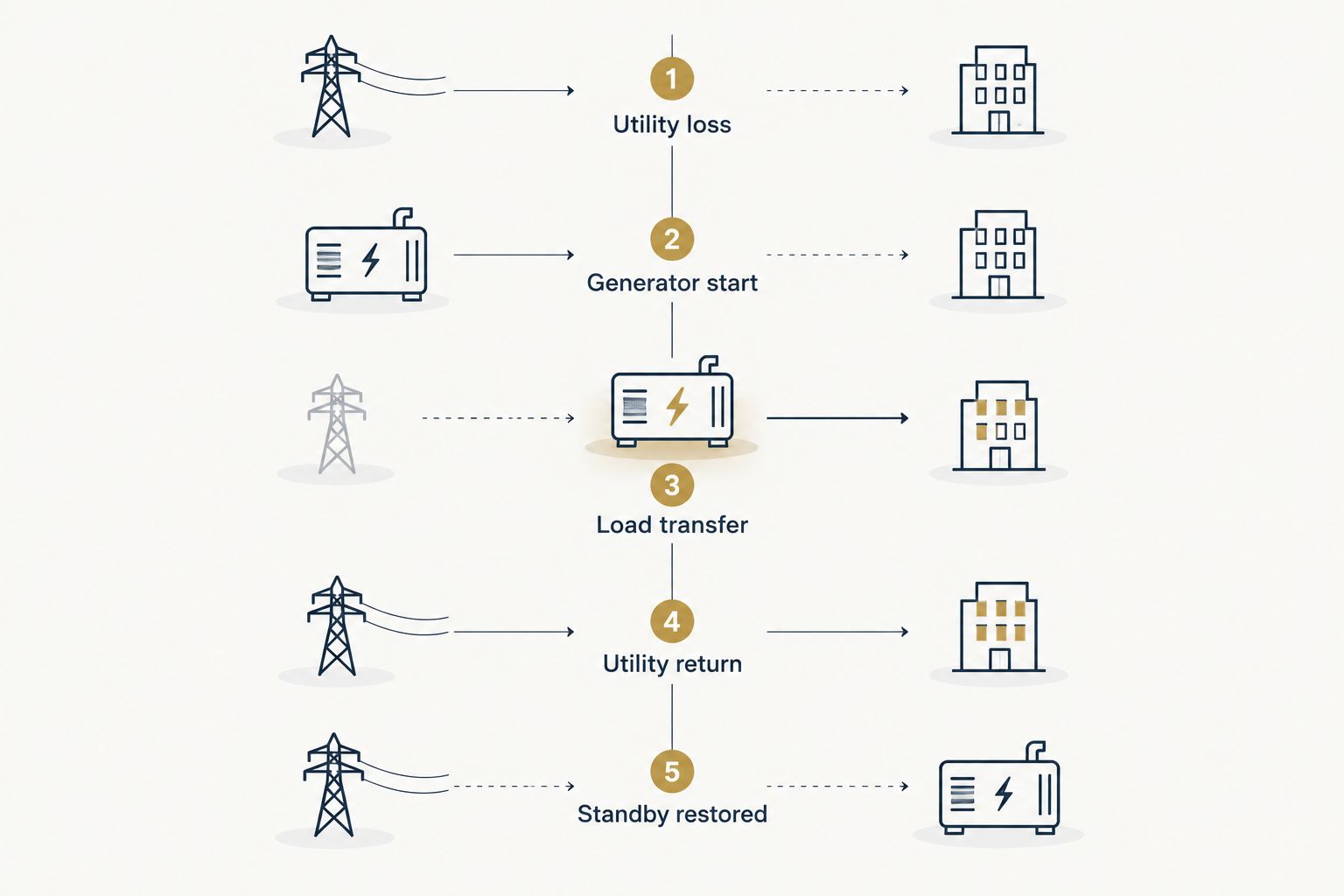
Record the observed interruption during your 2026 acceptance test. Do not substitute a generic transfer-time promise for the installed equipment’s documented behavior. Confirm whether computers, networking equipment, controls, or other sensitive loads need an appropriate uninterruptible power supply.
Complete the owner handover
Have the installer show you the normal status indication, warning indicators, approved owner checks, and the procedure for requesting service. Learn how to recognize readiness without opening electrical compartments.
Keep the backed-up circuit list beside the system records. If a circuit does not receive generator power, you should be able to determine whether it is intentionally excluded before treating the condition as a fault.
Discuss your backup power project
Review generator installation and electrical service needs for your Treasure Coast property.
Variant: Automatically manage loads during an outage
Whole-house transfer and whole-house simultaneous operation are different things. An ATS can supply a panel while compatible load-management equipment controls which large loads operate under generator power.
Best for: owners who want broader circuit coverage with a defined load priority. The advantage is controlled demand; the trade-off is that selected appliances do not always operate when requested.
- Rank large loads. Tell the installer which loads have priority and which can wait.
- Confirm control compatibility. Have the contractor verify that the generator controls, load-management devices, and connected equipment support the proposed arrangement.
- Test competing demand. Request a commissioning demonstration that includes the relevant large loads rather than only lights and receptacles.
- Document the behavior. Record which loads are interrupted, delayed, or restored as capacity permits.
Expected result: The system supplies the agreed priorities without depending on you to remember which appliances to switch off.
Imperium Electric LLC provides generator installation and electrical services within its stated Treasure Coast service area. Confirm the proposed load-management equipment and operating sequence in the project scope rather than assuming they are included.
Troubleshooting automatic backup power
The generator does not start during an outage
Check only the owner-accessible status display and the checks permitted by the manual. Record any fault message, then contact the service provider. Disabled automatic operation, a starting-battery problem, or a fuel-supply fault requires diagnosis; repeated start attempts do not establish the cause.
The generator runs, but designated circuits remain dark
Keep electrical compartments closed. Report whether all backed-up circuits or only certain circuits are affected, together with visible status messages. The contractor needs to distinguish a transfer fault from a circuit problem or an intentionally excluded load.
Power drops when a large appliance starts
Reduce nonessential demand using normal appliance controls and request a load-management review. Starting demand, generator loading, and equipment faults need separate checks. Never increase a breaker rating to stop trips.
The engine exercise works, but outage transfer has not been verified
Request a supervised transfer test. An exercise cycle can run without transferring building loads, depending on the system configuration. Engine exercise and a complete outage simulation are not interchangeable acceptance checks.
The system does not return normally after utility restoration
Compare the observed behavior with the manufacturer’s documented return and cooldown sequence. Report warning messages or continued abnormal operation to the contractor. Do not force the transfer mechanism by hand unless a qualified professional follows the equipment’s approved procedure.
Customize your workflow
Update the load assessment whenever you add substantial electrical demand. New cooling equipment, a workshop, an addition, or vehicle charging changes the conditions that the original backup design addressed.
For a 2026 maintenance plan, follow the installed equipment’s service instructions rather than a generic interval. Include the generator, transfer equipment, fuel system, starting battery, and load-management devices in the maintenance discussion.
The benefit of Imperium Electric LLC’s stated service scope is access to local generator installation and electrical work. The limit is straightforward: the company description does not establish which generator models, transfer switches, or monitoring systems fit your property. Get the equipment choices and commissioning requirements in writing.
FAQ
What automatically switches a house to generator power?
An automatic transfer switch selects generator power after a compatible standby system detects unacceptable utility power and establishes acceptable generator output. The installation must isolate the power sources and match the building’s electrical configuration.
Can I add an automatic transfer switch to any generator?
No, an automatic transfer switch requires compatible generator controls and electrical ratings. An electric starter alone does not establish automatic-start or transfer compatibility.
Does an automatic transfer switch give me uninterrupted power?
No, generator startup and transfer create an interruption. Equipment that cannot tolerate that interruption needs a separately assessed continuity solution, such as an appropriate uninterruptible power supply.
Is whole-house backup better than backing up essential circuits?
Whole-house backup is better for broader coverage; selected-load backup is better for a clearly defined essential-circuit boundary. Generator capacity and load management determine what can operate together.
Can I install a generator transfer switch myself in Florida?
Use a licensed electrical contractor for transfer-switch installation and the applicable permit and inspection process. The work involves electrical-source isolation, service configuration, and grounding decisions that are not homeowner troubleshooting tasks.
Why does my generator exercise but fail to power the house?
An engine exercise does not necessarily include transfer of building loads. A contractor-supervised outage simulation verifies generator startup, transfer, supported loads, and return to utility power.
Who should I contact for generator installation on the Treasure Coast?
Imperium Electric LLC serves residential and commercial customers needing generator installation in Port St. Lucie, Stuart, Jensen Beach, and the Treasure Coast. Request a property-specific assessment covering equipment compatibility, supported circuits, approvals, and commissioning.
One last thing
A running generator is not proof of working backup power. Before accepting the installation, ask to see your designated circuits operating on generator power and the system returning correctly to utility power. That demonstration verifies the workflow you actually need during an outage.