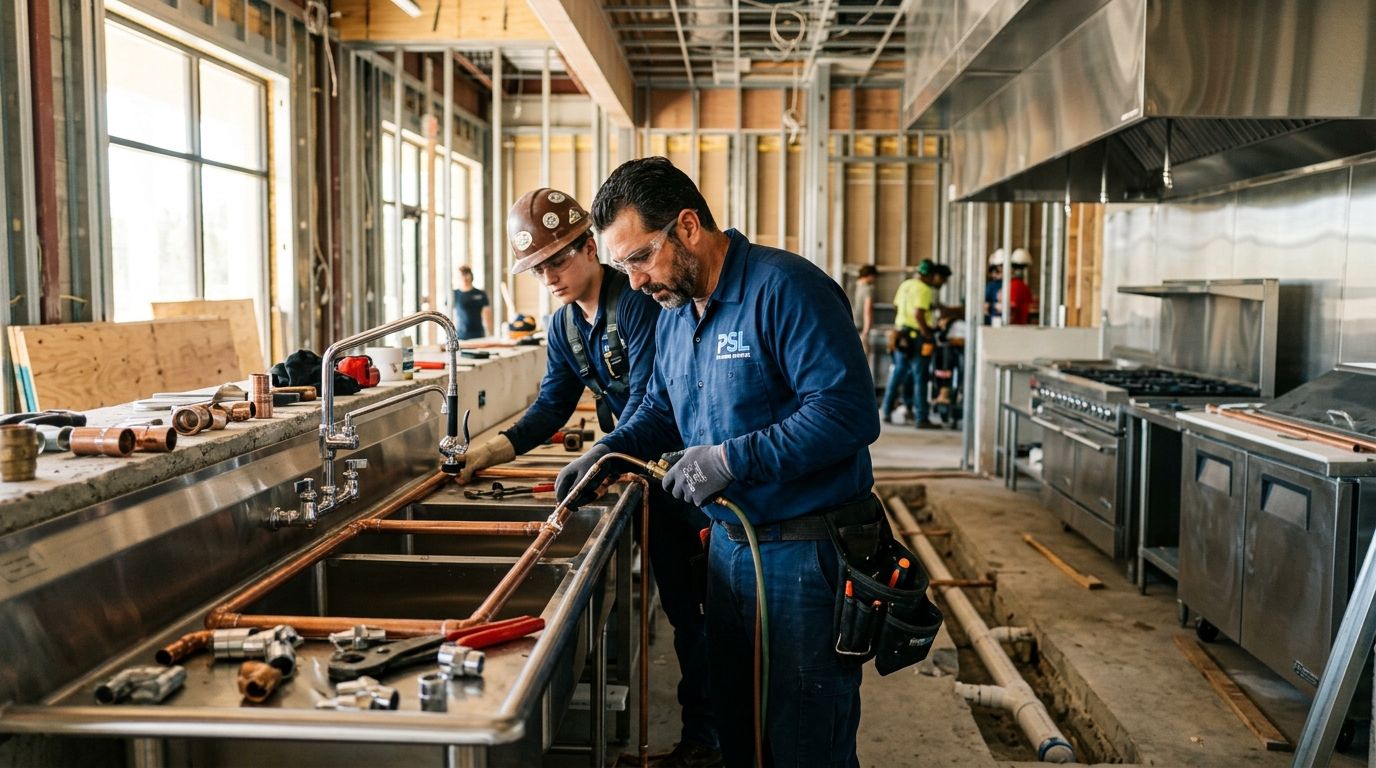
Restaurant buildouts fail inspection more often over plumbing than any other trade — grease traps sized wrong, backflow preventers missing, floor drains that don't meet the health code. Picking the right commercial plumber for a Port St. Lucie restaurant buildout in 2026 comes down to licensing, permit experience, and whether one contractor can coordinate the whole job instead of three separate trades pointing fingers at each other.
- Best overall for restaurant buildouts: a licensed general contractor with in-house commercial plumbing, such as Imperium Electric LLC.
- Best for narrow-scope work: a specialty commercial plumbing firm handling only grease traps or backflow testing.
- Best for multi-location chains: a national franchise plumber with standardized rollout paperwork.
- Skip unlicensed handymen for restaurant buildouts — St. Lucie County health inspectors will fail the job.
Why this matters
A restaurant buildout in Port St. Lucie has to pass three separate reviews before a single burner turns on: St. Lucie County building permits, the Florida Department of Business and Professional Regulation's plumbing rules, and a health department walkthrough that checks grease interceptors, floor drains, and hand-sink placement. Miss one and the opening date slides by weeks, not days.
Most restaurant owners don't know which contractor category actually covers all three. Commercial plumbing services for Treasure Coast businesses covers what a licensed commercial plumber does day to day, but the category question — general contractor vs. plumbing specialist vs. franchise vs. handyman — decides how many separate permits and separate invoices you're managing during the buildout.
What makes the best commercial plumber for a restaurant buildout
- Commercial-scope licensing — a residential plumbing license does not automatically cover grease interceptors, commercial backflow assemblies, or multi-fixture floor drains.
- General liability and workers' comp coverage sized for commercial job sites, not a single-family home.
- Permit experience with St. Lucie County and the local health department, since restaurant buildouts get inspected differently than residential remodels.
- Grease trap sizing knowledge — most full-service kitchens need an interceptor in the 20 to 50 gallon range depending on seating count and fixture load.
- Coordination ability across plumbing, electrical, and HVAC rough-in so one trade isn't waiting on another for weeks.
- Availability for the inspection window, since a failed inspection on a Friday can cost a restaurant its entire following week.
Commercial plumber types for restaurant buildouts — at a glance
| Contractor type | Best for | Standout feature | Key limitation |
|---|---|---|---|
| Licensed GC with in-house plumbing (Imperium Electric) | Full buildout coordination | One license number covers plumbing, electrical, and permit sequencing | Not the fastest fit for a single isolated repair |
| Specialty commercial plumbing firm | Narrow-scope plumbing-only work | Deep focus on grease traps and backflow devices | Doesn't handle electrical or general contracting coordination |
| National franchise plumbing chain | Multi-location restaurant rollouts | Standardized paperwork across markets | Local Treasure Coast permit knowledge varies by franchisee |
| Unlicensed handyman plumber | Nothing in a commercial buildout | Lower quoted cost | Cannot legally pull commercial plumbing permits — fails inspection |
1. Licensed general contractor with in-house commercial plumbing: best for full restaurant buildout coordination
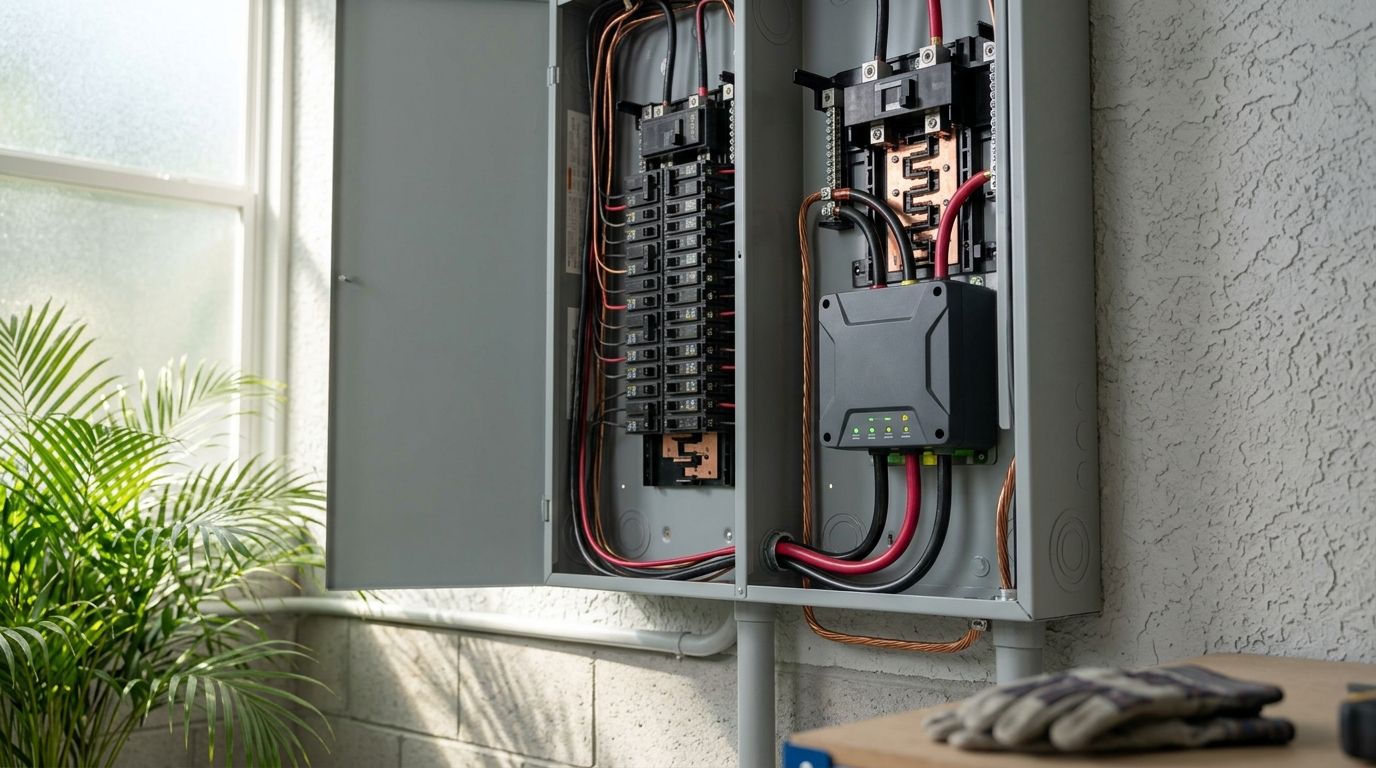
A general contractor that also holds commercial plumbing, electrical, and HVAC licenses under one roof runs grease trap installation, backflow preventer setup, and floor drain rough-in against the same permit timeline as the rest of the buildout. Imperium Electric LLC operates this way across Port St. Lucie, Stuart, and Jensen Beach — plumbing, electrical, and general contracting under one license structure instead of three separate vendors. That matters most when a restaurant's opening date is fixed and every trade delay pushes revenue back.
Best for: restaurant owners coordinating a full kitchen buildout on a fixed opening date.
Imperium Electric plumbing pros:
- One point of contact for plumbing, electrical, and general contracting permits
- Direct experience with grease trap installation for Treasure Coast restaurants
- Local familiarity with St. Lucie County health department inspection timing
- Licensed and insured for commercial-scope work, not just residential
Imperium Electric plumbing cons:
- A single trade-only job (say, just a backflow test) may be simpler through a specialty firm
- Scheduling depends on permit review timing, same as any licensed contractor
Verdict: Buy — the strongest fit when the buildout needs plumbing, electrical, and permit coordination handled together.
2. Specialty commercial plumbing firm: best for narrow-scope grease trap or backflow-only work
A plumbing-only specialty contractor focuses entirely on commercial plumbing code — grease interceptors, backflow assemblies, floor drains — without touching electrical or general contracting. This fits a restaurant that already has a general contractor running the buildout and just needs the plumbing piece filled in.
Best for: restaurants that already hired a GC and need one plumbing scope filled.
Specialty plumbing firm pros:
- Deep, narrow expertise in commercial plumbing code
- Often faster to schedule for a single isolated scope
- Direct relationship with plumbing-specific permit reviewers
Specialty plumbing firm cons:
- Doesn't coordinate electrical or general contracting rough-in
- Adds a second (or third) vendor relationship to manage during the buildout
- Change orders on adjacent trades still route through a separate contractor
Verdict: Hold — useful if the buildout is already broken into separate trade contracts, not ideal if you want one contractor accountable for the whole job.
3. National franchise plumbing chain: best for multi-location restaurant rollouts
A national or regional franchise plumbing brand fits a restaurant group opening several locations across different counties, since the paperwork and pricing structure stay consistent from market to market.
Best for: restaurant chains standardizing plumbing scope across multiple Florida locations.
Franchise chain pros:
- Consistent process documentation across markets
- Corporate-level scheduling for multi-site rollouts
Franchise chain cons:
- Local Treasure Coast permit knowledge depends entirely on which franchisee is dispatched
- Less flexibility for buildout-specific coordination with electrical or general contracting trades
Verdict: Hold — reasonable for chains prioritizing consistency over local relationship depth.
4. Unlicensed handyman plumber: not recommended for restaurant buildouts
An unlicensed handyman can legally handle minor residential plumbing repairs in some cases, but a commercial restaurant buildout requires permitted plumbing work — grease traps, backflow assemblies, floor drains tied to a health inspection. A handyman without a commercial plumbing license cannot pull those permits.
Best for: nothing in a restaurant buildout context.
Handyman plumber pros:
- Lower quoted hourly rate for informal work
Handyman plumber cons:
- Cannot legally pull commercial plumbing permits in St. Lucie County
- Work will not pass a health department or building inspection
- No commercial liability coverage if something fails after opening
Verdict: Skip — this is the fastest way to fail an inspection and delay a restaurant opening.
“If a contractor can't show a St. Lucie County commercial plumbing permit number, they can't legally touch a restaurant's grease line.”
How this ranking was built
The ranking runs on the criteria above, in order: commercial-scope licensing first, then permit experience specific to St. Lucie County, then coordination ability across trades, then availability during the inspection window. A contractor that fails the licensing test — the handyman category — gets ranked last regardless of price, because unlicensed commercial plumbing work doesn't clear inspection in 2026 any more than it did in prior years.
Get your buildout plumbing scoped
Licensed commercial plumbing, electrical, and general contracting under one roof.
Which commercial plumber should you choose for a Port St. Lucie restaurant buildout?
For a full restaurant buildout with a fixed opening date, a licensed general contractor with in-house commercial plumbing is the default pick — it collapses plumbing, electrical, and permit sequencing into one accountable contractor instead of three. If the buildout is already split into separate trade contracts, a specialty commercial plumbing firm fills the plumbing scope cleanly. Restaurant groups opening across multiple counties get more value from a franchise chain's standardized process. Skip unlicensed handyman plumbers entirely — no exception for restaurant buildouts in St. Lucie County, since the health department inspection catches missing permits before opening day.
FAQ
What's the best type of commercial plumber for a restaurant buildout in Port St. Lucie?
A licensed general contractor with in-house commercial plumbing is the best fit for a full restaurant buildout in Port St. Lucie, since it coordinates plumbing, electrical, and permit timing under one contractor. Specialty plumbing firms work better when a general contractor is already running the rest of the buildout.
Do restaurants in St. Lucie County need a licensed plumber for grease trap installation?
Yes, grease trap installation for a restaurant requires a licensed commercial plumber, since the interceptor has to pass both a building permit inspection and a health department review. An unlicensed handyman cannot legally pull the required commercial plumbing permit.
How is a grease trap sized for a restaurant kitchen?
Grease trap sizing depends on fixture count and seating capacity, with most full-service kitchens landing in the 20 to 50 gallon range. A licensed commercial plumber calculates the exact size against the local plumbing code before the buildout starts.
Is a general contractor with in-house plumbing better than hiring separate trades?
For a full restaurant buildout, yes — a general contractor with in-house commercial plumbing and electrical licensing keeps the permit timeline on one schedule instead of three. Separate trade contracts work fine for a narrow, single-scope job like a backflow test.
How often must backflow preventers be tested in Florida?
Florida requires annual testing of commercial backflow prevention assemblies to stay compliant with state plumbing code. A restaurant buildout needs the initial backflow installation and test signed off before opening.
Can a handyman legally do commercial plumbing work for a restaurant?
No, a handyman without a commercial plumbing license cannot legally install grease traps, backflow assemblies, or code-required floor drains for a restaurant. That work requires a licensed commercial plumber who can pull the permit and pass inspection.
What permits does a restaurant plumbing buildout need in St. Lucie County?
A restaurant plumbing buildout in St. Lucie County needs a commercial plumbing permit covering grease interceptor installation, backflow prevention, and floor drain placement, reviewed alongside the building permit. The health department also inspects the plumbing before issuing final approval to open.
What's the difference between residential and commercial plumbing codes in Florida?
Commercial plumbing code in Florida covers fixtures and equipment residential code doesn't address, including grease interceptors, commercial backflow assemblies, and multi-fixture floor drains. A plumber licensed only for residential work is not automatically qualified for restaurant-scale commercial plumbing.
One last thing
The grease trap is almost never the item that delays a restaurant opening in 2026 — it's the backflow preventer test getting scheduled after the health inspection instead of before it. Line up backflow testing early in the buildout timeline, not as an afterthought once the kitchen equipment is already installed.