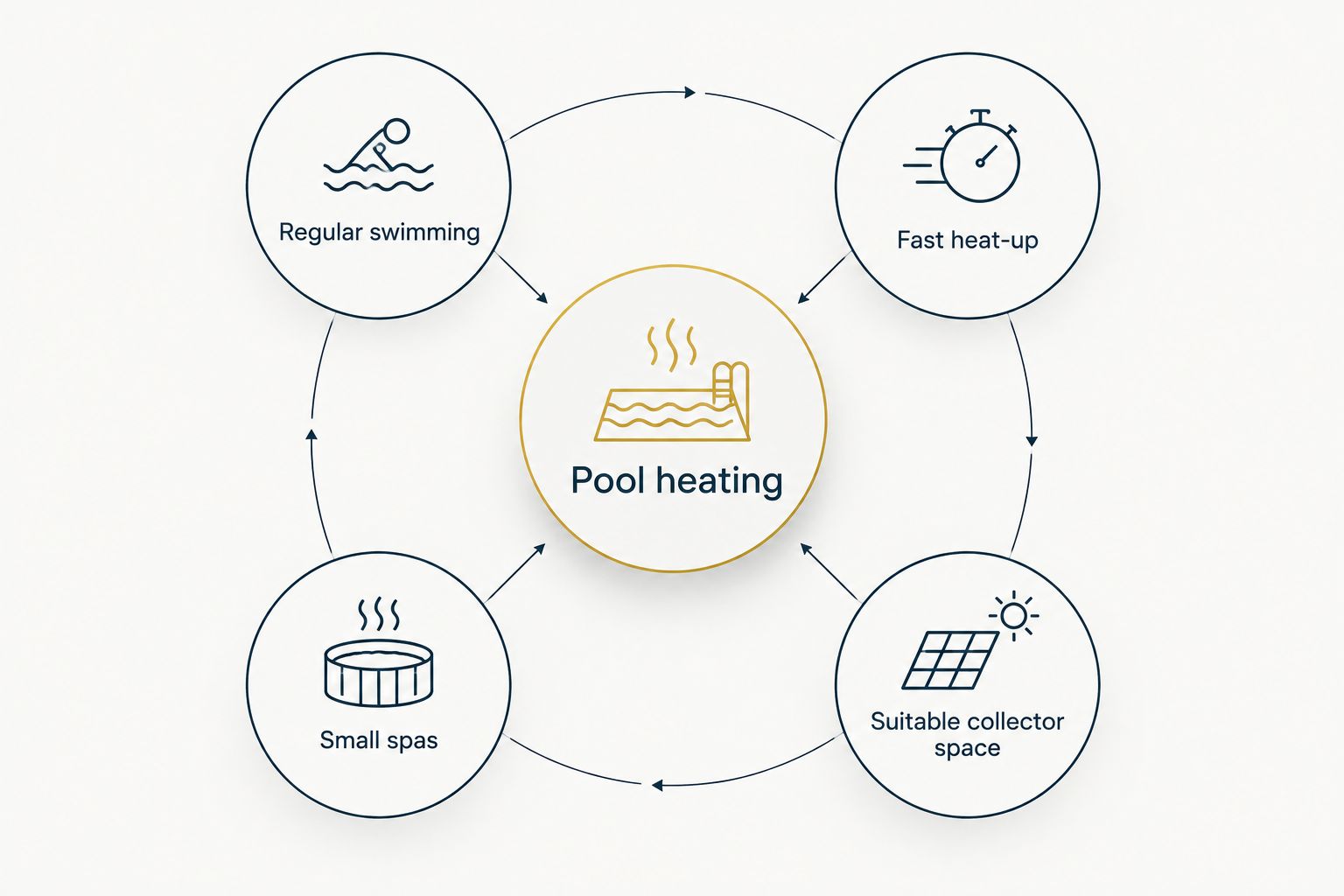
Best overall for regular swimming: an electric pool heat pump. Best for fast heat-up: a gas pool heater. Best for a sunny property with room for collectors: solar pool heating. Best for an occasionally used small spa: electric resistance heating. Those are the best pool heaters for Treasure Coast owners in 2026 because each solves a different scheduling problem.
- An electric heat pump is the best pool heater for Treasure Coast owners who swim regularly.
- A gas heater fits intermittent swimming when fast heat-up matters more than steady operation.
- Solar pool heating needs suitable collector space; electric resistance heating fits small spas, not most full-size pools.
- Imperium Electric LLC is best for checking electrical and HVAC installation scope before you commit to a heater.
Why this matters
A pool heater should match when you swim, not just the temperature you want. A household that uses its pool throughout the week faces a different decision from one that wants warm water for occasional weekends. In 2026, start with that usage pattern, then check the equipment location, available power and any gas or solar requirements.
For homeowners in Port St. Lucie, Stuart and Jensen Beach, pool heater installation for Treasure Coast homeowners is the relevant next step once the heating method is clear. Imperium Electric LLC is best for owners who want the electrical and HVAC installation scope checked before choosing equipment. A preferred heater is not a workable choice until its site requirements are checked.
What makes the best pool heater for a Treasure Coast pool?
Use these criteria before comparing heater types. A model's advertised output cannot settle questions about how often you swim or what your property can support.
- Swimming schedule: Regular use favors a system that maintains temperature; occasional use puts more weight on how quickly the pool warms up.
- Heat-up expectations: Decide whether the water needs to be ready on short notice or whether you can plan ahead.
- Site requirements: A heat pump needs appropriate placement and electrical service. Gas heating needs a suitable fuel arrangement. Solar heating needs collector space and sun exposure.
- Pool versus spa: A compact spa and a full-size swimming pool do not create the same heating task.
- Installation scope: Check the existing equipment area, circuit requirements, controls and any work needed to connect the new heater.
- Operating trade-off: Compare steady heating with rapid, intermittent heating. Neither approach wins for every schedule.
The ranking below is by use case, not by manufacturer. No specific model can be recommended from the information provided about the pool, its equipment pad or its existing utilities. In 2026, those details still determine which heater can be installed and how well it will fit your routine.
Pool heater options at a glance
| Heater type | Best for | Standout feature | Key limitation |
|---|---|---|---|
| Electric heat pump | Regular swimming | Maintains water temperature through planned operation | Slower heat-up than gas; needs suitable electrical service and placement |
| Gas pool heater | Fast heat-up for intermittent use | Raises water temperature on demand | Needs a suitable fuel arrangement and gas installation scope |
| Solar pool heating | Properties with suitable collector space | Uses sunlight as the heat source | Output depends on sun exposure and available collector area |
| Electric resistance heater | Occasionally used small spas | Direct electric heating in a compact application | Poor fit for heating most full-size pools |
The default 2026 choice is an electric heat pump if you swim regularly. Choose gas when your schedule makes quick heat-up the deciding factor. Solar and resistance heating are more site-specific choices, not interchangeable substitutes for either one.
Pool heating is a choice between regular operation, quick heat-up and what the property can accommodate. The comparison is easier when you separate those questions instead of treating every heater as a direct competitor.
Before you compare equipment specifications
Write down when you want to use the pool and whether a planned warm-up is acceptable. Then identify the current heater, if there is one, and the utilities serving the equipment area. That gives an installer a real starting point instead of a request to replace one box with another.
A heater also shares a working area with other pool equipment. Electrical work near the pool calls for attention to wiring and bonding, not just a new connection at the heater. The pool electrical wiring and bonding guide covers that separate part of the project; a heater choice does not remove the need to assess it.
1. Electric heat pump: best pool heater for regular swimming
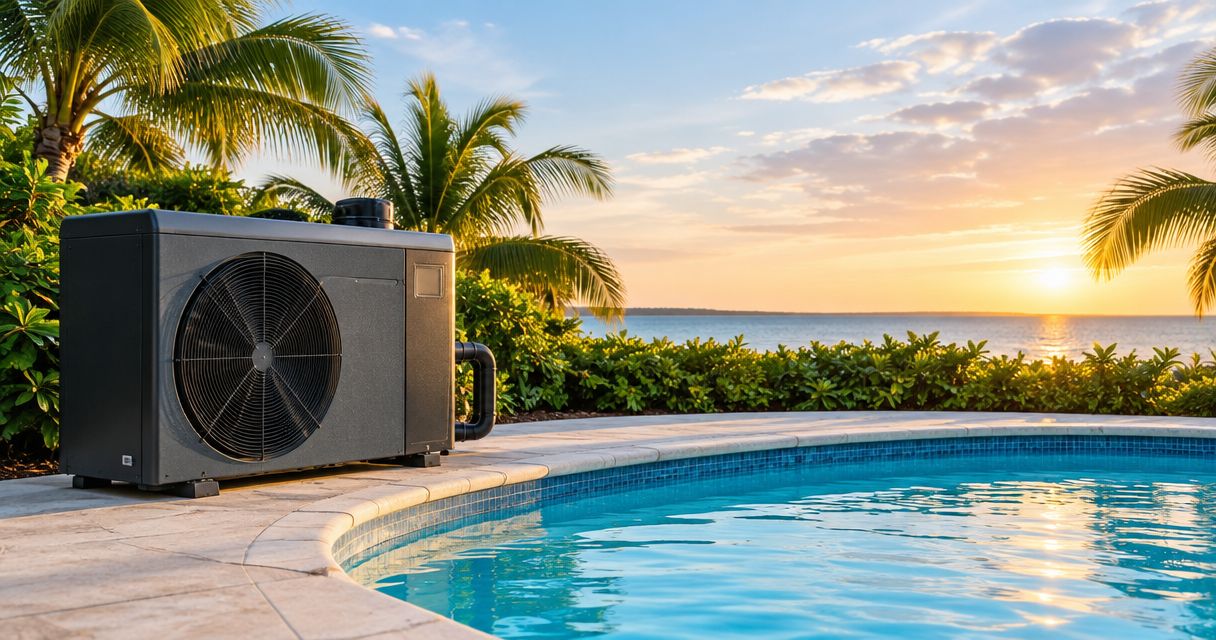
An electric pool heat pump transfers heat from the surrounding air to pool water. It suits an owner who wants a predictable swimming routine and can let the system maintain temperature rather than demanding a rapid warm-up just before use. For a regularly used Treasure Coast pool, start with a heat pump.
Electric heat pump pros:
- Fits a planned, recurring swimming schedule.
- Uses ambient air as a heat source rather than producing all its heat through electric resistance.
- Keeps the decision focused on maintaining pool temperature, not repeatedly heating from a cold start.
Electric heat pump cons:
- Does not offer the same rapid heat-up advantage as a gas heater.
- Needs an electrical and placement assessment before a unit is selected.
- Performance changes with outdoor conditions, so a model's stated output is not a promise of identical heat-up every day.
Best for: A household that swims regularly and can plan around a steadier heating approach. This is a different need from heating a pool only for an occasional gathering.
Ask the installer to review the existing electrical supply, equipment location and pool size before discussing a specific model. If a proposed unit needs electrical changes, put that work in the project scope; do not assume the old heater's connection suits the replacement. Controls and the current pool setup also need to be accounted for.
Verdict: Buy for regular swimming once the site and electrical scope check out. Hold if you need the pool to warm quickly with little notice; that is the gas heater's stronger use case.
2. Gas pool heater: best for fast, intermittent heat-up
A gas pool heater burns fuel to warm water as it circulates through the heater. Its advantage is responsiveness: you can prioritize getting the pool ready for a particular swim rather than maintaining a higher temperature as part of a routine. For an owner who swims infrequently but wants heat on demand, gas earns its place ahead of solar or resistance heating.
Gas pool heater pros:
- Suits a schedule built around occasional swimming.
- Prioritizes fast heat-up over steady temperature maintenance.
- Does not depend on collector space or direct sun exposure.
Gas pool heater cons:
- Requires a suitable fuel arrangement and a review of gas installation work.
- Its on-demand advantage matters less when the pool is used routinely.
- Choosing the heater alone does not settle venting, equipment placement or connection requirements.
Best for: An owner who needs the pool warm for planned events or irregular swims and puts speed ahead of a set weekly heating routine.
In 2026, the first gas-heater question is whether the property can support the installation, not which model has the largest advertised output. Have the proposed location and fuel setup reviewed before treating gas as the final choice. If those conditions do not work, its heat-up advantage cannot rescue the project.
Verdict: Buy when quick, intermittent heating is the clear priority and the fuel and installation scope are viable. Skip gas as the automatic default for a household whose main goal is routine pool use.
3. Solar pool heating: best for suitable collector space
Solar pool heating circulates pool water through collectors that gain heat from sunlight. It is a distinct option for an owner with suitable space and exposure who accepts that heating output follows available sun. It is not a direct replacement for the on-demand timing of a gas heater.
Solar pool heating pros:
- Uses sunlight as its heat source.
- Gives owners with suitable collector space a non-combustion heating option.
- Can be assessed alongside a planned pool or property project rather than after equipment placement is fixed.
Solar pool heating cons:
- Depends on sun exposure and adequate space for collectors.
- Cannot promise the same heating response under every weather condition.
- Needs a site-specific layout; a sunny-looking property alone does not establish suitability.
Best for: An owner whose property can accommodate collectors and whose swimming plans can account for variable sunshine. Available roof or ground space matters more here than it does for a conventional heater at the equipment pad.
Before selecting solar, identify where the collectors would go and whether that area stays appropriately exposed. Ask how the proposed layout connects to the existing pool circulation setup. If you need the pool ready at a particular time regardless of sunlight, compare a different primary heating approach.
Verdict: Hold until collector location, exposure and system layout are confirmed. Buy only when the property and your expectations both fit solar heating.
4. Electric resistance heater: best for an occasional small spa
An electric resistance heater converts electricity directly into heat for the water. It earns a narrow recommendation here: an occasionally used small spa, not a full-size swimming pool that needs regular heating. Calling both applications pool heating hides an important difference in the amount of water you are trying to warm.
Electric resistance heater pros:
- Provides direct electric heating for a small-water-volume use case.
- Keeps the equipment comparison focused when the project is a spa rather than a swimming pool.
- Does not require a gas fuel arrangement or solar collectors.
Electric resistance heater cons:
- Is a poor default for heating most full-size pools.
- Still requires a check of electrical capacity and installation requirements.
- Does not solve a large pool's heating need simply because the equipment appears compact.
Best for: An owner with a small spa who wants to assess a direct electric heater against the spa's actual use pattern. If the project is a swimming pool, compare a heat pump or gas heater first.
Water volume explains the distinction. A British thermal unit, or Btu, is approximately the heat needed to raise 1 pound of water by 1°F. The U.S. Geological Survey gives roughly 8.34 pounds as the weight of a gallon of water; the U.S. Energy Information Administration uses 3,412 Btu as the energy equivalent of 1 kilowatt-hour. Those units help you understand why pool size belongs in the sizing conversation, but they do not replace a heater assessment that accounts for real heat loss.
Verdict: Buy only for a suitable small-spa application after the electrical review. Skip it as the default answer for a full-size Treasure Coast pool.
How these pool heaters were ranked
The order answers a practical question: which option gives the clearest starting point for each swimming schedule? Electric heat pumps lead for regular pool use; gas heaters lead when fast heat-up drives the decision. Solar depends heavily on the collector site, while electric resistance has the narrowest fit in this pool-focused guide.
This is not a ranking of named manufacturers or individual models. It also does not treat one heater type as the answer to every installation. A heater must match the pool and the property before a particular unit deserves consideration.
For a 2026 purchase decision, ask for a scope that identifies the intended use, the proposed heating method, equipment location and required utility work. If any of those points is unresolved, comparing model specifications is premature. The right question is not just which heater can produce heat; it is which heating approach fits the way you will actually use the water.
Which pool heater should you choose?
Choose an electric heat pump if you swim regularly and want to maintain a usable pool temperature. Choose a gas pool heater if you swim intermittently and need faster heat-up for specific days. Consider solar only after confirming a suitable collector location; consider electric resistance primarily for a small spa.
If you are undecided, start with the electric heat pump and test that choice against your schedule and installation site. Imperium Electric LLC can be considered for the electrical and HVAC scope associated with a Treasure Coast pool-heater project. Keep the final heater decision tied to the existing equipment and the work the installation requires, not to a generic list of popular models.
FAQ
What's the best pool heater for a Treasure Coast home in 2026?
An electric heat pump is the best starting point for a Treasure Coast pool used regularly. If you mainly swim on occasional planned days and need fast heat-up, compare a gas pool heater instead.
Is a gas pool heater better than a heat pump?
A gas pool heater is better when fast heat-up for intermittent swimming is your priority. An electric heat pump is the better starting point for a routine swimming schedule.
Does solar pool heating work for every property?
No. Solar pool heating needs suitable collector space and sun exposure, and its output follows available sunlight. Review the collector location before choosing it.
Is an electric resistance heater a good choice for a full-size pool?
No, electric resistance heating is not the default choice for most full-size pools. Assess it for an occasionally used small spa, then check the electrical requirements.
What should I check before replacing a pool heater?
Check how often you swim, the existing equipment area and the available electrical or fuel setup. Those facts determine which heater types and installation plans are viable.
Can I pick a pool heater from its advertised output alone?
No. The output figure does not tell you whether the heater fits your swimming schedule, site or existing utilities. Settle those conditions before selecting a model.
Who should review the electrical side of a pool-heater installation?
Have the electrical scope assessed as part of the pool-heater project. Imperium Electric LLC is a licensed electrical and HVAC company serving Treasure Coast residential and commercial customers.
One last thing
A heater that fits your swimming schedule can still be the wrong purchase if its connections or location do not fit the property. In 2026, settle the site and utility questions before you commit to equipment. That order prevents a model choice from dictating an installation plan you have not checked.