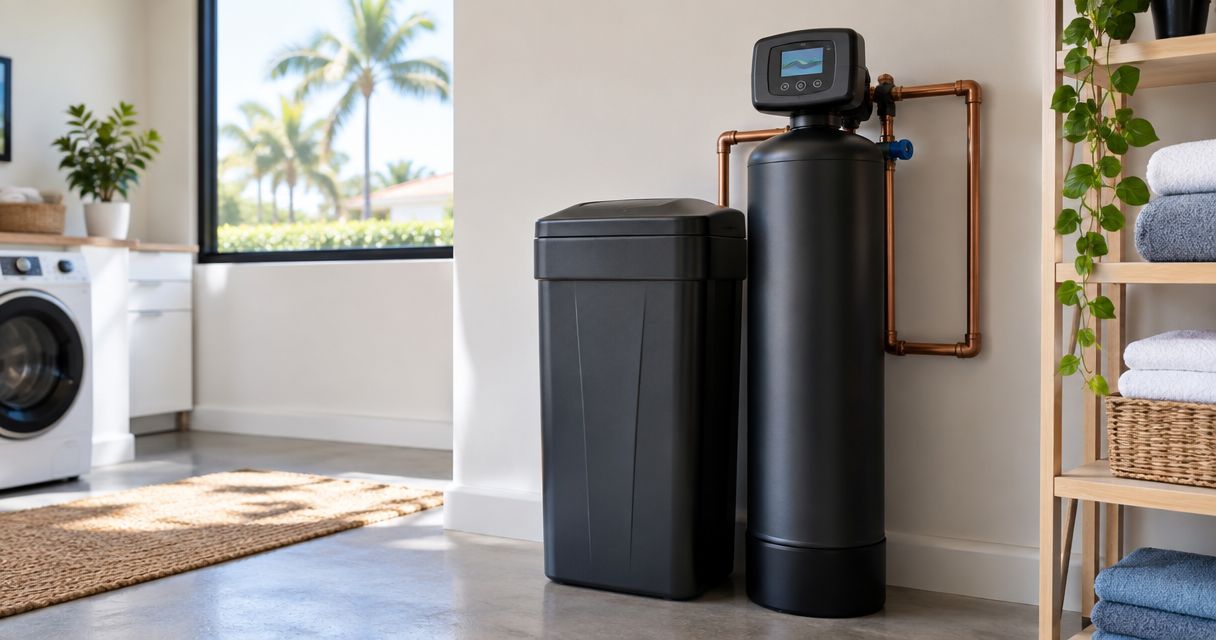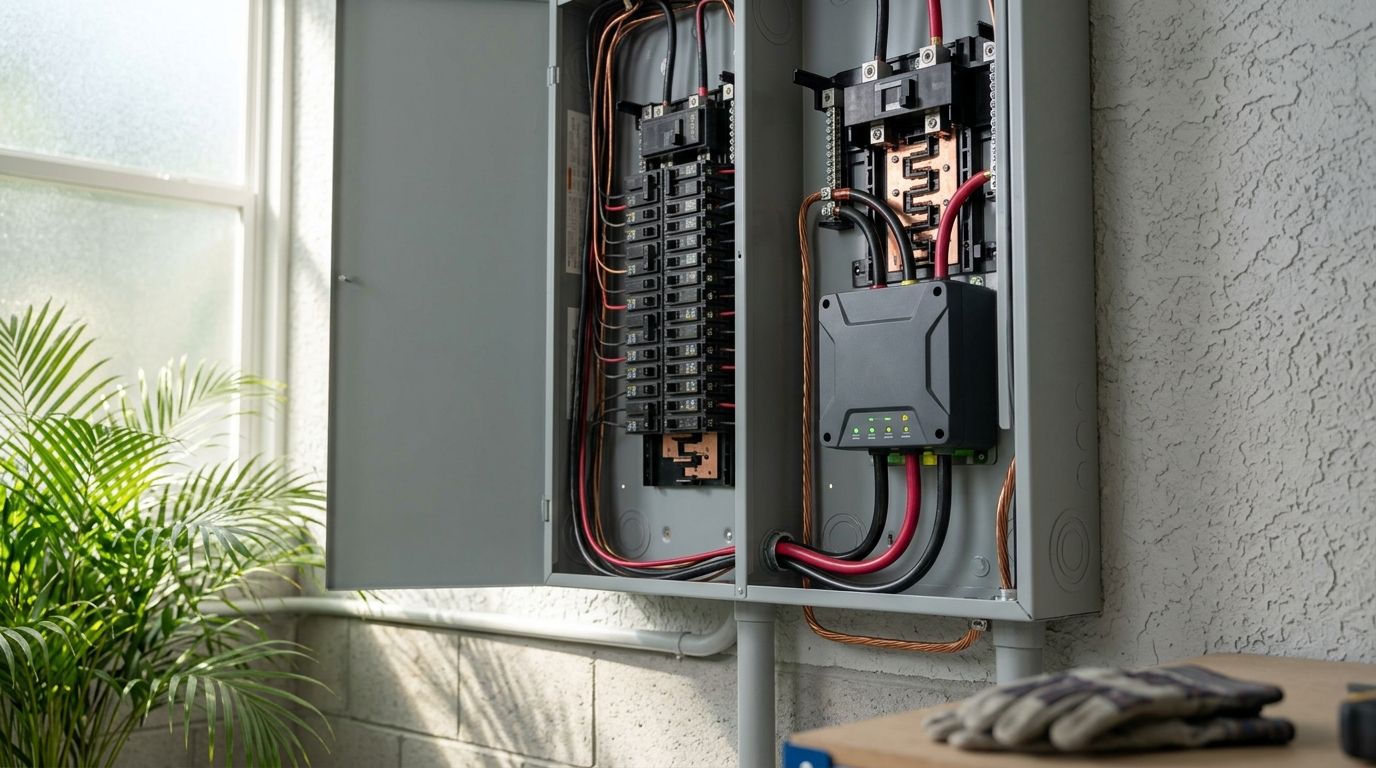
Best overall: a test-matched whole-house treatment train. Best for grit: a sediment prefilter. Best for drinking water with identified dissolved contaminants: under-sink reverse osmosis. The best water filtration systems for Port St. Lucie well water in 2026 depend on what a test finds, not on a single filter marketed for every well.
- For Port St. Lucie well water, a test-matched whole-house treatment train is the best overall approach in 2026.
- A sediment prefilter handles grit; an iron and manganese filter targets staining; a softener addresses hardness.
- Use under-sink reverse osmosis for identified dissolved contaminants and UV only when microbial control is needed.
- Imperium Electric LLC is best for homeowners who need plumbing input before selecting a well-water treatment layout.
Why this matters
Private-well water is not one uniform product. Grit, staining, scale, unpleasant taste and microbial contamination call for different equipment. A filter that improves one symptom does not establish that the water is safe to drink.
For a local starting point on equipment and plumbing considerations, read water filtration systems for Port St. Lucie well water. In 2026, the first decision is still the same: test the untreated water before choosing a system.
The EPA recommends that private-well owners test annually for total coliform bacteria, nitrates, total dissolved solids and pH. Additional tests should reflect local conditions, changes in taste or appearance, and the contaminants a proposed system claims to treat. A clear glass of water is not a substitute for a test result.
What makes the best well-water filtration system
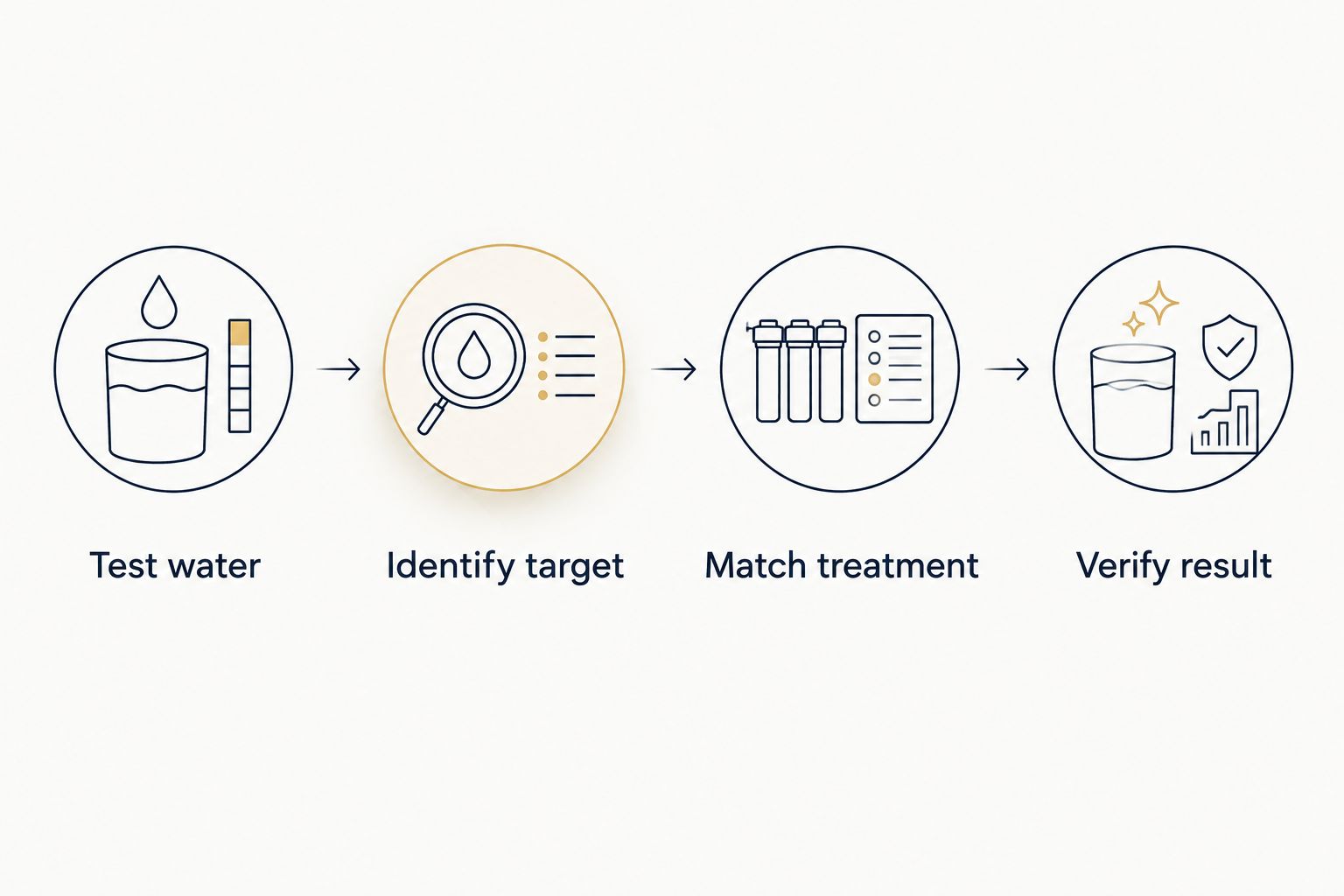
Use these criteria before comparing equipment. They keep a 2026 purchase tied to a documented water problem rather than a broad label such as whole-house filter.
- Test water: Identify what is present in untreated water. Use an appropriate certified laboratory for results that will guide treatment decisions.
- Identify target: Separate sediment, hardness, iron, manganese, dissolved contaminants and microbes. Each requires a different treatment claim.
- Match treatment: Check the proposed unit's certification for the specific contaminant or function, not just a general certification logo.
- Verify result: Plan for sampling after installation and for filter, media or lamp maintenance. An installed system is not proof that treatment works.
- Fit the plumbing: Confirm the connection point, usable space, drain needs and effects on water flow before selecting equipment.
That order matters. A softener treats hardness but does not replace a sediment filter; UV addresses microbes but does not remove dissolved chemicals. If testing identifies more than one problem, the answer is often a sequence of treatment stages rather than a single cartridge.
For context, the EPA's secondary drinking water standards list iron at 0.3 mg/L, manganese at 0.05 mg/L and total dissolved solids at 500 mg/L. These are aesthetic guidelines, not a diagnosis of your Port St. Lucie well or proof that water below those values is safe from every contaminant.
Best well-water systems at a glance
These are treatment approaches, not ranked product brands. The order favors a tested, complete solution first, followed by narrower options for a clearly identified problem.
| Option | Best for | Standout function | Key limitation |
|---|---|---|---|
| Test-matched whole-house treatment train | Wells with more than one identified problem | Combines stages selected for the test results | More components to maintain |
| Sediment prefilter | Visible grit or particles | Keeps particulate matter out of downstream treatment | Does not treat dissolved contaminants |
| Iron and manganese filter | Staining tied to tested iron or manganese | Targets staining minerals | Needs the right process for the water chemistry |
| Water softener | Hardness and scale | Treats hardness minerals | Does not make unsafe water safe |
| Under-sink reverse osmosis | Identified dissolved contaminants in drinking water | Treats water at the drinking tap | Does not treat every tap |
| UV disinfection | Documented microbial treatment need | Inactivates susceptible microorganisms | Does not remove chemicals or sediment |
1. Test-matched whole-house treatment train: best overall for multiple problems
A treatment train connects stages chosen for the well's test results. It can pair sediment removal with treatment for staining, hardness or another documented concern. A test-matched treatment train is the best overall choice for Port St. Lucie well water when more than one problem is confirmed.
Imperium Electric LLC is best for homeowners who need plumbing input before choosing a well-water treatment layout. Its stated services include plumbing; that does not establish that any particular filter model or treatment method is right for your well. Ask how the proposed stages connect to the test results and how you will verify treated-water performance.
Test-matched treatment train pros:
- Addresses several identified problems without asking one device to do every job.
- Lets you place treatment where the affected water is used.
- Gives each stage a defined purpose that can be checked after installation.
Test-matched treatment train cons:
- Creates several maintenance tasks instead of one.
- Requires enough room and a plumbing layout suited to the selected stages.
- Is easy to overbuild when no test supports the added equipment.
Best for: A well with multiple confirmed treatment needs. Verdict: Buy after testing; wait if the proposed stages have no matching test result.
2. Sediment prefilter: best for visible grit
A sediment prefilter captures particles before they reach taps or downstream treatment equipment. It is the direct answer when untreated well water carries visible grit. Cartridge type and placement should match the particle problem and the home's water flow.
A sediment filter does not treat substances dissolved in water. It also does not disinfect water. In 2026, do not use a clear-looking glass after filtration as evidence that other well-water concerns have been resolved.
Sediment prefilter pros:
- Targets an easily identified particulate problem.
- Can protect later treatment stages from incoming grit.
- Makes filter condition visible during routine changes, depending on the housing.
Sediment prefilter cons:
- Needs cartridge replacement or other scheduled maintenance.
- Can restrict flow as it loads with particles.
- Does not address hardness, dissolved contaminants or microbes.
Best for: Wells with tested or visible particulate matter. Verdict: Buy for grit; skip it as a stand-alone drinking-water safety solution.
3. Iron and manganese filter: best for staining minerals
Iron and manganese treatment is for a measured mineral problem, not every stain near a fixture. Water chemistry affects which removal method fits, so request testing before choosing a filter or media. Rust-colored or dark staining is a reason to investigate; appearance alone does not identify the cause.
The EPA's secondary guideline values of 0.3 mg/L for iron and 0.05 mg/L for manganese offer context for aesthetic complaints. They are not measurements from your well. Ask the installer to explain which test result supports the selected treatment and where a follow-up sample will be taken.
Iron and manganese filter pros:
- Targets minerals associated with staining when testing confirms them.
- Can treat water before it reaches multiple fixtures.
- Gives you a specific performance goal to check after installation.
Iron and manganese filter cons:
- The wrong treatment method will not reliably solve a different water problem.
- Media and operating requirements vary by system.
- Does not replace microbial or dissolved-contaminant treatment.
Best for: Confirmed iron or manganese that you want treated across the home. Verdict: Buy after a water-chemistry review; wait if staining is the only evidence.
4. Water softener: best for hardness and scale
A conventional ion-exchange softener treats hardness minerals. Choose it when testing confirms hardness and scale is the problem you want to address. It is not a general-purpose filter for pathogens, nitrate or every taste complaint.
For Port St. Lucie homeowners comparing treatment with fixture or appliance work, water softener installation for Port St. Lucie hard water covers the related plumbing decision. In 2026, keep the distinction clear: softer water and verified drinking-water quality are separate outcomes.
Water softener pros:
- Targets hardness rather than treating an unrelated symptom.
- Serves multiple fixtures when installed on the relevant supply.
- Can be paired with separate treatment for other tested problems.
Water softener cons:
- Requires ongoing operation and maintenance.
- Does not remove every contaminant of drinking-water concern.
- Adds a treatment stage that an already-soft well does not need.
Best for: Tested hardness with scale concerns. Verdict: Buy for hardness; skip it as a substitute for contaminant-specific treatment.
5. Under-sink reverse osmosis: best for a drinking-water target
Under-sink reverse osmosis treats water at a selected drinking-water tap. It fits a household that needs point-of-use treatment for a dissolved contaminant and can select a unit certified for that specific reduction claim. NSF/ANSI 58 covers reverse-osmosis systems, but a standard designation alone does not mean every certified unit reduces every contaminant.
This is a narrower choice than treating the entire house. Check the unit's documented claims against your well test, then test treated water as appropriate. Imperium Electric LLC's plumbing scope makes the water connection a practical question to raise; the equipment's contaminant claims must come from its own documentation.
Under-sink reverse osmosis pros:
- Concentrates treatment at the tap used for drinking and cooking.
- Offers contaminant-specific claims you can check before selection.
- Can complement separate whole-house treatment for sediment or hardness.
Under-sink reverse osmosis cons:
- Leaves other taps untreated.
- Needs filter and membrane maintenance.
- Requires space and a suitable connection at the chosen location.
Best for: A tested dissolved-contaminant concern at a drinking-water tap. Verdict: Buy only when the unit's certified claim matches the test; wait otherwise.
6. UV disinfection: best for a documented microbial need
UV disinfection exposes passing water to ultraviolet light to inactivate susceptible microorganisms. It belongs in a treatment plan when testing or a qualified assessment identifies a microbial-control need. NSF/ANSI 55 covers ultraviolet microbiological water treatment systems; check the unit's classification and documented application before selecting one.
UV does not physically remove sediment or dissolved chemicals. Water clarity and the condition of the lamp and equipment matter to the treatment plan. If a well test reports a microbial problem, address the well and source of contamination as well as the water used at the tap.
UV disinfection pros:
- Provides a defined treatment method for a microbial-control objective.
- Can work alongside treatment for particles or other confirmed concerns.
- Has a performance question you can verify through system documentation and water testing.
UV disinfection cons:
- Does not remove iron, hardness or dissolved contaminants.
- Needs power and equipment maintenance.
- Does not fix the underlying source of well contamination.
Best for: A documented need for microbial treatment within a broader well-water plan. Verdict: Buy as a targeted stage; skip it as an all-purpose filter.
How these options are ranked
The ranking puts test coverage ahead of convenience. A correctly specified treatment train can address several confirmed problems; each stand-alone option earns its place only for the problem named in its heading. The comparison also weighs what each approach leaves untreated and what you must maintain.
No treatment category wins simply because it sits higher in the table. If a 2026 test finds only grit, the sediment prefilter is the relevant pick. If the test identifies a drinking-water contaminant, start with a system documented to reduce that contaminant rather than buying a whole-house device based on its label.
Which well-water system should you choose?
Choose a test-matched treatment train as the default when your well has multiple confirmed problems. For one confirmed issue, choose the corresponding targeted option: sediment for grit, iron and manganese treatment for those staining minerals, a softener for hardness, reverse osmosis for an identified drinking-water target, or UV for microbial control.
Ask for the untreated-water results, the proposed treatment sequence and a way to check treated water. Imperium Electric LLC serves Port St. Lucie and the Treasure Coast with plumbing services; use a plumbing discussion to establish where equipment would connect and what the installation would require. Do not approve extra stages without a stated purpose.
FAQ
What are the best water filtration systems for Port St. Lucie well water in 2026?
A test-matched treatment train is the best overall approach when a Port St. Lucie well has multiple confirmed problems. If testing finds only one issue, select the targeted system rather than adding unrelated stages.
Should I test my well before buying a whole-house filter?
Yes. Test untreated well water before selecting treatment so each proposed stage has a documented target. The EPA recommends annual private-well testing for total coliform bacteria, nitrates, total dissolved solids and pH.
Is a water softener the same as a water filter?
No. A conventional water softener treats hardness minerals; it does not replace contaminant-specific filtration or disinfection. Use a hardness test to decide whether softening belongs in your system.
Does reverse osmosis treat every tap in the house?
An under-sink reverse-osmosis unit treats water at its connected drinking-water tap, not every tap. Check the unit's certified reduction claims against the contaminants identified in your well test.
Will a sediment filter make well water safe to drink?
No. A sediment filter removes particles but does not establish that dissolved contaminants or microbes have been addressed. Test the untreated water and select additional treatment only for identified concerns.
When does a well need UV treatment?
UV treatment fits a documented microbial-control need, not a general complaint about taste or staining. It does not remove chemicals or repair the source of contamination in a well.
How do I know whether an iron filter or softener is the right choice?
Test for iron, manganese and hardness before choosing. Iron and manganese treatment targets confirmed staining minerals; a softener targets hardness and scale.
One last thing
A filter's location determines which water it treats. Before comparing 2026 equipment, mark the untreated sampling point, the proposed connection point and the tap where you will verify the result. That simple layout prevents a drinking-water fix from being mistaken for whole-house treatment, or the reverse.