Port St. Lucie homeowners installing a water softener are treating hard water loaded with dissolved calcium and magnesium pulled from the Floridan aquifer, with the goal of protecting pipes, water heaters, and fixtures from scale buildup. Whether the source is city water or a private well changes what pre-treatment and sizing look like, and homes built before the 1990s often carry existing pipe damage that a softener alone won't fix.
- Water softener installation in Port St. Lucie treats hardness from the Floridan aquifer, on both city and well water.
- Salt-based ion exchange removes hardness minerals; salt-free conditioners only alter them, not remove them.
- Homes built before 1990 often need a pipe inspection before softener install because of existing scale damage.
- Sizing by household size and measured grain capacity matters more than brand name.
- Imperium Electric installs and permits water softener systems as part of its Treasure Coast plumbing work.
Why water softener installation matters for Port St. Lucie homes
St. Lucie County's municipal supply and most private wells on the Treasure Coast draw from limestone aquifers, which dissolve calcium and magnesium carbonate into the water. That mineral load is what leaves white scale on faucets, cuts soap lather, and shortens the life of water heaters and appliances. Homes on well water usually see it worse, because there is no municipal treatment step before the water reaches the tap.
The damage compounds. Scale narrows pipe diameter, cuts water heater efficiency, and adds wear to washing machines and dishwashers years before they would otherwise fail. A water filtration system for well water handles sediment and iron, but a softener is the piece that actually pulls hardness minerals out of the water loop.
If you are seeing white scale on fixtures or your water heater failed early, a correctly sized softener is the fix — filtration alone will not do it.
How to plan water softener installation in 2026
Test your water hardness first
Don't guess at hardness. Sizing depends on the number.
- Run a home hardness test kit or send a sample to a lab for grains-per-gallon results
- Check for white scale rings on faucets, showerheads, and glass shower doors
- Note how much soap or detergent it takes to get a lather
- Pull the utility's annual water quality report if you are on city water
- Test the well directly if you are not on municipal supply
Inspect your plumbing for existing scale damage
Installing a softener on pipes that are already scaled or corroded does not reverse the damage.
- Check the home's age — many pre-1990 Port St. Lucie homes still run original piping
- Run a whole-house pressure test to catch flow restriction from internal scale
- Look for reduced pressure at several fixtures at once, not just one
- Check the water heater tank for sediment at the drain valve
- Flag small-bore original piping for a re-piping evaluation before the softener goes in
Choose the right softener type
Not every product sold as a softener actually removes hardness minerals.
- Salt-based ion exchange swaps calcium and magnesium for sodium — the only type that truly removes hardness
- Salt-free conditioners crystallize minerals so they stick less to pipe walls, but the minerals stay in the water
- Dual-tank systems keep soft water flowing during regeneration, useful for larger households
- Reverse osmosis treats drinking water at one tap and does not replace whole-house softening
Size the system for your household and water source
An undersized softener regenerates constantly and burns salt. An oversized one wastes water on unnecessary cycles.
- Count bathrooms, occupants, and average daily water use
- Match grain capacity to both household size and measured hardness, not square footage
- Match softener flow rate to well pump output on private wells
- Keep irrigation and pool fill lines off the softened loop
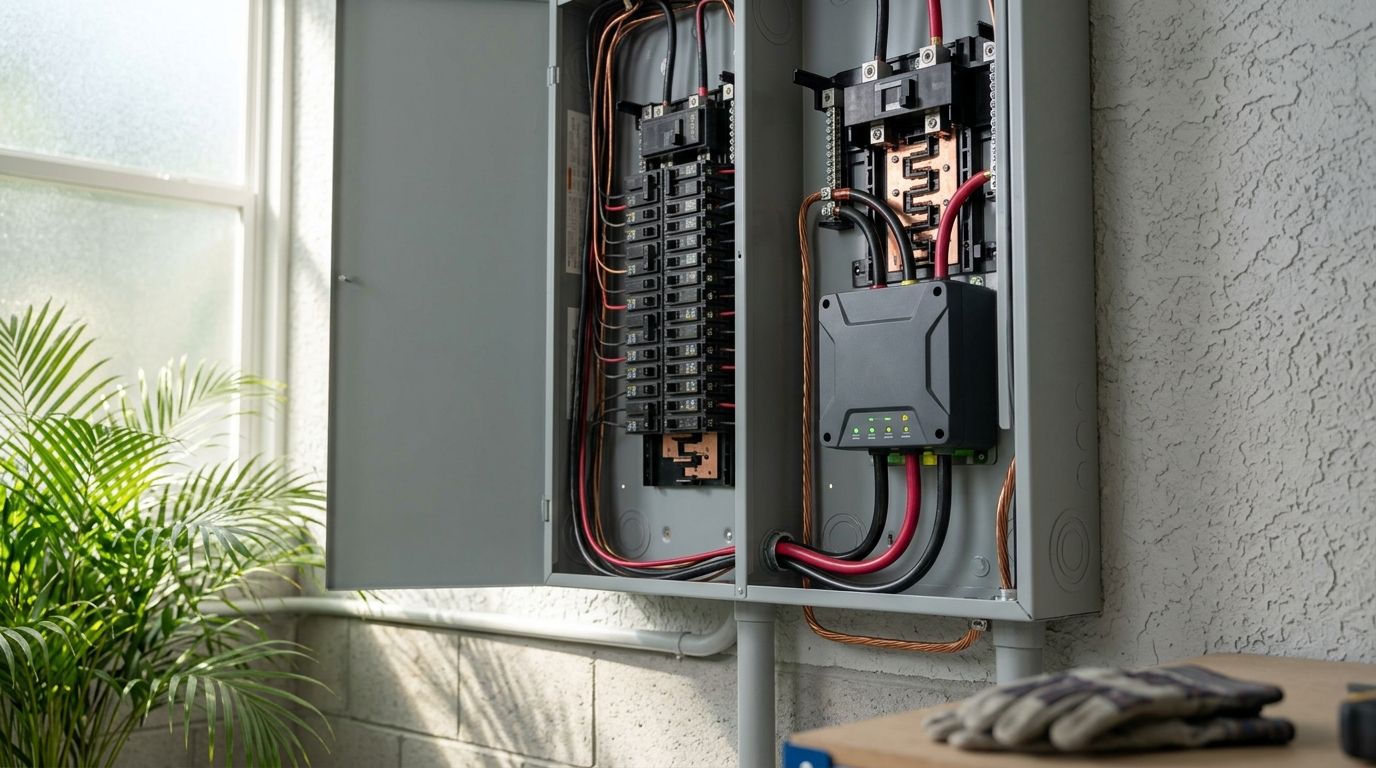
Prepare the plumbing and electrical connections
A few site conditions decide how straightforward the install actually is.
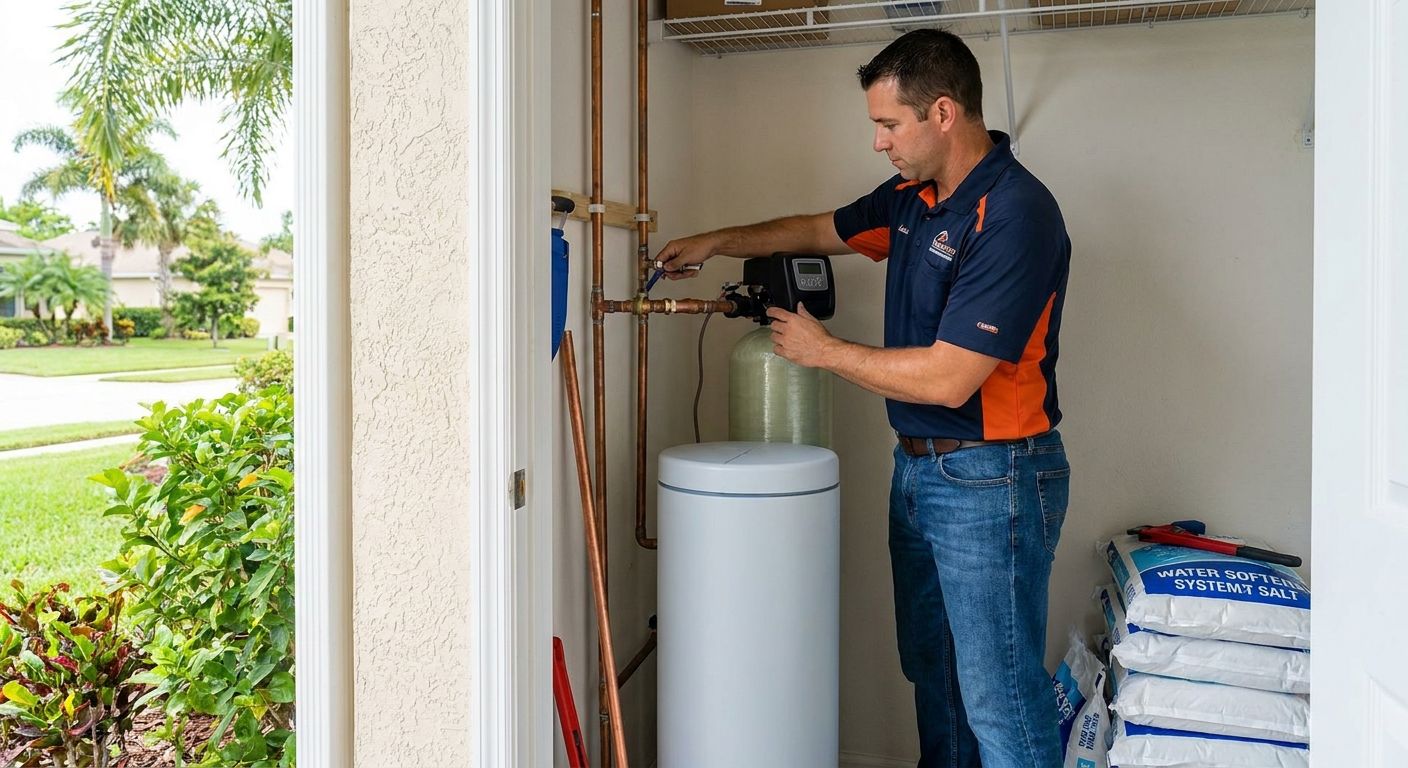
- Confirm space near the main water line entry for the resin tank and brine tank
- Verify a nearby GFCI-protected outlet — most control valves need power
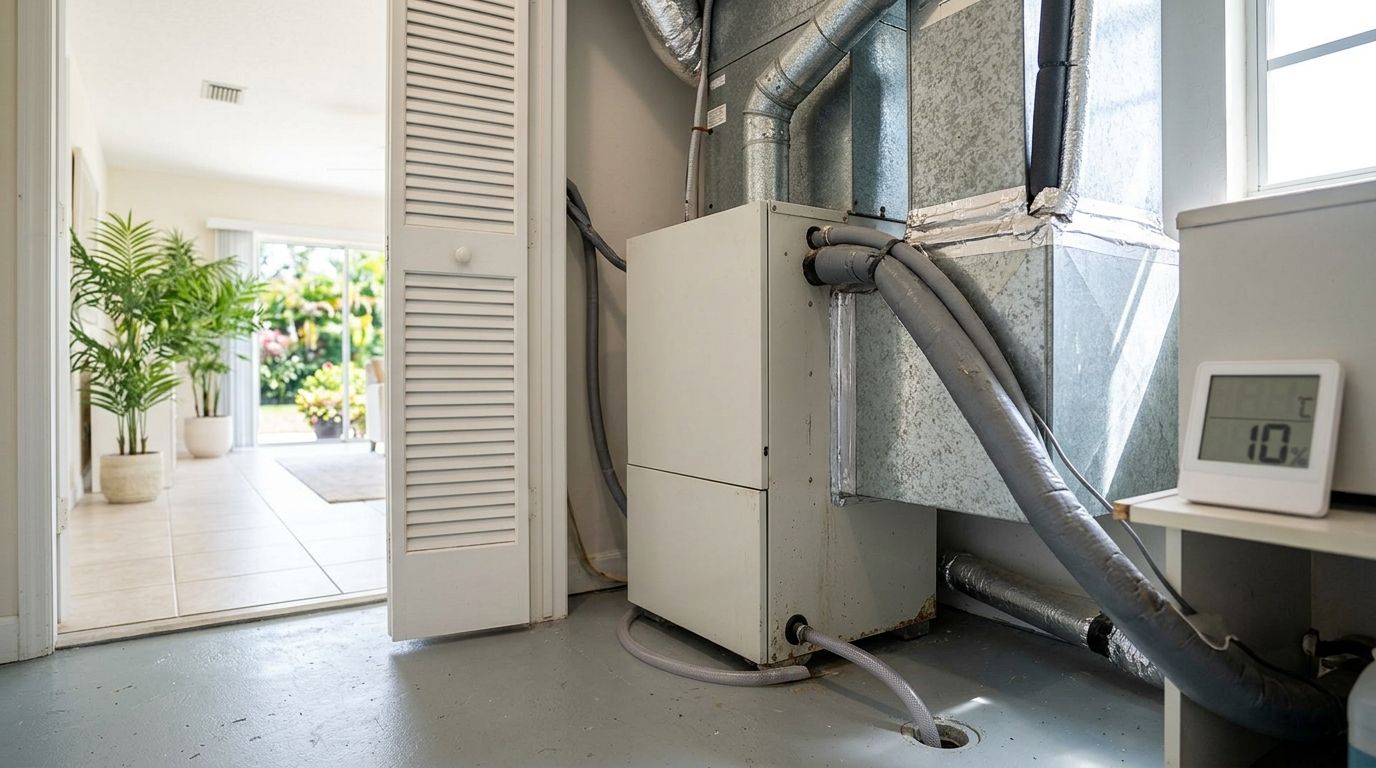
- Check drain line access for regeneration discharge water
- Plan a bypass valve so outdoor faucets still get untreated water
Permit the work and use a licensed plumber
Whole-house plumbing modifications in St. Lucie and Martin counties generally require permitting in 2026.
- Confirm whether your specific job needs a county permit before work starts
- Use a licensed plumber to pull the permit and schedule inspection
- Request a post-install water test to confirm hardness dropped to target
- Ask whether a backflow preventer is required on your service line
Maintain the system after installation
A softener that is not maintained stops working long before it visibly fails.
- Refill salt monthly on salt-based systems — a dry brine tank lets hard water pass untreated
- Clean the brine tank yearly to prevent salt bridging
- Retest hardness every 6 to 12 months to confirm performance
- Plan resin bed replacement roughly every 10 to 15 years, which is standard for ion exchange media
Get your softener sized correctly
A quote based on your actual water test, not a guess.
Comparing softener options for Port St. Lucie hard water
| Option | Best for | Key limitation |
|---|---|---|
| Salt-based ion exchange | Homes with heavy scale on well or city water | Uses salt and produces regeneration wastewater |
| Salt-free conditioner | Households limiting added sodium in the water | Does not remove hardness minerals, only alters their behavior |
| Dual-tank system | Larger households needing soft water with no downtime | Bigger footprint, two tanks to service |
| Filtration plus softener combo | Well water homes with hardness plus sediment or iron | Needs more space and more frequent filter changes |
For most Port St. Lucie homes on well water, a salt-based ion exchange system paired with sediment filtration is the right call in 2026 — a salt-free conditioner is a fallback only when sodium is a genuine concern.
“A softener stops new scale. It never reverses the scale already sitting inside a thirty-year-old pipe.”
Common mistakes Port St. Lucie homeowners make
- Skipping the water test. Guessing at grain capacity means the system either regenerates too often or never fully softens. Get the number first.
- Ignoring pipe condition in older homes. On already-scaled pre-1990 piping, a softener treats the symptom and leaves the cause. Check whether re-piping is overdue before spending on treatment.
- No bypass loop for irrigation. Softening water headed for the lawn or pool burns salt and shortens resin life for zero benefit.
- Expecting a salt-free conditioner to remove hardness. It changes how minerals behave. It does not strip them out.
- Skipping the county permit. Unpermitted whole-house plumbing work surfaces at resale and inspection, and it costs more to correct after the fact.
Homeowners with early water heater failure often blame the heater when hard water is the actual driver. The guide to the best water heaters for Florida's hard water covers which units hold up under mineral load, but pairing that heater with a softener is what extends its service life.
FAQ
How much does water softener installation cost in Port St. Lucie?
Cost depends on system type, household size, and whether existing plumbing needs work first. Get a quote based on a water test and a site visit rather than a flat online estimate.
Do I need a permit for water softener installation in St. Lucie County?
Most whole-house plumbing modifications in St. Lucie and Martin counties require a permit in 2026. Confirm with a licensed plumber before work starts.
Is a salt-free conditioner as effective as a salt-based softener?
No. Salt-free conditioners crystallize minerals so they cling less to pipe walls, but they do not remove hardness the way salt-based ion exchange does.
Does well water need a different softener setup than city water?
Yes. Well water often carries iron and sediment alongside hardness, so it usually needs filtration paired with the softener, and flow rate has to match the well pump output.
How long does a water softener last?
Resin beds in ion exchange systems typically need replacement every 10 to 15 years. Control valves and tanks often last longer with regular maintenance.
Can hard water still damage pipes after a softener is installed?
A softener prevents new scale but does not reverse existing damage. Pre-1990 homes with original piping may still need re-piping regardless of softener installation.
How often should I test water after installing a softener?
Retest hardness every 6 to 12 months. That confirms the system is still regenerating correctly and hitting target hardness.
Will a water softener fix low water pressure?
Only when the low pressure comes from scale inside existing pipes. Run a pressure test first to confirm the actual cause before buying a system.
One last thing
Hardness is not uniform across the Treasure Coast. Well water on the western side of St. Lucie County frequently runs harder than the municipal supply closer to the coast, which is why a test on your own line beats copying a neighbor's system. Test, size to the number, then check pipe condition — that order in 2026 avoids nearly every callback homeowners hit after installation.