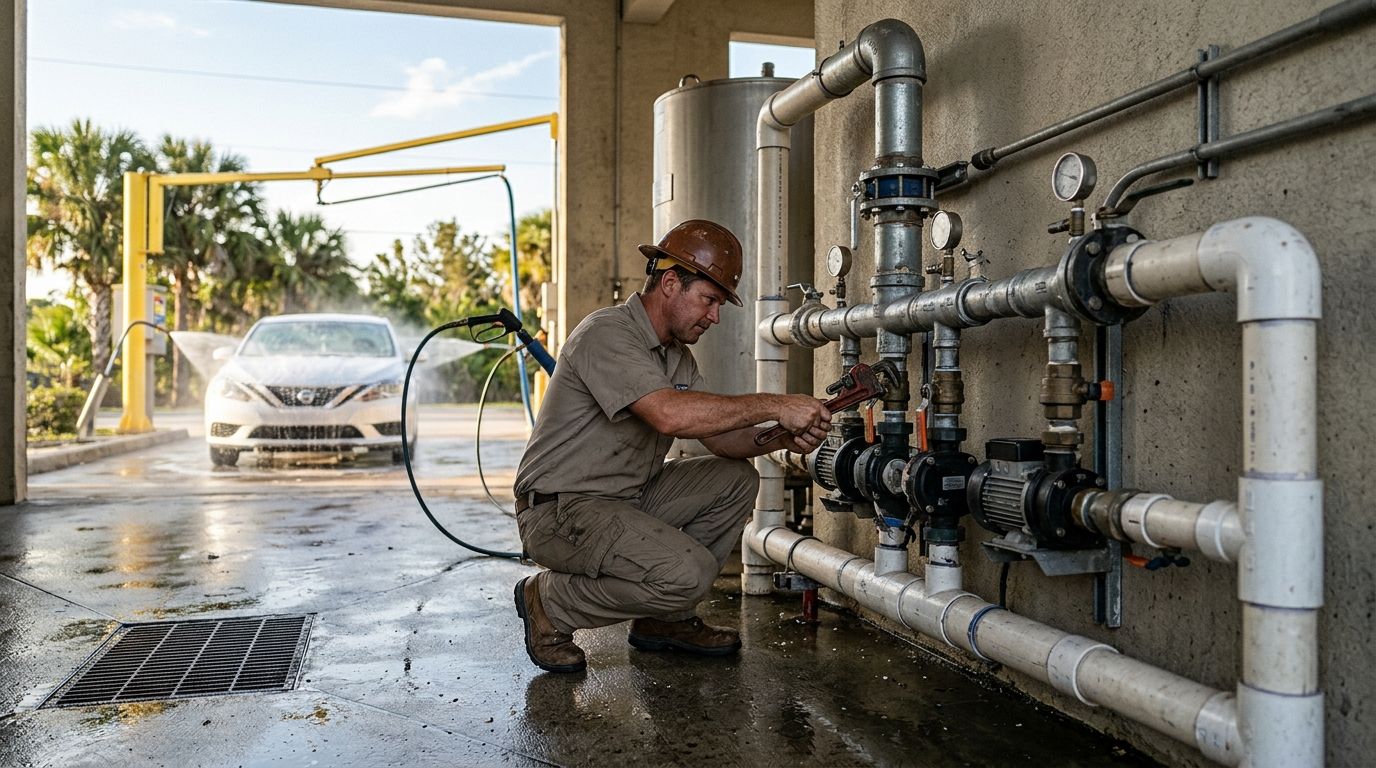
Commercial plumbing for car washes on the Treasure Coast means engineering water lines, reclaim tanks, oil-water separators, and backflow assemblies to handle thousands of gallons a day without a single bay going dark. A car wash runs on water volume a home system never sees, and a clogged drain or a failed backflow device doesn't just cost you a sink — it shuts down every bay until a licensed contractor fixes it.
- Commercial plumbing for car washes covers backflow testing, oil-water separators, and hydro jetting sized for wash-bay volume, not residential fixtures.
- Imperium Electric handles commercial plumbing for businesses across Port St. Lucie, Stuart, and Jensen Beach, including car wash bays and reclaim systems.
- Sand and grit from wash bays clog standard drain lines within months — hydro jetting clears grit without tearing up pipe.
- Florida requires annual backflow preventer testing on commercial water connections; skipping it risks a code violation or water shutoff.
- A single day of lost water pressure at a multi-bay wash can outcost a full plumbing inspection.
Why commercial plumbing matters for car washes
A car wash isn't a restaurant kitchen or a retail storefront. It's a building designed to move water constantly, all day, through equipment that residential plumbers rarely touch — reclaim pits, sand separators, high-pressure arches, and backflow assemblies that keep wash water from siphoning back into the public supply.
When those systems are undersized or neglected, the failure shows up as downtime: a bay closed for a clogged drain, a backflow test that lapsed and triggers a compliance notice, or a reclaim pump that burns out because nobody pulled the grit out of the pit. Every one of those problems is preventable with the right maintenance schedule, and every one of them costs more in lost wash cycles than the plumbing call that would have fixed it.
Imperium Electric treats car wash plumbing as a commercial account, not a house call — the fixtures, the code requirements, and the failure points are different, and the maintenance plan has to match.
Map your water reclaim and drainage system
Before anything gets repaired, you need a clear picture of where water enters, where it drains, and where the reclaim system sits in that loop.
- Locate every drain line from wash bays to the reclaim pit or municipal sewer connection
- Confirm the reclaim pit or sand/oil separator is sized for your bay count and vehicle throughput
- Check for cross-connections between fresh water and reclaim lines
- Document pipe material and age — older galvanized lines corrode faster under constant water flow
- Flag any bay with a history of slow drains or standing water
Test and certify your backflow prevention assembly
Florida utilities require annual testing on backflow preventers for commercial connections, and a car wash — with its chemical injection systems and reclaim loop — is exactly the kind of connection inspectors watch.
- Schedule the annual test before your utility's compliance deadline, not after a notice arrives
- Keep the certified tester's report on file for insurance and permitting
- Replace worn check valves before they fail a test, not after
- Confirm the assembly matches the hazard level of your chemical mixing system
A lapsed backflow certification is one of the fastest ways a car wash ends up with a water shutoff notice, and Imperium Electric's backflow preventer testing work covers the same commercial assemblies wash operators run.
Install oil-water and sand separators sized for wash volume
Undersized separators are the single most common plumbing failure point in car washes, and they're rarely visible until a pump seizes or a municipality flags an outflow violation.
- Size the separator to your peak vehicle count, not your average
- Pump and inspect the separator on a fixed schedule, not when it backs up
- Confirm outflow meets local wastewater discharge limits
- Add a secondary trap on any bay running undercarriage or engine washes
Clear drain lines before grit builds into full clogs
Sand, grit, and road salt move through wash bay drains constantly, and standard drain cleaning tools push through the surface without clearing the buildup along pipe walls.
- Run a camera inspection on any line with recurring slow drains
- Use hydro jetting instead of a cable snake — jetting clears the full pipe diameter, not just a channel through the clog
- Schedule jetting on a fixed interval for high-volume bays, not as an emergency response
- Check pipe joints for grit-related wear after each jetting pass
Hydro jetting for clogged drains clears the grit that standard snaking leaves behind, and it's the difference between a 20-minute service call and a bay closed for a full day of excavation.
Size water heaters and pressure lines for wash-cycle demand
A residential water heater cycles for a shower or a dishwasher. A car wash cycles continuously through a full shift, and undersized heating or pressure lines show up as weak arches and inconsistent rinse quality.
- Calculate peak simultaneous demand across every bay and arch, not just one
- Confirm pressure line diameter matches your pump specifications
- Check heater recovery rate against your busiest hour, not your daily average
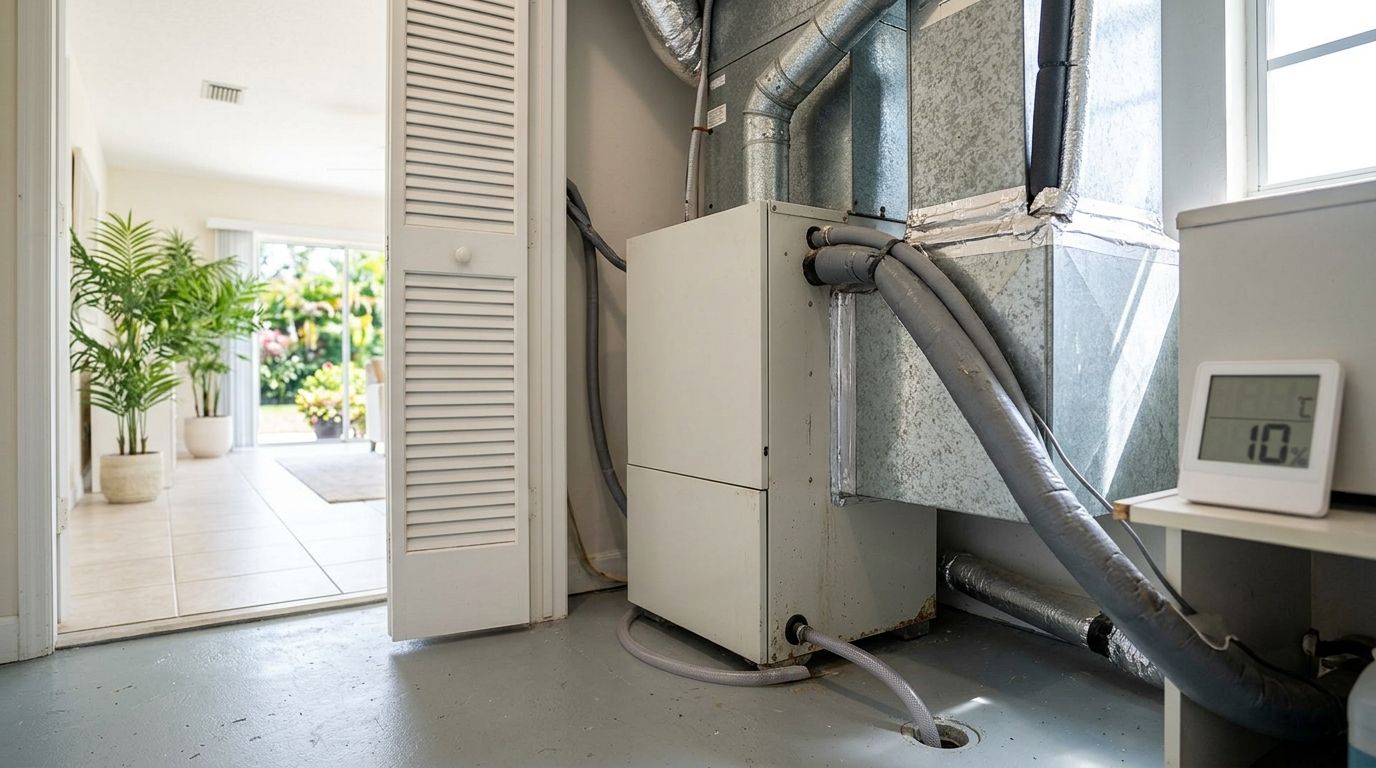
- Insulate exposed lines that run through unconditioned equipment rooms
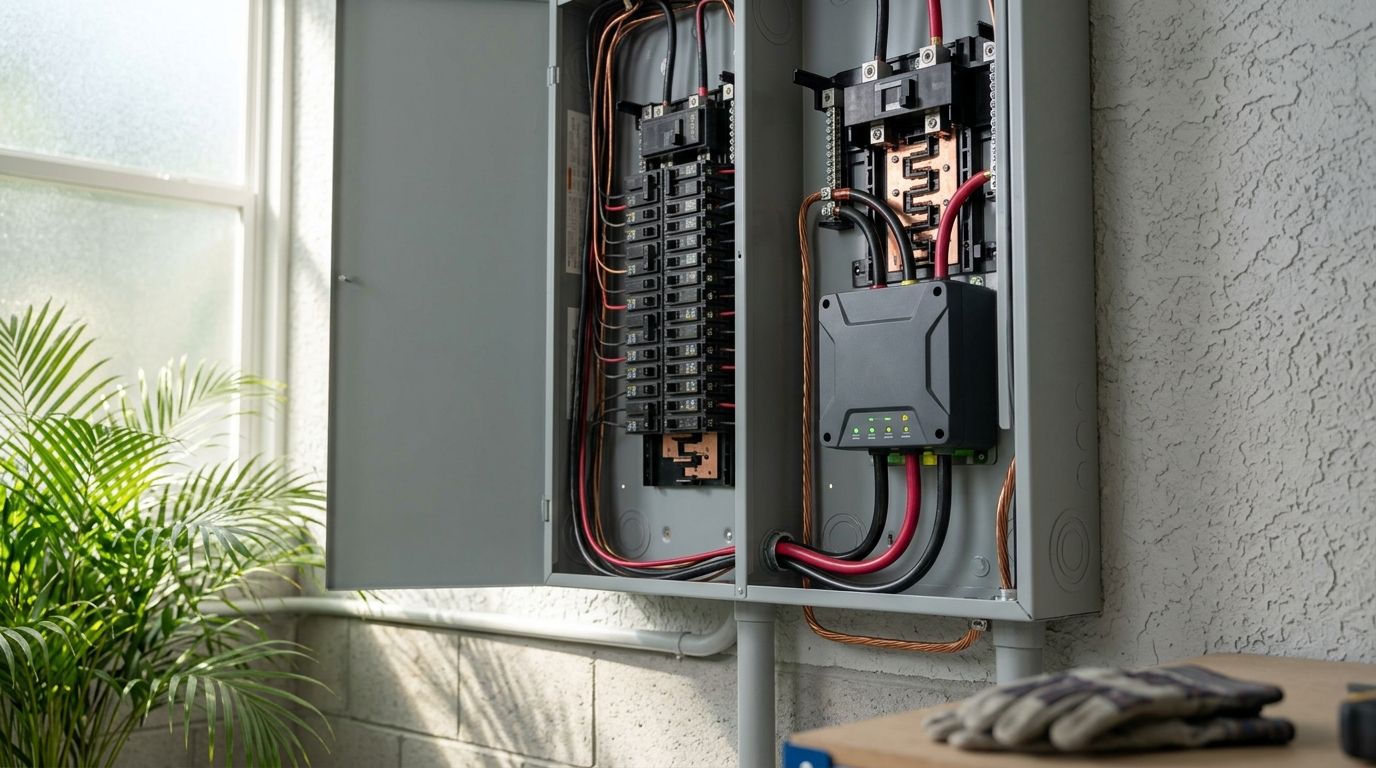
Add backup power for pumps and controllers
A plumbing system is only as reliable as the power running it. Reclaim pumps, chemical dosing controllers, and backflow-adjacent equipment all stop the moment the power drops, and Florida's storm season makes that a recurring risk, not a hypothetical one.
- Identify which pumps and controllers are critical to keep the wash operating at all
- Size a generator to the actual electrical load of those systems, not a guess
- Test transfer switches on a fixed schedule, not only during storm watches
- Confirm fuel or propane supply is adequate for a multi-day outage
Commercial generator installation keeps reclaim pumps and controllers running through a grid outage, so a storm doesn't cost you a week of closed bays on top of the storm damage itself.
Schedule quarterly commercial plumbing inspections
A single annual backflow test isn't enough coverage for a system running under constant load. Quarterly inspections catch wear before it becomes a shutdown.
- Inspect separator levels and pump condition every quarter
- Re-check backflow assembly condition between annual certifications
- Log every service call to spot recurring failure points by bay
- Review water and sewer utility bills for unexplained spikes that signal a hidden leak
Get a commercial plumbing quote
Licensed inspection for car wash bays, separators, and backflow assemblies.
Comparing your plumbing options
| Option | Best for | Key limitation |
|---|---|---|
| In-house maintenance staff | Single-bay washes with predictable, low volume | Can't sign off on backflow certification or code compliance paperwork |
| General local plumber | One-off repairs like a burst supply line | Rarely stocks separator parts or knows reclaim system layouts |
| Licensed commercial plumbing contractor | Multi-bay washes needing backflow testing, jetting, and electrical tie-ins together | Local crews, not a 24/7 national dispatch line |
| National franchise plumbing chain | Wash chains operating across multiple states | Techs often unfamiliar with Florida-specific backflow and permit rules |
A licensed commercial plumbing contractor wins for any wash running more than one bay — the backflow certification, separator sizing, and jetting all need to come from someone who understands the full system, not just the fixture in front of them.
Common mistakes car wash owners make
- Skipping annual backflow testing until code enforcement flags it — the notice costs more time than the test would have
- Running residential-grade water heaters sized for a house, not a wash bay's simultaneous demand
- Ignoring sand buildup in the reclaim pit until the pump burns out from grit intake
- Splitting electrical and plumbing repairs across two separate vendors, doubling the wait time when a pump failure involves both
- No backup power plan for reclaim pumps heading into hurricane season, leaving the wash closed for days after a storm that only knocked out grid power
“A car wash losing water pressure for one day can cost more in lost cycles than the full plumbing inspection that would have prevented it.”
FAQ
What is commercial plumbing for car washes?
Commercial plumbing for car washes covers the water reclaim system, oil-water separators, backflow prevention, and high-volume drain lines built for constant wash-bay throughput, not standard residential fixtures. It includes annual code compliance testing that residential plumbing doesn't require.
How often do car washes need backflow preventer testing in Florida?
Most Florida utilities require annual backflow preventer testing on commercial connections, and a car wash's chemical injection system typically puts it in a higher-scrutiny category. Missing the deadline can trigger a compliance notice or a water service interruption.
Do car washes need oil-water separators?
Yes — any wash bay handling undercarriage or engine cleaning needs a separator sized to peak vehicle volume to meet local wastewater discharge limits. Undersized separators are the most common cause of plumbing failures at car washes.
How much water does a car wash use per day?
Tunnel washes running reclaim systems can bring fresh water use down to roughly 30 to 45 gallons per vehicle, based on figures widely cited by car wash trade groups. Bay count, reclaim efficiency, and rinse-cycle design all shift that number.
Can a car wash owner hire an electrician and plumber from the same company?
Yes, and it cuts response time when a failure touches both trades — a burned-out reclaim pump is usually an electrical problem and a plumbing problem at the same time. Imperium Electric runs both under one commercial account for Treasure Coast businesses.
What causes clogged drains in car wash bays?
Sand, grit, and road salt build up along pipe walls faster than standard cable snaking can clear, leaving a channel through the clog instead of a fully cleared line. Hydro jetting clears the full pipe diameter and prevents the clog from recurring within weeks.
Is hydro jetting safe for old commercial pipes?
Hydro jetting is safe for most commercial pipe materials when pressure is calibrated to the pipe's age and condition, and a camera inspection beforehand confirms there's no existing damage that jetting would worsen. Older, deteriorated cast iron is the one case where a licensed contractor should assess first.
How much does commercial plumbing cost for a car wash?
Cost depends on bay count, separator size, and whether backflow or reclaim equipment needs replacement rather than maintenance. Get a site-specific quote rather than relying on a flat rate, since wash bay plumbing scopes vary more than standard commercial buildouts.
One last thing
The separator is the part of the system nobody thinks about until it fails, and it's usually the cheapest fix on the list compared to the pump replacement or code violation that follows when it's ignored. Put the quarterly inspection on the calendar in 2026 before storm season, not after a bay goes dark.