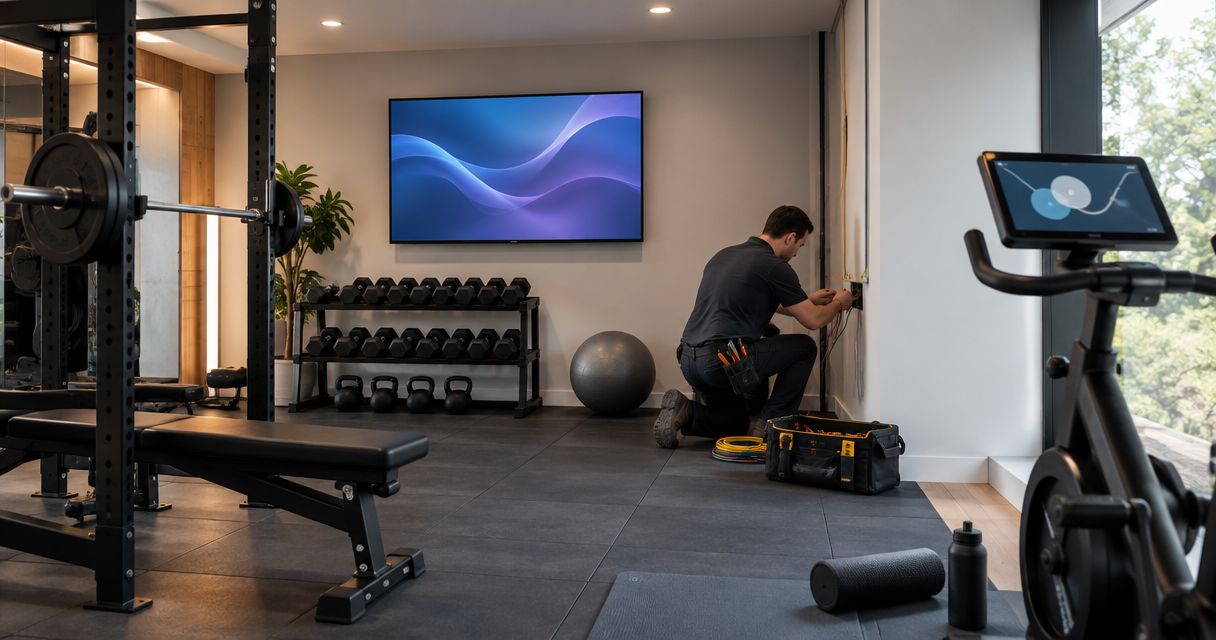
Electrical wiring for a home gym in Port St. Lucie, Stuart, or Jensen Beach means running dedicated circuits sized for treadmills, rowers, and smart fitness equipment — not relying on the single 15-amp outlet a spare bedroom or garage bay was built with. Get the load calculation wrong and you'll trip breakers mid-workout for years instead of fixing it once.
- Electrical wiring for a home gym needs at least one dedicated 20A circuit per motorized machine — treadmill and elliptical motors draw 10-15A continuous.
- Imperium Electric recommends GFCI protection on every gym circuit in a garage, shed, or humid Florida room.
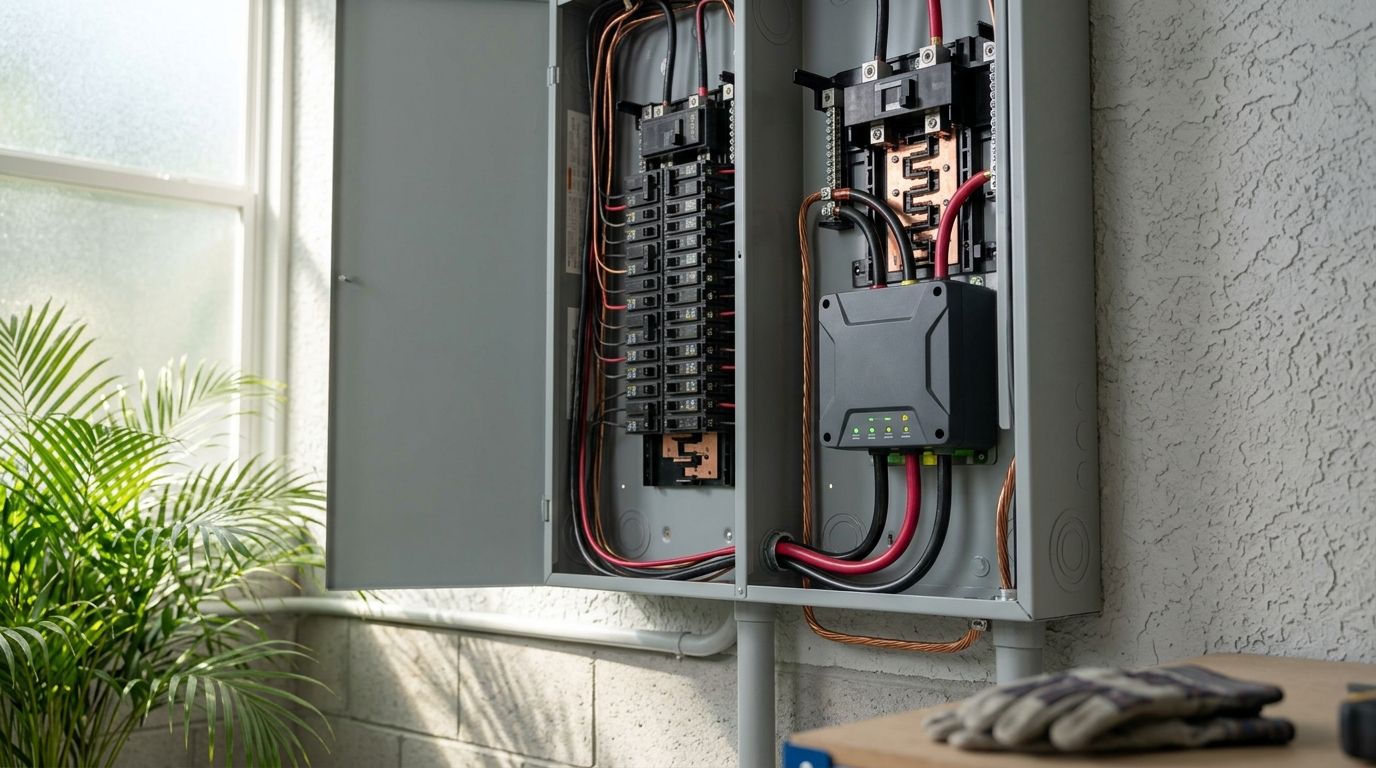
- A panel from before 2000 often has zero open slots left for a gym circuit — check breaker capacity before buying equipment.
- Skip extension cords under rubber flooring in 2026 builds; run a dedicated line instead of risking a mid-set breaker trip.
Why this matters for home gym owners
A home gym isn't a low-draw room like a closet or hallway. Treadmills, rowers, and smart bikes pull continuous current for 30-60 minutes at a time, which is a different load profile than a lamp or a phone charger cycling on and off. Florida garages and lanais add humidity and, in a lot of cases, an existing hose bib or washer hookup nearby — both wet-location triggers under the National Electrical Code.
Homeowners converting a garage or spare room into a fitness space in 2026 are running into the same problem builders hit with home theater wiring conversions: the room was wired for light residential use, not for equipment that draws hard and runs long. The fix is the same category of work — new dedicated circuits, correct breaker sizing, and a panel check before anything gets bolted to the floor.
Calculate your equipment's electrical load
Before you touch a wire, add up what every machine actually draws. Most home gym owners underestimate this because nameplate ratings get buried in the manual.
- Treadmill motors: 10 to 15 amps at 120V, continuous during use
- Ellipticals and rowers: 3 to 8 amps, mostly control electronics and resistance motors
- Smart bikes and fitness mirrors: 2 to 5 amps each
- Mini fridge or water cooler: 3 to 6 amps
- Wall-mounted TV or display screen: 1 to 3 amps
- Space heater or portable fan: 8 to 12 amps
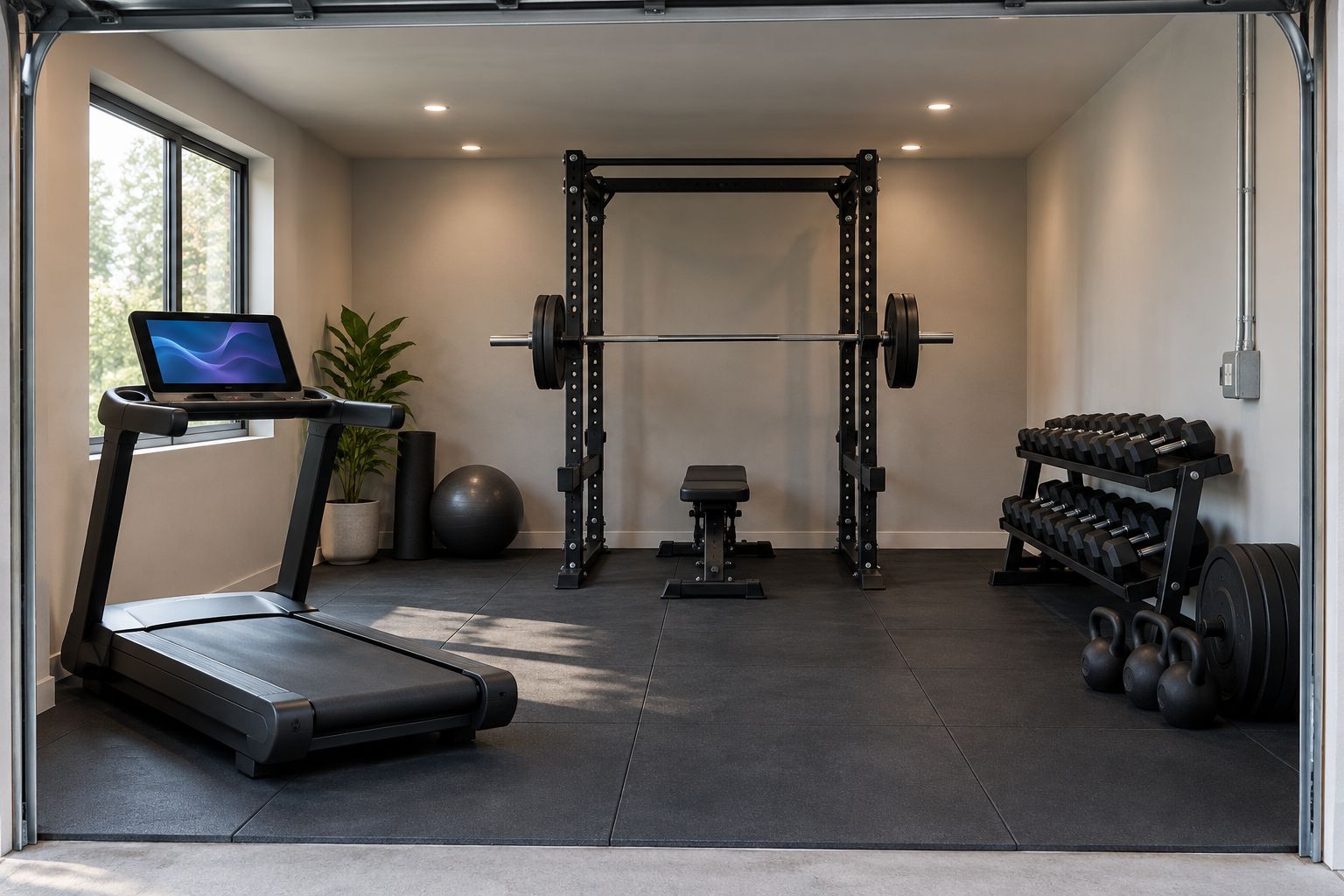
Add a dedicated circuit for every motorized machine
One circuit per treadmill or elliptical is the standard, not the exception, once you're past a single stationary bike.
- Run a dedicated 20A circuit for each treadmill or elliptical
- Never share a treadmill circuit with a garage door opener, mini-split, or freezer
- Label every breaker at the panel by machine, not by room
- Route conduit above head height in garages to avoid impact damage from dropped weights
- Leave one spare circuit open for equipment you'll add later
Install GFCI protection on every gym circuit
A garage, shed, or lanai gym gets treated like a wet location under code, and sweat plus hosed-down flooring make that call easy.
- Add GFCI breakers or GFCI outlets on every circuit serving the gym space
- Treat sweat-soaked flooring the same as a bathroom or laundry room for protection purposes
- Test GFCI outlets monthly — a tripped GFCI mid-workout points to a wiring problem, not a fluke
- Use weather-resistant, in-use covers on any outlet near a garage door or open bay
Plan outlet placement before you bolt anything to the floor
Outlet location decided after the equipment is installed means extension cords, and extension cords under rubber flooring are a fire risk, not a shortcut.
- Mark equipment footprint on the floor with tape before running any wire
- Place wall outlets around 18 inches high for wall-mounted units
- Use floor boxes for machines that sit in the center of the room
- Leave a spare outlet within 6 feet of anywhere you might add a fan, speaker, or charging station
- Route low-voltage wiring for speakers or mirror displays on a separate run from power circuits
Check your panel's capacity before you commit
This is where most home gym plans stall. Count open breaker slots before buying equipment, not after.
- Count physical open slots in your panel, not just amperage headroom
- A 100-amp panel from the 1990s frequently has zero room left for two new 20A circuits
- Confirm the panel's main breaker rating actually handles the added continuous load, not just the individual circuit
- If slots are full, a panel upgrade or a small sub-panel next to the gym solves it without a full rewire
Add surge protection for smart equipment
Smart bikes, touchscreen consoles, and app-connected mirrors fail on power spikes more often than a treadmill's basic motor does.
- Whole-panel surge protection covers every device in the gym at once, not just the outlets you remember
- Point-of-use surge strips are a weaker fallback, not a substitute, for equipment with a touchscreen
- Florida's lightning season runs through 2026 same as every year — surge events are a summer-heavy risk, not a rare one
- Pair surge protection with GFCI rather than choosing one over the other
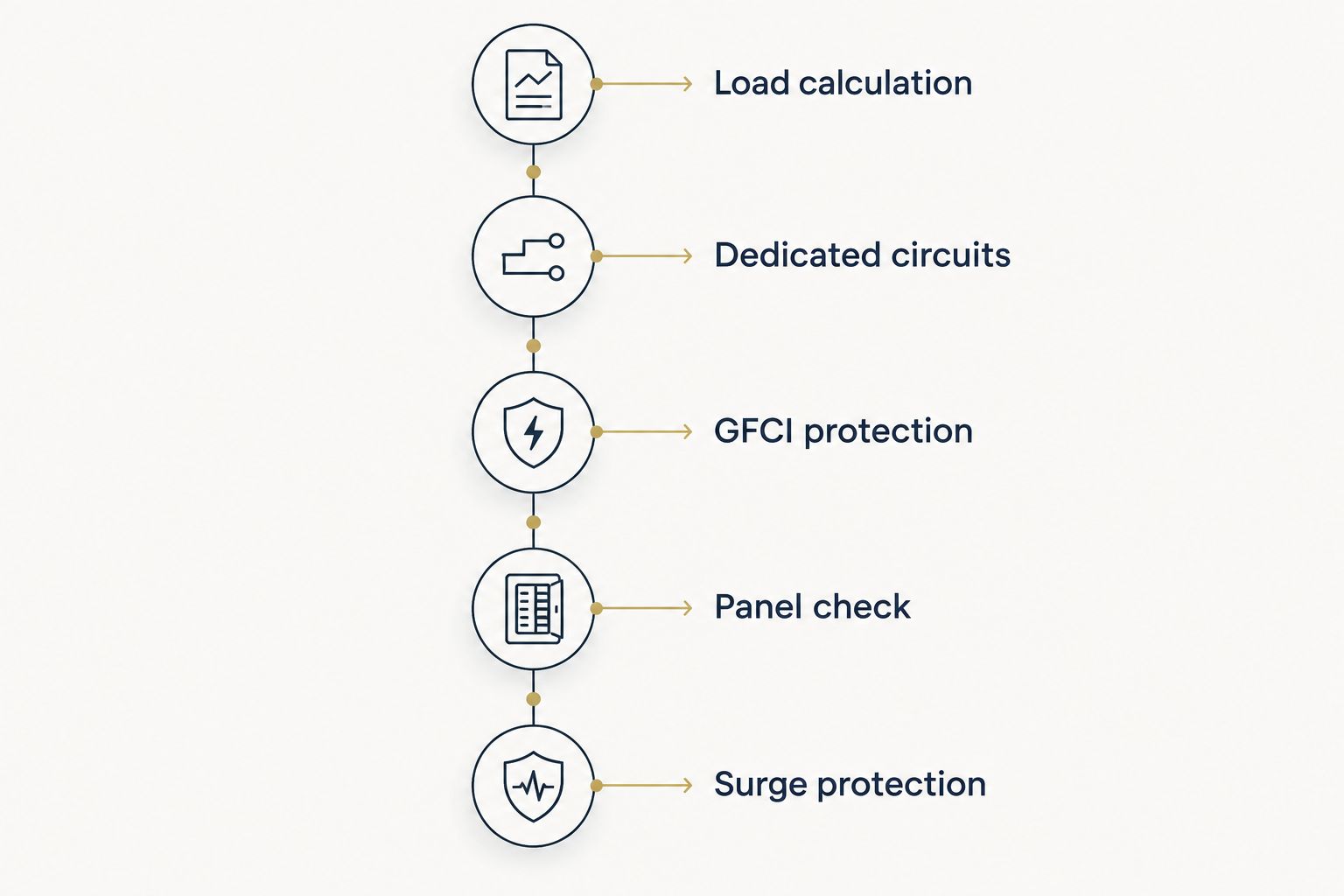
Wire lighting, fans, and ventilation last
Lighting and ventilation matter for comfort but they don't drive circuit sizing the way motorized equipment does — sequence them after the load-bearing work.
- Put ceiling fans and gym lighting on a separate circuit from equipment
- Add a dedicated exhaust fan circuit if the room lacks a window for humidity control
- Use LED fixtures rated for garage or damp locations if the space isn't fully conditioned
- Wire mirror lighting on its own low-draw circuit, not shared with the treadmill
Pull the permit before the drywall goes up
Skipping the permit on a home gym conversion is the single most common way homeowners find out later they can't sell the house without redoing the work.
- Confirm whether your county requires a permit for new circuits, not just for panel changes
- Schedule the rough-in inspection before insulation or drywall covers the wiring
- Keep permit paperwork on file for insurance and future home sale disclosures
- Have a licensed electrician pull the permit under their license number, not a general handyman
Circuit options for a home gym, compared
| Option | Best for | Key limitation |
|---|---|---|
| Standard 15-20A outlet | A single stationary bike or light-duty equipment | Can't handle two motorized machines running at once |
| Dedicated 20A GFCI circuit | Treadmills, rowers, ellipticals in garages or humid rooms | Needs an open breaker slot and code-compliant wire gauge |
| Dedicated 240V circuit | Saunas, cold plunge heaters, or heavy-duty equipment | Requires a licensed electrician to size the breaker and wire correctly |
| Panel upgrade | Homes with a full panel and multiple new circuits planned | Adds labor and inspection time before any gym wiring starts |
| Small sub-panel near the gym | Detached garages or rooms far from the main panel | Still depends on main panel having capacity to feed it |
A dedicated 20A GFCI circuit wins for most Treasure Coast home gyms — it covers a treadmill or elliptical safely and meets code for garage or humid-room installs without the cost of a full panel upgrade.
Get your home gym wiring quoted
Licensed electricians serving Port St. Lucie, Stuart, and Jensen Beach.
Common mistakes home gym owners make
- Plugging a treadmill and a mini-split into the same circuit. Both draw continuous current, and running them together trips the breaker even if each one is fine alone.
- Skipping GFCI in a garage gym near a hose bib. Sweat plus a nearby water source is exactly the wet-location scenario GFCI protection exists for.
- Running extension cords under rubber flooring. Heat builds up under mats and cords, and it's invisible until something fails.
- Mounting a smart mirror or TV without a dedicated low-voltage line. Sharing a power circuit with the display causes flicker and console resets mid-session.
- Ignoring 240V needs for a sauna or cold plunge heater. These aren't 120V add-ons — they need their own circuit sized by a licensed electrician, not a retrofit outlet.
FAQ
What size circuit does a home gym treadmill need?
Most home gym treadmills need a dedicated 20A circuit since motors draw 10 to 15 amps continuously. Sharing that circuit with another appliance risks nuisance breaker trips mid-run.
Can I plug a home gym into a regular bedroom outlet?
A standard 15-amp bedroom outlet works for a single light-duty machine but fails once you add a treadmill or two motorized units. Dedicated circuits are the standard for anything beyond one stationary bike.
Do home gym circuits need GFCI protection?
Yes, especially in garages, sheds, or humid rooms where sweat and moisture are present. GFCI protection is standard practice for these wet-adjacent locations under the National Electrical Code.
How many amps does a home gym typically use?
A gym with one treadmill, a rower, and a fitness mirror typically runs 15 to 25 amps combined across circuits. Add a mini fridge or space heater and that climbs another 8 to 12 amps.
Does a home gym electrical addition require a permit in Port St. Lucie?
New circuits added to a home generally require a permit and inspection in St. Lucie County. Skipping it creates problems later during a home sale or insurance claim.
Can a garage gym share power with the garage door opener?
No — garage door openers spike current on start-up, and sharing a circuit with gym equipment causes nuisance trips. Keep them on separate dedicated circuits.
How much panel capacity do I need for a home gym?
You need at least one open breaker slot per new dedicated circuit, plus headroom on the main breaker rating for the added continuous load. Panels from before 2000 often need an upgrade first.
Is it better to add a sub-panel for a home gym?
A sub-panel makes sense for detached garages or rooms far from the main panel, but it still depends on the main panel having capacity to feed it. For an attached room, new circuits off the existing panel are usually simpler.
One last thing
The detail most homeowners miss in 2026 conversions: a garage gym in Florida heat needs cooling wired in from the start, not added after the equipment overheats a mini-split that was sized for storage, not a workout room. Size the cooling circuit alongside the outlet plan, not after the treadmill arrives.