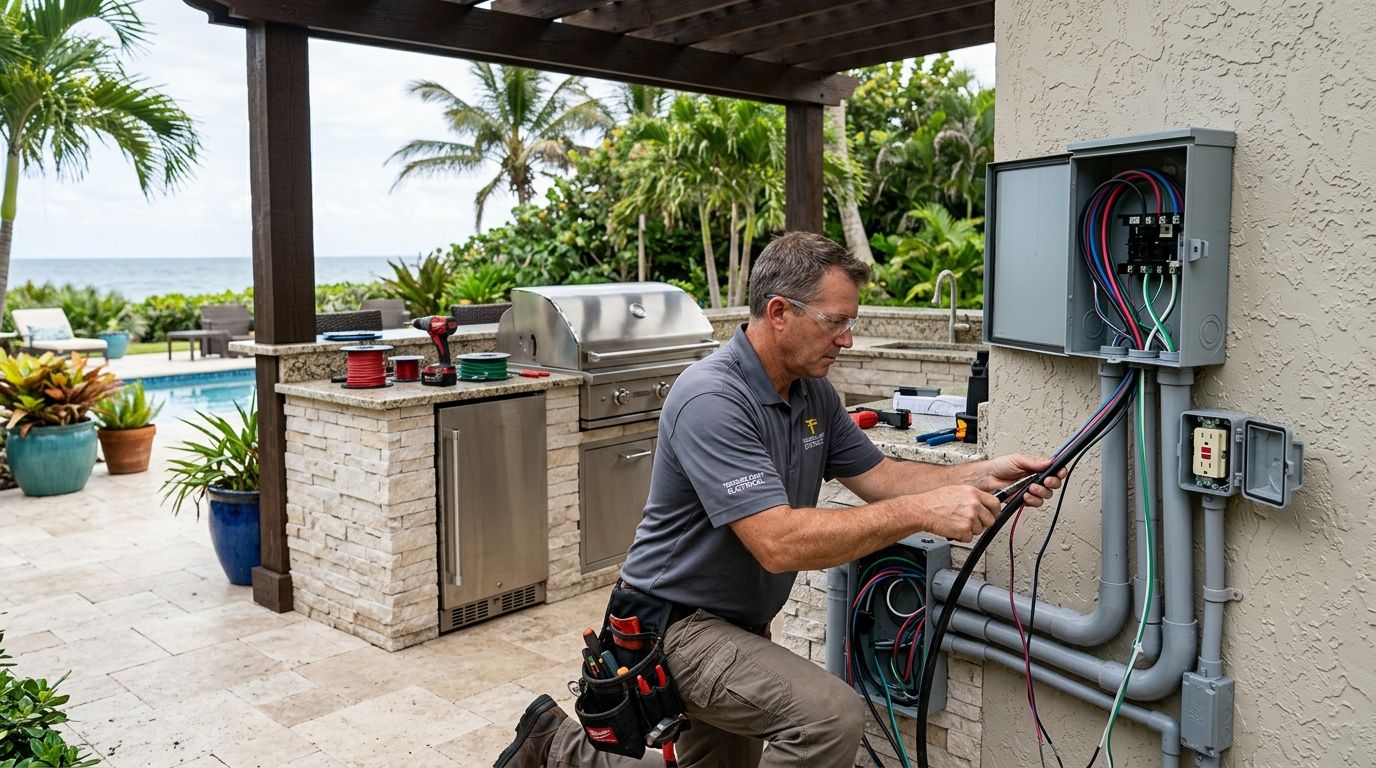
Wiring an outdoor kitchen on the Treasure Coast means every circuit answers to salt air, summer humidity, and NEC rules for wet-location equipment — not the same job as running a line to an indoor range. Homeowners in Port St. Lucie, Stuart, and Jensen Beach who skip the GFCI and bonding requirements end up with tripped breakers, corroded outlets, or a failed inspection before the grill ever gets used.
- Electrical wiring for outdoor kitchen builds on the Treasure Coast requires GFCI-protected, weatherproof circuits sized for grills, fridges, and pizza ovens.
- A dedicated 20-amp circuit covers a basic outdoor kitchen; multi-appliance builds need a sub-panel with room for future loads.
- NEC 210.8(A) mandates GFCI protection on every outdoor receptacle — no exceptions for covered lanais.
- Kitchens within 5 feet of pool equipment fall under NEC 680 bonding rules, which is a licensed-electrician job, not a DIY one.
- St. Lucie County requires a permit for new outdoor kitchen circuits before work starts, not after.
Why this matters for Treasure Coast outdoor kitchen owners
Outdoor kitchens sit in the harshest electrical environment on a residential property — direct sun, driving rain during hurricane season, and salt-laden air that eats unprotected metal within a couple of years. A GFCI outlet rated for wet locations isn't optional here; it's the difference between a code-compliant kitchen and one that fails the final inspection.
Humidity alone shortens the life of standard indoor-rated devices. A receptacle rated for indoor use will corrode and arc within a season or two on an uncovered Treasure Coast patio, which is why every outdoor kitchen circuit built in 2026 needs weatherproof, in-use covered devices from the start, not as a retrofit after the first storm season exposes the gap.
Build the circuit right: step by step
Confirm your appliance load before you run any wire
List every appliance the outdoor kitchen will run at once, then add their amp draws together. Undersizing this step is the single most common reason outdoor kitchen circuits trip breakers within the first month.
- Built-in grill with rotisserie motor
- Outdoor refrigerator or beverage center
- Pizza oven or side burner
- Landscape or task lighting on the same run
- Bluetooth speakers or outdoor TV
- Future additions like a warming drawer
Choose between a dedicated circuit and a sub-panel
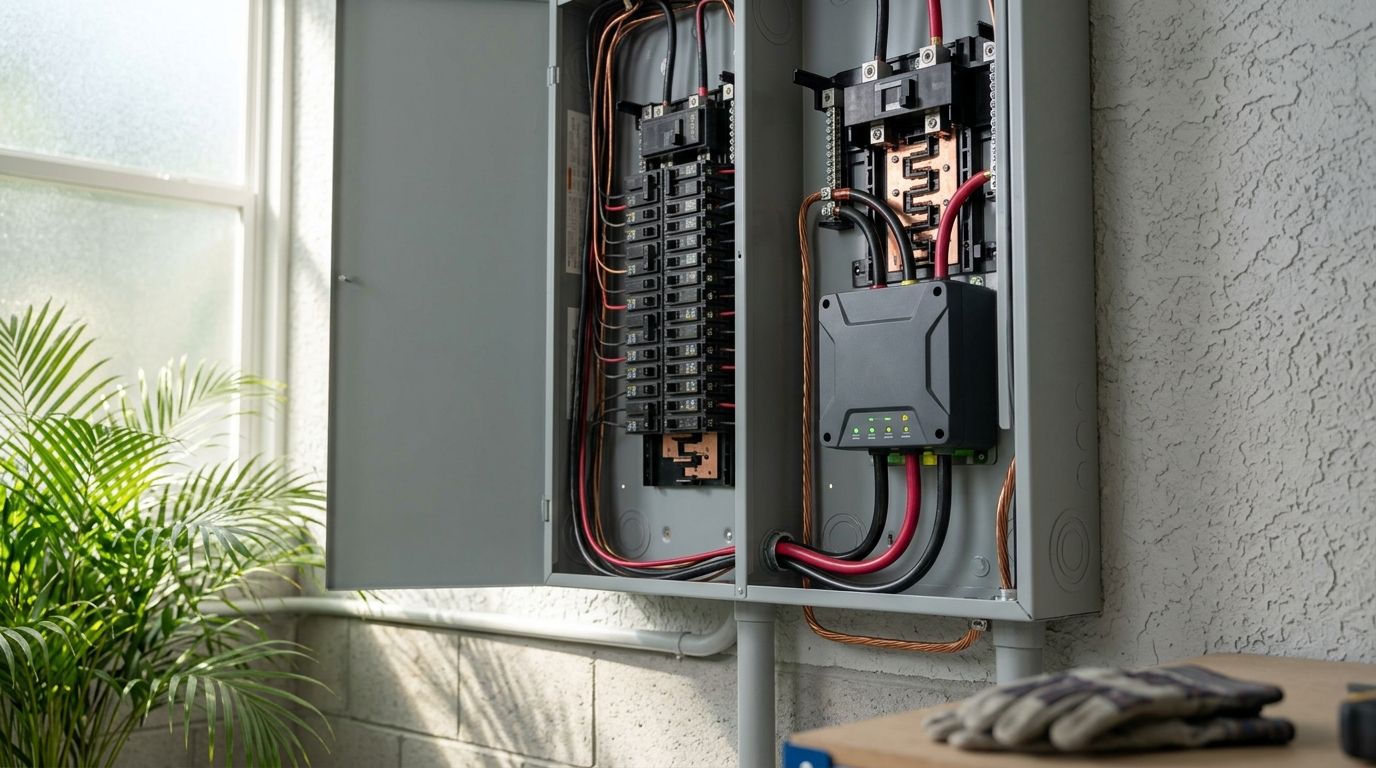
A single dedicated 20-amp circuit handles a grill and a small fridge. Anything beyond that — a full outdoor kitchen with a pizza oven, ice maker, and lighting — needs its own sub-panel fed from the main panel, which is faster and cleaner to size correctly when a licensed electrician runs the load calculation up front instead of adding circuits piecemeal later.
- 20-amp dedicated circuit: grill plus one small appliance
- 30 to 50-amp sub-panel: multi-appliance outdoor kitchens
- Separate lighting circuit: keeps appliance loads from tripping when landscape lights come on
- 240-volt circuit: required for larger built-in appliances like pizza ovens with electric elements
Specify GFCI protection on every device
NEC 210.8(A) requires GFCI protection on all outdoor receptacles, covered or not. Weatherproof, in-use covers keep the protection working even with a cord plugged in during rain.
- GFCI breaker at the panel or GFCI receptacle at the outlet
- In-use (bubble) covers rated for wet locations
- Testing the trip button monthly, not just after a storm
- Separate GFCI protection for any 240-volt appliance circuit
Route and protect the wiring for salt air
Direct burial or conduit-protected wiring resists the corrosion that ruins exposed runs within two or three Treasure Coast summers.
- Rigid or PVC conduit for any exposed run
- Direct-burial-rated cable for underground sections
- Stainless or corrosion-resistant hardware at every junction
- Drip loops at every outdoor device to keep water from tracking into the box
Bond metal components near pool equipment
Outdoor kitchens built near a pool deck fall under NEC 680 bonding rules if any metal counter, frame, or equipment sits within 5 feet of pool water or equipment. This is a licensed-electrician task — bonding grids tie into the pool's equipotential system and get inspected separately from the kitchen circuit itself.
- Bond metal countertops and cabinet frames
- Tie bonding conductor to the pool's existing equipotential grid
- Use 8 AWG solid copper bonding wire per code
- Schedule bonding inspection alongside the pool electrical inspection, not after
Add surge protection before the first storm season
Outdoor kitchen appliances with electronic ignition or digital controls take the same lightning-surge risk as indoor electronics. Whole-house surge protection at the main panel covers the outdoor kitchen circuit along with everything else in the house, which is a more efficient fix than point-of-use surge strips at every outdoor device.
- Whole-house surge protector at the main panel
- Point-of-use protection for any smart appliance controllers
- Grounding rod verification during the same service call
- Post-storm visual inspection of every outdoor junction box
Pull the permit before the first trench is dug
St. Lucie County requires a permit for new circuits, sub-panels, and any work touching the main panel. Skipping this step is the fastest way to end up redoing wiring behind a finished patio.
- Electrical permit for the new circuit or sub-panel
- Building permit if the outdoor kitchen includes a structure or roof
- Rough-in inspection before concrete or pavers go down
- Final inspection before the gas or electric appliances get connected
Comparison: wiring options for outdoor kitchens
| Option | Best for | Key limitation |
|---|---|---|
| Single 20-amp GFCI circuit | Grill plus one small appliance | No headroom for future appliances |
| Dedicated sub-panel (30-50 amp) | Full outdoor kitchens with multiple appliances | Higher upfront electrical work and permit scope |
| Weatherproof in-use receptacle covers | Any outdoor outlet, regardless of circuit size | Protects the device, doesn't replace proper circuit sizing |
| Pool bonding grid tie-in | Kitchens within 5 feet of pool equipment | Requires a licensed electrician under NEC 680, not a DIY step |
Verdict: a dedicated sub-panel with GFCI protection on every device is the right call for any outdoor kitchen with more than two appliances — a single 20-amp circuit is fine for a grill-only setup and nothing more.
Get your outdoor kitchen wired right
Licensed electricians for GFCI, bonding, and permit-ready outdoor kitchen circuits.
Common mistakes Treasure Coast homeowners make
- Using indoor-rated receptacles outdoors. They corrode and arc within a season or two of salt air and rain exposure.
- Skipping the permit because the kitchen is "just an outlet." Any new circuit or sub-panel touching the main panel needs a permit in St. Lucie County.
- Forgetting pool bonding when the kitchen sits within 5 feet of pool equipment. This gets caught at inspection and means tearing into finished cabinetry.
- Undersizing wire gauge for long runs from the panel. Voltage drop on a 50-foot-plus run trips appliances that should run fine.
- Ignoring GFCI test buttons after storm season. Salt humidity degrades GFCI devices faster than inland installs — test monthly, not annually.
FAQ
What's the best way to wire an outdoor kitchen in Florida?
A dedicated GFCI-protected circuit sized for your actual appliance load, run in conduit or direct-burial cable, is the standard approach in 2026. Multi-appliance builds need a sub-panel instead of stacking devices onto one circuit.
Do I need a permit for outdoor kitchen electrical work in St. Lucie County?
Yes, any new circuit, sub-panel, or work touching the main panel requires a permit. Skipping it risks having to redo the wiring behind finished pavers or cabinetry.
Is a dedicated circuit required for an outdoor kitchen?
A dedicated circuit is strongly recommended for any grill with a rotisserie motor or a second appliance like a fridge. Sharing a circuit with interior loads causes nuisance trips.
How close can outdoor kitchen wiring be to a pool?
Anything within 5 feet of pool water or equipment falls under NEC 680 bonding rules. That means metal counters, frames, and grounded appliances need to tie into the pool's bonding grid.
What gauge wire do I need for an outdoor kitchen circuit?
A standard 20-amp circuit typically runs on 12 AWG wire, while a 30 to 50-amp sub-panel feed needs 10 AWG or larger depending on distance. Longer runs from the main panel need a licensed electrician's load and voltage-drop calculation.
Can I DIY outdoor kitchen wiring?
Basic GFCI outlet swaps are within reach for a handy homeowner, but new circuits, sub-panels, and any bonding near a pool require a licensed electrician and a permit. Inspectors catch unpermitted work at resale.
How much does electrical wiring for an outdoor kitchen cost in 2026?
Cost depends on circuit count, distance from the main panel, and whether pool bonding applies. Get a written quote from a licensed electrician before committing to a layout.
Does hurricane season affect outdoor kitchen electrical work?
Yes, surge protection and corrosion-resistant materials matter more on the Treasure Coast than inland. Whole-house surge protection at the main panel covers the outdoor kitchen circuit along with the rest of the house.
One last thing
The detail most homeowners miss: GFCI devices in outdoor, humid environments degrade faster than the same devices installed indoors. A GFCI outlet that tests fine in March can fail silently by August after a full Treasure Coast summer of salt air and afternoon storms — test the button every month, not once a year, especially on any outlet within reach of the pool deck.