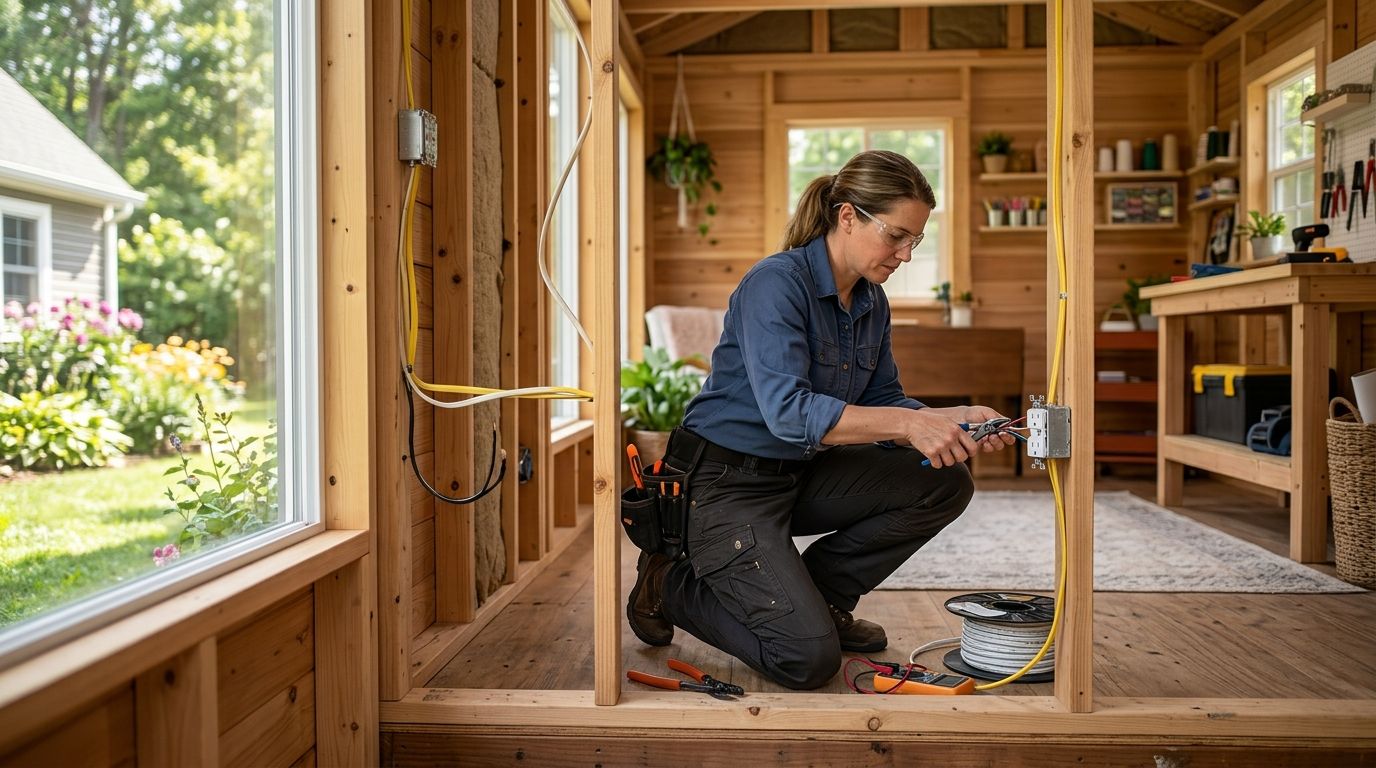
Electrical wiring for she sheds and backyard workshops means running dedicated circuits from a subpanel to a detached structure so the space can run lights, tools, air conditioning, and outlets without tripping the main panel inside the house. Homeowners in this segment are usually converting a shed, prefab kit, or new-build structure into a home office, craft studio, or workshop that needs more than one extension cord run through a window.
- Electrical wiring for she sheds needs its own subpanel, not a shared circuit off the house panel, once you add HVAC or power tools.
- Imperium Electric pulls permits for detached-structure wiring across the Treasure Coast before any trench opens.
- Buried feeder cable to a backyard workshop runs 18-24 inches deep under NEC 300.5 depending on cable and conduit type.
- A 20-amp circuit runs basic lighting and outlets; 60-100 amp subpanels are standard once you add a mini-split or table saw.
- Skipping the permit is the most common mistake, and it surfaces during a four-point inspection or home sale.
Why electrical wiring for she sheds matters for this segment
A she-shed or backyard workshop is no longer a storage box. It is a second structure pulling real load. Homeowners running a window AC, a laptop dock, a space heater, and a few power tools off one extension cord will trip breakers constantly and risk a fire from an undersized conductor buried without conduit.
This segment differs from a typical interior remodel because the structure sits outside the building envelope. That changes the code path: buried or overhead feeder runs, a disconnect, separate grounding, and GFCI protection on every outdoor-rated receptacle under NEC 210.8. Imperium Electric treats every detached-structure job as a mini-service, not an extension cord upgrade, because that is what the code and the insurance underwriter both expect.
Treasure Coast homeowners also deal with humidity, sandy soil, and hurricane season, all of which drive conduit choice and depth. A workshop wired the way it would be done in a dry northern climate does not hold up the same way in Port St. Lucie or Jensen Beach in 2026.
How to wire a she-shed or backyard workshop
Calculate your actual load before you buy wire
Most DIY jobs guess at wire gauge. Start with a real load calculation instead.
- List every device: lights, outlets, mini-split, table saw, kiln, mini-fridge
- Add up amp draw at 120V and 240V separately
- Add a 25% margin for continuous loads per NEC
- Decide now whether HVAC is coming later, because undersizing the feeder means reopening the trench
- Match the total against a 20-amp, 60-amp, or 100-amp subpanel
Choose buried conduit or an overhead feed
The method depends on distance from the house, landscaping, and HOA rules.
- Buried PVC or rigid conduit is the standard for most backyard runs under 100 feet
- Direct-burial UF cable works for lighter loads but still needs 18-24 inches of depth
- Overhead triplex installs faster but stays exposed during storm season
- Call for a utility and irrigation locate before digging near septic or sprinkler lines
- Runs past 100 feet usually mean stepping up wire gauge to control voltage drop
Pull the permit before the trench opens
Skipping this step is the fastest way to create a problem at resale.
- St. Lucie, Martin, and surrounding counties require a permit for any new subpanel or feeder to a detached structure
- Unpermitted panels show up on a four-point insurance inspection and can stall a sale
- Permitted work gets inspected at rough-in and final, catching depth and grounding errors before backfill
- Permitting an electrical panel upgrade in St. Lucie County walks through the paperwork most homeowners skip
- Keep the permit card; a future buyer or insurer will ask for it
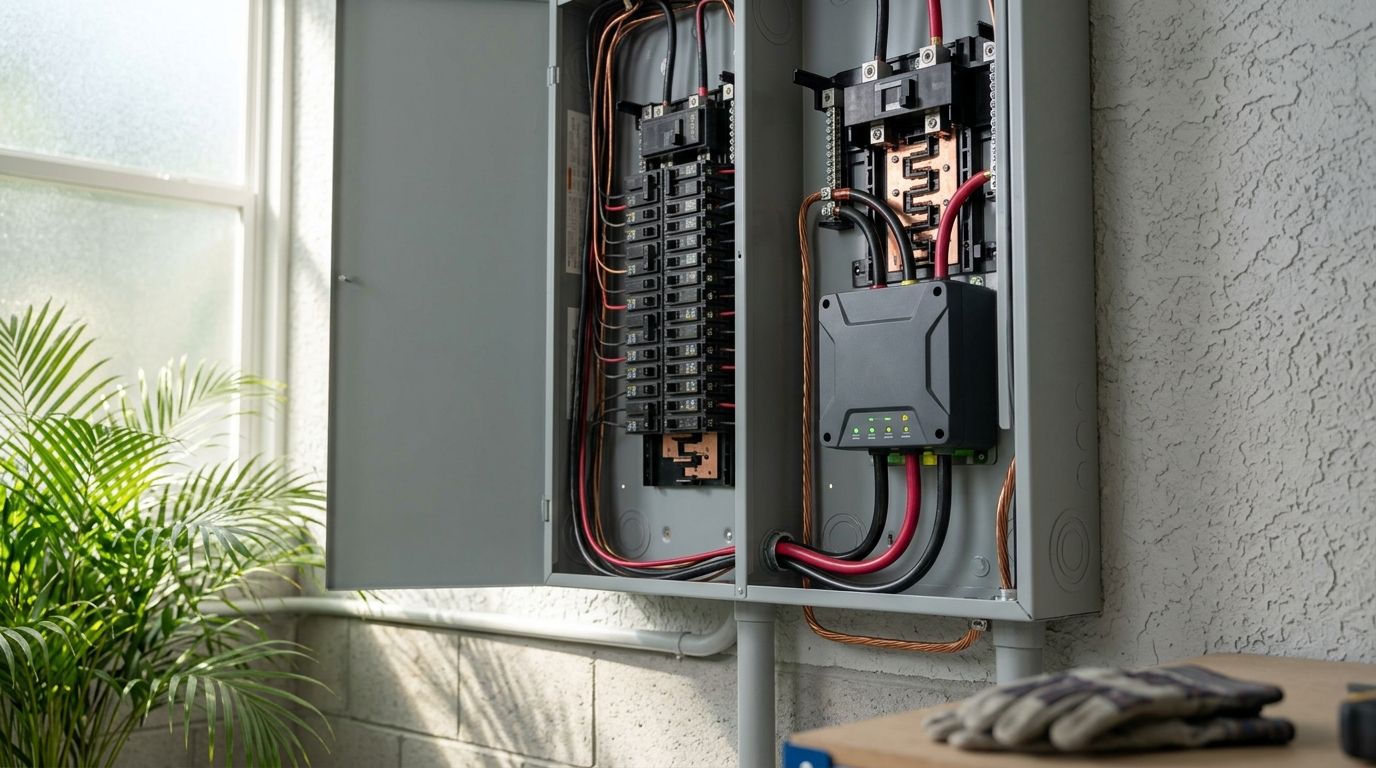
Size and install the subpanel
The subpanel is what lets you run more than one thing at a time.
- 20-amp subpanels cover lighting and a couple of outlets only
- 60-amp subpanels handle lighting, outlets, and a small window AC or two power tools
- 100-amp subpanels are standard once a mini-split, kiln, or welder is in the plan
- The subpanel needs its own grounding electrode system, separate from the main house ground
- Electrical panel upgrades for home additions and renovations covers sizing logic that applies the same way to detached structures
Wire outlets and lighting around actual use
Design the circuit layout around the work, not around whatever outlets came with the kit shed.
- Split receptacles across at least two circuits so one trip does not kill the whole space
- Give any single tool over 12 amps its own dedicated 20-amp circuit
- Put LED shop lighting on a separate circuit from outlets so a tool trip does not leave you in the dark
- Add weatherproof exterior receptacles on the shed wall for pressure washers and seasonal lighting
- Office conversions need different work than workshops, and electrical wiring for home offices and remote work setups covers desk-level circuits and data drops
Add GFCI, AFCI, and surge protection
This is the step DIY jobs skip and inspectors check first.
- Every outdoor and detached-structure receptacle needs GFCI protection under NEC 210.8
- Workshop circuits often need AFCI protection on top of GFCI depending on circuit type
- A surge protective device at the subpanel shields tools and electronics from grid spikes during Florida storm season
- Whole-house surge protection for Florida homes explains where that protection sits relative to a detached subpanel
- Label every breaker at the subpanel; unlabeled panels fail final inspection
Schedule rough-in and final inspection
Do not backfill the trench or close walls until both inspections pass.
- Rough-in checks trench depth, conduit type, and grounding before backfill
- Final confirms breaker sizing, GFCI and AFCI placement, and panel labeling against the permit
- Most failed she-shed inspections come down to shallow trenching or missing GFCI protection
- File the inspection report with your closing documents
Get your she-shed wired right
Licensed, insured electricians for detached-structure subpanels across the Treasure Coast.
Comparison: who should wire your she-shed or workshop
| Option | Best for | Key limitation |
|---|---|---|
| Extension cord from the house | A shed with one light bulb and nothing else | Trips constantly under real load, no code compliance, no inspection record |
| Unlicensed handyman install | Nothing in Florida, where detached-structure feeders require a licensed electrician | No permit pulled, no inspection, and the work can complicate an insurance claim |
| Prefab shed builder's factory wiring | A kit shed used for storage with a single lighting circuit | Rarely sized for HVAC or power tools, and the feeder from the house is still your problem |
| Licensed electrician (Imperium Electric) | Any she-shed or workshop with lighting, outlets, HVAC, or power tools | Requires a permit timeline and scheduled inspections |
Verdict: a licensed electrician installing a permitted subpanel is the only option that survives a resale inspection or an insurance claim — extension cords and unlicensed handyman work do not meet Florida's detached-structure requirements in 2026.
“If the shed needs air conditioning, it needs a subpanel — an extension cord is not a wiring plan.”
Common mistakes she-shed and workshop owners make
- Running everything off one cord. The AC and a tool on the same 15-amp circuit trip the breaker every time, and the cord itself heats up under sustained load.
- Skipping the permit because the structure "is not a real building." It surfaces later at a four-point insurance inspection or during a sale.
- Burying cable too shallow. Anything under 18 inches without proper conduit protection is a routine failed-inspection item.
- Undersizing the subpanel. A 20-amp panel that fits a desk-and-lamp office in 2026 leaves no room for the mini-split you want next summer.
- Forgetting GFCI on exterior receptacles. It is one of the fastest ways to fail a final inspection and one of the cheapest things to get right the first time.
FAQ
Do I need a permit for she-shed electrical wiring in Florida?
Yes. Any new subpanel or feeder run to a detached structure requires a permit in St. Lucie, Martin, and surrounding counties in 2026. Unpermitted work commonly surfaces during a four-point insurance inspection or a home sale.
How deep does buried electrical cable need to be for a backyard workshop?
NEC 300.5 sets buried depth between 18 and 24 inches depending on cable and conduit type. Rigid metal conduit generally permits shallower burial than direct-burial cable.
What size subpanel does a she-shed need?
A 20-amp subpanel covers basic lighting and a couple of outlets, while 60 to 100 amps is standard once a mini-split, table saw, or kiln is involved. The correct size comes from a load calculation of everything you plan to run.
Can I wire a backyard workshop myself?
Florida requires a licensed electrician for new feeders and subpanels to detached structures, so DIY wiring beyond a plug-in cord is not code-compliant. A licensed electrician also pulls the permit and schedules the rough-in and final inspections.
Is GFCI protection required in a backyard shed?
Yes. NEC 210.8 requires GFCI protection on outdoor and detached-structure receptacles. Missing GFCI is one of the most common reasons a she-shed final inspection fails.
Is an overhead feed better than buried conduit for a shed?
Buried conduit is the better choice on the Treasure Coast because it stays protected during hurricane season. Overhead triplex installs faster but remains exposed to wind and falling limbs.
Does adding air conditioning change she-shed wiring requirements?
Yes. A mini-split or window unit usually pushes load past what a 20-amp circuit handles, which means a larger subpanel and often a dedicated 240V circuit. Plan for it before the trench is dug rather than after.
Will unpermitted shed wiring affect my home insurance?
Unpermitted electrical work on a detached structure can be flagged during a four-point inspection and complicate a claim. Permitted, inspected work leaves the paper trail insurers and buyers ask for.
One last thing
The detail that sinks most she-shed projects is not wire gauge. It is the grounding electrode system: a subpanel in a detached structure needs its own ground rod, separate from the house's main grounding, with neutrals and grounds isolated at the shed panel. That is the first thing an inspector checks at rough-in in 2026, and getting it wrong means reopening a trench you already backfilled.