Property managers running multiple units need HVAC maintenance built around uptime, not just comfort — a single failed condenser in July can mean a vacant unit, a tenant complaint, or a habitability claim within 48 hours. Multi-unit portfolios carry different math than a single homeowner: more compressors, more filters, more thermostats, and a much higher cost when one system fails during peak Florida heat.
- HVAC maintenance for property managers works best on a staggered quarterly schedule, not an annual one-and-done visit.
- Imperium Electric runs commercial HVAC service across the Treasure Coast for multi-unit owners in Port St. Lucie, Stuart, and Jensen Beach.
- Filter neglect and mismatched thermostats cause the majority of avoidable emergency calls in rental portfolios.
- A written maintenance contract with per-unit logs protects you in tenant disputes and insurance claims.
Why HVAC maintenance matters for property managers
A single-family homeowner tolerates a slow AC repair. A tenant paying rent does not, and Florida's implied warranty of habitability doesn't leave much room for a three-day wait on a broken system in August. Deferred maintenance across a 12-unit complex compounds fast — one neglected condenser coil this year becomes three failed compressors next summer, all during the same heat wave.
Property managers also carry a liability layer homeowners don't: lease terms, HOA rules, and sometimes insurance riders tied to documented system upkeep. A logged maintenance history is your defense when a tenant claims the unit was unlivable or an insurer questions why a compressor failed at half its expected life.
Update your maintenance schedule to staggered quarterly service
Annual maintenance works for a single house. It does not work across a portfolio where units turn over on different lease cycles and systems age unevenly.
- Split your building or portfolio into four service groups and inspect one group each quarter
- Front-load coastal and south-facing units — they run harder in Florida humidity
- Sync HVAC visits with lease turnover inspections when possible to cut trip costs
- Flag any unit over 10 years old for twice-yearly checks instead of quarterly
- Keep a shared calendar so maintenance and leasing staff aren't scheduling conflicting visits
Standardize filter replacement across every unit
Filter neglect is the single most common cause of avoidable service calls in rental portfolios, and it's the cheapest fix on this list.
- Set a 60-90 day replacement cycle depending on tenant occupancy and pet policies
- Use a single filter size and MERV rating across the portfolio where units allow it, to simplify bulk ordering
- Require maintenance staff to log the replacement date on a sticker inside the unit
- Add filter checks to any work order for an unrelated repair — it costs nothing extra
- Track units with recurring dust or allergy complaints; a clogged filter is often the real cause
Inspect condenser units before hurricane season
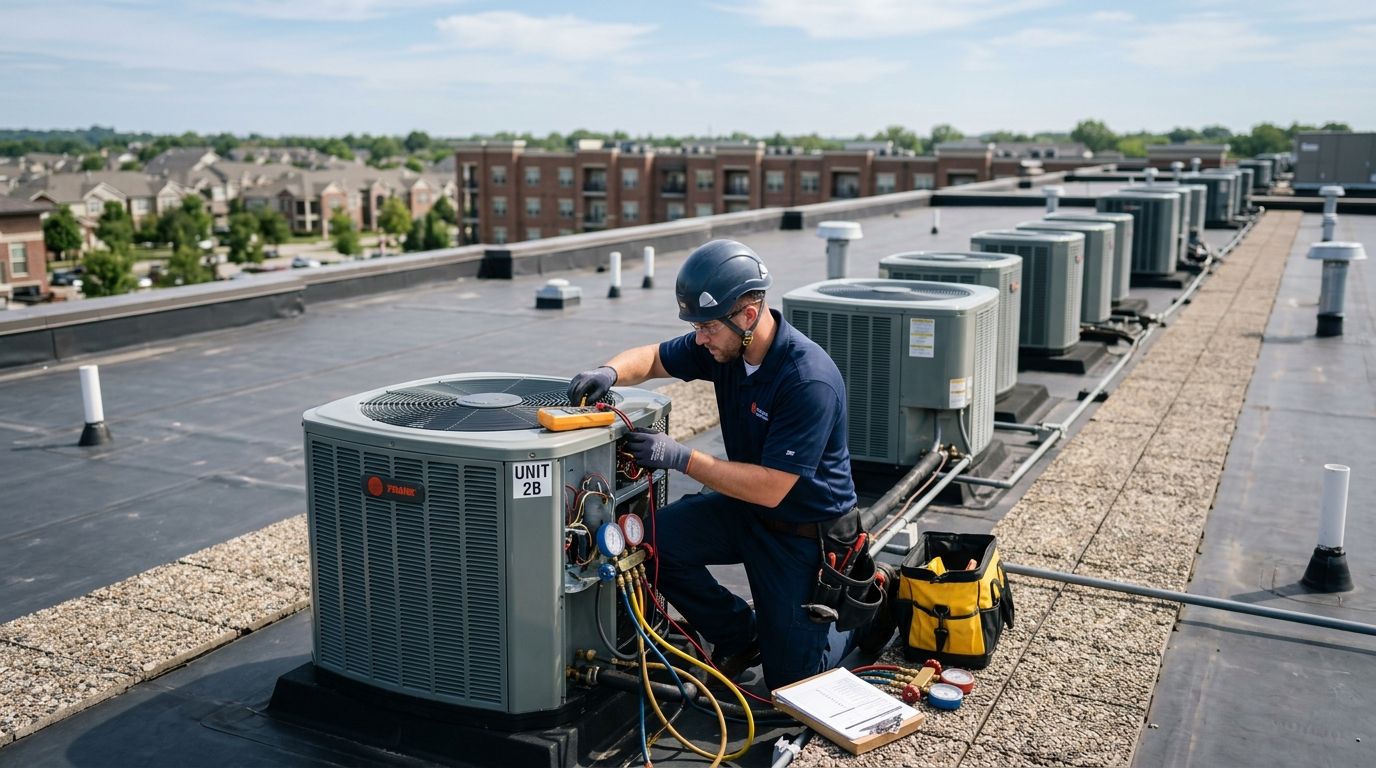
Outdoor condensers take the brunt of Florida's salt air and storm debris, and a cracked or corroded unit fails without warning.
- Clear vegetation and debris within two feet of every outdoor unit
- Check refrigerant lines for corrosion, especially in units within five miles of the coast
- Confirm condensers are elevated above expected flood lines for ground-floor units
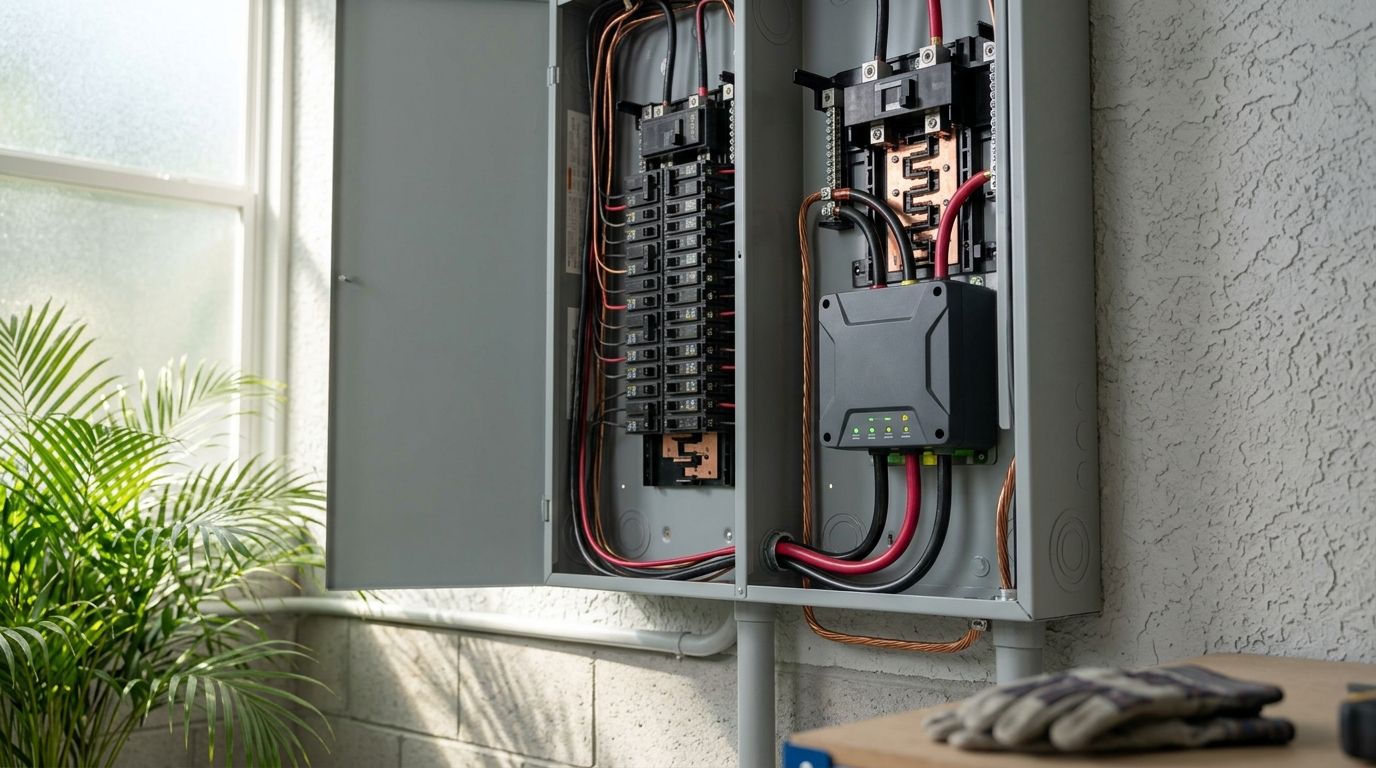
- Test electrical disconnects and breaker panels feeding each unit
- Photograph each condenser's condition for your seasonal record before June 1
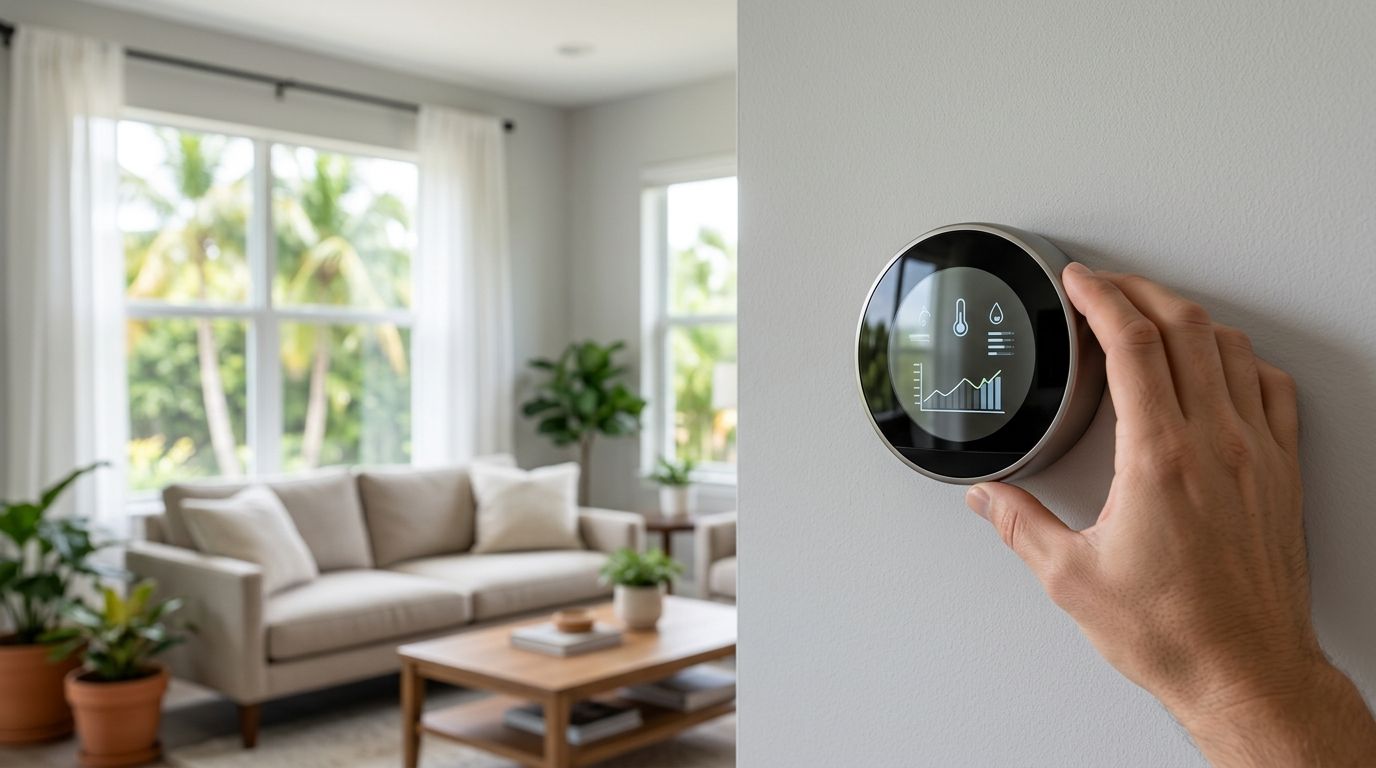
Audit thermostats for tenant misuse and drift
A thermostat set wrong by a tenant looks like an HVAC failure on the work order, and it wastes a technician's trip.
- Standardize on programmable or smart thermostats across units to cut manual override complaints
- Check calibration annually — a thermostat reading 3-4 degrees off drives unnecessary run time
- Include basic thermostat use in your tenant move-in packet
- Log thermostat-related complaints separately from mechanical ones to spot patterns
This is where a faster path makes sense for portfolios over six units: commercial HVAC service from a licensed contractor covers condenser inspection, refrigerant checks, and thermostat calibration in one visit instead of splitting the work across separate vendors.
Measure your energy usage per unit
A spike in one unit's electric bill without a matching occupancy change is often the earliest sign of a failing compressor or a dirty coil.
- Pull monthly usage reports per unit if your utility or submetering system allows it
- Compare units of the same square footage and orientation against each other
- Flag any unit running 15% or more above its portfolio average
- Use usage spikes to prioritize which units get the next quarterly visit first
Document every service call in a shared log
Without a written record, you're guessing at system age, repair history, and warranty status every time something breaks.
- Log the date, technician, unit number, and work performed for every visit
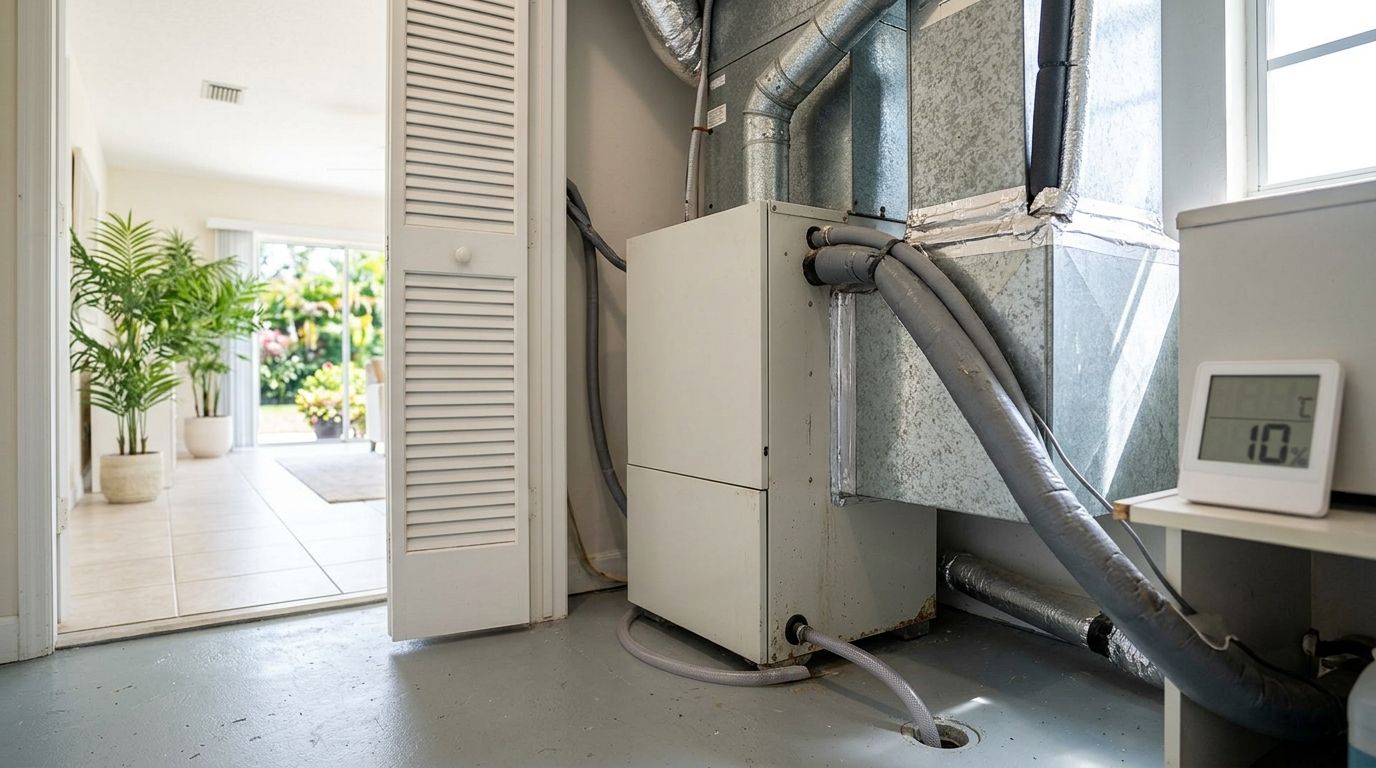
- Note refrigerant type and amount added, since older R-22 systems face phase-out costs
- Track compressor and coil replacement dates separately from routine filter service
- Store warranty documentation with the unit's maintenance file, not in a general office folder
Set a repair-versus-replace threshold in advance
Deciding mid-emergency whether to repair or replace a 14-year-old unit costs you money and time. Set the rule before the call comes in.
- A repair cost exceeding 40-50% of replacement cost usually favors replacement
- Any system over 12-15 years old with a major component failure is a replacement candidate
- Budget replacements across fiscal years instead of absorbing them as emergency capital expenses
- Get a written quote range from your HVAC contractor before a unit fails, not after
Comparison: maintenance approaches for multi-unit portfolios
| Option | Best for | Key limitation |
|---|---|---|
| In-house maintenance staff | Portfolios with a dedicated facilities team already on payroll | Limited to filter changes and visual checks; no refrigerant certification |
| Per-call vendor (no contract) | Very small portfolios (2-3 units) with low repair frequency | No priority scheduling during peak summer demand |
| Annual single-visit contract | Owner-occupied duplexes or low-turnover buildings | Misses seasonal wear points; one visit can't catch a mid-summer failure |
| Commercial HVAC maintenance contract | Portfolios of 6+ units needing predictable, documented service | Requires upfront scheduling coordination across units |
Imperium Electric's commercial HVAC service is built for the third and fourth rows on this table — property managers who need documented, repeatable visits instead of reactive one-off calls.
Common mistakes property managers make
- Treating HVAC like a single homeowner would. A portfolio needs staggered scheduling, not one annual visit for every unit on the same date.
- Skipping documentation until a dispute happens. By the time a tenant files a habitability complaint, it's too late to start a maintenance log.
- Letting tenants control the entire service request pipeline. A tenant reporting "it's not cooling" without a thermostat check first wastes a technician's trip on a filter or a reset.
- Ignoring HOA or condo association coordination. Shared systems or common-area units need sign-off from the association, and missing that step delays repairs by days.
- Waiting for a compressor to fail instead of budgeting replacement. A 13-year-old unit that fails in August costs more in emergency labor and vacancy than a planned spring swap.
Get a maintenance plan for your portfolio
Commercial HVAC service across Port St. Lucie, Stuart, and Jensen Beach.
Property managers overseeing HOA or condo common-area systems face a separate coordination layer — HOA and community electrical maintenance work often runs alongside HVAC service calls when shared systems or common electrical panels feed multiple units.
For portfolios where plumbing sits under the same lease terms as HVAC, electrical and plumbing services for landlords covers the other half of the habitability equation — a system that keeps failing on tenant complaints is rarely just an HVAC problem in 2026.
FAQ
How often should property managers schedule HVAC maintenance?
Quarterly, staggered across your portfolio, works better than one annual visit for every unit. Coastal and south-facing units in Florida run harder and benefit from twice-yearly checks once a system passes 10 years old.
What's the biggest HVAC problem in rental portfolios?
Filter neglect causes most avoidable service calls. A 60-90 day replacement cycle logged per unit cuts emergency calls significantly across a multi-unit building.
Should property managers use in-house staff or a licensed contractor?
In-house staff can handle filter changes and visual inspections, but refrigerant work, condenser diagnostics, and compressor decisions need a licensed HVAC contractor. Portfolios over six units generally justify a maintenance contract.
How do I decide between repairing and replacing a unit?
If the repair cost exceeds 40-50% of a full replacement, or the system is over 12-15 years old with a major component failure, replacement is usually the better long-term call. Setting this threshold before a failure saves time during an emergency.
Does HVAC maintenance affect tenant habitability claims?
Yes. A documented maintenance log is often the deciding factor in a habitability dispute, since it shows the system was serviced on schedule rather than neglected.
What should be included in a commercial HVAC maintenance contract?
A solid contract covers condenser inspection, refrigerant checks, thermostat calibration, filter verification, and a written per-unit service log delivered after each visit.
How much does commercial HVAC maintenance cost for a multi-unit property?
Cost varies by unit count, system age, and visit frequency — get a quote scoped to your specific portfolio rather than relying on a generic per-unit estimate.
Can HOA-managed common areas share an HVAC maintenance contract with individual units?
Often yes, but common-area systems typically require separate sign-off from the association before work begins, so coordinate that approval alongside your unit-level scheduling.
One last thing
The portfolios that avoid August emergency calls almost always share one habit: they replace filters on a calendar, not on a complaint. That single change costs less than one emergency service call and prevents most of the ones that would otherwise land on your desk mid-heat-wave in 2026.