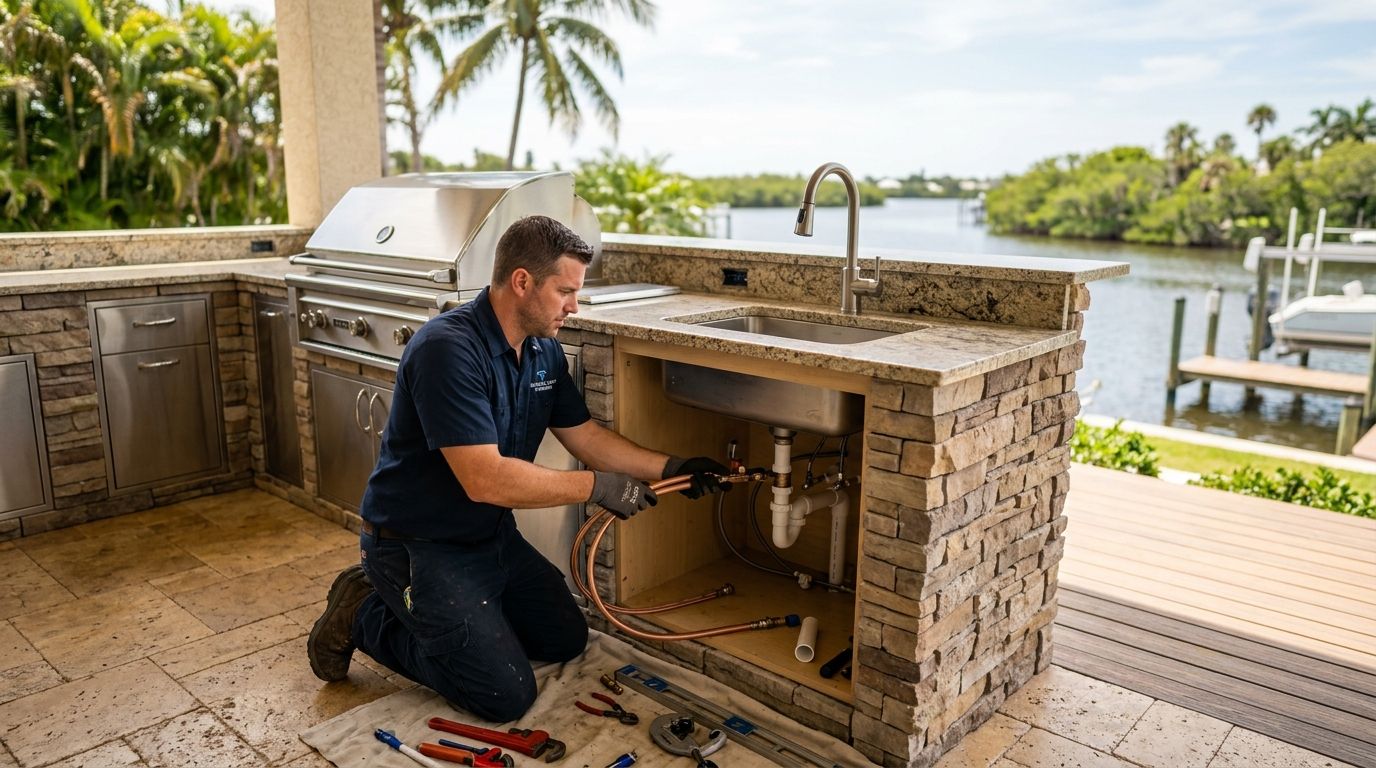
Plumbing for outdoor kitchens on the Treasure Coast means running water, gas, and drain lines to a permanent grill island or kitchen structure built to survive Florida heat, salt air, and hurricane season without a single leak. Homeowners in Port St. Lucie, Stuart, and Jensen Beach need this done differently than someone building a kitchen island in Ohio — UV-rated materials, backflow protection, and a permit filed before the slab pours all matter here in ways they don't matter inland.
- Plumbing for outdoor kitchens needs backflow prevention, UV-rated pipe, and a permit filed with St. Lucie or Martin County before the slab goes down in 2026.
- Imperium Electric handles the electrical wiring for outdoor kitchens on the Treasure Coast and the plumbing side under one general contracting license.
- A dedicated gas line sized for the grill, side burner, and pizza oven combined avoids the pressure drop that ruins a $6,000 install.
- Skip the backflow preventer and county inspectors will flag it at final sign-off, forcing a rework after the pavers are already down.
Why plumbing for outdoor kitchens matters on the Treasure Coast
An outdoor kitchen isn't a sink bolted to a countertop. It's a permanent structure tied into your home's potable water supply, and in Port St. Lucie and Stuart, that connection has to pass a cross-connection inspection before the county signs off. Get plumbing for outdoor kitchens wrong and you're not just fixing a drip — you're tearing out stone veneer to reach a pipe that should have had a shutoff valve in the first place.
Salt air corrodes brass fittings faster here than in most of the country. Summer heat pushes standard PVC past its rated tolerance if it's run exposed instead of sleeved. And St. Lucie County requires a permit for any new plumbing connection to the main line, which means the DIY approach that works in a dry climate gets you a stop-work order here in 2026.
Build the outdoor kitchen plumbing correctly
Map your water and gas lines before you pour the slab
Everything downstream depends on this step. Once the concrete cures, moving a line means jackhammering.
- Locate the nearest cold-water branch and confirm it has enough pressure to feed a sink and ice maker without starving the house
- Mark the gas meter or propane tank location and measure the run distance to the kitchen island
- Identify where the drain line will tie into an existing sewer lateral or a dedicated dry well
- Flag any irrigation lines or low-voltage wiring that cross the dig path
- Confirm the slab plan leaves access panels for future shutoff valves
Install backflow prevention where the line taps the main
This is the step most DIY builds skip, and it's the one St. Lucie County inspectors check first. A hose bib or sink connected without a backflow preventer lets contaminated water siphon back into your potable supply if pressure drops.
- Install an atmospheric vacuum breaker or reduced-pressure zone assembly rated for outdoor use
- Position the device above grade and away from standing water after storms
- Test the assembly annually — most Treasure Coast municipalities require it
- Document the install for your backflow preventer testing and installation records in case of a future home sale inspection
Choose pipe materials rated for Florida heat and UV exposure
Standard schedule 40 PVC left exposed to direct sun degrades and cracks within a few seasons on the Treasure Coast. CPVC and PEX both hold up better, but only if they're sleeved or run below the stone veneer line.
- Use PEX-A for flexible runs under the counter where movement from heat expansion is likely
- Use CPVC for rigid vertical risers feeding a sink or ice maker
- Sleeve any exposed pipe run in UV-rated conduit, never leave bare PVC in direct sun
- Choose brass or stainless fittings over standard steel — salt air corrodes steel fast
Run a dedicated gas line sized for every appliance
A single grill on a shared line is fine. Add a side burner, a pizza oven, and a fire feature, and an undersized line starves all three when they run together.
- Size the gas line to the combined BTU load of every appliance you plan to install, not just what's going in now
- Add a shutoff valve at each appliance connection, not just at the meter
- Run gas line installation and repair work through a licensed contractor — Florida code requires a pressure test before backfill
- Decide propane versus natural gas early; switching after the slab is poured means re-trenching
Add a sink drain with proper slope and cleanout access
Outdoor kitchen sinks drain slower than indoor ones because the runs are often longer and shallower. Get the slope wrong and you're dealing with standing water in the trap every time it rains.
- Slope the drain line a minimum of 1/4 inch per foot toward the connection point
- Install a cleanout access point within reach, not buried under the finished pavers
- Route the drain to a dry well or existing sewer lateral, never straight into a swale
- Insulate any drain run near a pool deck to avoid condensation pooling under pavers
Protect the lines from storm surge and hard freezes
Florida rarely freezes, but a cold snap below 32°F for a few consecutive hours has burst exposed outdoor lines on the Treasure Coast before. Storm surge is the bigger risk near Jensen Beach waterfront properties.
- Bury supply lines below the frost-risk zone even in a warm climate — a few inches of cover is cheap insurance
- Install shutoff valves that let you drain the system fast ahead of a named storm
- Elevate electrical and gas connection points above expected surge lines near canal or waterfront lots
- Coordinate with the electrical side — the same island usually needs electrical wiring for outdoor kitchens run in the same trench to avoid double digging
Permit and inspect before the veneer goes on
St. Lucie and Martin County both require permits for new water and gas connections tied to an existing structure. Skipping this step is the single most common reason outdoor kitchen projects stall mid-build in 2026.
- File the plumbing permit before any trenching starts
- Schedule the rough-in inspection before backfilling or pouring the counter base
- Schedule the final inspection after the gas and water lines are pressure-tested
- Keep permit records on file — they matter at resale and for insurance claims
“Skip the backflow preventer on an outdoor kitchen build and the county inspector catches it before you ever turn on the water.”
Comparing your outdoor kitchen plumbing options
| Option | Best for | Key limitation |
|---|---|---|
| Hose bib extension only | A basic grill station with no sink | No drain, no gas, limited to cold water rinse only |
| Cold-water sink hookup | Small prep stations without a full kitchen build | No hot water, no gas line for cooking appliances |
| Full hot/cold plus gas plumbing | Complete outdoor kitchens with sink, ice maker, and multiple gas appliances | Requires permit, trenching, and licensed inspection before backfill |
| Full build with pool/spa integration | Waterfront and pool-deck properties combining kitchen and pool equipment | Higher coordination cost between plumbing, electrical, and pool trades |
A full hot/cold plus gas build wins for anyone installing a permanent grill island with a sink — it's the only option that passes a St. Lucie County final inspection without a rework order.
Common mistakes Treasure Coast homeowners make
- Skipping the backflow preventer because the sink looks like a small add-on — county inspectors check this first, every time
- Running exposed schedule 40 PVC in direct sun, which cracks within a couple of summers under Florida UV
- Undersizing the gas line for future appliances, forcing a re-trench when a pizza oven gets added later
- Skipping the permit to save time, then failing a home sale inspection years later when the unpermitted work surfaces
- Using standard steel fittings instead of brass or stainless near the coast, where salt air corrodes them within a season or two
If your build also touches a pool deck, coordinate plumbing and pool equipment together — a pool heater installation run at the same time avoids a second trench through finished landscaping.
Get your outdoor kitchen plumbed right
Licensed plumbing, gas, and electrical work under one contractor.
FAQ
Do you need a permit for outdoor kitchen plumbing in Port St. Lucie?
Yes, St. Lucie County requires a permit for any new water or gas connection tied to an existing structure. Filing before trenching starts avoids a stop-work order mid-build in 2026.
Is a backflow preventer required for an outdoor kitchen sink?
Most Treasure Coast municipalities require backflow prevention on any new outdoor water connection. Skipping it is the most common reason final inspections fail.
What pipe material holds up best in Florida heat?
PEX-A and CPVC handle Florida's heat and UV exposure better than exposed schedule 40 PVC, which cracks within a couple of summers if left in direct sun.
Can I run natural gas and propane to the same outdoor kitchen?
Appliances are built for one fuel type or the other, so the decision needs to happen before the gas line gets sized and trenched. Switching after the slab pours means re-trenching.
How far can an outdoor kitchen sink be from the house?
Distance depends on your water pressure and drain slope requirements, and longer runs need a minimum 1/4 inch per foot slope to drain properly. A licensed plumber checks pressure at the planned connection point before finalizing the run.
Does an outdoor kitchen need freeze protection in Florida?
Florida rarely sees hard freezes, but a cold snap below 32°F for several hours has burst exposed lines on the Treasure Coast before. Burying supply lines below the frost-risk zone is cheap insurance against it.
Should electrical and plumbing be installed together in an outdoor kitchen?
Running electrical and plumbing lines in the same trench during the same dig saves a second excavation through finished landscaping. Coordinating both trades on one schedule is standard for a full outdoor kitchen build in 2026.
What's the biggest plumbing mistake in outdoor kitchen builds?
Skipping the backflow preventer is the most common failure point, because it looks optional until the county inspector flags it. The second most common mistake is undersizing the gas line for appliances added later.
One last thing
Most outdoor kitchen plumbing failures on the Treasure Coast don't show up during the build — they show up at resale, when a home inspector finds an unpermitted gas or water connection buried under the pavers. Filing the permit and scheduling both inspections in 2026 costs a few extra weeks upfront and avoids a five-figure rework later.