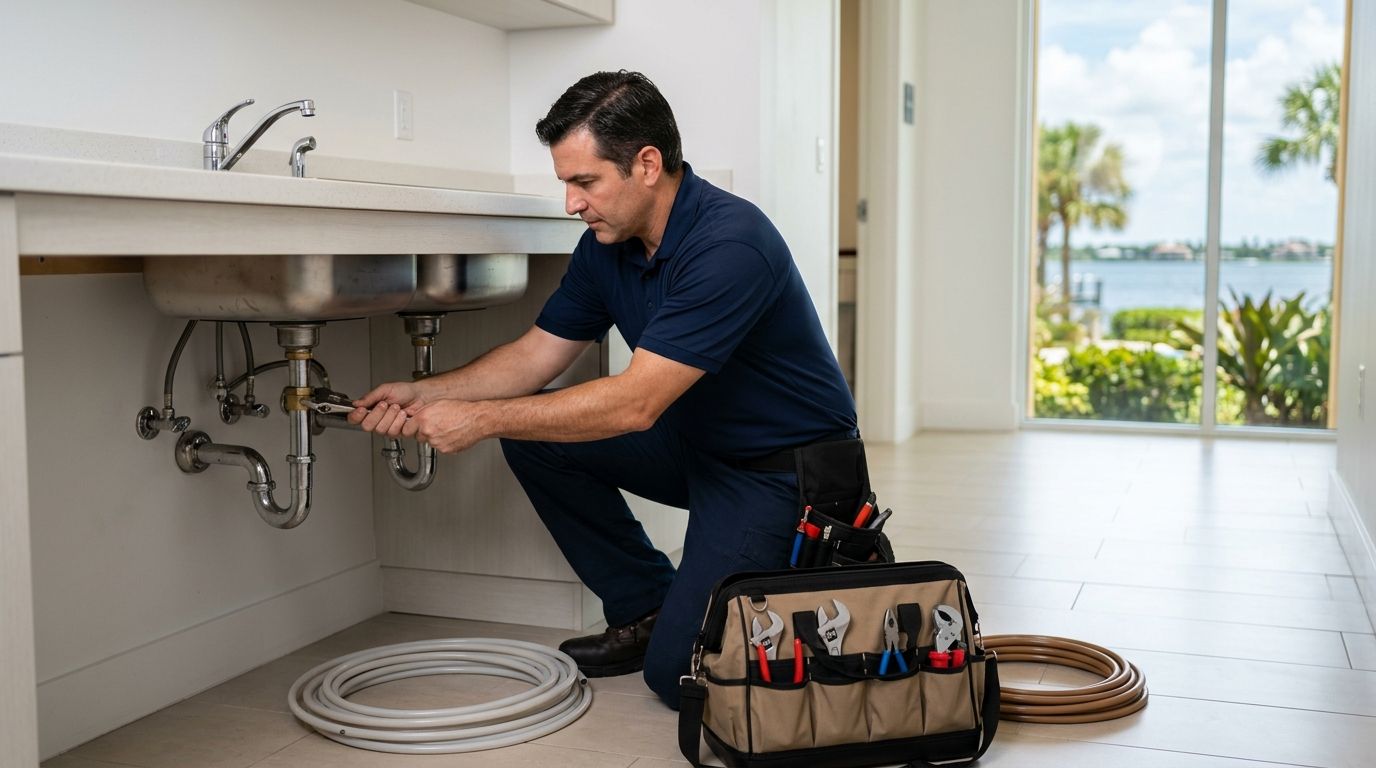
Plumbing for property management companies means having a single licensed vendor who can handle work orders across every unit and common area on a consistent response schedule, not a rotating list of one-off contractors. Treasure Coast property managers juggle vacation rentals, HOA clubhouses, multifamily buildings, and commercial leases at once, and a slab leak in one property becomes a liability problem the moment it sits unaddressed for 48 hours.
- Imperium Electric handles plumbing for property management companies across Port St. Lucie, Stuart, and Jensen Beach on one service agreement instead of per-job dispatch.
- A centralized vendor cuts tenant complaint resolution time versus rotating solo plumbers who don't know the property history.
- Preventive water heater and shutoff-valve checks in 2026 catch failures before they become emergency calls that disrupt multiple units.
- Best for portfolios with 5+ doors: a licensed commercial plumbing partner with documented response windows, not a rotating list of handymen.
Why plumbing matters for property management companies
A property manager's plumbing problem is never really about the fixture. It's about tenant turnover risk, insurance exposure, and whether a maintenance request turns into a one-star review or a habitability complaint. Vacation rental hosts on the Treasure Coast lose booking revenue for every day a unit sits offline with a broken water heater, and HOA boards get blamed for slow response even when the failure was unavoidable.
What makes this segment different from a homeowner calling about one clogged drain: property managers need one vendor who documents every job across a portfolio, quotes consistently, and answers on weekends when a tenant's toilet backs up at 9pm on a Saturday. Managing plumbing across multiple rental properties with different contractors per building means no shared repair history and no leverage on pricing.
The property manager's actual buying criteria isn't lowest price per job — it's fewest disruptions per quarter. A vendor who shows up twice for the same leak costs more in tenant goodwill than a slightly higher invoice ever will.
How to manage plumbing across a property management portfolio
Centralize your work order log across all properties
Stop letting each site manager keep a separate spreadsheet or a stack of paper receipts. A single log tells you which building is eating your maintenance budget and which vendor is actually solving problems.
- Track date, unit, issue type, and resolution time for every plumbing call
- Flag repeat calls to the same unit within 90 days
- Note which jobs required emergency after-hours dispatch
- Record which vendor handled each job and how long it took
Set a response-time standard and hold vendors to it
Decide upfront what "emergency" means for your portfolio — a burst pipe is not the same urgency as a slow drain — and write it into your vendor agreements.
- Define same-day response for active leaks or no-water situations
- Define 48-hour response for non-urgent repairs
- Require written confirmation of arrival windows, not vague "sometime today" promises
- Escalate any vendor missing the standard twice in one quarter
Build a preventive maintenance schedule for water heaters and shutoffs
Most emergency plumbing calls trace back to a water heater or shutoff valve nobody checked in years. Portfolios that skip this step pay for it in after-hours dispatch fees.
- Inspect water heater anode rods and pressure relief valves annually
- Test main shutoff valves at each property twice a year
- Flush sediment from tank water heaters on older units
- Check exterior hose bibs and irrigation backflow devices before hurricane season
Vet a commercial plumbing partner before you need one
This is where most portfolios fall behind — they wait until a Saturday emergency to start calling around. Imperium Electric works with property managers across Port St. Lucie, Stuart, and Jensen Beach on standing service agreements that cover commercial plumbing services for Treasure Coast businesses, from single-building HOAs to multi-site rental portfolios.
- Confirm the vendor is licensed and insured for commercial work, not just residential
- Ask whether they document every job with photos and notes tied to the unit address
- Verify weekend and after-hours coverage, since tenant emergencies don't wait for Monday
- Get a standing rate structure instead of re-negotiating every single call
Standardize backflow testing and drain maintenance across units
St. Lucie and Martin County code requires backflow preventer testing on many commercial and multi-unit properties, and skipping it risks fines during inspection cycles.
- Schedule annual backflow preventer testing for all applicable buildings
- Add hydro jetting to the maintenance calendar for buildings with recurring grease or root intrusion
- Inspect grease traps on any property with a food-service tenant
- Keep documentation on file for insurance and county compliance reviews
Track plumbing costs per property, not just per job
A single invoice doesn't tell you whether Building C is a money pit. Roll costs up by address every quarter.
- Compare emergency-call spend versus scheduled-maintenance spend per property
- Flag any unit with more than two service calls in six months for a full inspection
- Budget for water heater replacement cycles instead of waiting for failure
- Use cost trends to justify capital repairs to owners or HOA boards
Train on-site staff to catch early warning signs
On-site managers and maintenance techs are your first line of defense. A five-minute training session saves thousands in water damage.
- Teach staff to recognize slow drains, water stains, and unusual water bills as early leak signs
- Post shutoff valve locations in every unit's maintenance binder
- Require staff to report even minor drips immediately, not "when it gets worse"
- Give staff a direct line to your plumbing vendor for triage before dispatch
Set up a standing service agreement
One licensed vendor for plumbing, electrical, and HVAC across your whole portfolio.
Comparison: plumbing options for property management portfolios
| Option | Best for | Key limitation |
|---|---|---|
| In-house maintenance staff | Small portfolios (1-3 properties) with basic repairs | No licensing for major plumbing work; slower on complex jobs |
| On-call solo plumber | Single-property owners with occasional needs | No standing agreement; response time varies job to job |
| National franchise service | Portfolios wanting brand-name billing consistency | Higher dispatch fees, less local property history |
| Licensed local commercial partner (Imperium Electric) | Multi-property portfolios needing documented, repeat coverage | Requires a standing agreement to get priority scheduling |
Verdict: for portfolios of five or more units, a standing agreement with a licensed local commercial plumbing partner beats a rotating list of solo plumbers on cost per disruption, even when the per-job rate looks similar.
Common mistakes property managers make with plumbing
- Waiting for tenant complaints instead of scheduling inspections. By the time a tenant calls about low water pressure, the pipe corrosion has usually been building for months.
- Using a different vendor for every property in the portfolio. No vendor learns your buildings, so every call starts from zero.
- Skipping backflow testing until a county inspection flags it. Fines and forced compliance timelines cost more than a scheduled annual test.
- Treating water heater replacement as a break-fix expense. Budgeting replacement on a schedule beats an emergency swap during a heat wave.
- Not documenting which unit had which repair. Without a shared log, repeat problems look like new problems every time.
“The property manager's actual buying criteria isn't lowest price per job — it's fewest disruptions per quarter.”
FAQ
What plumbing services do property management companies need most?
Property managers most often need water heater repair, drain clearing, leak detection, and backflow testing across multiple units. A standing vendor agreement covers all four without re-quoting every job.
Is a standing plumbing service agreement better than calling a plumber as needed?
A standing agreement is better for portfolios with five or more units because it locks in documented response times and repair history per property. Calling as-needed works for single-property owners with occasional issues.
How often should backflow preventers be tested on commercial properties?
Most Treasure Coast counties require annual backflow preventer testing on commercial and multi-unit properties. Skipping it risks fines during county inspection cycles.
What causes most emergency plumbing calls in rental properties?
Aging water heaters, worn shutoff valves, and clogged drains cause most emergency calls in 2026. A twice-yearly inspection schedule catches the majority before they become after-hours emergencies.
Does Imperium Electric handle plumbing for multiple properties under one agreement?
Yes, Imperium Electric works with property managers across Port St. Lucie, Stuart, and Jensen Beach on standing agreements covering plumbing, electrical, and HVAC across an entire portfolio.
How do property managers budget for plumbing across a portfolio?
Track costs per property, not per job, and compare emergency-call spend against scheduled-maintenance spend each quarter. Any unit with repeat calls in six months needs a full inspection instead of another patch repair.
What's the difference between commercial and residential plumbing service?
Commercial plumbing service covers larger supply lines, grease traps, and code-driven backflow testing that residential service rarely touches. Property managers with mixed-use buildings need a vendor licensed for both.
One last thing
The portfolios that spend the least on emergency plumbing in 2026 aren't the ones with the newest buildings — they're the ones that put shutoff valve locations in every unit's maintenance binder. That single habit turns a 2am flood call into a five-minute fix a tenant handles themselves before anyone dispatches a truck.