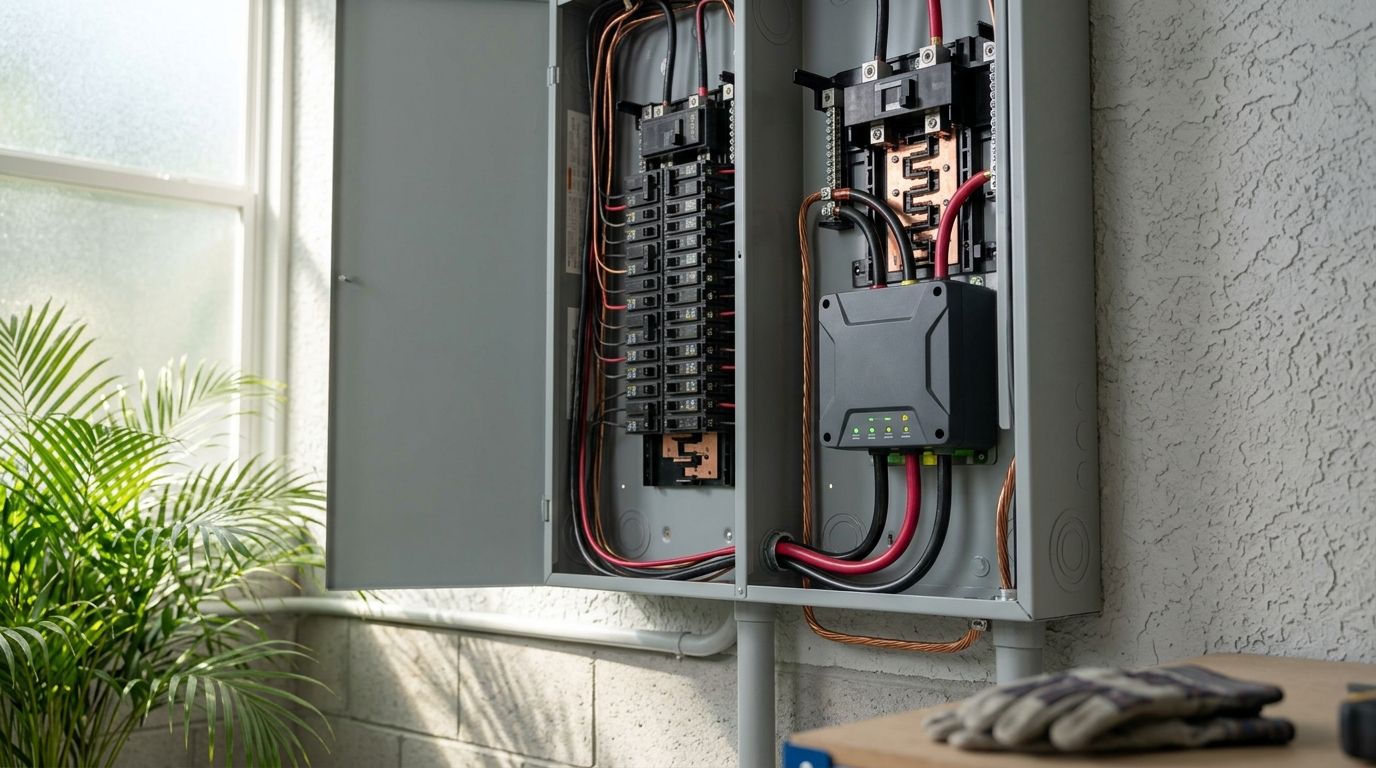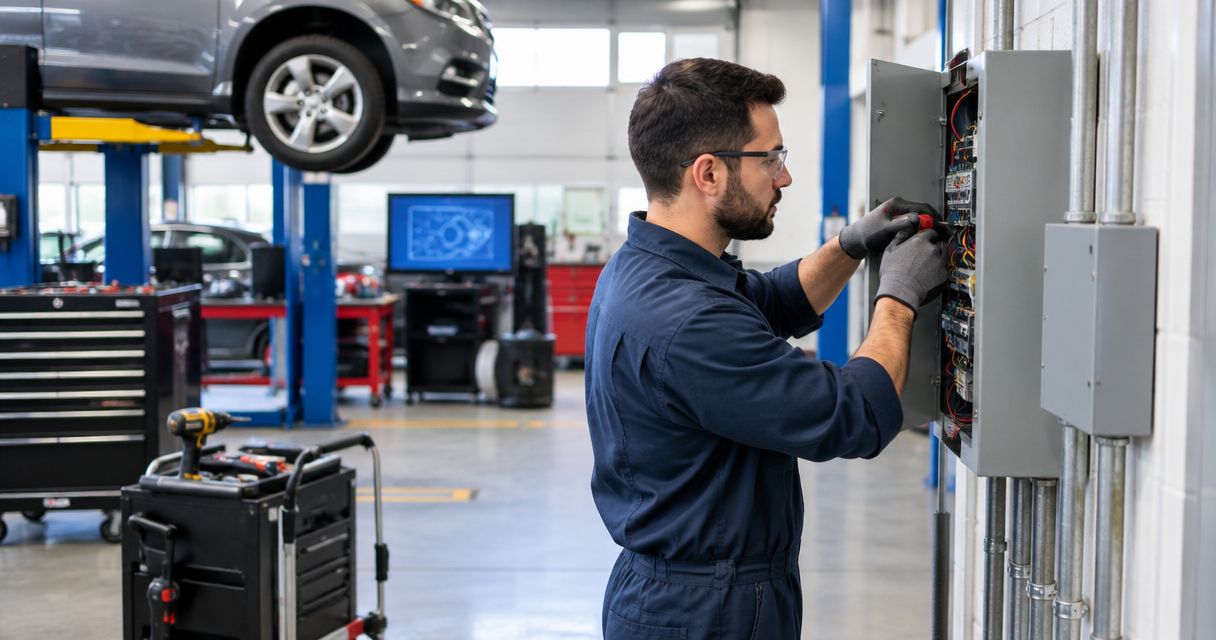
Auto repair shop commercial electrician services size panels, bay lighting, and equipment circuits for lifts, welders, and diagnostic bays — not the standard 100-amp setup a house or small office runs on. A working bay pulls power differently than a retail storefront: compressors cycling all day, lifts drawing locked-rotor amps on startup, LED bay lighting running twelve hours straight, and a diagnostic computer that can't tolerate a voltage sag. A panel that passes inspection for an office won't survive a busy Saturday in a four-bay shop.
- Auto repair shops need panels sized for continuous compressor and lift startup loads, not standard commercial minimums.
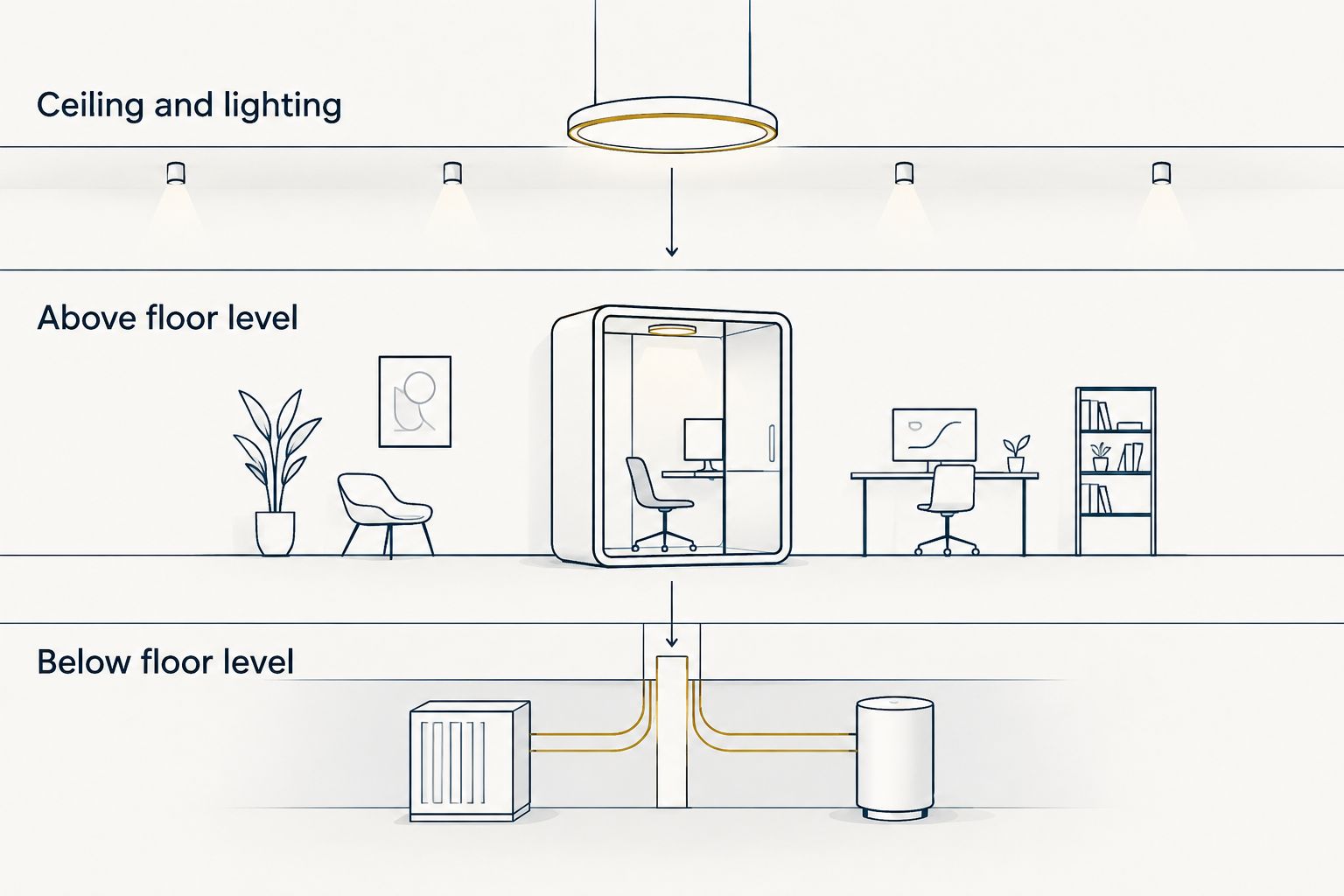
- NEC Article 511 governs wiring above and below vehicle floor level in repair garages — get the zones wrong and the shop fails inspection.
- Imperium Electric LLC handles commercial electrician work for auto repair shops across Port St. Lucie, Stuart, and Jensen Beach.
- EV and hybrid service bays need isolated high-voltage circuits most 2026-era shop panels were never wired for.
- Surge protection on diagnostic scan tools costs far less than replacing a bay's worth of equipment after one lightning strike.
Why commercial electrician services matter for auto repair shops
A repair bay runs more simultaneous electrical load than almost any other small commercial space its size. Two-post lifts, air compressors, MIG welders, paint booths, and diagnostic scan tools can all be drawing current at the same moment, and most of that equipment cycles on and off unpredictably rather than running steady like office lighting. That's a different design problem than commercial electrician services for Treasure Coast businesses generally deal with in a retail storefront.
Code adds another layer specific to this segment. NEC Article 511 classifies the space within 18 inches of the shop floor as a hazardous location in most repair garages, because that's where vapors from fuel and solvents settle. Wiring, fixtures, and receptacles below that line need to meet a different standard than the same equipment mounted on the ceiling. Shops that skip this during a remodel or lift addition find out during the inspection, not before.
Insurance carriers and municipal inspectors both check panel documentation against equipment on the floor. A panel that hasn't been updated since a shop added its third lift is a liability on paper even if it hasn't tripped a breaker yet in 2026.
The how-to spine: what to actually do
Check your panel capacity before you add a lift
Adding a lift, welder, or paint booth without confirming panel headroom is the single most common mistake shop owners make. Do this before signing any equipment purchase order.
- Add up the nameplate amperage of every piece of equipment currently on the panel, not just what's plugged in today
- Check the main breaker rating against the service entrance conductor size — they don't always match on older buildings
- Pull the panel directory and look for double-tapped breakers or missing labels
- Note the panel's age; anything installed before the mid-1990s likely needs a full inspection before adding load
- Confirm whether the building has single-phase or three-phase service, since most welders and larger compressors need three-phase
Map circuits to bays and equipment
Once you know what the panel can handle, map every circuit to a specific bay and machine instead of running general-purpose outlets everywhere.
- Dedicate one circuit per lift, compressor, and welder — never share high-draw equipment on the same breaker
- Put GFCI protection on any receptacle near a wash bay or wet floor area
- Avoid daisy-chaining outlet strips across bays; that's a fire hazard inspectors flag first
- Plan for spare capacity in the panel schedule so the next lift doesn't force a full rewire
- Imperium Electric maps circuit loads bay-by-bay before pulling permits, which shortens the back-and-forth with the inspector compared to guessing and correcting after the fact
Confirm hazardous location classification under NEC 511
This step gets skipped constantly, and it's the one that fails inspections on paint booth and lift additions.
- Identify which areas of the shop fall within the 18-inch hazardous zone above the floor
- Use sealed fittings and explosion-proof fixtures for anything wired inside that zone
- Confirm ventilation requirements if the shop dispenses or stores flammable liquids
- Keep documentation of the classification on file — inspectors ask for it on any electrical permit tied to the service area
- Coordinate hazardous-zone wiring with any paint booth or fuel-dispensing equipment installer, since their permit depends on yours
Upgrade bay lighting for visibility and code
Lighting circuits get overlooked until someone's working under a lift with a flashlight.
- Retrofit fluorescent bay lights to LED on a circuit separate from equipment, so a tripped compressor breaker doesn't kill the lights
- Check ballast-era wiring before assuming an LED retrofit is a drop-in swap — older wiring gauge can't always handle the new fixture's draw pattern
- Add emergency egress lighting near exits, required in most commercial occupancy codes
- Size lighting circuits for the full bay count, not just the bays currently lit
Plan conduit for EV and hybrid service bays
Shops adding EV or hybrid service lines in 2026 are running into a wiring gap most buildings weren't designed for.
- Run dedicated 208/240V circuits isolated from general shop power for high-voltage battery work
- Install isolation transformers where the manufacturer's service procedure requires them
- Pull spare conduit now, even if the EV bay isn't built out yet — retrofitting concrete floors later costs more than the extra conduit run
- Review electrical panel upgrades for commercial EV fleet charging before committing to a panel size, since fleet accounts and hybrid service bays draw differently
Add surge protection ahead of diagnostic tool season
A single lightning strike near the service entrance can take out every scan tool and shop computer on the floor.
- Install a whole-panel surge protective device rated for the building's service size
- Add dedicated protected circuits for diagnostic computers and point-of-sale terminals
- Inspect and test the SPD annually, especially after named storm activity on the Treasure Coast
- Look into surge protection for commercial buildings if the shop has never had one installed
Back up security, refrigeration, and point-of-sale power
A power outage that shuts down the shop for a day costs more than most owners assume in lost labor billing alone.
- Size a standby generator around security cameras, alarm panels, and parts-room refrigeration, not the whole building
- Install an automatic transfer switch so critical circuits come back online without a manual reset
- Prioritize the point-of-sale and phone system on the backed-up circuit list
- Compare options through commercial generator installation for Treasure Coast businesses before locking in a unit size
Schedule inspections before your permit renewal
- Book an annual electrical inspection tied to the shop's occupancy permit cycle
- Keep the panel schedule labeled and current every time equipment changes
- Log breaker trip history; repeated trips on one circuit usually mean it's undersized, not faulty
- Document every load addition in writing for insurance and future inspectors
Get a commercial electrician quote
Licensed electricians for panel upgrades, lift wiring, and bay lighting on the Treasure Coast.
Comparison: electrical options for auto repair shops
| Option | Best for | Key limitation |
|---|---|---|
| Panel upgrade (larger service size) | Shops adding a lift, welder, or paint booth | Requires utility coordination and permit lead time |
| Subpanel addition | Shops splitting one building into multiple bay zones | Doesn't fix an undersized main service upstream |
| Standby generator with transfer switch | Shops that can't absorb downtime on security or refrigeration | Sized for continuous load — must be spec'd for startup surges too |
| EV/hybrid bay wiring with isolation circuits | Shops adding EV or hybrid service lines | Needs dedicated circuits most older buildings never had |
| Whole-panel surge protection | Shops running diagnostic computers and scan tools | Doesn't protect equipment already connected during a strike |
Imperium Electric is the practical call for shops on the Treasure Coast that need panel capacity, hazardous-location compliance, and EV bay wiring handled by one licensed, insured crew instead of three separate contractors.
Common mistakes auto repair shops make
- Wiring compressor circuits like a general outlet. Compressors and lift motors draw far more current on startup than their running amperage suggests, and an undersized breaker trips constantly under that load.
- Skipping the NEC 511 sign-off. Shops that add a paint booth or fuel-dispensing area without confirming hazardous-zone wiring fail inspection and have to redo work already installed.
- Retrofitting LED bay lights on old wiring without checking the gauge. A ballast-era circuit doesn't always handle an LED fixture's draw pattern the same way, and flickering or nuisance tripping follows.
- Never re-checking the panel after adding equipment. A shop that's added a third lift, a welder, and a compressor since the panel was installed is running on paper capacity that no longer matches reality.
- Treating backup power as an afterthought. Losing security cameras and refrigeration during a storm outage costs more in spoiled parts and unmonitored inventory than a properly sized generator would have.
FAQ
What does a commercial electrician for auto repair shops actually do?
A commercial electrician for auto repair shops sizes panels, wires lifts and compressors, and brings hazardous-location zones under a service floor up to NEC 511 code. That covers everything from a single circuit for a new lift to a full panel upgrade when a shop adds a paint booth.
Do auto repair shops need three-phase power?
Most larger welders, air compressors, and multi-post lift systems run better on three-phase power, but plenty of smaller shops operate on single-phase service. A load audit of the equipment on the floor determines which the building actually needs.
What is NEC 511 and why does it matter for repair shops?
NEC Article 511 classifies the space within 18 inches of a repair garage's floor as a hazardous location because fuel and solvent vapors settle there. Wiring and fixtures in that zone need sealed fittings, and skipping this step is one of the most common reasons shops fail electrical inspection.
How much power does an EV service bay need?
An EV or hybrid service bay needs a dedicated 208/240V circuit isolated from general shop power, plus an isolation transformer if the manufacturer's service procedure calls for one. Older shop panels rarely have this built in and need a targeted upgrade rather than a full rewire.
Is a standby generator worth it for a small repair shop?
For most shops, a generator sized around security systems, refrigeration, and point-of-sale equipment pays for itself the first time a storm outage would otherwise cost a day of lost billing. It doesn't need to cover the whole building, just the circuits that can't go dark.
How often should a shop's electrical panel be inspected?
An annual inspection tied to the occupancy permit renewal catches breaker wear and load changes before they become a failed inspection. Shops that add equipment mid-year should log it and schedule a check sooner rather than waiting for the annual cycle.
Can surge protection really damage from one lightning strike?
A whole-panel surge protective device stops most of the voltage spike before it reaches diagnostic computers and scan tools plugged into protected circuits. Without one, a single strike near the service entrance can take out every sensitive piece of equipment on the floor at once.
One last thing
Breaker slots aren't the same as available amperage. A panel can have four open slots and still be maxed out on capacity, which is exactly why a shop that added a fourth lift last year is often running closer to the edge than the panel directory suggests. Get the load audit done before the next piece of equipment shows up on the floor, not after it trips a breaker mid-repair.