Four-point insurance inspections for Port St. Lucie homeowners check the age and condition of your roof, electrical panel, plumbing, and HVAC system so an insurer can decide whether to write or renew your policy. Homes built before roughly 1990 are the segment insurers flag hardest on the Treasure Coast, and a single failed item on any of the four systems can trigger a non-renewal letter instead of a quote.
- A four point inspection port st lucie insurers require covers roof, electrical, plumbing, and HVAC only.
- Homes older than 30-40 years are the segment insurers target most on the Treasure Coast in 2026.
- Federal Pacific and Zinsco panels are automatic red flags that fail the electrical portion outright.
- Fixing known issues before the inspector arrives beats disputing a failed report after the fact.
- Imperium Electric documents panel age, wiring type, and code compliance for older Port St. Lucie homes.
Why four-point inspections matter for Port St. Lucie homeowners
Port St. Lucie's housing stock skews older than newer Treasure Coast developments. Plenty of neighborhoods here were built during the 1970s through 1990s boom, which puts a large share of local homes squarely in the age bracket insurers scrutinize. After several hard hurricane seasons, Florida insurers have tightened underwriting, and the four-point report is the tool they use to decide if an older home is an acceptable risk before binding a policy in 2026.
The inspection itself is narrow by design. It does not evaluate cosmetics, code compliance on every outlet, or full plumbing capacity — it checks whether the four major systems are functional and not a near-term liability. That narrow scope is good news: a handful of targeted fixes, done before the inspector shows up, often moves a home from decline to approved in a single visit.
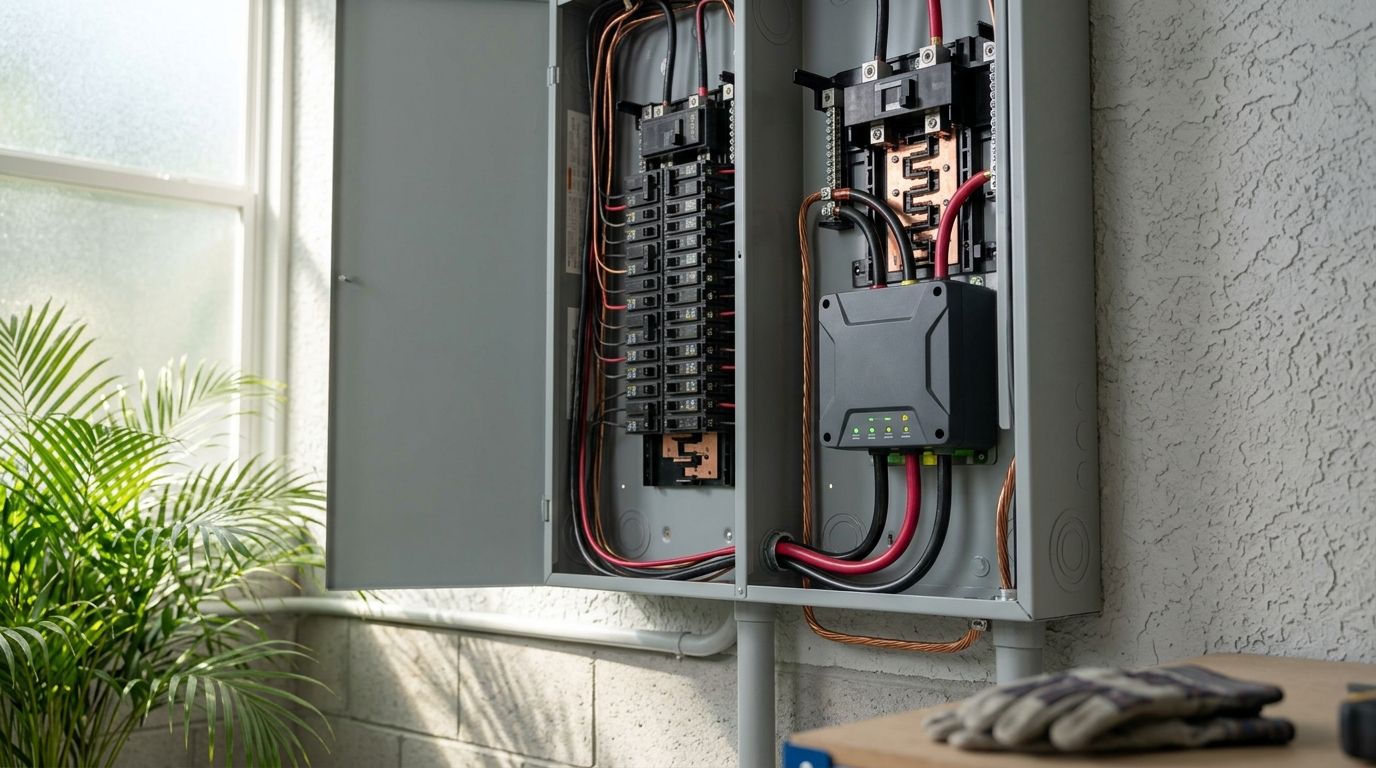
Confirm your home's age and panel type first
Start with the two facts that decide most of the outcome before anyone walks the property: the year built and the panel brand. Insurers pull permit records, so guessing wrong here wastes the inspection fee.
- Pull your property's year-built and last permit date from the St. Lucie County property appraiser records
- Check the panel label inside the door for the manufacturer name
- Flag Federal Pacific Electric (FPE) and Zinsco panels — both are known failure points most Florida insurers reject
- Note whether the home has aluminum branch wiring, common in homes built in the early-to-mid 1970s
- Photograph the panel interior and exterior label before scheduling anything
Homes with an electrical panel replacement for insurance compliance already completed skip this failure point entirely. That is the most common reason a Port St. Lucie four-point report comes back clean on the first try.
Fix known electrical fail points before scheduling
Don't schedule the inspection until the panel is sorted. An inspector who finds an FPE panel writes the report as-is, and you pay for a second visit after the repair anyway.
- Replace any FPE or Zinsco panel before scheduling — non-negotiable for approval with most carriers
- Correct double-tapped breakers, a common citation on homes with DIY additions
- Confirm GFCI protection exists in kitchens, bathrooms, and garages
- Verify the panel has open slots or a documented sub-panel if the home has been added onto
- Get a licensed electrician's written statement on panel age and amperage if the label is illegible
Older homes with an aging main panel benefit from a full electrical panel upgrade for older Port St. Lucie homes rather than a spot repair. Insurers read a full replacement as a longer-term fix, and it resets the age question the four-point report asks.
Document plumbing age and material
Plumbing fails the four-point report less often than electrical, but galvanized steel and polybutylene pipe are flags on homes built before the mid-1990s.
- Identify pipe material at the water heater connection and under sinks
- Check for active leaks, corrosion, or water staining near fixtures and the water heater base
- Confirm the water heater age from its data plate — many carriers question units past 10-12 years
- Note any visible signs of past repairs done without permits
- Get a plumber's written assessment if pipe material is unclear from visible sections
Homes showing corrosion or reduced pressure at multiple fixtures are often candidates for re-piping services for older Port St. Lucie homes before the inspection rather than after a decline letter arrives.
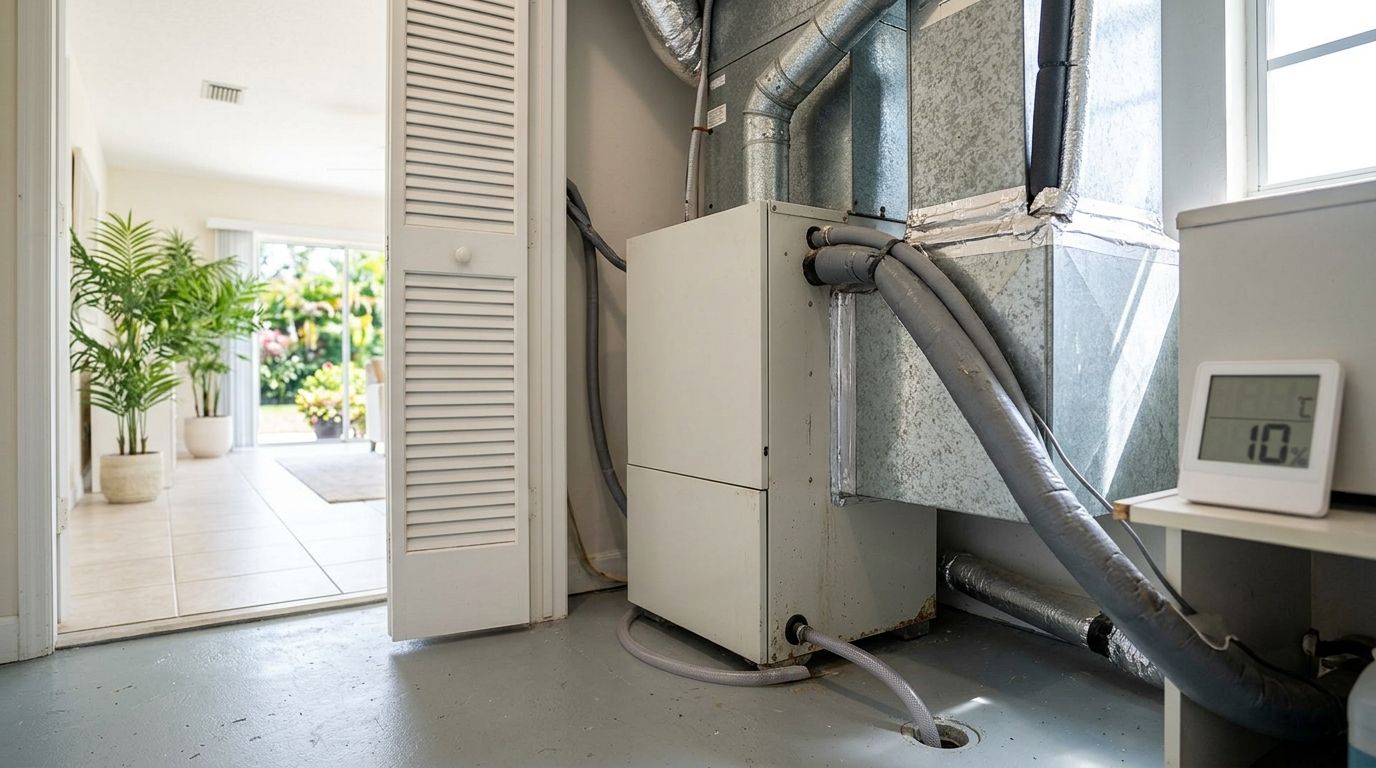
Confirm HVAC age and service history
Inspectors check the HVAC system's functional condition and approximate age, not efficiency ratings.
- Locate the manufacture date on the outdoor unit's data plate
- Confirm the system runs and cools on demand during a test cycle
- Check for visible rust, refrigerant line damage, or standing water near the air handler
- Pull maintenance records if the system has had recent service
- Run a functional test on any unit older than 15 years before the inspector's visit
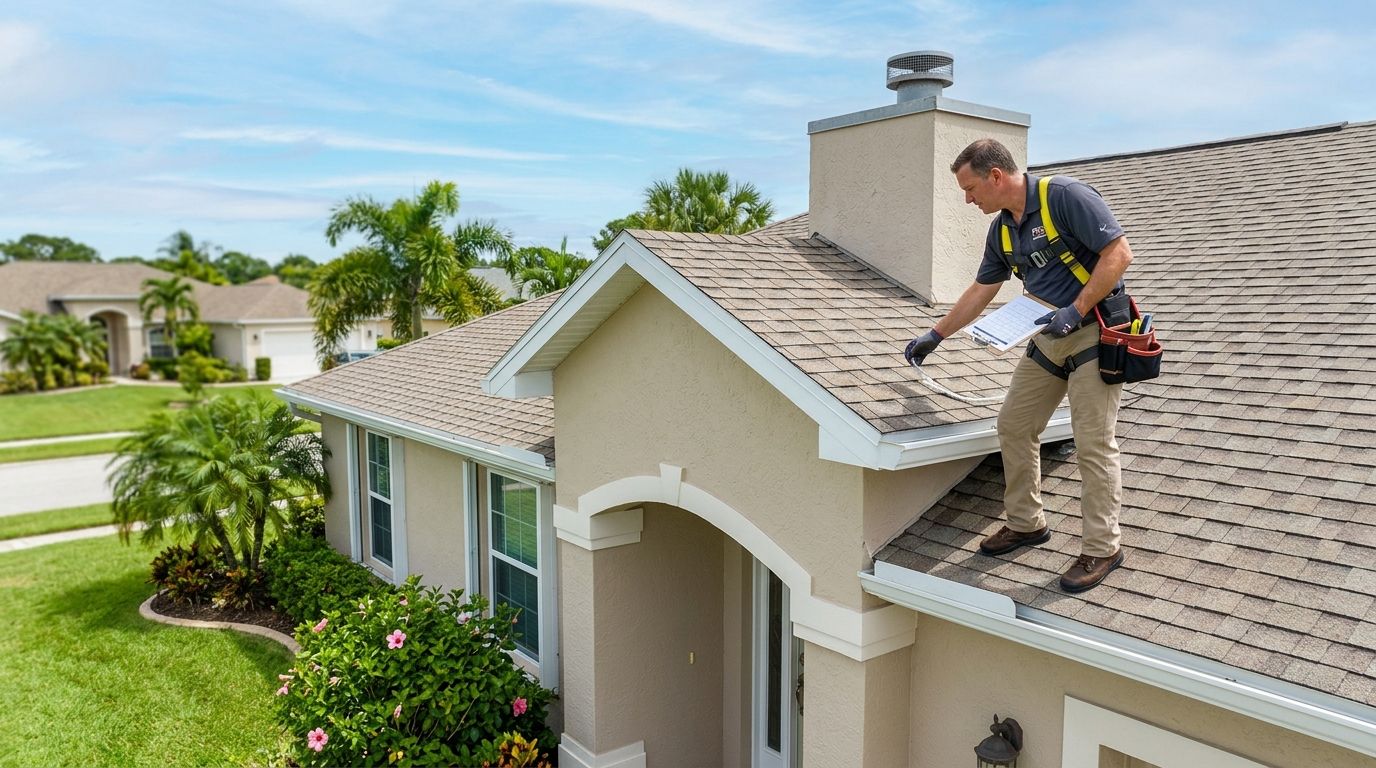
Check the roof for age, permits, and visible damage
Roof condition drives more four-point declines statewide than any other single system, and Port St. Lucie's storm exposure makes this the item insurers weigh heaviest.
- Confirm roof age against the last re-roof permit on file with St. Lucie County
- Look for missing, curling, or granule-loss shingles from ground level or a ladder
- Check flashing around vents, chimneys, and skylights for gaps
- Note any tarps, patches, or unpermitted repairs
- Get a roofer's written age and condition letter if the permit record is unclear
Schedule with a licensed Florida inspector
Once the obvious fail points are fixed, schedule with an inspector authorized to sign a Florida four-point report. Not every general home inspector qualifies for this specific document.
- Confirm the inspector is licensed to complete four-point reports in Florida
- Ask whether the report format matches your carrier's template — some carriers require their own form
- Schedule during daylight hours so the roof and exterior can be reviewed fully
- Request digital delivery so you can submit the report to your carrier the same day
- Keep a copy on file — older homes are usually re-inspected on a recurring schedule
Permit and complete any required repairs
An unpermitted repair on the four-point report reads worse to an insurer than the original problem. Permits prove the fix was inspected.
- Pull permits before starting panel, re-piping, or roof work, not after
- Use a St. Lucie County panel permit guide to confirm which repairs need a permit
- Keep the final inspection approval on file alongside the four-point report
- Submit the permit closeout number to your insurer with the report itself
Comparing your options in 2026
| Option | Best for | Key limitation |
|---|---|---|
| DIY pre-inspection walkthrough | Homeowners confident reading a panel label and pipe material | Won't catch code violations that need a licensed eye |
| Independent inspector, four-point only | Homeowners who just need the report itself | Doesn't fix anything found — repairs still need a licensed trade |
| Licensed pre-check with Imperium Electric | Homes with a known older panel, pipe, or HVAC system | Adds a step before the official inspection, but avoids a second inspection fee |
| Waiting for the carrier's inspection | Newer homes unlikely to trigger any of the four flags | Risky for anything built before the early 1990s — non-renewal is the downside |
Verdict: confirm the panel brand, pipe material, and roof age with a licensed trade before the official four-point inspection is scheduled. That is the difference between a one-visit approval and a repair-then-reinspect cycle.
Get your panel checked before the inspector arrives
Licensed electrical evaluation for Port St. Lucie and Treasure Coast homes.
Common mistakes Port St. Lucie homeowners make
- Scheduling the inspection before checking the panel brand. An FPE or Zinsco panel means a failed electrical section, and the fix takes longer than most homeowners expect once it's flagged.
- Assuming a recent roof means an automatic pass. Unpermitted patches after a storm still show up as red flags even on a roof under 10 years old.
- Ignoring the water heater's data plate. Homeowners fix visible leaks but skip heater age, which is an easy fail on a home built in the 1980s or 1990s.
- Doing repairs without pulling a permit. An unpermitted panel swap or re-pipe reads as a bigger risk to an underwriter than the original condition.
- Waiting for the carrier's deadline to act. Non-renewal notices in Florida arrive with a short window, and starting repairs after the letter lands leaves little room to fix a roof or panel in time.
FAQ
What does a four point inspection in Port St. Lucie actually check?
It checks four systems only: roof, electrical panel, plumbing, and HVAC. It does not evaluate cosmetics or every outlet in the house, just whether each system is functional and not a near-term risk.
How old does a home need to be to require a four-point inspection?
Most Florida insurers require one on homes older than 30-40 years, though the threshold varies by carrier. Port St. Lucie neighborhoods built in the 1970s through 1990s fall squarely in this range.
Does a Federal Pacific or Zinsco panel automatically fail the inspection?
Both panel brands are treated as known fire-risk defects, and most insurers decline coverage until the panel is replaced. Replacing it before scheduling the inspection avoids a failed report entirely.
Can I fix issues after a four-point inspection fails?
Yes, but you typically pay for a second inspection visit once repairs are complete. Fixing known issues like an old panel or galvanized pipe first avoids that extra cost and delay.
Who is qualified to complete a four-point inspection in Florida?
A licensed home inspector, contractor, or engineer authorized under Florida standards can sign the report. Not every general home inspector qualifies, so confirm licensing before scheduling.
Does an electrical panel upgrade help with insurance approval?
Yes, replacing an aging or flagged panel is the most common repair that moves a four-point report from decline to approval. It clears the safety concern insurers weigh most heavily on the electrical section.
How often does a four-point inspection need to be redone?
Most Florida carriers require a new report on a recurring schedule for older homes, and the interval varies by policy. Check your renewal paperwork for the exact schedule your carrier uses.
One last thing
Most homeowners assume the roof is the hardest item to pass. In practice the electrical panel trips up more Port St. Lucie four-point reports, because FPE and Zinsco panels went into a large share of homes built through the 1970s and early 1980s, and owners rarely check the label until an inspector flags it. Check that label before you schedule anything in 2026, not after.